We love Independence Hall, but there are plenty more things to do in Philadelphia beyond the biggest tourist destinations.
As the largest city in Pennsylvania and the sixth-largest in the country, Philadelphia is full of beauty and spectacle, both expected and unexpected. But if you’ve seen the Liberty Bell so often you could tell us the precise length of its crack, and if you’ve just about memorized the Declaration of Independence thanks to frequent visits to Independence Hall, you may be itching to explore parts of Philadelphia that are less well-known to tourists.
We’ve put together a list of some of Philadelphia’s hidden gems, whether they’re sites you may have heard of but never visited or those that you didn’t realize existed in Philly at all. From unique museums to secret gardens, here are some of our favorite things to do in Philadelphia, off the beaten path.
James G. Kaskey Memorial Park
This botanical garden on the campus of the University of Pennsylvania was originally constructed for the school’s biology program in 1894. Since then, generations of Philadelphians have enjoyed the shade of the park’s trees and the native wildlife drawn to the park’s distinctive pond, known as the BioPond. Indeed, James G. Kaskey Memorial Park is often referred to as simply “the BioPond.”
The research garden and natural oasis in the middle of the city offers a peaceful escape, complete with benches and picnic tables where you might find students or office workers whiling away a study session or lunch break. You might take a self-guided tour of the park’s 3.5 acres and plan your next retreat at the garden.
Wagner Free Institute of Science
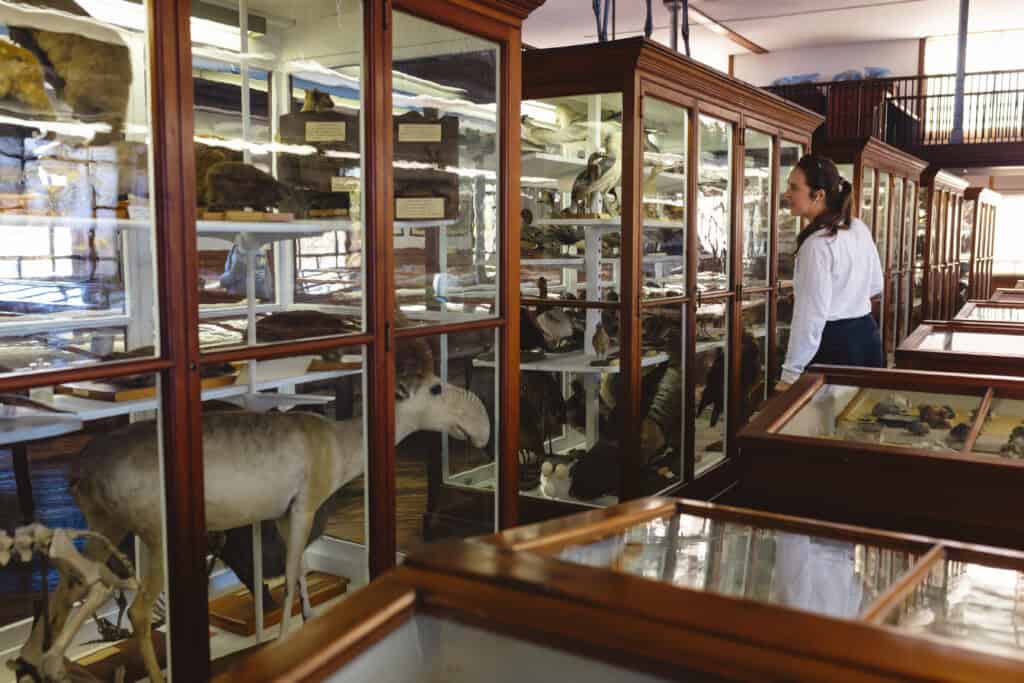
True to its name, the Wagner Free Institute of Science is a free natural history museum dedicated to public science education. The institute dates to 1855 and survives today as a preserved Victorian-era museum with more than 100,000 specimens on view: ancient fossils, taxidermized birds and mammals, shells, rocks and minerals, fish, dinosaur bones, and more.
Fort Mifflin
You’ve learned about U.S. history detailed within Independence National Historical Park, but there’s much more to discover about the nation’s founding era in Philadelphia. Take Fort Mifflin, a Revolutionary War battlefield on the Delaware River and one of the oldest U.S. forts.
The British bombarded the fort and captured it in 1777, but not before the garrison of 400 American soldiers held them off, giving George Washington and his army time to retreat to Valley Forge. Fort Mifflin later served as a prison during the Civil War and as a magazine during World War II.
Today, Fort Mifflin is open to the public between March and December, with guided tours and cannon demonstrations on weekends.

Colored Girls Museum
A “memoir museum,” the Colored Girls Museum is dedicated to the lives and experiences of ordinary Black women and girls. As such, the museum space has everyday artifacts, special heirlooms, and art celebrating Black womanhood. The current exhibition is “Act 2: The House, The Oracle and The Table” of “Say it loud, I’m Black, and I’m proud.”
You can visit the museum by booking tickets in advance; tickets are available only on Saturdays.
Edgar Allan Poe National Historic Site
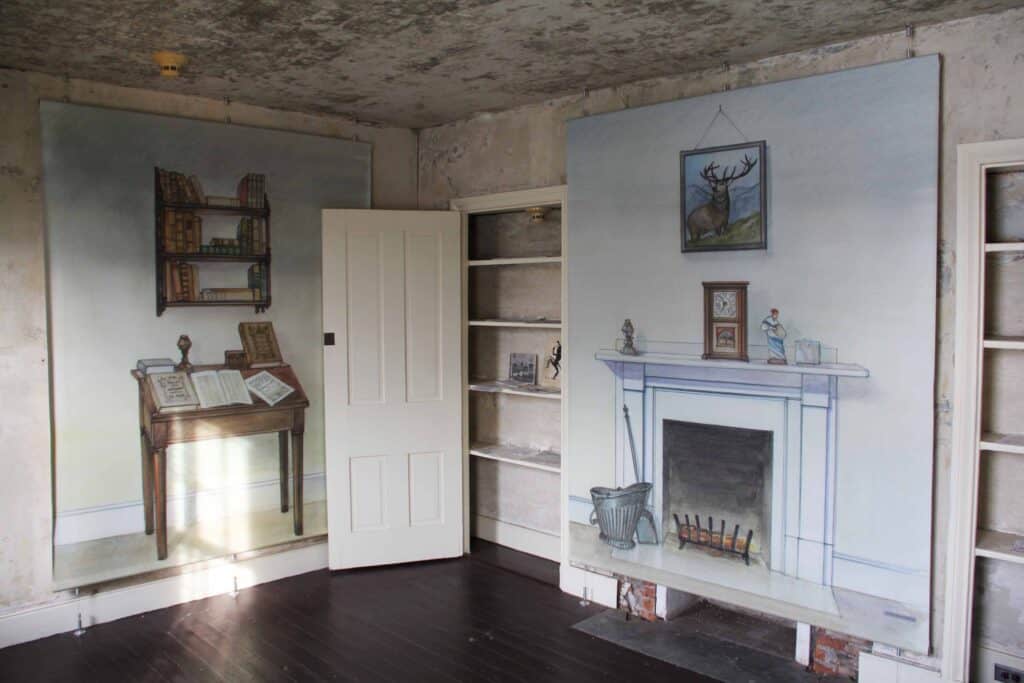
One of the country’s most storied writers, Edgar Allan Poe, made Philadelphia his home for six years between 1838 and 1844. Poe was famously melancholic, but his years in Philadelphia were some of his happiest. Visitors can tour a home not far from Independence Hall that Poe rented in Philadelphia, where he wrote some of his most famous stories, like “The Black Cat” (which features a creepy basement similar to the one in the house).
The Edgar Allan Poe National Historic Site is run by the National Park Service, and while it is currently closed for a utility improvement project, it is expected to reopen soon and once again attract visitors intrigued by Poe’s macabre poems and stories.
Philadelphia’s Toynbee Tiles
In the 1980s, mysterious tiles began appearing on major North American city streets, broadcasting strange messages like “TOYNBEE IDEA IN Kubrick’s 2001 RESURRECT DEAD ON PLANET JUPITER” and “AS HELLIONS INFIL-TRATE EN MASSE AND GIVE YOU BEAT-.” Known as the Toynbee Tiles, no one has ever been sure of their purpose or who was behind them. And while most of the tiles have been removed, some remain, especially in the city that was home to the most: Philadelphia.
Check out the Toynbee Tile map to see where the tiles can still be found in Philly, and how you might try to spot them.
“Greet the Light” at Chestnut Hill Friends Meeting
The artist James Turrell has created 100 museum “Skyspaces” around the world, where holes in the ceiling frame the sky in ways that turn light and air into works of art. Hidden light systems interact with natural light, allowing viewers to watch a crisp slice of sky change colors, especially striking at sunrise or sunset. We see the sky every day, but engaging with it through a Skyspace feels new.
Philadelphia is home to its own public Skyspace at Chestnut Hill Friends Meeting; the installation is known as “Greet the Light” and is viewable during sunrise or sunset on designated days.
Self-guided mural walking tour
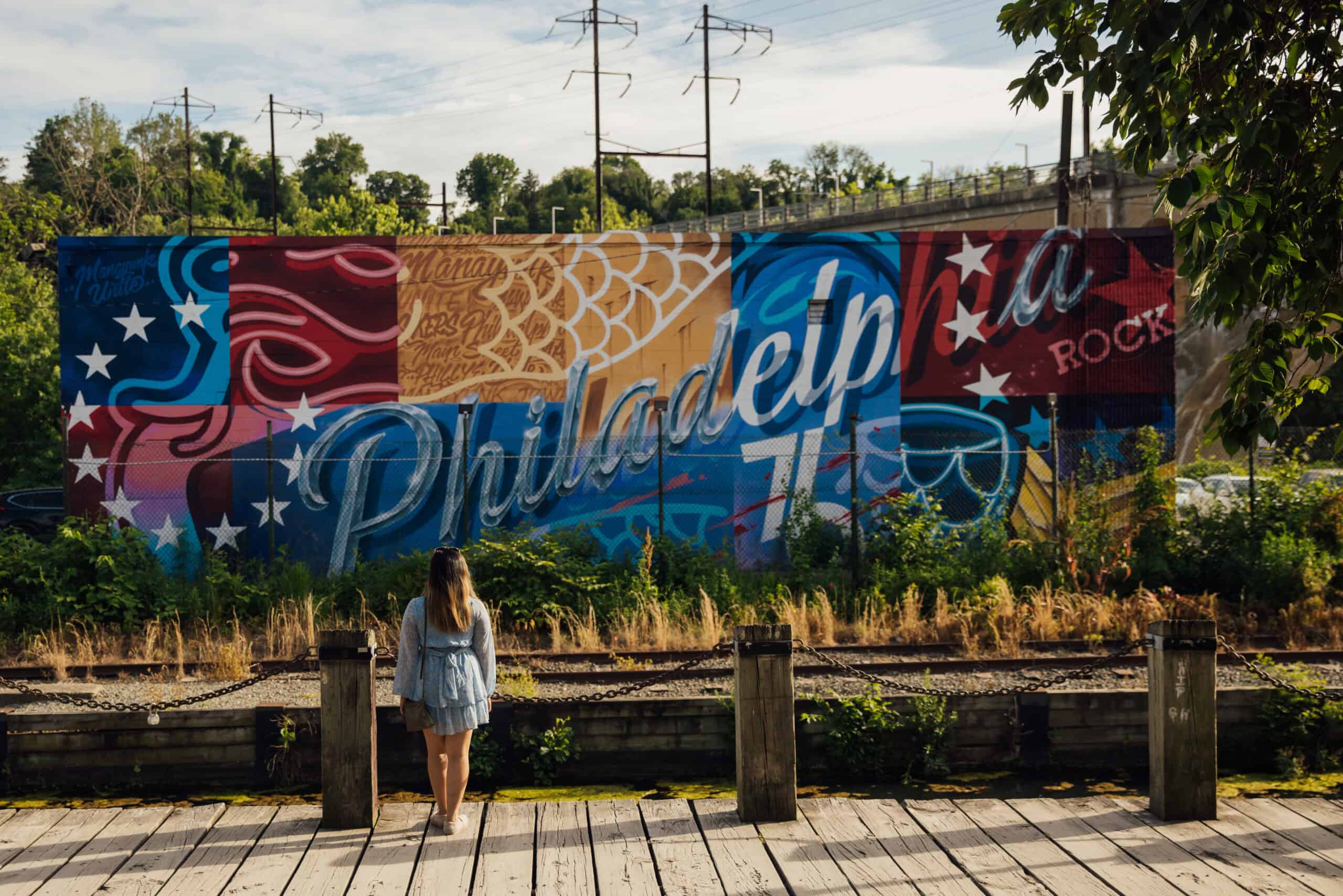
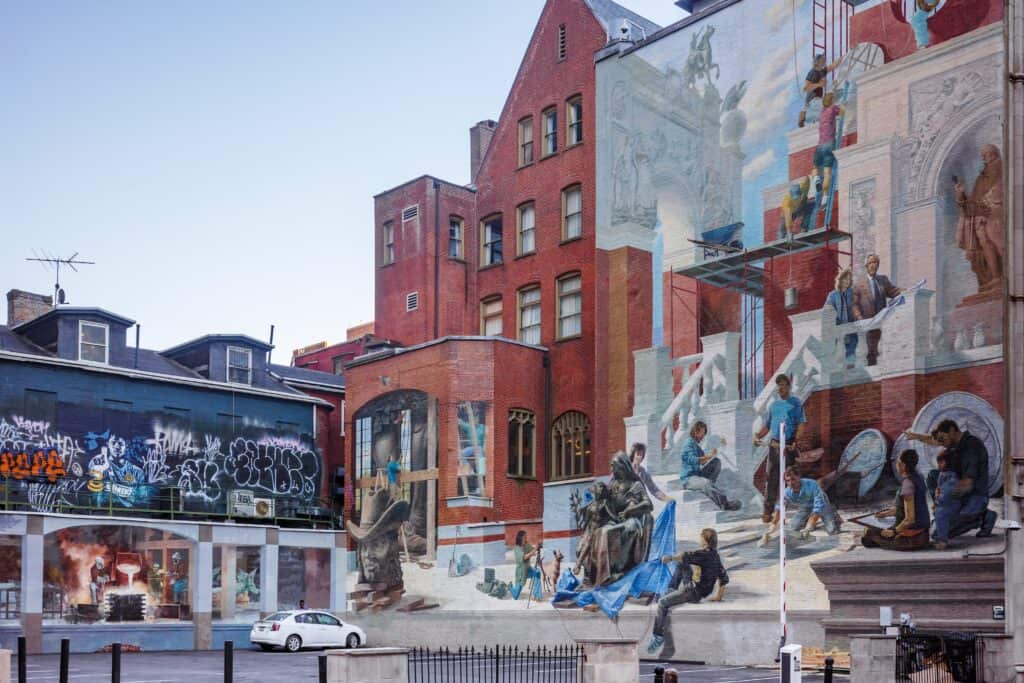
In addition to renowned art institutions like the Philadelphia Museum of Art, the city is also dotted with dozens of public art installations, including murals painted across the urban map. One of the best ways to explore Philadelphia—and see some of its incredible street art—is by going on a self-guided tour of the city’s murals. Mural Arts Philadelphia (which also offers its own array of guided walking tours if you’d rather be led by an expert in city murals) has published a GPS-based, self-guided tour that explores the details and locations of nearly three dozen murals on the streets of Philadelphia.
Awbury Arboretum
Awbury Arboretum, nestled in the Germantown neighborhood, is a free, 56-acre public garden with walking trails, an urban farm, natural habitats, and historic buildings. As a “tree museum,” Awbury is home to many different species of trees and shrubs for the public to study and enjoy. It also offers community events and educational programs, a natural playground, and even an art gallery at the arboretum’s Francis Cope House.
Laurel Hill Cemetery
Laurel Hill Cemetery was founded in 1836 as one of the country’s first “garden” cemeteries, an alternative to overcrowded, urban church graveyards. The idea was that cemeteries could be beautiful places to enjoy nature, in addition to places to bury and honor the dead. Laurel Hill still fulfills that mission today, serving as a gorgeous natural area that is both a cemetery and a public park.
You can visit Laurel Hill for a quiet walk overlooking the Schuylkill River, or you can head there for any one of its engaging public programs, such as historic walking tours, the annual makers’ market, outdoor movie screenings, and more.