It’s always ideal to support small, local businesses—but it’s even better when you can support the environment, too.
There are many ways businesses can have disastrous impacts on the environment, like pollution, excessive energy consumption, and wasteful use of resources. But there are also ways businesses, especially locally focused small businesses, are fighting back against that and making dedicated efforts to lower their carbon footprint and go green.
All across Wisconsin, community hubs like businesses and green schools are stepping up to make a positive impact on the environment by increasing their sustainability efforts.
Whether it’s a small step in the right direction, like salvaging materials from a landfill and reusing them, or making environmentally friendly advancements in their buildings, there are many ways, and many small businesses throughout the state have dedicated themselves to going green.
1. Hello Art Hatchery
Location: 134 East Main St., Stoughton
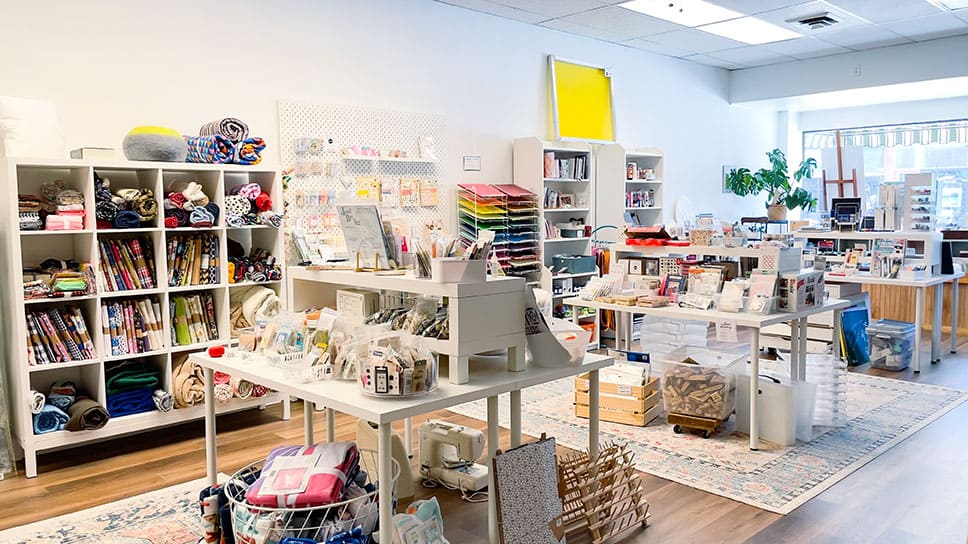
Most art supply stores offer anyone interested in art or starting a new hobby the opportunity to buy the products needed to create whatever they want. But Hello Art Hatchery, in Stoughton, Wisc., serves as a sort of art supply thrift store. Instead of offering brand-new items in plastic packaging, Hello Art Hatchery is focused on being sustainable by reselling donated art supplies. The art supply shop offers all sorts of materials, ranging from macrame tools, painting supplies, and clay.
Hello Art Hatchery accepts donations of clean and reusable materials, which helps the business stay environmentally friendly by keeping those items out of landfills and encouraging reuse rather than purchasing new materials. The store’s values extend beyond being environmentally friendly, too. Hello, Art Hatchery places an emphasis on using art as an act of self-care, and participants don’t have to be trained or have any sort of skill level to take part in it.

2. Tattersall Distillery
Location: 1777 Paulson Road, Suite 3, River Falls
When Tattersall Distillery set out to source the ingredients that it would use in its products, they understandably wanted to find the best. So, they searched locally. The corn, rye, wheat, malts, grains, and barley used by the River Falls-based distillery to make its bourbon, whiskey, gin, and other spirits and liqueurs are all grown locally at farms in Wisconsin and Minnesota, or produced by companies from those two states. Using locally sourced products has helped reduce the distillery’s carbon footprint, but Tattersall Distillery hasn’t stopped there.
After Tattersall Distillery uses those quality ingredients in its distilling process, they’re not just discarded. Instead, the distillery composts all of its botanicals, food waste, straws, and cups, alongside other products. The grains used by the distillery to make its spirits and liqueurs are reused: After distilling, they’re stored in a 10,000-gallon silo, and picked up on a weekly basis by one of the farmers that the distillery works with, and are used to feed the farmer’s pigs. The roof of the distillery’s River Falls location is also lined with solar panels, helping it source its energy in a greener way.

3. Sail Door County
Location: 10707 North Bay Shore Drive, Sister Bay
One of the best ways to explore Door County is by getting out on the water. The peninsula is surrounded by water, with Lake Michigan on one side and Green Bay on the other. While there are several companies that give visitors and locals alike a chance to explore the peninsula from the water, Sail Door County is one of the county’s environmentally-friendly options.
The sailing company was first founded in 1999, and one of its core values is being environmentally friendly. It is even considered a Travel Green Business by Travel Green Wisconsin. The sailing company cuts down on its carbon footprint by doing something pretty basic: sailing. Rather than using its engines to motor customers up and down the Door County coastline, it relies on the sailing skills of its employees, harnessing the power of the wind to move the boats, showing that it doesn’t have to take drastic measures to be a more environmentally conscious business.
4. Lakefront Brewery
Location: 1872 North Commerce St., Milwaukee
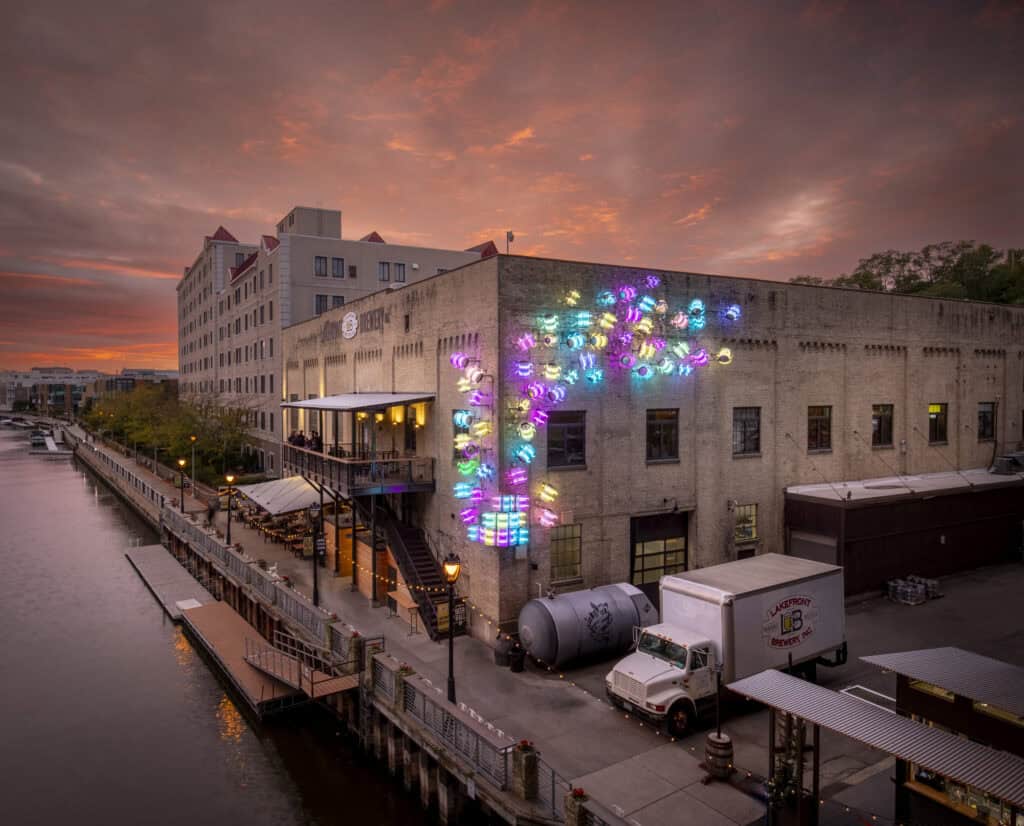
Wisconsin is proud of its brewing heritage, and the state and its residents should be even more proud of the efforts that breweries are putting into being more sustainable, like Milwaukee’s Lakefront Brewery. Since its founding in 1987, the brewery has worked to become more sustainable. In 1996, it became the country’s first-ever certified-organic brewery, and a year after that, it began developing efforts to reuse its hot water through a heat exchanger.
In the decades since then, Lakefront Brewery has only ramped up its efforts to go green. Throughout the 2000s, the brewery swapped out its sample cups for tourgoers with entirely plant-based cups and began printing all of its printed material on recycled paper with soy ink. Most recently, staff at the brewery have joined together to pick up trash throughout the city to prevent it from ending up in the Milwaukee River, and have joined the Wisconsin Sustainable Business Council.
5. Upshift Swap Shop
Location: 836 East Johnson St., Madison
When it comes to fashion, a lot of trends are short-lived, and people are constantly changing up their wardrobes by getting rid of old clothing items and purchasing new ones. That creates a lot of clothing waste, and plenty of clothing items that are ending up in landfills. Upshift Swap Shop, in Madison, was founded with the hope of reducing the amount of clothing waste that ends up in landfills each year.
The clothing shop does this by offering consumers a place to swap out clothing they no longer want. Customers bring a bag to Upshift Swap Shop, empty it out at the store, and then refill it with any items they want from the shop. At the end, they pay a $20 swap fee and can bring the bag of new-to-them clothing home. All of the clothing and accessories at Upshift Swap Shop are recycled and reused, and so are their resources, like the store’s mannequins, which have been handed down from other stores.
6. Lost Creek Adventures
Location: 22475 WI-13 Trunk, Cornucopia
The goal of Lost Creek Adventures, an outdoor adventure tour and rental company, is to get customers outside to appreciate nature. It only makes sense that the small business is also focused on protecting that nature. The company uses as much organic and locally sourced food as possible in the menu provided to customers, and utilizes solar power at the building where the business is housed.
For Lost Creek Adventures, part of being sustainable is placing an emphasis on education, as well as tourism. When customers book a tour with Lost Creek Adventures, they are instilled with a knowledge of the natural and cultural history of the Apostle Islands and the surrounding area throughout the tour, as well as outdoor skills and safety. The tour company offers kayak trips to the Apostle Islands, including overnight to six-day kayak camping trips, as well as stand-up paddleboard tours and guided, eco-focused tours to places beyond Wisconsin’s waters, like Costa Rica.
7. The Soap Opera
Location: 319 State St., Madison
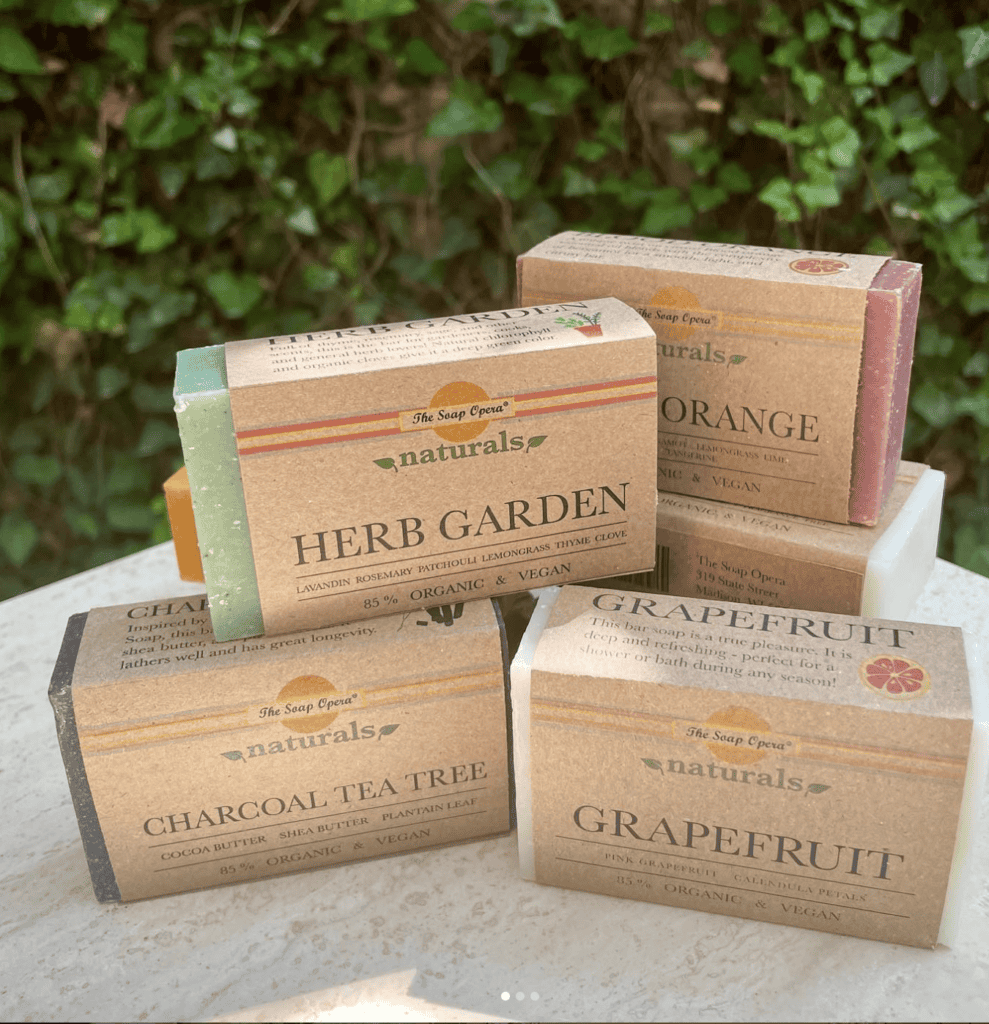
For more than five decades, Madison’s The Soap Opera has been vending soaps, skincare, and wellness products, among other items. It has also been selling them with the environment in mind, making sustainability one of the soap store’s primary values.
The store uses green energy in its brick-and-mortar location, as well as on its website, which is hosted on Shopify, a platform that is working toward being entirely carbon-free by 2030. The store itself sells environmentally friendly products, like clean-burning candles, and many of its items can be refilled at The Soap Opera, reducing packaging per item rather than having customers purchase the same product over and over with new packaging. Even if customers aren’t shopping in store, they’re still making an environmentally-conscious choice, because The Soap Opera uses recycled and eco-friendly packaging when shipping orders.

8. Grand Geneva Resort and Spa
Location: 7036 Grand Geneva Way, Lake Geneva
It might be hard to imagine that anything as large as Grand Geneva Resort and Spa, a sprawling resort on 1,300 acres in Lake Geneva, could be eco-friendly, but anyone assuming otherwise would be wrong. One of the resort’s most well-known amenities is its three golf courses, including two 18-hole courses, the Brute and Highlands, and an 11-hole course, Wee Nip. Rather than offering a golf course surrounded by a freshly-manicured lawn, there are tens of thousands of square feet of native grasses and forbs, which help the environment by conserving water and restoring local biodiversity.
It’s not just the resort’s golf courses that are opting to go green, though. The resort uses locally sourced produce, fish, meat, and breads, and really locally sourced honey: the Grand Geneva Resort and Spa recently harvested more than 100 pounds of honey from its on-site beehives.
9. Cultivate Taste Tea
Location: 520 North Broadway, Suite 120, Green Bay
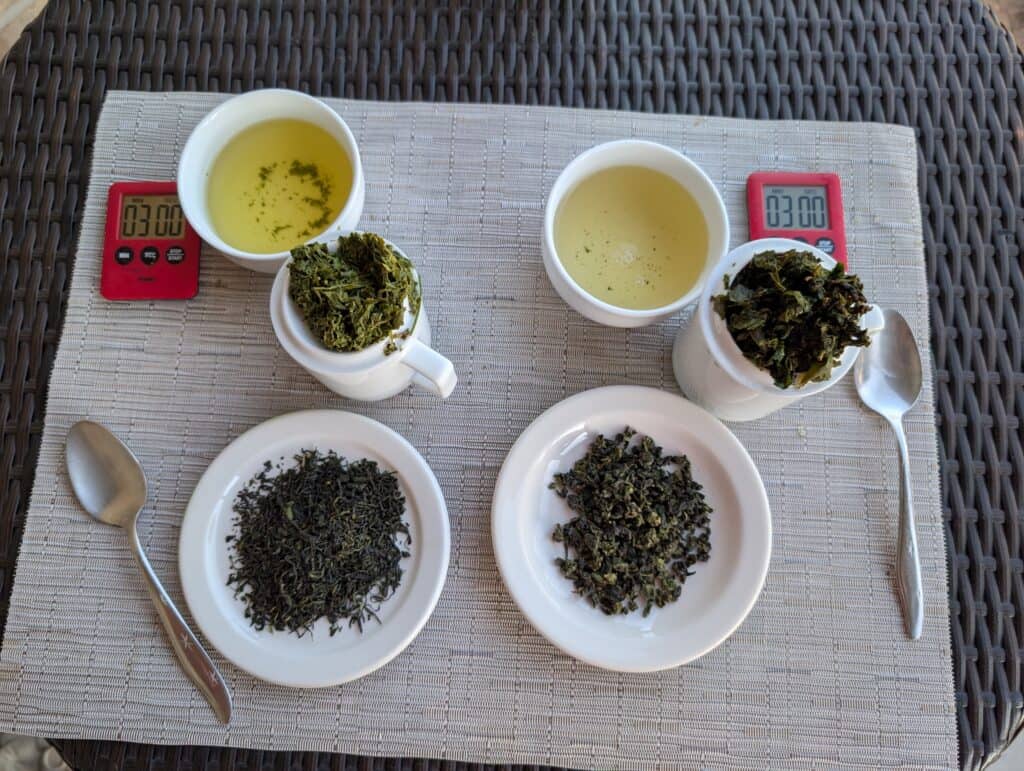
A lot of tea shops offer unique flavors or sweetened options, but that’s not the case at Green Bay’s Cultivate Taste Tea. The tea shop is dedicated to showcasing tea in its truest form and doesn’t add flavorings, create new blends, or sell novelty teas. It wants to highlight the tea as an agricultural product, instead.
The store also wants to highlight its efforts to make itself an environmentally friendly place to shop. Since opening its doors in 2021, each tea order is packed in eco-friendly and biodegradable packaging, and the tea shop is considered a Travel Green Business by Travel Green Wisconsin.
10. Central Waters Brewing
Location: 351 Allen St., Amherst
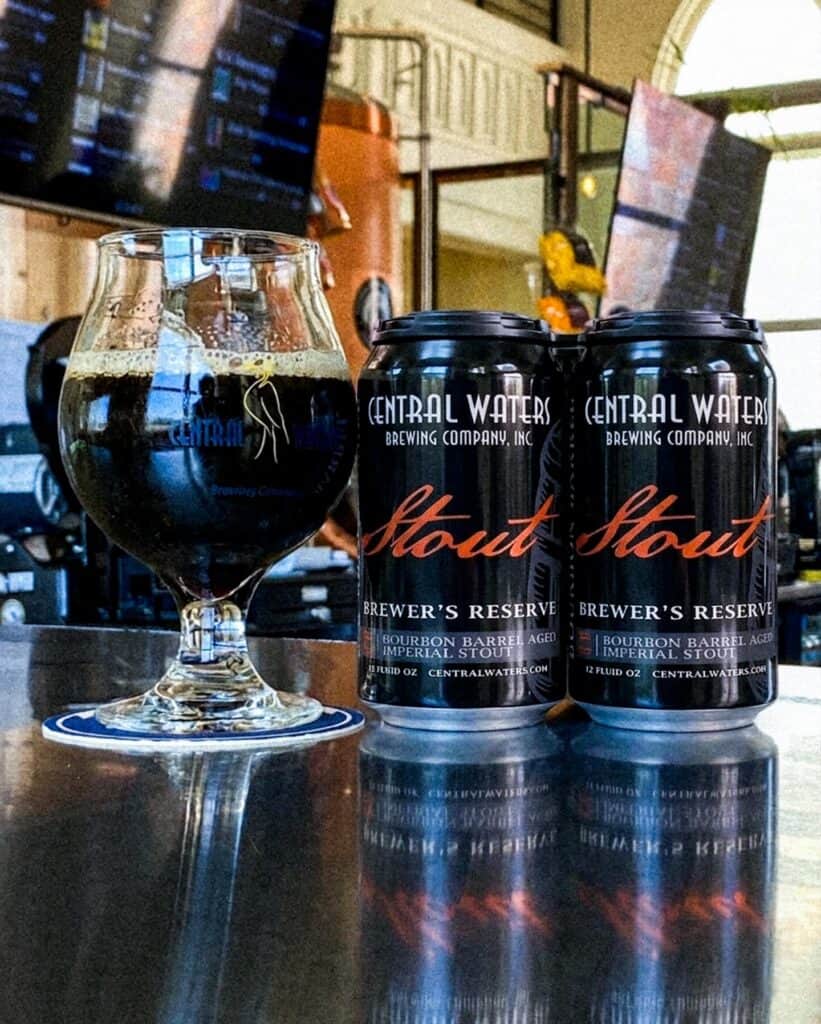
The process of brewing beer, something crucial to Wisconsin’s identity, uses quite a lot of resources. While the staff of Central Waters Brewing in Amherst loves brewing beer, they always want to balance that passion with a desire to go green, so they’ve found ways to use fewer resources, like water and energy.
One of the most prominent ways that Central Waters Brewing has done that is through installing solar arrays, a linked collection of multiple solar panels. One of those arrays, which is 1,000 feet, provides hot water to heat the brewery. The brewery is also thoughtful when sourcing its raw goods, making its packaging out of recycled cardboard, and sourcing ingredients as locally as possible, including all of Central Waters Brewing’s barley, which comes from Briess Malting Company in Chilton, Wisc.