Learn about the 13 most groundbreaking events for North Carolina’s labor unions over the years.
If you’re an N.C. local who reads headlines, you may have seen several articles that list us in their top rankings, such as “top states people are moving to,” or “top state for business.” There’s a dark side to the latter, though, as the Tar Heel State is consistently ranked as the worst state for workers’ rights. A scathing 2023 Oxfam America report called the state out for being ranked as the worst four years in a row, noting “no protections against sexual harassment,” minimal general workplace protections, and the state government not providing resources for workers hoping to unionize.
Just last September, the NC Justice Center posted that Oxfam once again ranked the state as the worst state for workers’ rights—a staggering seven-year title. The center’s Raising Wages NC Coalition works with Oxfam and Patriotic Millionaires to advocate for increased pay and stronger workplace protections. Axios points out that a state can be pro-business and pro-worker, such as Virginia, which CNBC ranked as fourth for business and Oxfam ranked as 23rd for workers’ rights.
NC Newsline also noted that N.C. ranked the lowest in quality of life and cost of living, with expenses surging, while the state’s $7.25 hourly minimum wage has stayed stagnant since 2009.
According to Cause IQ, there are currently 409 labor unions in N.C. working to improve worker protections and wages. Throughout the 150+ years of organizing in N.C., labor unions often championed equal rights across racial minorities and women while combating pro-corporate state-level political leaders and legislation.
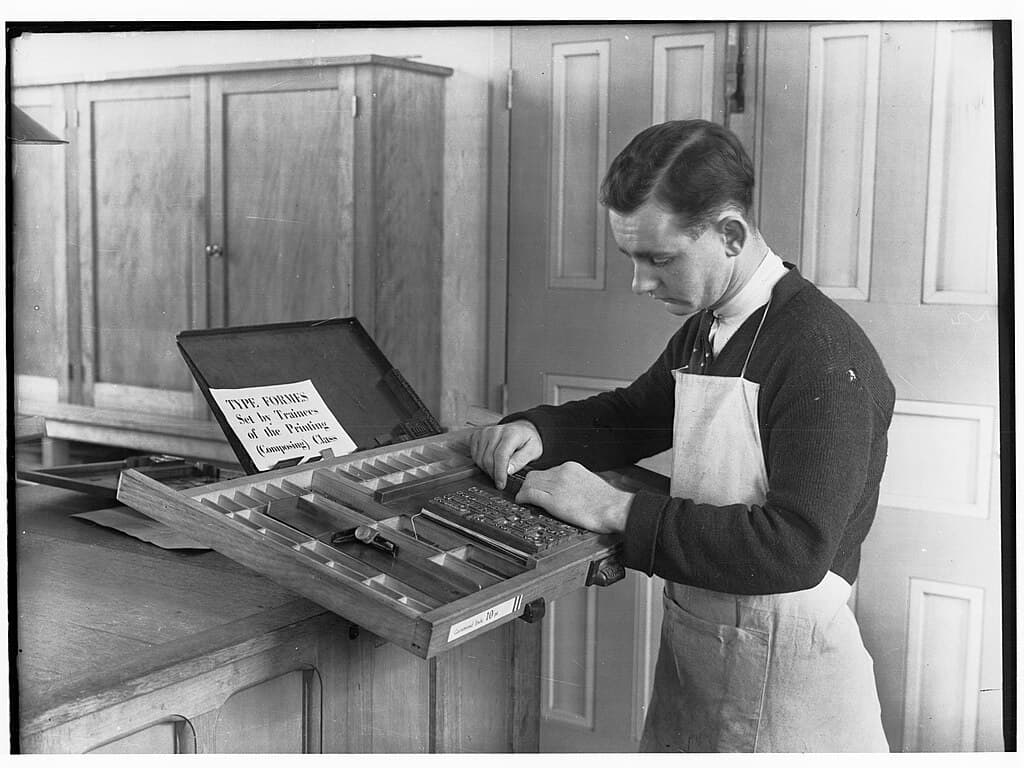
1. The Raleigh Typographical Union served as one of the first examples of labor organizing
According to Duke University Press, the earliest organized labor movements in antebellum N.C. happened in the larger metropolitan areas. The Raleigh Typographical Union, which represented the skilled laborers of the newspaper and periodical printing trade, is one of the earliest on record. Formed in 1854, the Raleigh Typographical Union joined the National Typographical Union as a member in 1860.
The International Typographical Union advocated for the eight-hour workday and was one of the first unions to admit women. The Raleigh chapter had goals of setting fair wage standards, promoting worker security/retainment, encouraging craftsmanship, and protecting the industry from “dishonorable competition.”
The union set a “price scale for labor” and imposed requirements for apprenticeship training programs before printers could be admitted into the union. Not only was the Raleigh Typographical Union one of the first examples of organized labor, but it was also successful, with printers in Raleigh, Charlotte, and Wilmington all joining by the mid-1880s.
This inspired other trades to start organizing as well, with the Carolina Watchman writing an article on the trend, titled “They All Organize.” From tailors to cigar makers, various craftsmen were advocating for increased wages and reduced hours. Labor organizers still faced many barriers in trying to execute widespread changes and promote union membership in the South due to the Reconstruction Era.
2. The Knights of Labor represented a racially integrated group of farmworkers during the Reconstruction Era
While the Raleigh Typographical Union was one of the first examples of a successful labor movement, the Noble Order of the Knights of Labor in N.C. was the first labor movement to happen on a statewide scale.
Originating in Philadelphia, a group of garment workers formed the Knights of Labor (KOL) in 1869, and it quickly grew into a national movement. KOL was a union that included most trades, except bankers, land speculators, lawyers, professional gamblers, and those working in the alcohol industry. The union even welcomed women and people of color, regardless of political views. People were grouped by location rather than by trade. KOL advocated for an eight-hour workday and even promoted equal pay for women.
John R. Ray, a Raleigh-based printer, first organized the N.C. KOL chapter in 1884, and the movement swiftly spread across the state, with the State Commissioner of Labor reporting that most of the counties had local assemblies by 1887. According to the N.C. Department of Natural and Cultural Resources, constituents of the Fourth District elected KOL leader John Nichols for Congress in 1886, and some members formed the KOL Cooperative Tobacco Company in downtown Raleigh.
From Asheville to Wilmington, membership continued to expand with a diverse coalition of Black people, white people, and women of all trades. At the time, Edgecombe County was the center of activity for the “Black Second” Congressional District — N.C.’s first district to be made up of a majority of Black residents. Second to Wake County, Edgecombe County held the most local KOL assemblies and had Black farm workers organizing since 1886.
This led to increased representation in the political sphere when, in 1888, KOL organizers backed congressional candidate Henry Cheatham, who went on to win and become the third Black congressman from the Second District.
Despite its rapid rise, the KOL movement declined by the early 1890s. The North Carolina Historical Association suggests that the union’s broad trade representation limited its ability to sustain a cohesive, formidable movement. Several KOL members and hundreds of farm workers also left the state after a failed cotton plantation strike.
While KOL’s was a short-lived movement, the union pushed for several notable advancements, such as the formation of the N.C. Bureau of Labor Statistics, ten-hour workdays, and banning children under 15 from working in dangerous professions. The 1895 General Assembly also passed legislation that increased voting accessibility for Black residents, generated additional funding for public education, and set a maximum interest rate on loans.
3. The early 20th century saw several setbacks for organized labor movements
The organized labor movement in N.C. remained fairly stagnant in the decades following KOL’s decline, according to The North Carolina Historical Review. The American Federation of Labor (AFL) still saw potential in the South. In 1899, the labor union sent organizers to Asheville, Charlotte, Raleigh, and Wilmington, in hopes of unionizing various skilled trades.
The organizers initially saw some success in bolstering the Asheville Typographical Union but faced significant pushback from textile mills in the Charlotte area. AFL was especially targeting the textile industry, in hopes of unionizing the workers. Eventually, the labor union established a local chapter in Charlotte.
The National Union of Textile Workers (NUTW), which was affiliated with the AFL, also began organizing in cities across N.C. and established local textile labor unions across the Charlotte Metro and Triad areas in 1901. The unions struggled to recruit members, though, and had only short strikes intermittently over the next two decades. It wasn’t until 1919 that N.C. saw a resurgence of successful strikes advocating for shorter eight-hour workdays at the same rate of pay.
However, this was during World War I when there was a shortage in labor and the success was short-lived when the country faced a sudden post-WWI economic depression from 1920–1921. The textile industry especially felt the downturn, with wages dropping 30–50% and shift hours being reduced to part-time. Tensions had been boiling, though, and on June 1, 1921, roughly 9,000 cotton mill workers went on strike.
The strike continued until the fall, with the National Guard activated and the governor involved at times. While at the time this marked the largest strike in N.C. history, it ultimately set back union workers. Wages remained stagnant, and many labor union members were blacklisted from employment.
The Textile Strikes of the 1920s-1930s fought hard to address low wages and long hours
From 1921, N.C. operated as an open-shop state where you were not required to join a union to work. Textile mills from the North had begun moving their plants to the South in hopes of taking advantage of the political and economic structures.
Mills conducted “stretch out” practices, which consisted of eliminating breaks, enforcing stricter disciplinary measures, and paying reduced rates. Many Southern mills also refused to hire Black people. In 1929, the tide started to turn when organizers attempted to unionize N.C. for the third time.
4. 1929 marked a deadly year for the textile labor union
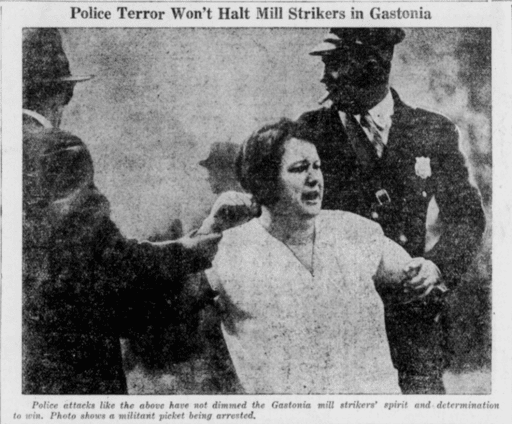
Loray Mill in Gastonia, N.C., was the largest factory at the time. Unhappy with the working conditions, the workers organized through the National Textile Workers Union (NTWU) and went on a general strike starting April 1, 1929. The union demanded a 40-hour workweek, a $20 weekly wage, equal pay for women, and union recognition.
On April 4, the governor, who was also a mill owner, activated the National Guard, and tensions flared. By June 7, mill owners were evicting workers from their housing and withholding their paychecks. Workers lived out of tents in the area.
Later that night, four police officers checked on the tent area. Strikers, who were in possession of guns, told them to show a warrant or leave, and a shooting ensued. The police chief died, while three deputies and one striker were shot.
Strikers claimed that they shot in self-defense and that another police officer had shot the bullet that killed the chief, while other reports claimed the strikers shot first. Police could not identify who killed the chief.
Riots and police brutality ensued in Gastonia. Ella May Wiggins, a mill worker and single mother of five, joined the union as its secretary. She often sang ballads that spoke of how hard a worker’s life can be from her perspective.
Wiggins was a part of a group of union workers heading to a mass rally in South Gastonia. Vigilante anti-union agitators started beating up union leaders and ransacking the office. NTWU called off the rally, but Wiggins and the group she was with didn’t hear about the cancellation.
Some of the agitators drove their cars, followed the truck the union workers were in, and crashed into the back of the truck. Then they started shooting the union workers and killed Wiggins. Labor leaders were blacklisted and even forced to look for jobs out of state.
NTWU lost support and was largely blamed for the violence, mainly due to the Communist Party’s support of the union.
Mill workers in Marion, a town in western N.C., went on strike starting July 11, 1929, without union backing. The workers faced violence and intimidation from the National Guard, which ended the strike on September 11. They were unable to negotiate higher pay and had to go back to 55-hour workweeks.
The mill refused to rehire more than 100 striking workers, which led to a second strike on Oct. 2. Police were called to the protest and opened fire on the crowd. Overall, six strikers were killed, and 15 were injured.
This day marked one of the deadliest examples of union-busting in the South. While the police claimed the strikers were armed, they didn’t find guns at the scene. In fact, major news outlets reported that the strikers were “shot in the back.”
Hospitals wouldn’t treat the injured strikers, and churches denied administering funerals for the deceased. Their efforts wouldn’t go in vain, though, as they set the stage for an unprecedented multi-state organized labor movement.
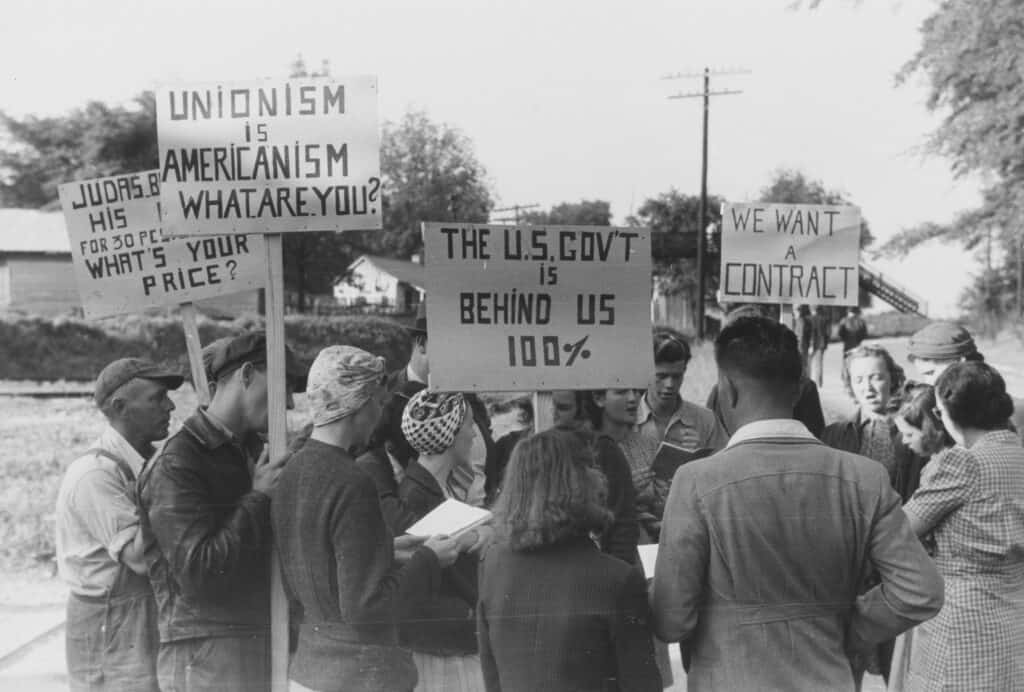
5. North Carolinians mobilized to improve working conditions across the country during the 1934 General Textile Strike
With 400,000 workers striking at textile mills across the South and the East Coast, the 1934 General Textile Strike is considered one of the largest labor strikes in U.S. history. While several localized strikes occurred starting in 1929, it wasn’t until 1934 that thousands of textile workers across various states coordinated a mass labor movement.
Starting in September of that year, around 65,000 North Carolinians participated in a series of work stoppages. Mill owners, especially in the South, responded with physical violence and intimidation.
After seeing the strike, President Franklin D. Roosevelt created the National Labor Relations Board (NLRB) to champion workers’ rights and signed the National Labor Relations Act (NLRA) that protected practices such as collective bargaining and striking. Southern textile workers fought against the deadliest odds during the 1934 General Strike, which led to workers across the country benefiting from NLRA protections. More than a decade later, state legislation would unravel some of those protections in N.C.
The mid-century saw its share of ups and downs for labor rights (40s–70s)
6. The R.J. Reynolds Tobacco Strike challenged the old guard of the Jim Crow Era
Three elite families controlled the social and economic hierarchy of 1940s Winston-Salem, often enforcing race and class-based discrimination. Workers at R.J. Reynolds Tobacco Company threatened this status quo when they started organizing in 1941 and walked out of the factory for a sit-down strike in 1943. They successfully voted to unionize as Local 22 of the Food, Tobacco, Agriculture, and Allied Workers, which at the time was “one of the largest multiracial unions” in the U.S.
The labor union came to an agreement with R.J. Reynolds to recognize federal holidays, give promotions based on tenure, and provide bathroom breaks. The union also promoted women in leadership positions and promoted voter registration campaigns to boost turnout among Black residents. Threatened by the progressive reform, the Winston-Salem elite provoked white supremacy and painted unions as communist.
Union leaders were arrested and sentenced to hard labor, effectively killing Local 22 years later. The threat of integrated labor unions still loomed, triggering several anti-union state legislations.
7. Efforts to unionize the South ended in mixed results and led to the 1947 Right-to-Work Law
After World War II, labor unions saw a resurgence in the country, with a third of workers joining. The South, however, told a different story, with fewer than 10% of workers unionized.
In May 1946, the Congress of Industrial Organizations (CIO) promoted Operation Dixie, a multimillion-dollar project backed by over 400 organizers to unionize Southern workers. Operation Dixie soon struggled with what many past labor movements faced: pushback from anti-labor “Dixiecratic” politicians, intimidation by big businesses, and racism. In Black Mountain, N.C., The Grove Stone and Sand Company fired all its second-shift employees after they attempted to organize.
However, Operation Dixie did result in a significant win—the first successful NLRB election for the Food, Tobacco, Agricultural & Allied Workers of America (FTA-CIO) in eastern North Carolina. FTA-CIO organized almost 10,000 tobacco workers at 30+ leaf houses, a group of mostly Black women, into labor unions. The union contracts increased wages and bolstered working conditions, and the union workers also conducted voter registration drives at Black churches, which ultimately helped elect politicians that would challenge the Jim Crow era’s discriminatory legislation.
Rather than strikes that went on for days, the workers utilized “short work stoppages,” in which everyone would stop working for 10–15 minutes. Companies incurred financial losses even in such short periods because the tobacco in the drying kilns would char. The strategy helped secure severance pay, guaranteed overtime pay, longer lunch breaks, and a dining room.
Labor unions faced one of their most significant challenges when the N.C. government passed the Right-to-Work Law in 1947, which banned closed shops and consequently limited the power unions had in practices such as collective bargaining. According to the Law Offices of James Scott Farrin, there were only 385 active labor unions in N.C. in 2023, compared to 2,900 in Illinois—a state without right-to-work laws.
8. N.C. woman’s real-life story inspired a movie that gave momentum to the labor movement
If you’ve seen the movie “Norma Rae,” you may remember the iconic scene where actress Sally Field inspires solidarity among fellow textile factory workers. However, you may not have known that the movie was based on the real-life events of Roanoke Rapids textile worker Crystal Lee Sutton.
Since 1963, TWUA had been trying to organize 34,000 workers employed across the 80 J.P. Stevens-owned mills. J.P. Stevens was the second-largest textile manufacturer at the time. In 1972, Sutton, who was working for J.P. Stevens, joined the union and publicly advocated for it by wearing a pin.
Her bosses took notice and targeted her with frequent disciplinary meetings over minor issues such as longer bathroom breaks. She would take a notebook into her meetings with the words “What the Company Will Do for You” on the cover, and write down all of her boss’s complaints, which surprised the management. Tensions came to a head in 1973 when Sutton noticed an anti-union notice with racist rhetoric on the company bulletin board that claimed “unions would be run by Black people.”
Sutton jotted down notes on the notice, hoping to expose the management—despite warnings against doing so—and hid the note in her bra so no one could take it. Management fired her on the spot, and while she was collecting items from her desk, she asked one of her colleagues for a marker and quickly wrote “UNION” on a poster. She stood up on a nearby table and showed the poster to all of her co-workers.
Immediately, the employees shut down the machines in solidarity, and Sutton was arrested by the police. In 1974, employees at seven textile plants in Roanoke Rapids, including J.P Stevens, voted to unionize.
The National Labor Relations Board was able to get Sutton her job back at J.P. Stevens in 1977, along with $13,000 in back pay. Sutton had already moved from the area, but in a symbolic move, joined and quit after two days. She went on to work other jobs, including a union organizer role at the Amalgamated Clothing and Textile Workers Union (ACTWU, after the merger between TWUA and Amalgamated Clothing Workers).
One brave woman’s actions not only helped the 3,000 textile workers, but she also paved the way for future victories in the industry.
Even after the union won the 1974 election, however, J.P. Stevens had refused to increase wages. This inspired the nationwide “Don’t Sleep with Stevens” boycott campaign in 1977, which referenced the bedsheets J.P. Stevens was known for. Because of mounting national pressure, J.P. Stevens finally agreed to pay $3,000,000 to the Roanoke Rapids employees in 1980.
During the 1980s Reagan era, labor unions were at a standstill due to the staunchly pro-business laws of the time. It wasn’t until 1999 that textile unions made major history again in N.C. In what then AFL-CIO president John J. Sweeney called the “largest union victory” to happen in the Southern textile history,” workers at six Fieldcrest Cannon Mills voted to unionize under the Union of Needletrades Industrial and Textile Workers.
Inspired by Sutton, the labor union finally won the right to represent 5,000 workers after a 25-year struggle and four failed elections.
Present-Day labor movements illustrate the enduring struggle for workers’ rights awareness in N.C.
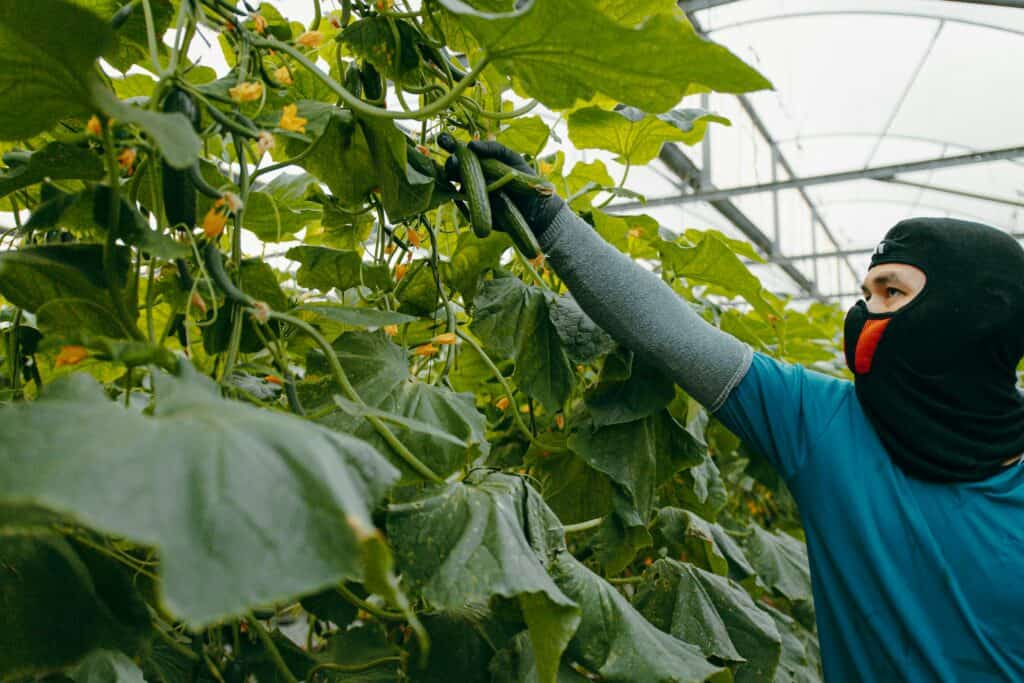
9. Mt. Olive Pickle workers staged a powerful boycott to protect migrant workers
Since the mid-90s,the Farm Labor Organizing Committee (FLOC) had been looking into the N.C. cucumber industry’s working conditions. Migrant farmworkers weren’t covered under the New Deal-era federal protections that other laborers had, such as a minimum wage and overtime pay, due to exemptions. Excessive hours also led to dangerous working conditions.
One migrant worker from Mexico, Raymundo Hernandez, died within his first week picking cucumbers because of the high levels of pesticide exposure. Mt. Olive Pickle Company bought these cucumbers from the farms for their pickles, but argued that they weren’t responsible for the poor working conditions because they didn’t employ the farmworkers. So when FLOC drafted a three-party agreement in 1997 between “Mt. Olive, the North Carolina Growers’ Association, and the union,” Mt. Olive refused to sign on to the terms.
In 1999, FLOC called for a boycott of Mt. Olive pickles, which garnered national attention. Even several grocery stores stopped carrying Mt. Olive products. In September 2004, Mt. Olive signed onto the contract, which set a grievance procedure, higher wages, and enabled their H-2A migrant workers to join FLOC. Mexican labor organizers now also provide oversight to ensure the contract isn’t breached.
10. United Food and Commercial Workers Union succeeded in unionizing N.C. workers of the largest hog slaughterhouse
N.C. labor unions are no strangers to intimidation tactics, and Smithfield Foods’ union-busting was one of the most egregious examples in recent times. According to a 2005 report commissioned by the Human Rights Watch, Smithfield Foods, the country’s largest hog slaughterhouse, created a “climate of fear,” in which the company physically assaulted any employees they thought were United Food and Commercial Workers Union organizers. In one case, the company coerced its employees to vote against unionizing and forced a worker to “stamp the words ‘Vote No’ on dead hogs.”
Workers also faced sexual harassment, immigration raids, and no compensation for occupational hazards. In 2008, workers at the Smithfield Foods plant in Tar Heel, N.C., voted to unionize after 16 years of organizing. Two years prior to this, a federal judge ruled against Smithfield Foods for firing employees it suspected of being union organizers and ordered it to pay “$1.1 million in back pay plus interest.”
The labor union especially credited the solidarity between Latino and Black employees as being instrumental to their success.
11. Faculty Forward secured the first union contract for instructors of a large Southern private university
In a one-of-a-kind deal, non-tenure track instructors at Duke University negotiated a three-year union contract in 2017. The contract represented 275 faculty members and made history as the first such deal for instructors at a large Southern private university. Biology instructor Christopher Shreve told WRAL that he was earning less than the starting salary of a Durham Public Schools teacher after working for 14 years.
Some other instructors even qualified for food stamps. The new terms included “multi-year teaching appointments and pay increases as high as 46% for the lowest-paid faculty over three years.” Other stipulations included guaranteeing faculty the same benefits as the broader Duke workforce, wage protections in the event of course cancellations, and funding for professional development opportunities.
Service Employees International Union (SEIU) supported the labor movement through its Faculty Forward campaign. Currently, the Duke Faculty Union comprises 200+ “non-tenure track Duke faculty members in the College of Arts and Sciences.” The labor union is a part of the SEIU Southern Region Local 26.
12. N.C. International Brotherhood of Electrical Workers prepared staff with immigrant defense training against ICE raids
Last September, Jody Anderson, an electrical worker with IBEW Local 553, collaborated with Siembra NC to organize immigrant defense training. The training would inform staff on how to properly identify Immigration and Customs Enforcement agents and teach workplaces ways to uphold the Fourth Amendment, such as designating “employee only” areas, asking for warrants, and documenting any interactions with agents.
Anderson and Siembra NC are planning their next sessions: “a train the trainer” lesson to prepare other local unions and a Fourth Amendment seminar that will provide tips for construction sites. IBEW Local 553 also approved a resolution to “condemn any statements made on our behalf that condemn, attack, or call for violence against immigrant workers.”
13. The United Automobile Workers of N.C. leads the way for organized labor movements in the state
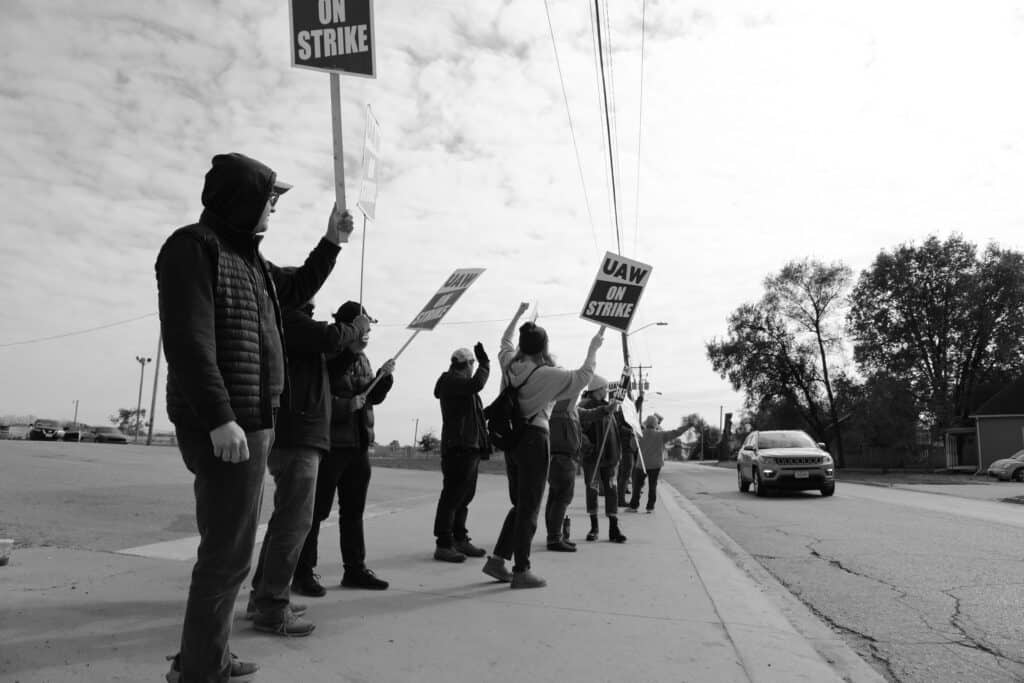
Members of the United Automobile Workers (UAW) working at the “Big 3” automakers (Ford, General Motors, and Stellantis) walked out, starting a historic strike in 2023. UAW changed its strategy, which threw off the corporate automakers and proved successful. Instead of promoting every worker to strike, the labor union strategically chose to have workers from the most profitable plants strike and kept adding plants until the automakers could agree to the new terms.
This included a 25% wage increase to occur over four-and-a-half years, an immediate 11% increase to all wages, raising the top wage ceiling, and raising the minimum pay for permanent employees by $10/hr. Following the success of this strike, UAW workers at Daimler Truck North America warned the truck company that they would strike once their contracts expired, if negotiations weren’t successful. The workers argued that “record profits mean record contracts,” referencing the auto industry’s soaring profits.
Most of the union workers were employed at N.C.-based plants and were joined by workers from Atlanta and Memphis. Averting the strike at the last minute, Daimler Truck agreed to the terms right before their contracts were set to expire. These terms included pay increases “of at least 25% over four years, as well as cost of living allowances and profit sharing.”
According to the Economic Policy Institute, autoworkers in the South are often paid less than their colleagues in other parts of the U.S. (even after factoring in the cost of living), face higher risks of occupational hazards, and are subject to union-busting from local/state politicians. Experts predict that autoworkers in the South will continue to unionize in favor of better working conditions.
This also appears to just be the start for mass labor organizing in N.C., as the North Carolina AFL-CIO ratified a resolution to support UAW’s call for a mass general strike on May 1, 2028. N.C. members of UAW, Electrical Workers, NewsGuild, and Teamsters submitted the resolution. N.C. has the “lowest union density” among all states, with fewer than 2.5% of the 4.6 million workers being members.
What the state may lack in numbers, it makes up for in momentum. Time will tell if history repeats itself and whether “they all organize” in May 2028.