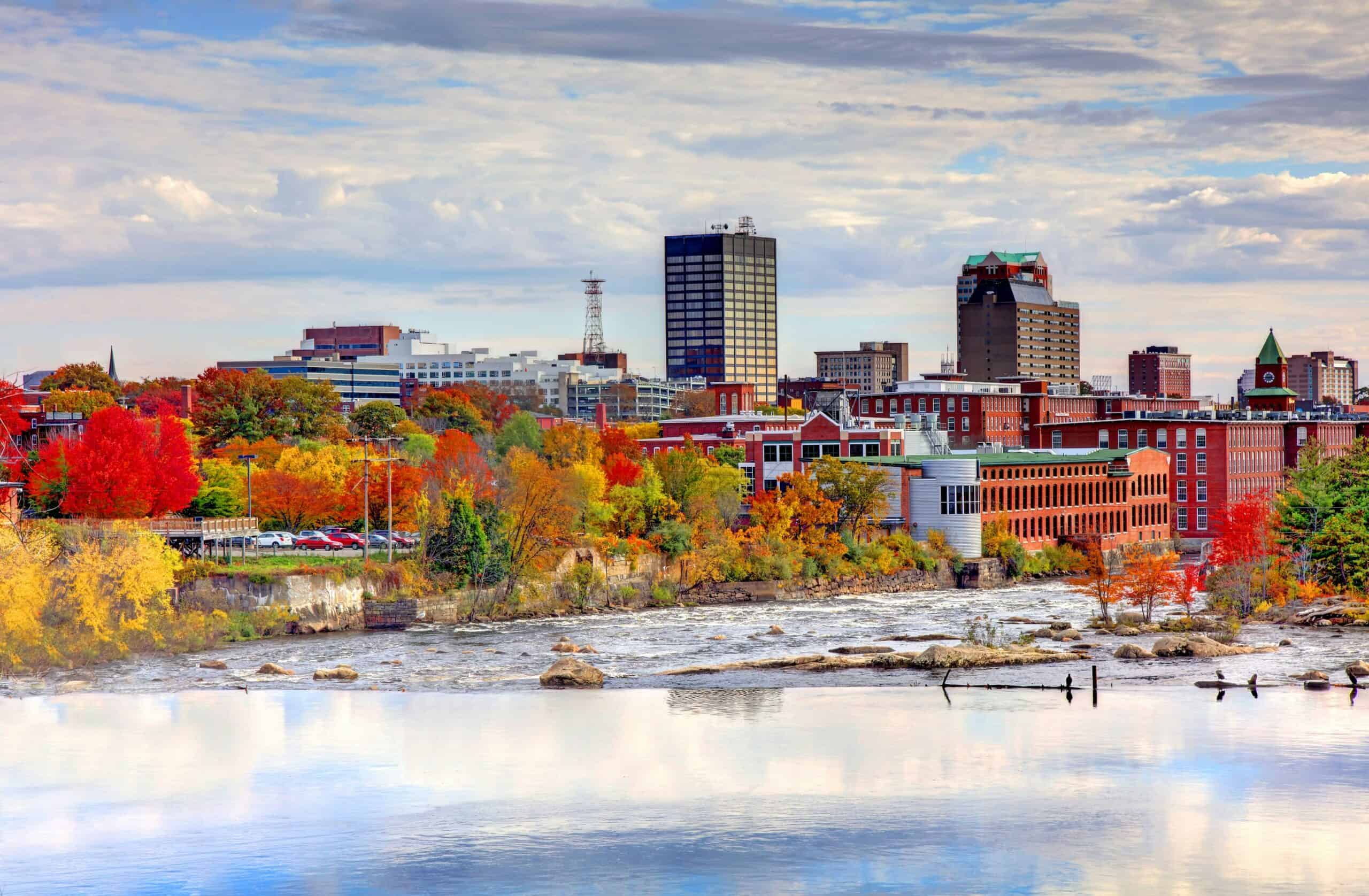
We love New Hampshire’s iconic foliage, but our passion doesn’t stop at colorful trees. We have our personal signs of fall too. Here are five of them.
It looks like it’s going to be a big year for foliage fanatics heading to New Hampshire. The Department of Business and Economic Affairs predicts 4 million leaf peepers will visit the state—that’s up 3% from last year. We welcome those visitors who bring enthusiasm and a predicted $2 billion in revenue. Our maples, birches, ash and oaks put on a technicolor leafapalooza. We love it too. But we don’t all hit the busy roads to get our fill. Some of us enjoy the small flashes of color and texture in our backyards, vacant lots, stone walls, and seaside walks that mark fall for us. We’ll let you in on those quiet, contemplative moments that those who live here enjoy in our quiet way.
Goldenrod and Aster
While some people think of them as weeds, these are native wildflowers that bloom together in the fall in New Hampshire. They present as soft clouds of periwinkle blue and saffron yellow. The asters, which look like little stars (aster is Latin for star), are a surprise shade of bluish purple in an autumn world of red, orange, and yellow. They shine bright next to their botanical pal – goldenrod, clusters of yellow flowers that grow on tall stalks in New Hampshire’s fields, roadsides, the edge of woods, and wetlands, along with asters.
These colorful wildflowers are such a sure sign of autumn for us New Hampshire folk; New England schoolchildren once recited a poem glorifying their growth each fall.
Goldenrod and asters, / All your hands can hold, / September wears a party dress / of lavender and gold.
And while these plants mark fall for us, they’re also a smorgasbord for native insects who pollinate this time of year and a winter hideaway for birds and bugs, according to the Wild Seed Project.
Milkweed
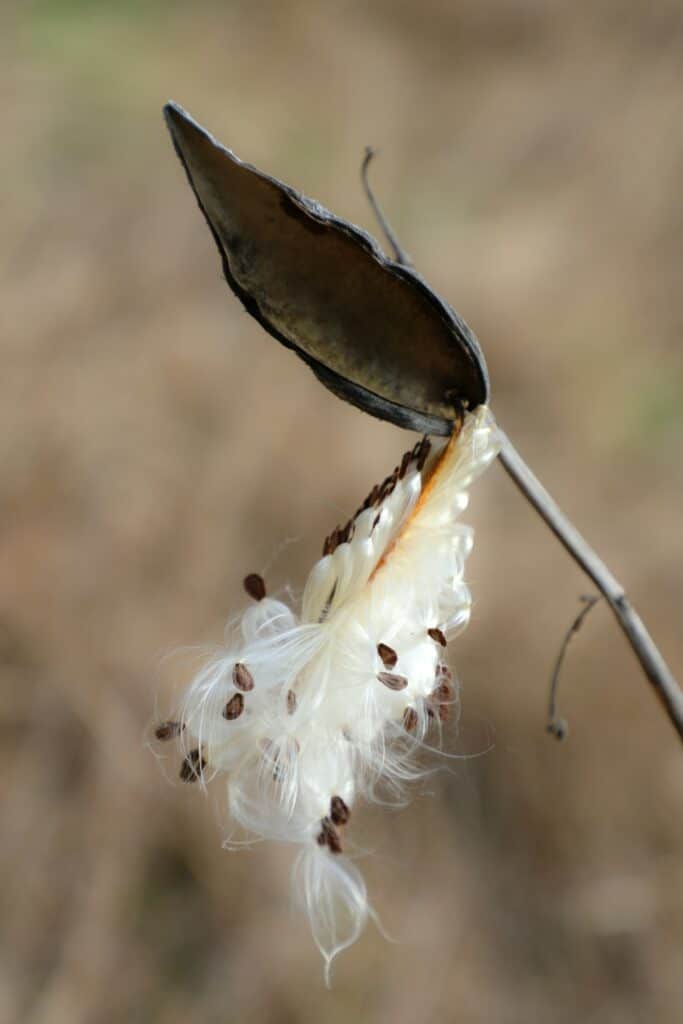
Ok, they aren’t particularly colorful, but for us, the fluffy, silky milkweed at the end of its life is a beautiful sign of autumn and a promise of next year’s purple spring flowers, which play a seminal role in the awesome metamorphosis of monarch butterflies. Monarchs lay their small eggs on the underside of milkweed leaves in the spring. When those eggs hatch, the caterpillars stay put and eat the leaves as they morph into stunning orange-and-black butterflies that eventually migrate to Mexico and California.
Milkweed grows in New Hampshire’s fields, empty lots, roadsides, rail sides, and, for butterfly lovers, planted in home gardens. Under the heat of the fall sun, the horn-shaped pods crack and emit ephemeral winged seeds that will become next year’s purple flowers, and the cycle of flora and fauna begins again. Indigenous people once used the fluff of the autumn pods for diapers, and during World War II children collected it as filling for life preservers.
Wild Beach Roses (Rosa Rugosa)
While we know fall in New England is an eye-candy feast of colorful foliage, Granite State folk also love its scent. The ashy aroma of woodstoves staving off morning chill, the woodsy scent of decaying leaves, and the sweet perfume of rugged and late-blooming pink and white beach roses along the New Hampshire coast, warming under an autumn sun.
By autumn, many of the roses have morphed into chubby, vermilion-and-turmeric-colored rose hips, but some incredibly fragrant flowers still hang on while leaves turn orange and light up the edge of the sea.
As we add the sense of smell to our autumn sensory experience, wild rose hips also add taste to the buffet, as some residents harvest them and turn them into rosehip jelly, tea, and syrup.
You can find luscious clusters of wild beach roses at Hampton and Rye beaches, Odiorne State Park, Seabrook dunes, and the occasional seacoast parking lot.
And while they’re everywhere along our seacoast, beach roses are not native to North America and can crowd out certain native plants, especially on dunes.
Lily Pads
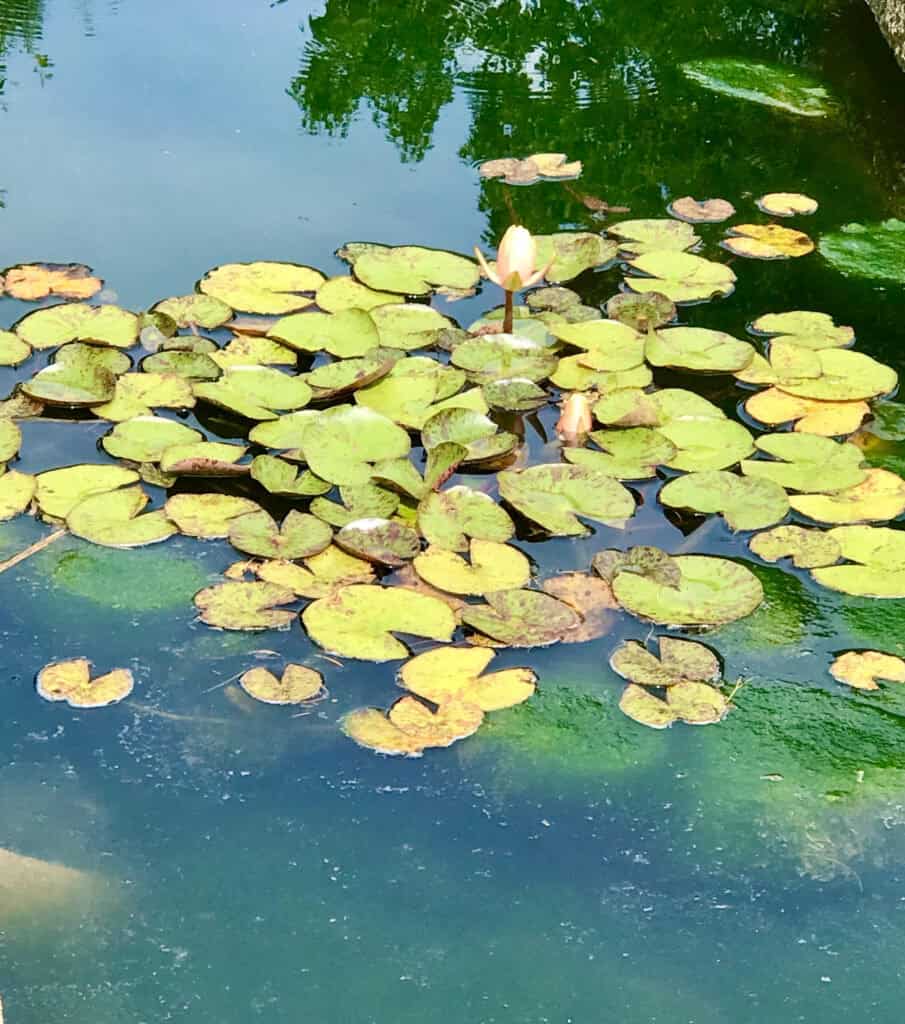
We know: It’s not the typical idea of fall foliage, but for some of us in New Hampshire, the changing nature of lily pads is worthy of a Monet painting. Our floating native plants, like Granite Staters themselves, are sturdy, buoyant, and colorful. Their large leaves skim the tops of rivers and pond edges throughout the state, creating floating islands of green leaves and blazing blossoms.
In the fall, lily pads have stopped producing their eye-popping pink flowers. Their bright-green, leathery leaves have gone eggplant and scarlet, creating their own floating foliage moment. Indigenous people in this region used the plant’s rhizomes and roots for medicine and food, according to NativeTech.org. We enjoy them as our own fall art gallery.
Bittersweet
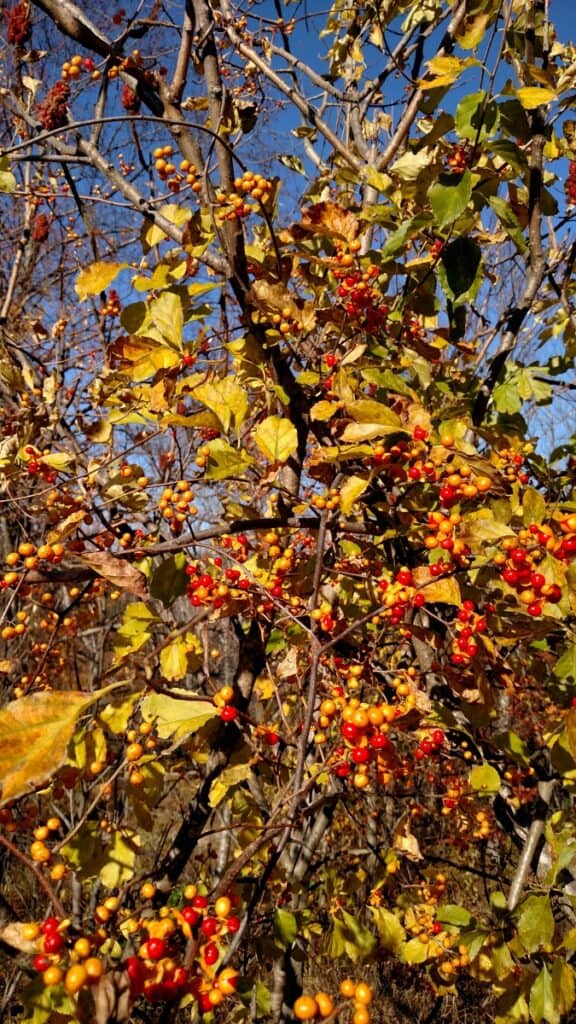
Oh, the seduction of bittersweet in the fall. When the blaze of autumn foliage has faded to tans and golds, the bittersweet, with its scarlet berries and turmeric-colored leaves, provides the last flash of color before snow covers the landscape. Perhaps that’s why so many New Englanders head out on hikes to harvest and hang the vine on mantlepieces, door fronts, and Thanksgiving tables in the fall.
But all bittersweet is not alike. There’s the native American variety, which pleases not only the eye but also the palate of local rabbits, squirrels, and quail. Hence the sweet. The bitterness comes more from the Asian variety, which isn’t native and is, in fact, an invasive species brought to the United States in 1860 as an ornamental plant that turned out to be an aggressive, hungry invader, choking out small trees and ground-level plants. It’s not easy to tell the difference between the two species; they both have woody vines and the iconic berries, but just in case, when you throw away those fall bittersweet wreaths and table runners, don’t chuck them into the woods. If they’re the invasive variety, they’ll likely take the opportunity to spread and grow.
American bittersweet grows along streams, rivers, lakeside, rocky slopes, and woodlands in New Hampshire. According to the UNH Extension, invasive Asian bittersweet can be found on roadsides, in grass, and in woodlands.