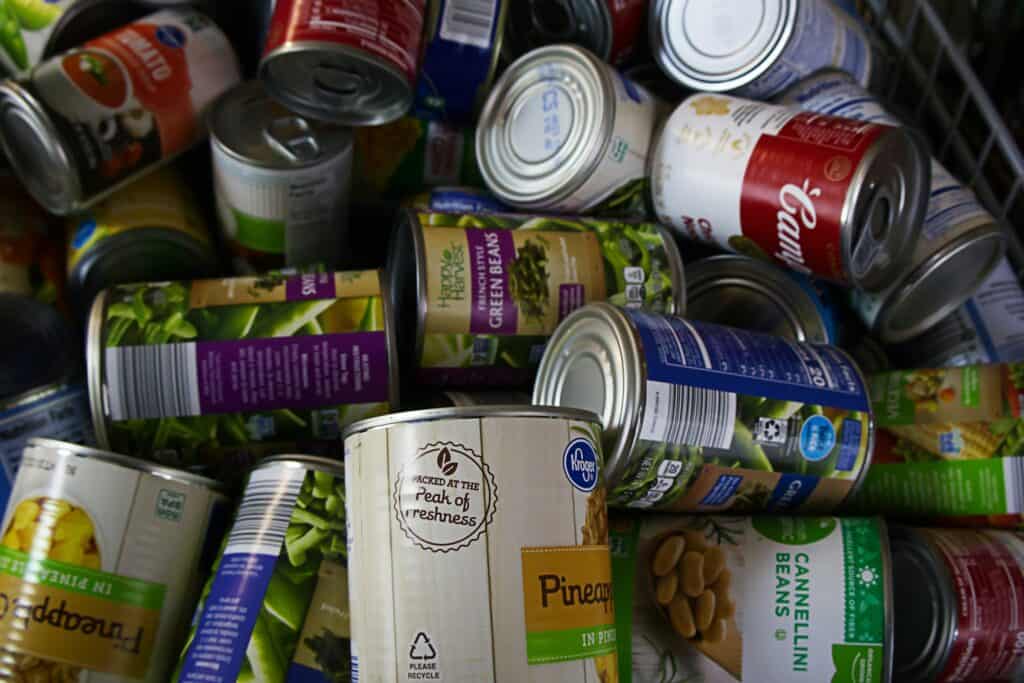
Show love to others in your community this season by donating food, time, or money to one of these New Hampshire food pantries.
Food insecurity is a pressing issue in New Hampshire; in fact, it affects 1 in 9 individuals in the state, according to data from the New Hampshire Food Bank. As the cost of living rises, many families are struggling to keep up and are turning to the community for help.
There are numerous hunger relief organizations working all year round in New Hampshire to support our neighbors in need—and they could use some help! Make a local impact this holiday season by donating your time, money, and/or food to these organizations.
New Hampshire food pantries
1. New Hampshire Food Bank in multiple locations
The New Hampshire Food Bank has been working to feed people in the state who are food-insecure since 1984. It operates in all 10 state counties, and is partnered with almost 400 other agencies, including homeless shelters, soup kitchens, senior centers, and more.
If you’re a local farmer, consider participating in the NH Feeding NH program, which promotes the purchase of locally grown food to assist Granite Staters struggling with food insecurity, and also reduces food waste. Interested in joining? Sign up here.
Individuals wanting to give financially this holiday season can make a donation here. You can also host a food drive in your neighborhood, office, school, or online! Fill out this request form for more information on how to be a food drive host.
2. Monadnock Food Pantries Collective in Keene
The Monadnock Food Pantries Collective is a collaboration among almost 23 towns to bring access to quality food items to food-insecure families in the Monadnock Region. In 2024, the collective served almost 700,000 meal equivalents to the community.
To donate to the collective, visit this link or mail a check to Monadnock United Way, 23 Center Street, Keene, NH 03431.
For donors age 70 or older, consider the Individual Retirement Account (IRA) charitable rollover option. This allows you to donate money without the withdrawals being taxed. You can also donate in the form of stocks. Find more information on different ways to donate here.
The best way to donate is by giving away your time! There are several opportunities—from financing, campaigning, gardening, crafts, to running operations—to volunteer as an individual or a group. Complete this form to sign up.
3. Families in Transition in Manchester
Families in Transition assists low-income families with housing, food services, emergency shelter, and substance use treatment. The organization runs a food pantry, which offers a dignified grocery shopping experience to low-income Granite Staters.
Volunteers are a vital part of this organization, and can help with sorting through donations, stocking shelves, and helping check out grocery shoppers. You will have to complete a background check before volunteering. Make a difference, sign up to volunteer today.
Items that are in high demand at this organization include milk, coffee, baby formula, grains (rice, pasta, cereal), canned food (tuna, beans, soups), and healthy packaged snacks. There is also a need for hygiene items, and household stuff such as cleaning supplies and new linens. Get more information on what you could donate here.
The drop-off location is 176 Lake Avenue in Manchester, and donation hours are Monday through Friday, 9 a.m. to 3 p.m.
4. Nashua Soup Kitchen and Shelter in Nashua
This Nashua-based organization ensures that food remains accessible to local residents in a sustainable and dignified way. It has a pantry stocked with perishable and non-perishable items, including personal hygiene products and home care items.
Located at 2 Quincy Street, the organization serves hot breakfast and dinner on weekdays and is open on Saturday, Sunday, and holidays from noon to 2 p.m. It also hosts several community-based fundraising events, such as dinner auction galas and “run and walk” for food and shelter. To participate, read more here.
To donate money, visit this link. To buy items from the organization’s Amazon wishlist, visit this link. Like any other organization, volunteers are at the heart of this organization. Click here to sign up for a shift.
5. Salvation Army Food Pantry in multiple locations
The Salvation Army runs food pantries across the U.S., including in New Hampshire towns such as Laconia, Nashua, Manchester, Portsmouth, Rochester, Concord, and Berlin. Enter your ZIP code here, and find the nearest Salvation Army pantry to you.
The organization runs neighborhood and mobile pantries, provides food parcels and fresh produce boxes, and even helps people apply for SNAP.
Items that are in high demand at this organization include: peanut butter, jelly, pasta, rice, breakfast cereal, canned fruit, vegetables, soup, and diapers.
Donate money through the Salvation Army website here. You can also donate gift cards to local gas stations. Contact your local pantry to learn more about how to get involved in your locale. You can sign up to become a volunteer here.
6. Lydia’s House of Hope in Rollinsford
The Seeds of Faith pantry started in 2007 to help people in the area who struggled with homelessness and food insecurity. Although it began in Somersworth, the food pantry has since moved to its new location in Rollinsford.
The food pantry includes programs such as monthly food boxes, emergency food boxes, birthday bags, Thanksgiving baskets, and Christmas baskets.
You can send monetary donations via this link or by dropping by at the food pantry located at 1 Front Street, Suite #160, in Rollinsford. To donate items, click on this food list that includes non-perishable items such as ketchup, granola, canned vegetables, tomato sauce, honey, butter, and sugar.
Volunteers are encouraged to donate their time to the organization, and are at the heart of everything that Lydia’s House does! To volunteer, request more information at adminassistant@seedsoffaith.org.
What items should I bring to a food pantry?
It is advisable to bring non-perishable items to food pantries, since “shelf-stable” food could go a long way. Avoid bringing open food items, items with packaging concerns, and glass containers, as they are more likely to break.
Here are the top items to bring: peanut butter, canned proteins (such as chicken or tuna), canned beans, pasta sauce, canned vegetables, cooking oil, spices (salt, pepper, oregano, basil, garlic powder, onion powder), and baby food or formula. However, it’s always a good idea to consult your local food pantry to see what items they need.