Pennsylvania historic sites, small towns, and distilleries trace a rebellion that was about much more than whiskey.
Historic homes, museums, and modern distilleries across Western Pennsylvania are connected by the Whiskey Rebellion, an uprising that challenged federal authority in the 1790s and left its mark on the country. Though the official Whiskey Rebellion Trail stretches across state lines from Pennsylvania to Maryland to Washington, D.C., the rebellion was firmly rooted in the western counties of Pennsylvania—and that’s where we’ll focus.
While whiskey is involved—particularly the rye whiskey of Western Pennsylvania, which can be sampled at different distilleries—the heritage sites are also about the people who organized, resisted, and ultimately collided with the power of the new federal government.
We’ll outline seven places, from historic sites to modern tasting rooms, where you can engage with whiskey heritage and why the Whiskey Rebellion still matters today.
Why should I care about the Whiskey Rebellion?
If you remember learning about the Whiskey Rebellion in history class, you might recall the topic being presented with a sort of wink, framed as amusing because people were angry about their alcohol being taxed. Your teacher may have also mentioned that Alexander Hamilton was there before moving on.
But there’s much more to the story, particularly about how federal power reshaped life in Appalachia, and whose economic interests that power served.
How it started
The Whiskey Rebellion unfolded across Western Pennsylvania in the early 1790s, after the federal government imposed an excise tax on distilled spirits meant to help pay off the state debts the government had assumed following the American Revolution.
On the western frontier that was Western Pennsylvania at the time, whiskey was not a luxury good but an essential part of the rural economy. Farmers—who made up the vast majority of the population—grew grains such as rye, which was bulky and perishable, but by distilling it into whiskey, the crop became shelf-stable and easy to transport across the mountains. Whiskey could serve as currency in a cash-poor region that largely operated as a barter economy.

It was about more than whiskey
In this way, the federal excise tax on whiskey was not simply a “sin tax,” but a form of economic policy that forced frontier farmers into the cash economy. Many of these farmers had just spent years fighting for freedom in the Revolutionary War, and they saw the tax not only as a betrayal but as an existential threat to their livelihoods. Large eastern producers could pay the tax with ease, but small frontier distillers often had no cash on hand at all.
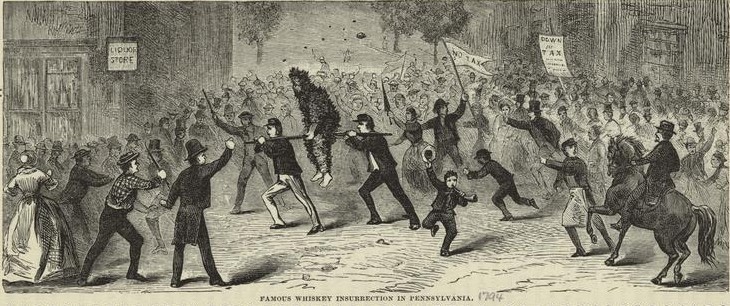
Dissenters met secretly, refused to pay the tax, and tarred and feathered tax collectors who dared try to collect.
The rebellion’s relevance
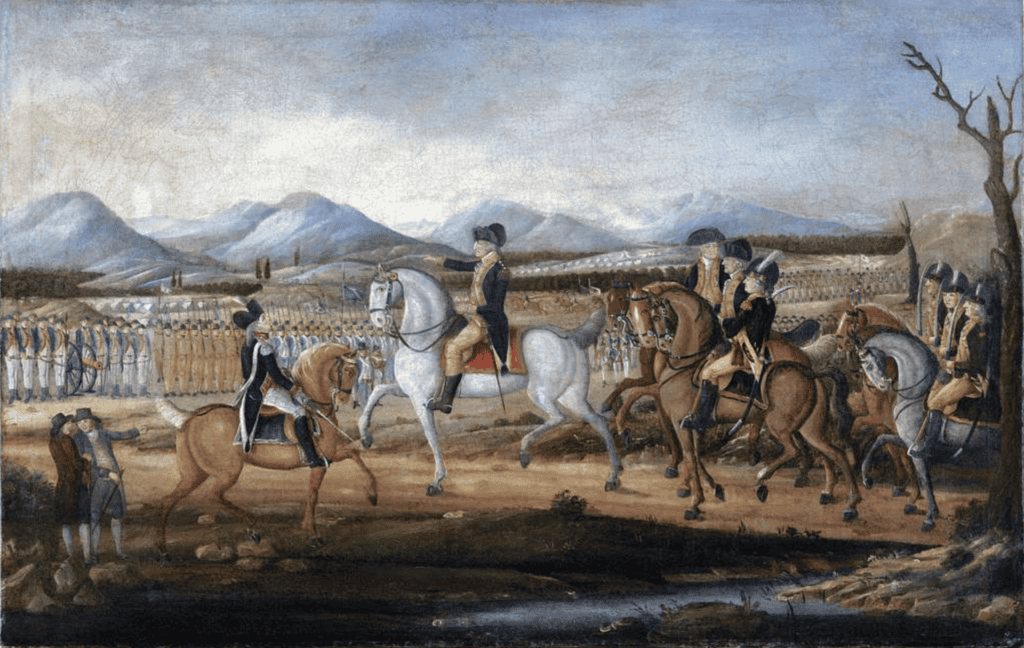
Today, the Whiskey Rebellion is sometimes brought up in the context of modern tax debates, and it did help establish the federal government’s power to levy taxes—the rebellion ended when President George Washington himself led troops to Western Pennsylvania to quell the unrest.
But it’s more helpful to think of the Whiskey Rebellion less as blanket opposition to taxation, and more as resistance to an economic system that disproportionately burdened poorer, more isolated communities.
Experience the Whiskey Rebellion in Western Pennsylvania
If you want to dive deep into the history of Western Pennsylvania whiskey and the Whiskey Rebellion—and sample a glass of that distinctive Monongahela rye—then take a trip to these seven stops across Western Pennsylvania.
The Bradford House – Washington (Washington County)
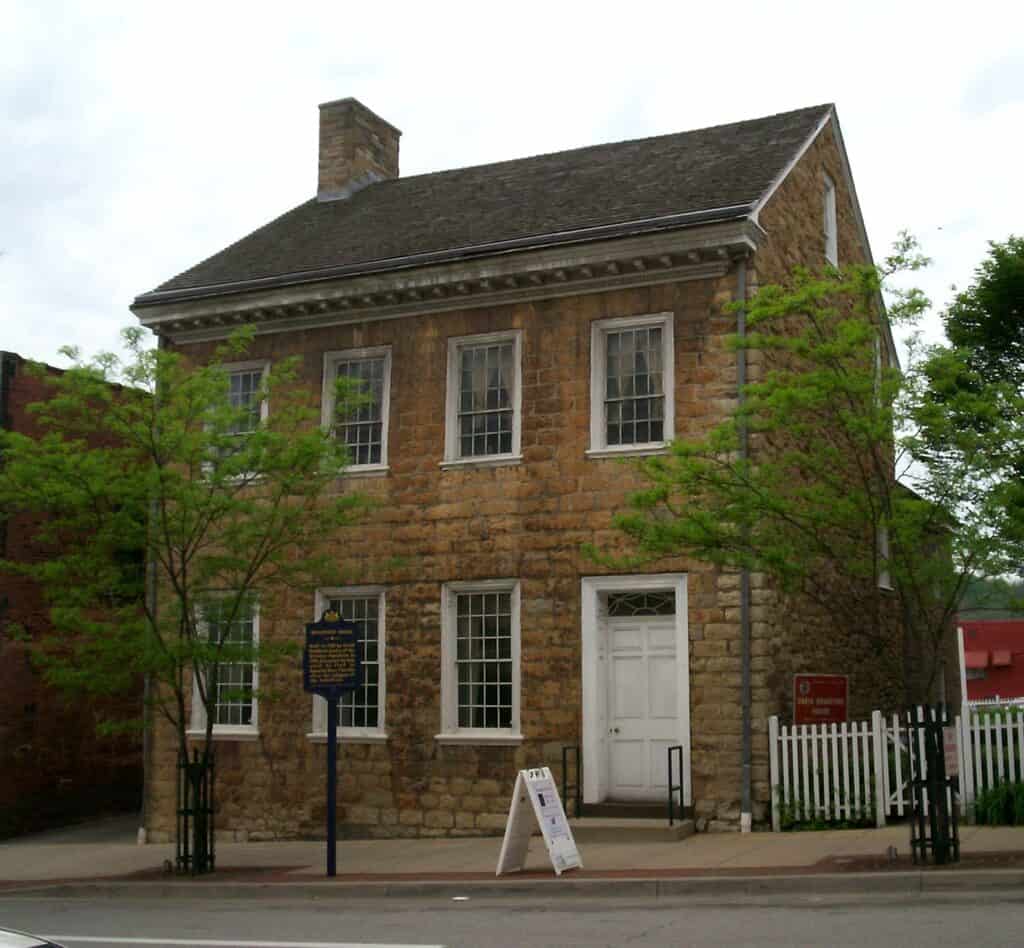
The Bradford House was the historic home of David Bradford, a prominent lawyer in Washington County in the late 1700s and one of the leaders of the Whiskey Rebellion. Bradford fled the area after the rebellion failed in 1794, though he was later pardoned by President John Adams.
Built in 1788, Bradford House was one of the first stone buildings in the town of Washington. Today it serves as a museum chronicling 18th-century life at the time of the Whiskey Rebellion. Docents dressed in period garb share stories about the home surrounded by antique furnishings, a log kitchen cabin, and a historical garden.
The house, located on Main Street in Washington, is open to the public between April and November, with guided tours by appointment in the colder months.
Whiskey Rebellion Education & Visitor Center – Washington (Washington County)
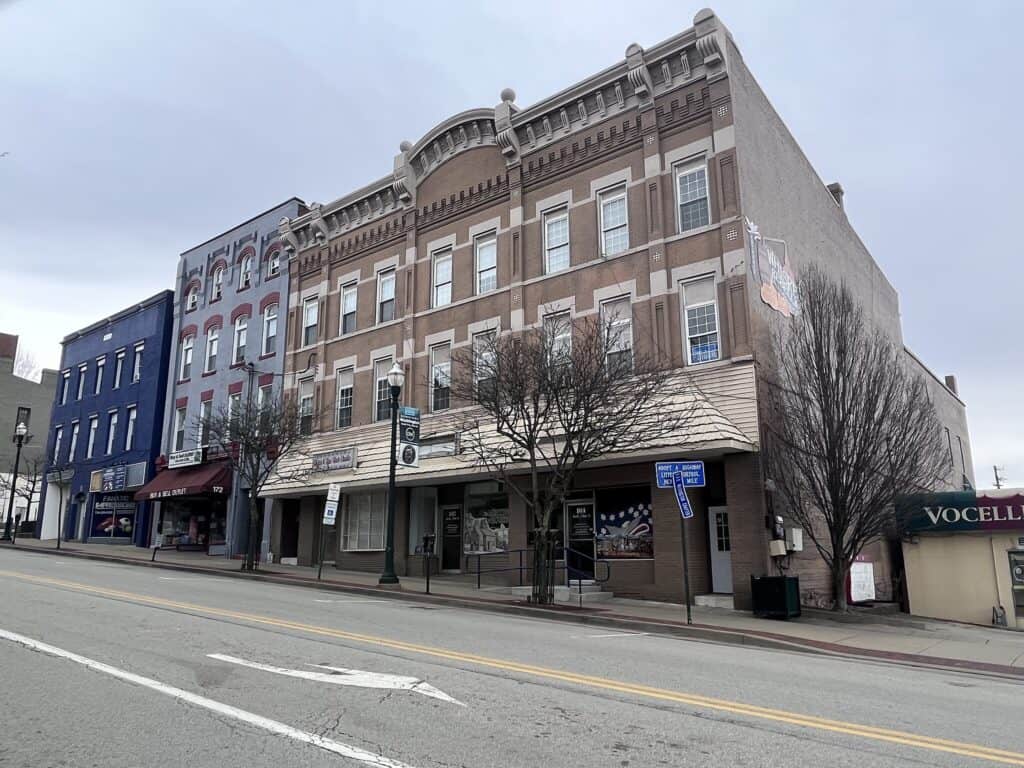
The Whiskey Rebellion Education & Visitor Center is just a couple of minutes’ walk from the Bradford House and is operated by the same group, the Bradford House Historical Association. The museum is devoted to telling the story of the Whiskey Rebellion, which is firmly tied to Western Pennsylvania and particularly Washington County, where many of the rebels lived. Exhibits include artifacts from the era, a colonial-style cage bar, and even a whiskey still.
Liberty Pole Spirits – Washington (Washington County)
You can, of course, still find craft whiskey in Washington! Liberty Pole Spirits is a family-owned distillery that focuses on whiskey, especially whiskey made in the Pennsylvania style—with rye. Its “old Monongahela full proof rye whiskey” recalls Pennsylvania’s whiskey history with its unique and robust flavor, aged at a lower proof and made with a high percentage of rye. Monongahela rye was one of the first American whiskey styles, and indeed, Pennsylvania is considered the birthplace of American whiskey. The distillery also produces bourbon, corn whiskey, and other whiskey blends.
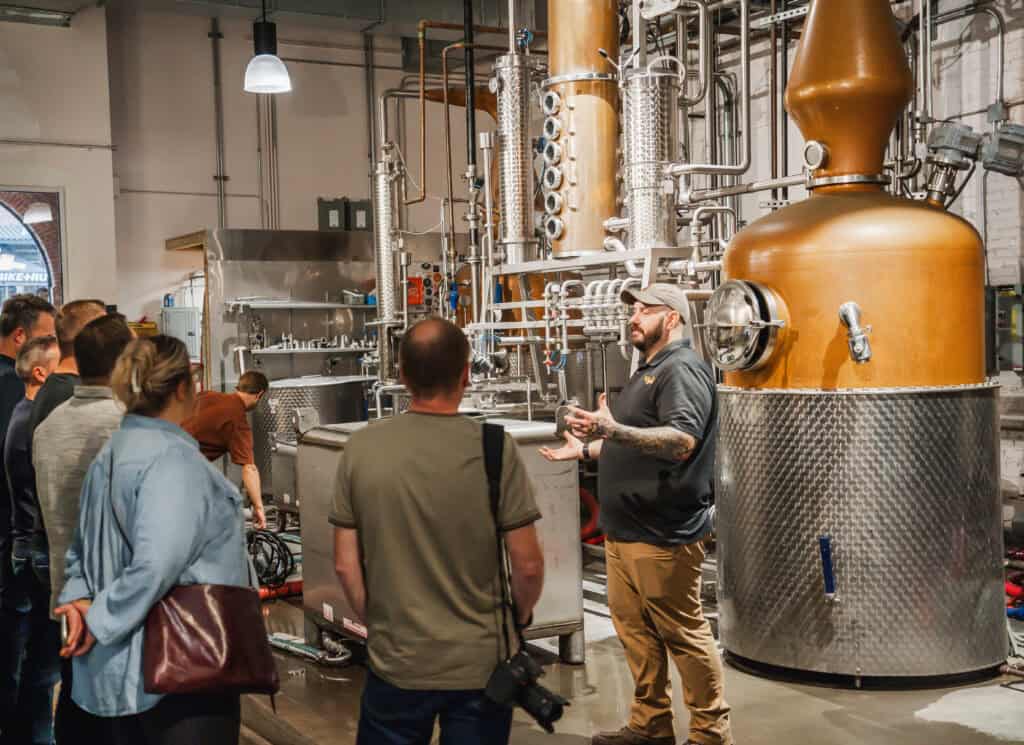
Liberty Pole welcomes guests to its 18th-century styled “Meetinghouse” Wednesday through Sunday for whiskey tasting, whiskey cocktails, small bites, and a view of the production floor. The distillery also offers guided tours of the facility for a fee.
The name “Liberty Pole” is a nod to the liberty poles—symbols of resistance—that the whiskey rebels raised in defiance of the tax, which they had also raised years earlier during the American Revolution. The image of a liberty pole even graces the distillery’s bottles.
Whiskey Rebellion Festival – Washington (Washington County)
The Whiskey Rebellion Festival is held each summer in Washington, commemorating the resistance led by frontier farmers between 1791 and 1794. Organized by the Bradford House Historical Association, the festival features historic reenactments of key rebellion events, live music, local food, kids’ activities, arts and craft vendors, a parade, and, of course, lots of libations like whiskey.
In 2025, the festival took place the second weekend of July—keep an eye out to see when the 2026 festival dates are announced!
West Overton Village – Scottdale (Westmoreland County)
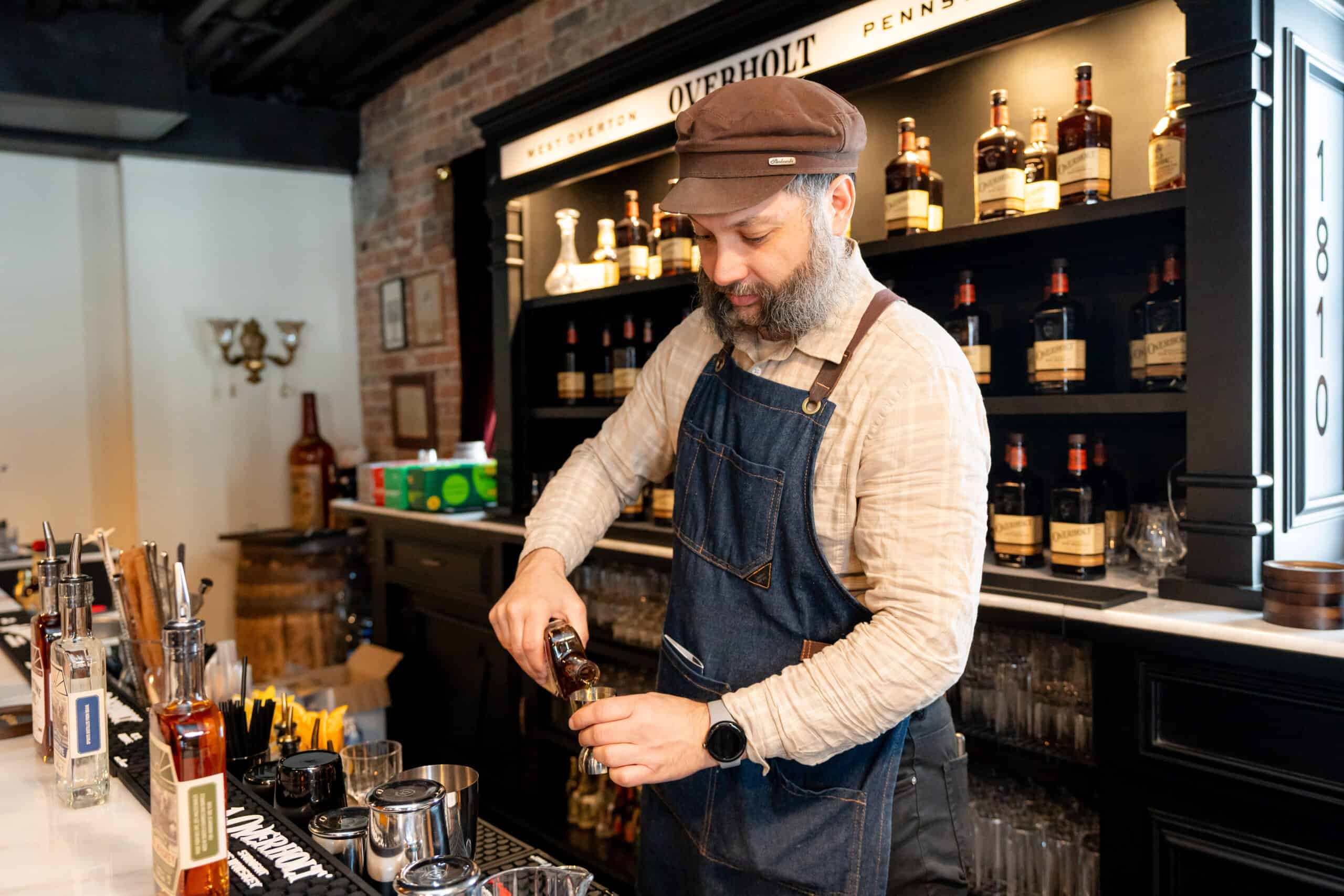
If you love history as well as drinking whiskey, you might want to visit West Overton Village in Scottdale, which houses not only a distillery but also a museum dedicated to southwestern Pennsylvania’s whiskey heritage. In fact, it has the largest collection of whiskey heritage objects in the country, located on what was once the Overholt family property—yes, the Old Overholt family of whiskey fame.
The operators insist West Overton is a museum that happens to have a distillery, so while you’re drinking, you’re sure to learn more about how whiskey was born in Western Pennsylvania.
The museum is closed from November to April, though the distillery remains open by appointment for bottle sales.
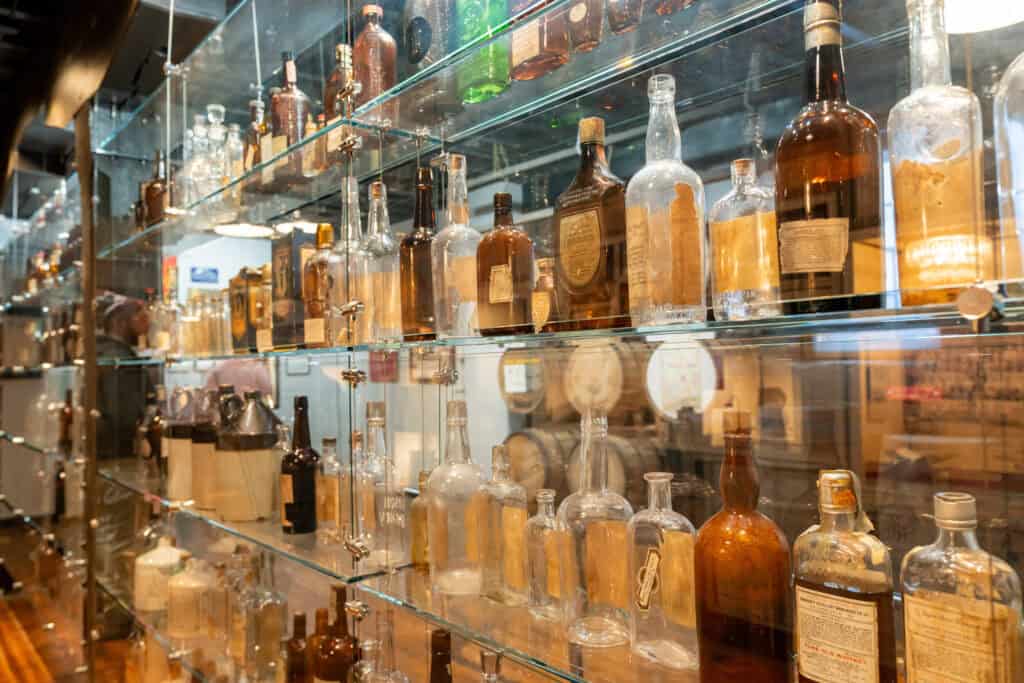
Woodville – Collier Township (Allegheny County)
Woodville was the plantation property of John Neville, a tax collector whose support of the excise tax on whiskey made him a hated figure among the whiskey rebels. In 1794, Neville’s primary home, several miles away on Bower Hill, was attacked and burned to the ground by protesters.
Today, Woodville operates as a museum on early frontier life, including Neville’s enslavement of hundreds of men, women, and children, as well as the tensions between frontier farmers and the federal government that culminated in the Whiskey Rebellion.
Woodville is open from April through November.
Wigle Whiskey – Pittsburgh (Allegheny County)
Located in Pittsburgh’s Strip District, Wigle Whiskey is a popular area distillery that has racked up serious accolades, like being named among the best craft distilleries in the country by USA Today. Wigle sources grain from local farmers to create a wide variety of whiskey—including many made with Pennsylvania rye—as well as vodka, gin, rum, and more.
The distillery has a cocktail bar as well as a full kitchen and also offers ticketed tours on Saturdays. Besides the Strip District distillery, the popular spirits can be found at a number of shops and bar locations throughout the region.
The brand was named for Phillip Wigle, a whiskey distiller in Western Pennsylvania who was convicted of treason in 1794 for his participation in the Whiskey Rebellion and sentenced to hang, though he was soon pardoned by President Washington.