Tejanas have changed history in ways big and small for as long as we can remember. Check out these seven examples from the music world to politics.
It goes without saying that Texas is home to countless people with Mexican heritage, but did you know that many of them have changed history? Now, let’s back up a second. First, we need to understand the proper terms here. The word “Tejano” means someone who’s from Texas but of Hispanic descent. As Spanish-language rules work, the female counterpart to it is “Tejana.” So, when we’re discussing Tejanas who shaped history, we’re specifically referring to women who have Hispanic roots but were born in the Lone Star State.
And, to be clear, there are many. The Tejanas included on this list have entered male-dominated arenas like music and politics and proven that their voices should never be silenced. They’ve also opened the doors for others to do the same, leading to greater acceptance and resilience across the board. Remembering their stories and contributions to history is one strong way to honor them, another being to carry their torches forward and be unabashedly true to yourself and your cause.
So, with that said, here are seven Tejanas who shaped history, from the recording booth to the front lines of protests.
1. Selena Quintanilla
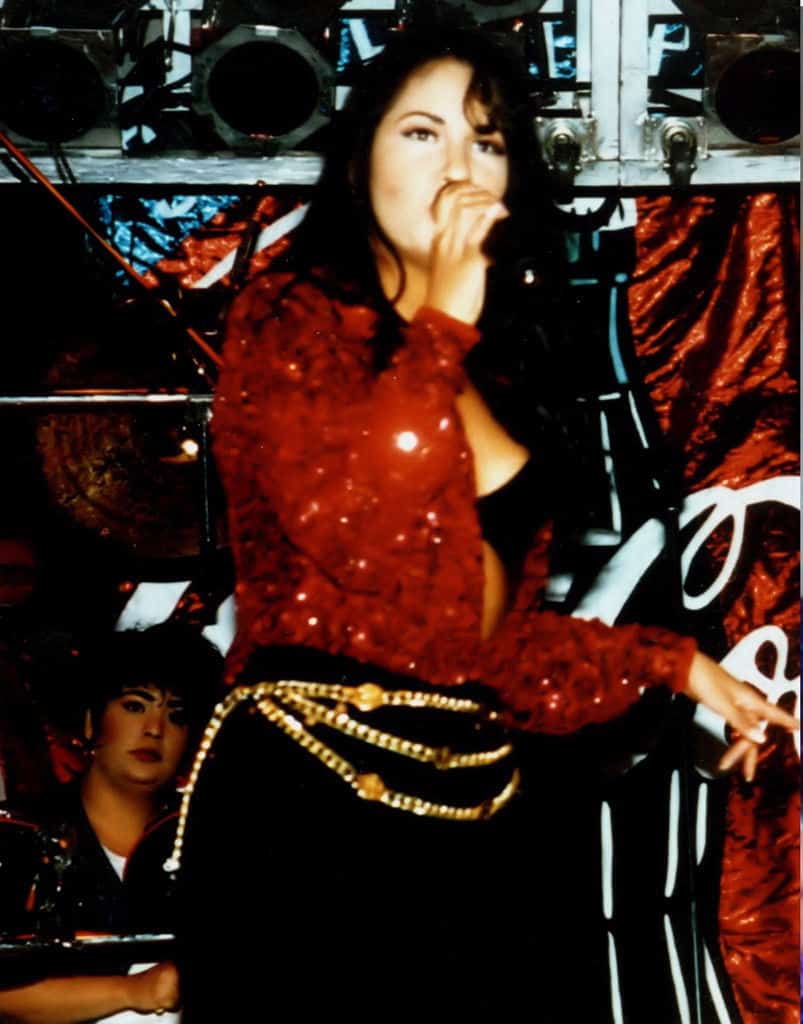
No list of Tejanas who shaped history would be complete without Selena Quintanilla. The late “Como la Flor” singer was a true icon—so much so that the word “Selena” alone brings her image to folks’ minds despite another musician with the same name, Selena Gomez, rising to superstardom. Oh, and she was also labeled the “Queen of Tejano Music,” cementing herself as a force to be reckoned with.
Selena was born in Lake Jackson, Texas, in 1971, but she tragically died in 1995 at age 23. Despite being so young, she left behind 11 albums for fans new and old alike to cherish. Six of these albums saw Selena front a band, Selena y Los Dinos, with her dad, Abraham Quintanilla, while the other five albums were solo projects. You may be thinking that she must’ve started young, and you’d be right. The first Selena y Los Dinos album was released in 1984, the year Selena turned 13 years old.
Selena’s voice always shone brightly, but she truly changed history by bringing music with a distinct, stunning Mexican flair to wider audiences. Songs like “Bidi Bidi Bom Bom” and “Dreaming of You” enraptured listeners then, and they’ve transcended time, continuing to be favorites today.
2. Jovita Idár
Tejanas often get the short end of the stick, and that’s precisely what prompted Jovita Idár to act. Idár was born in 1885 in Laredo, Texas, a town that sits directly on the United States-Mexico border. Being on the edge of two countries gives particularly insightful intel into the goings on of both sides, so perhaps it’s only natural that Idár grew up to be a journalist. As an adult, she began working in Laredo thanks to her father having a newspaper, La Crónica, there, and she became particularly impassioned about human rights.
Idár’s hometown let her see how Tejanos and Mexicans were treated, and she wanted better for them, especially women. This led her to becoming the president of La Liga Femenil Mexicanista, known as the League of Mexican Women in English. This organization worked to educate and empower local children, putting stock and hope into the next generation. It also promoted the idea of women putting stock into themselves by becoming feminists and urging for societal change, according to Britannica. (An organization with a similar name popped up in the 1970s in Fresno, Calif., and still operates today, but the two don’t seem to be related.)
Idár’s contributions to society are too many to put into words, but it’s worth noting that she went beyond empowering and educating. She also sprung into action, crossing the border to grant mutual aid at times. Overall, Idár had a way of gathering people, which she also did with the First Mexican Congress, inspiring countless folks around her. It’s no wonder that her visage found itself on an honorary U.S. quarter in 2023 through the American Women Quarters Program.
3. Lydia Mendoza
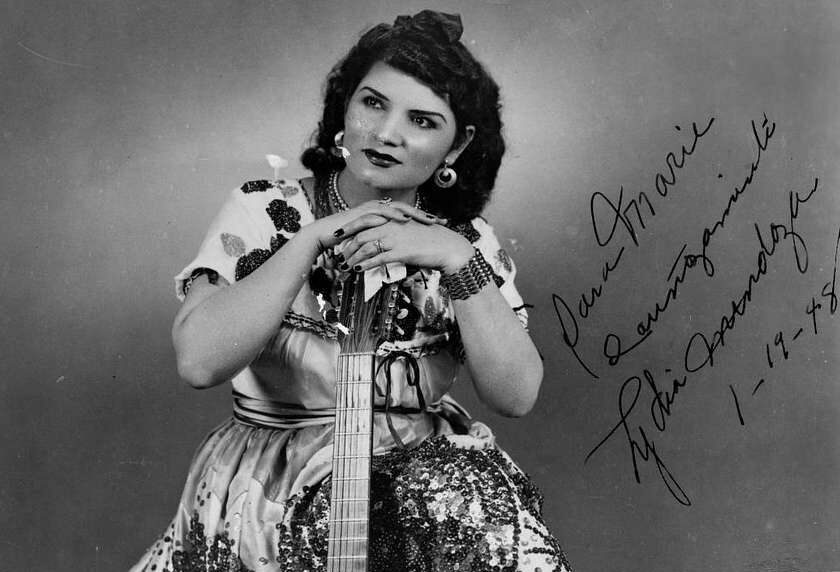
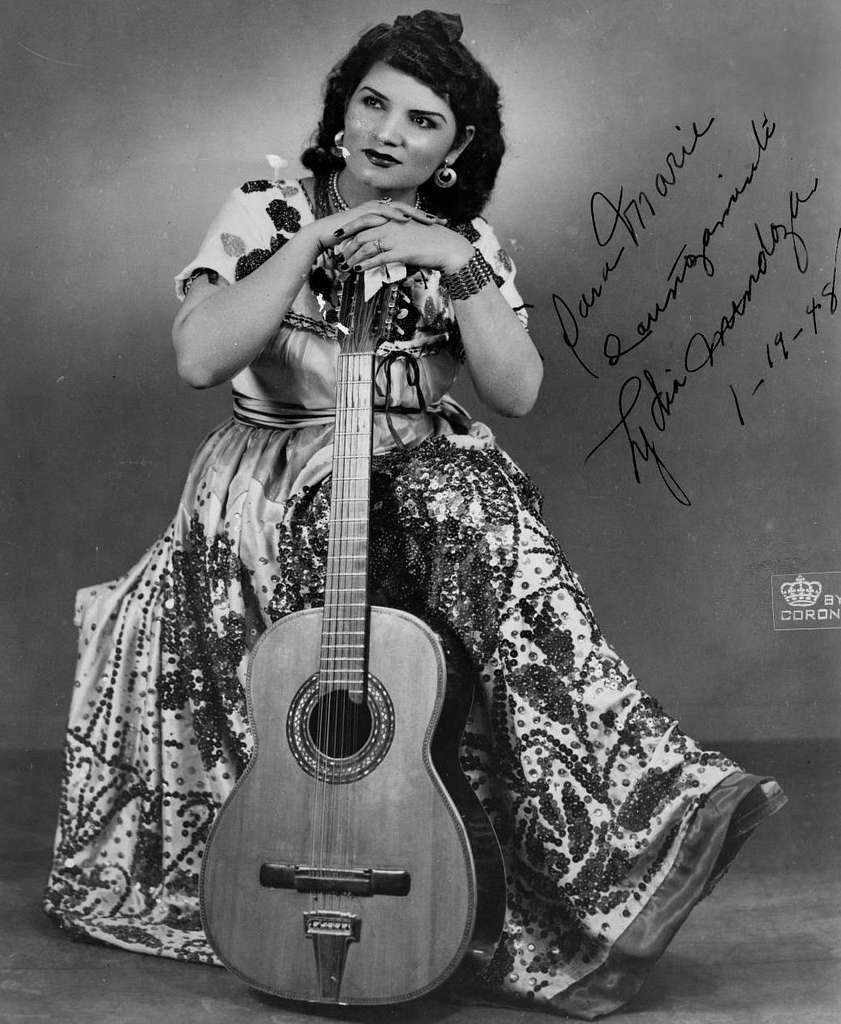
Many more Tejanas have made music history than just Selena Quintanilla. Enter Lydia Mendoza, a Houston native who was born in 1916 and lived until 2007. Like Selena, Mendoza has been called the “Queen of Tejano Music,” and it’s rightly earned. The “Mal Hombre” singer was prolific in her craft, performing for more than 60 years and crafting hundreds of songs. As should be expected from someone with Mendoza’s career longevity, she was signed to several labels over the years, but it never mattered which one she was with because her music always found its way into people’s hearts.
Mendoza’s tunes were beautifully written and sung, and they brought Tejano touches to the wider music scene that were sorely missing in the twentieth century. The 1900s were decades full of war—Mendoza was born mid-World War I—and they were polarizing even outside of that. But some still saw how important it is to showcase all of the cultures present in the U.S. President Jimmy Carter’s inauguration in 1977 included an Inaugural Folk Dance and Concert, and Mendoza was invited to perform her Tejano music for the nation.
Her story didn’t stop there, either. As detailed by the Library of Congress Blogs, Mendoza was given the National Medal for the Arts in 1999 after becoming a National Endowment for the Arts (NEA) National Heritage Fellow in 1982. Moments like these, as well as her paving the way for artists like Selena, are just one big reason why she’s among these Tejanas who shaped history.
4. Gloria Anzaldúa
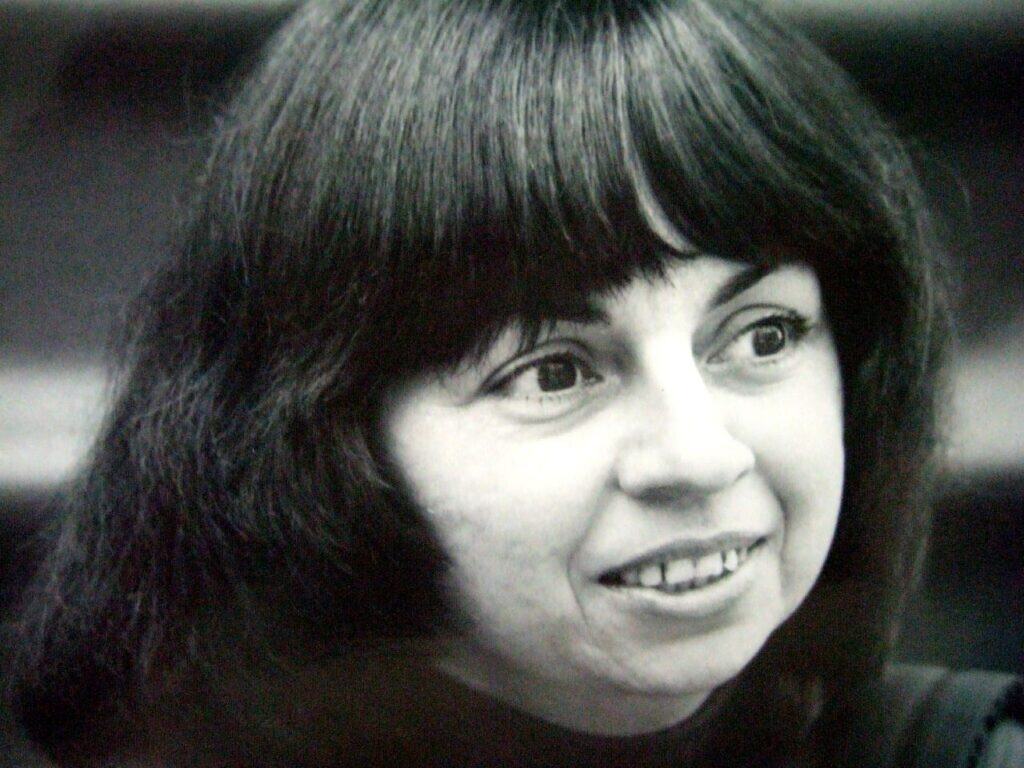
Anyone who’s studied literary criticism has likely heard of Gloria Anzaldúa, but if you haven’t, well, that’s what we’re here for. Anzaldúa was born in Raymondville, Texas, in 1942, smack dab in the middle of World War II. (Sensing a theme here?) She passed away in 2004 at age 61, but she left behind a lengthy legacy.
Anzaldúa worked in the realms of queer theory and Chicana theory for years, becoming well-known for her 1987 book “Borderlands/La Frontera: The New Mestiza.” She penned many other books as well, but let’s not get ahead of ourselves. Anzaldúa’s story really began at the University of Texas at Austin, where she was able to meet like-minded people who were passionate and activist-inclined while earning her master’s degree in English and education. This experience helped anchor her in her theory work, leading to six published books and many essays, short stories, and poems.
Anzaldúa is widely believed to be one of the greatest thinkers of the twentieth century, which is why she’s among these history-changing Tejanas. However, it’s worth noting that not everyone sees her work as faultless. As it goes with literary criticism, some have viewed her as “polarizing,” according to the University of California Humanities Research Institute, because it’s not always clear where Indigenous and Afro-Mexican folks fit into her framework.
5. Laura Canales
The third and final musician on this list of generationally great Tejanas is Laura Canales. Born in 1954 in Kingsville, Texas, Canales was a perfect middle ground between Selena Quintanilla and Lydia Mendoza. She continued paving the way the latter had, while opening up the space for Selena to shine a couple of decades later. But that’s not to say that her only legacy is being a stepping stone. No, Canales’ music was special, and she soared all on her own.
Canales’ main claim to fame is shattering the glass ceiling in the Tejano movement. Men dominated the genre for many years, even despite Mendoza making waves decades earlier. Canales broke through, though, and earned herself the title “La Reina De La Onda Tejana”—“The Queen of the Tejana Wave” in English—in doing so.
Songs like “Si Vivi Contigo” and “Dile a Tu Esposa” showed off not only Canales’ vocal prowess but also her ability to beautifully deliver emotion without seeing her face. Others knew it, too, which is why she found herself admitted into the Tejano Roots Hall of Fame in 2000. Ultimately, her work is a masterclass in authenticity, making her one of many Tejanas we shouldn’t forget.
6. Adela Sloss Vento
Born in Karnes City, Texas, in 1901, Adela Sloss Vento never stopped fighting to show everyone around her that people of Mexican descent deserved the same education and rights as white folks. According to the Caller Times, Sloss Vento graduated from high school in 1927, marking a rare exception to the norm at the time, and she used everything she’d learned to fight for her community. If she had anything to say about it, Mexican folks would no longer suffer.
It’s possible that she got her desire to help others from her mom, a healer and midwife. However, they differed in their approach. Sloss Vento became a writer, so she put pen to paper to try and make change. She wrote letters to presidents to bring people of Mexican descent to the forefront, and she also wrote longer works, like the 1977 book “Alonso S. Perales: His Struggles for the Rights of Mexican Americans.” These works aimed to educate others, and they did indeed make waves.
Outside of writing, Sloss Vento was a community organizer who wasn’t afraid of getting her hands dirty. She was well-connected, and her belief in her mission never seemed to falter. This energy was infectious. Looking back, her approach to feminism is interesting. She rallied behind male politicians but also actively promoted feminist ideals, specifically regarding machismo. Perhaps it was because male politicians were the only options back then. Either way, there’s a lot we can still learn from Sloss Vento, making her one of many Tejanas who continue to inspire us today.
7. Emma Tenayuca
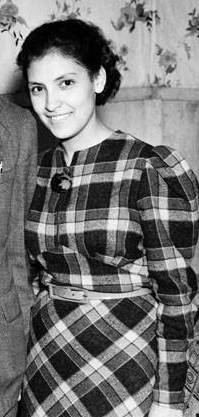
Emma Tenayuca may be the last of the history-changing Tejanas on this list, but her contributions aren’t any less impressive than those who came before her. A San Antonio native, Tenayuca was born in 1916, and she learned early on just how badly some groups in the U.S. are treated over others. Context is also important here: Tenayuca’s family had lived in the South Texas area for generations, so they’d seen how much things had changed since the Mexican-United States War of the 1840s and so forth.
Cut to the 1930s, and Tenayuca wanted to spark major change in how Tejanos were treated—both in the workplace and in society at large. She believed in the need for change so deeply that she joined the Communist Party at a time when it was polarizing to do so, to say the least. She even ran for office under the party, but she never landed a government position. She did, however, make waves for worker rights.
Never one to sit idly by, Tenayuca found herself organizing and leading the Pecan-Shellers’ Strike in 1938 (via the Texas State Historical Association). Mexican workers had been taken advantage of, but the strike turned into a huge success, leading people to understand their rights—and how they can leverage them—better. This was the gist of her story: Though her purely political ambitions never got to play out, she spent her life aiding unions and employees in ways that others overlooked. This is why she went down in history as La Pasionaria, which translates to “the passionate one.” Now, you can carry her passion forward by engaging in local activism and supporting women-owned businesses in San Antonio.