National Slavery and Human Trafficking Prevention Month seeks to bring awareness to a very real problem. Here’s how Texans can make a difference.
January is National Human Trafficking Prevention Month. Born out of the Trafficking Victims Prevention Act of 2000, the month got its official designation in 2010, when President Barack Obama declared January to be “National Slavery and Human Trafficking Prevention Month.” Since then, the federal government has continued to make presidential proclamations and issue executive orders against human trafficking. The U.S. State Department also launched the Program to End Modern Slavery, its largest anti-trafficking program, in 2017. Today, 178 countries around the world are part of the UN Protocol to Prevent, Suppress, and Punish Trafficking in Persons.
Human trafficking is a crime that’s divided into two major categories by the U.S. Department of Justice. Sex trafficking is “the recruitment, harboring, transportation, provision, obtaining, patronizing or soliciting of a person for the purposes of a commercial sex act, in which the commercial sex act is induced by force, fraud, or coercion.” Labor trafficking is “the recruitment, harboring, transportation, provision or obtainment of a person through the use of force, fraud, or coercion for the purpose of involuntary servitude, peonage, debt bondage, or slavery.”
Trafficked people can be any age, race, gender, or nationality. According to Texas Health and Human Services, Texas has the second-highest number of reported sex trafficking cases across all U.S. states. Dallas and Houston are among the top ten cities across the nation in sex trafficking case calls, with their large populations and proximity to the I-35 corridor making them easily accessible targets for bad actors dealing in trafficking. There are also an estimated 313,000 victims across Texas as a whole.
In 2019, the Texas Legislature founded the Texas Human Trafficking Prevention Coordinating Council, which includes representatives across several government departments. The Lone Star State is also home to several organizations working to protect victims and reduce and eliminate these situations. During National Slavery and Human Trafficking Prevention Month, Texans can support them in their efforts to prevent, recognize, and report human trafficking.
1. Central Texas Coalition Against Human Trafficking
The Central Texas Coalition Against Human Trafficking has a simple mission: freedom. The organization focuses on building public education and awareness of human trafficking while also working to identify trafficking survivors and victims, providing them with medical and social services.
The coalition formed in 2003 when law enforcement officers in Austin noticed a lack of collaboration between law enforcement and social services organizations during human trafficking cases. Over the past two-plus decades, the coalition has developed multiple working groups to approach critical areas such as labor trafficking and sex trafficking, partnering with dozens of other organizations and companies that align with its mission. To date, the coalition’s partners have trained over 35,000 professionals, and they’ve identified and provided services to more than 500 survivors.
2. Heart of Texas Human Trafficking Coalition
Founded in 2015, the Heart of Texas Human Trafficking Coalition (HOTHTC) aims to fight human trafficking by raising community awareness, increasing the investigation and prosecution of human trafficking cases, and providing coordinated and comprehensive services to victims. For example, HOTHTC offers victims health care, survivor advocacy, counseling, job training and placement, and other services. The Heart of Texas primarily focuses on cases in Bosque, Falls, Freestone, Hill, Limestone, and McLennan Counties.
The Department of Justice, Office of Victims of Crime has awarded multiple grants to the coalition to help develop its resources and impact. It also hosts annual events in January in recognition of National Slavery and Human Trafficking Prevention Month, such as the “Not In My City Outreach.” This collaboration with Unbound Waco gives awareness materials to more than 500 businesses.
3. Allies Against Slavery
Showing the power of a concerted grassroots movement, Allies Against Slavery began as a small East Austin initiative in 2010 and has since developed into a wider coalition built on the values of justice, community, dignity, innovation, integrity, and collaboration. The organization has empowered 200 partners and 2,000 field professionals with the tools to take meaningful action.
Allies Against Slavery believes data is a key driver for fighting human trafficking, and the organization helps state and national government agencies collect and report on data through a solution called Lighthouse. By aggregating and visualizing data in an easy-to-digest way, law enforcement, policy makers, service providers, and government workers can all make better-informed decisions and more efficiently distribute resources and address the global problem of slavery and human trafficking. Last year, Lighthouse identified nearly 3,300 children as a “Clear Concern” for human trafficking and met with 10 legislative offices to help enact change. Allies Against Slavery offers monetary, data, and service opportunities for partnership.
4. A21
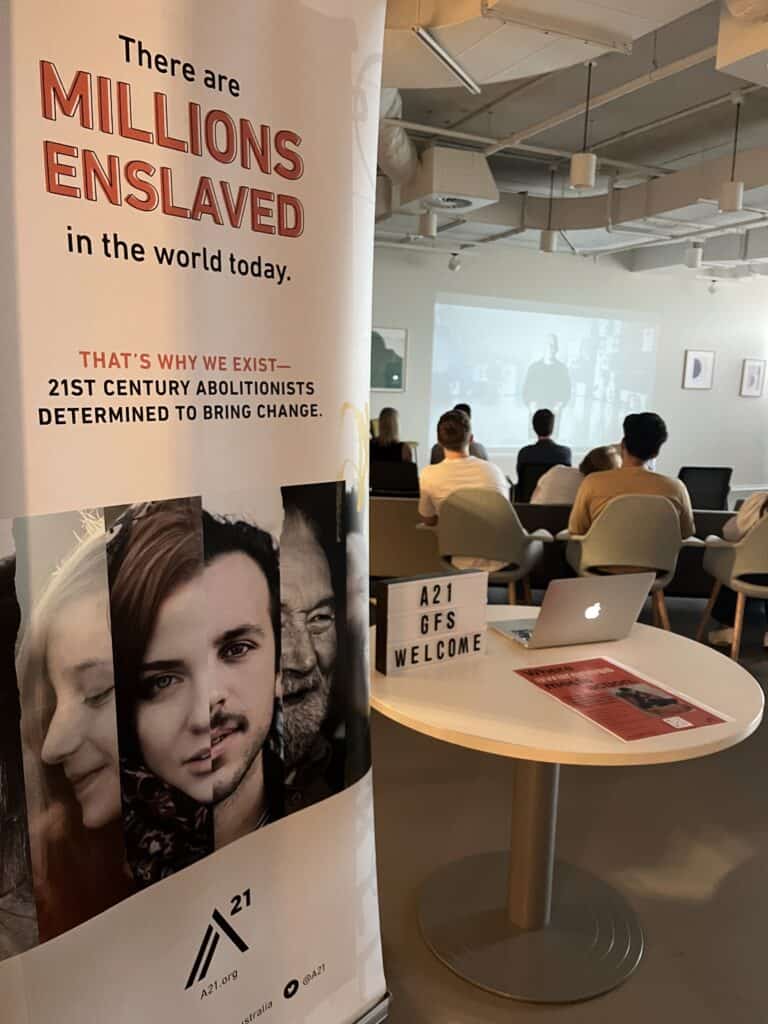
Initially established as a Fort Worth nonprofit, A21 has evolved across the globe. Since 2008, it’s expanded to 19 locations across 14 countries, each focused on a mission to “reach the vulnerable, recover victims, and restore survivors.” That means presentations for adults, an education curriculum for students, prevention play-based programs for children, and the “Can You See Me?” public awareness campaign that highlights common human trafficking scenarios and how to report them. In addition to its Global Freedom Summit, A21 provides hotlines, professional support, and legal assistance, as well as aftercare services, including trauma-informed holistic support, emergency shelters, and drop-in day freedom centers.
Supporting A21 can take several forms. The organization always welcomes donations or the creation of fundraisers, and it encourages building awareness and mobilizing communities through different educational events. You can also volunteer in an A21 office anywhere in the world to join the frontline fight against slavery and human trafficking.
5. United Against Human Trafficking
With a vision of “we fight so that all may live free,” United Against Human Trafficking (UAHT) has worked to prevent the exploitation of people for more than 20 years. The Houston-based organization runs regular trainings, youth programs, and direct services, such as family huddles and case management. In the organization’s 2024 report, it noted 34 individuals had received comprehensive support through the organization’s client services program, including transitional housing, new employment, and advanced education through ESL classes. UAHT partnered with organizations including the Houston Police Department, Houston Firefighters, and Texas Children’s Hospital, training nearly 5,000 people on how to identify and report human trafficking situations. The organization also received 56 disclosures of human trafficking through its Real Talk program, which was created to support people who are at high risk of being trafficked or who have already experienced trafficking.
While anyone can donate to the UAHT cause, there’s another way to contribute if you’re in the Houston area. UAHT has assumed the duties of A 2nd Cup, the city’s first nonprofit coffee shop that raises awareness about human trafficking. A quality drink that also helps tackle an important issue? That’ll perk anyone up.
6. Texas Network of Youth Services
Texas Network of Youth Services (TNOYS) addresses a wide range of challenges facing youth through interactive experiences, learning camps, and more. Additionally, it has an incredibly extensive resource center for preventing, identifying, and responding to child sex trafficking and commercial sexual exploitation of youth.
TNOYS itself provides training on prevention, risk factors, screening, and identification. The organization can also assist with crisis intervention, developing alliances with children, and offering trauma-informed care. Whether through donating or sharing the resources page, you can help make a difference in the fight against trafficking.
7. iWatchTexas
The Texas Suspicious Activity Reporting Network hosts the iWatchTexas website, which allows Texans to report suspicious activities or behaviors. Analysts review every report and can help thwart threats or crimes around school safety, terrorist acts, and trafficking.
Simply being diligent in reporting something can go a long way. For a financial donation, Texas residents can purchase personalized “Stop Human Trafficking” license plates. The plate includes a $30 specialty plate fee, $22 of which goes to support a trafficked persons program account within the state.