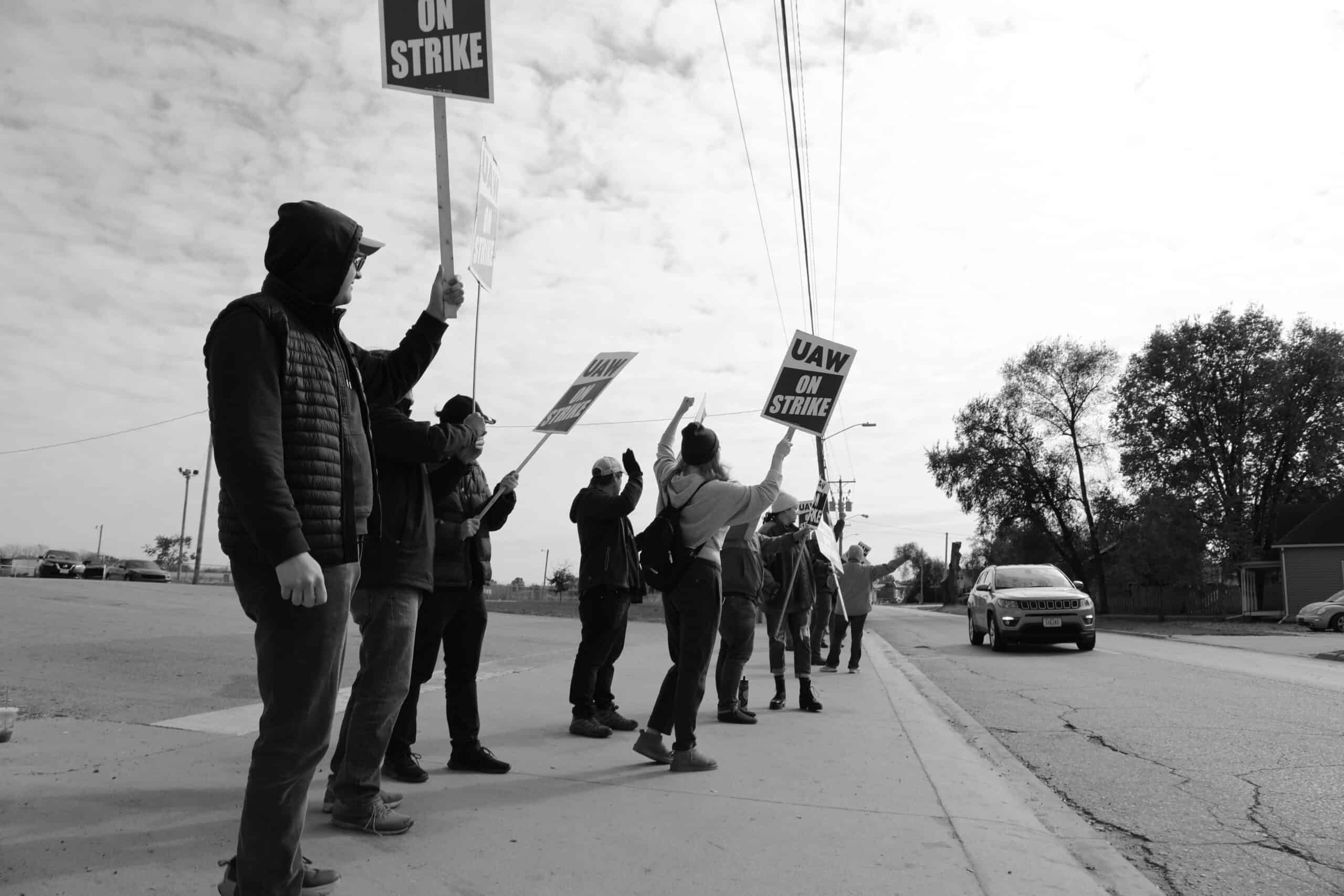
The labor movement in Iowa has a rich history of struggles, solidarity, and hard-won victories. Here are seven of the most notable events.
Workers in Iowa look out for each other, and that’s been the case for over a century. After all, the state motto is “Our liberties we prize and our rights we will maintain,” with the first-person plural making the Hawkeye State’s “all for one and one for all” mentality official. That’s why it should come as no surprise that Iowa has a strong tradition of labor and union activism, spanning from the nineteenth century to this very moment.
But how did Iowa labor unions get where they are today? And what were the stops and struggles along the way? How did Iowan workers rise to meet the challenges that organizing inevitably brings? Well, the history of any union is really thousands of histories, because every member has something to say. However, there have been a few particularly remarkable moments in Iowa’s union history. Here are the major turning points:
1. 1855 and the founding of Iowa’s first union
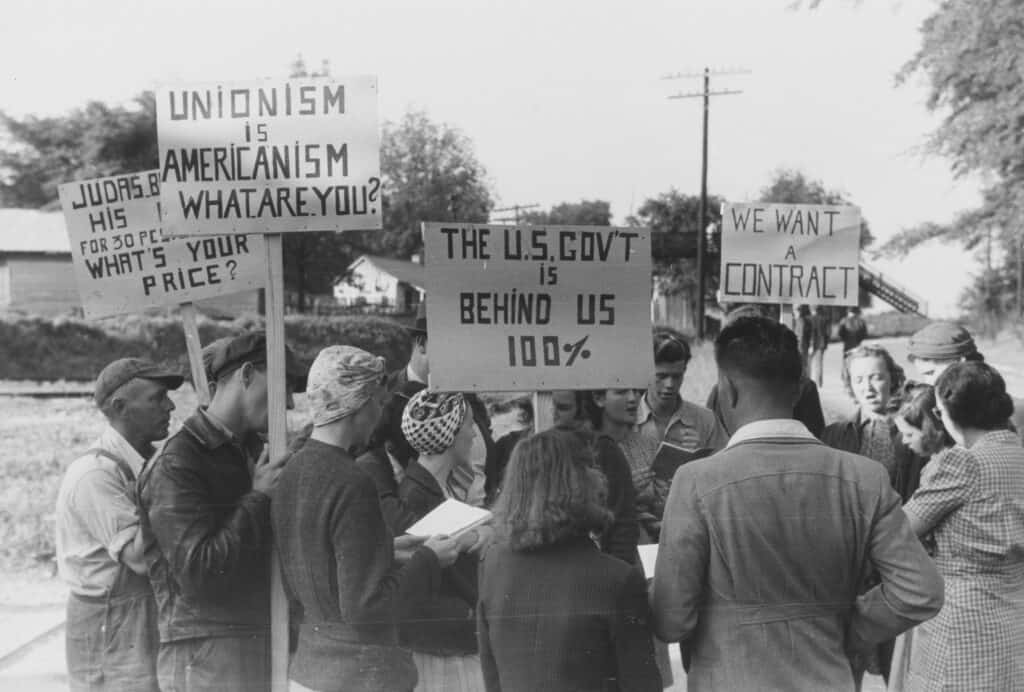
As the Industrial Revolution arrived with a bang in nineteenth-century America, the labor movement made its way through the country. Iowa’s first labor union, Dubuque Typographical Union Local 22, was founded in 1855. This was a single-craft union for typographers.
While this was the beginning of unions in the Hawkeye State, it was only a matter of time before there were far more. By the 1880s, Iowa was home to a variety of trade unions, including many separate unions for the workers employed on the state’s railways.
2. The Knights of Labor bring solidarity
While individual trade unions were effective in advocating for members of their trade, one of the core tenets of the labor movement is that workers are stronger and more powerful together. That was the idea behind the Knights of Labor, a national organization that sought to bring together local unions and other organizations across state and professional lines.
The Knights of Labor was founded in 1869, and quickly spread across the United States, into Canada, and even around the world. In Iowa, the Knights began organizing in the 1880s, as the state was rapidly industrializing. Iowa members would eventually number in the tens of thousands; at their peak, they outnumbered the total membership of smaller local unions in Iowa by a factor of ten. While their membership declined as the nineteenth century drew to a close, at their height, they were one of the most effective organizing bodies and wage advocates in the state.
3. Tensions rise with the 1947 Iowa Acts, Chapter 296
As America began to recover from the end of the Second World War, times in Iowa were changing. In 1947, the Iowa state legislature passed the 1947 Iowa Acts, Chapter 296, which established Iowa as a “right to work” state. This means that, by state law, labor unions in Iowa cannot require employees of any profession to join the union, or pay union dues, in order to keep that job.
This act was not supported by union members, who argue that it decreases the unions’ financial power and ability to engage in collective bargaining. Union membership would enter a period of gradual decline, which union organizers in Iowa continue to fight against to this day.
4. ILHOP is founded to tell labor unions’ stories in the Hawkeye State
With union power in Iowa somewhat diminishing in the second half of the twentieth century, many advocates of Iowa’s labor movement worried that the movement’s ideals would be lost. That’s why, in the 1970s, the Iowa Labor History Oral Project was founded to ensure that the stories of Iowa workers wouldn’t be lost.
The project, founded by the Iowa Federation of Labor (AFL-CIO) in partnership with the University of Iowa, comprises over 1,500 recorded interviews with Iowa workers describing their experiences in their own words, along with related archival materials and ephemera. Workers who have contributed to the project include members of dozens of different professions, including meatpackers, barbers, machinists, grain processors, and more.
Today, the ILHOP is a vital resource for academic and public historians and researchers, and preserves Iowa’s labor history as understood by those who lived it. Moreover, it’s still growing, and you can contact them if you think you or someone you know would be a good source for an interview.
5. The rise of collective bargaining units
While the 1947 Iowa Acts Chapter 296, and its later place in the Iowa Code, established the so-called “right to work” in Iowa and made it harder for unions to grow their membership, labor organizing in Iowa’s public sector was able to find a new path. Collective bargaining units, which are groups of employees who advocate on behalf of union members, are protected for public sector workers under Iowa law and have become major hubs of union activism across the state.
These units have spent decades advocating on behalf of public sector workers in Iowa, including teachers, state and county employees, and more. One of the things that makes them effective is that they don’t only advocate for union members; they advocate on behalf of all members of the professional body they represent.
6. The “Brown Bag” Committee feeds Iowans during hard times
Times were tough during the 1980s, as an economic downturn left Iowans struggling with basic expenses. Their struggles didn’t go unnoticed by the unions. Specifically, in Waterloo, Iowa, where farming communities had been hit hard by high land prices and crop surpluses, UAW Local 838 started the “Brown Bag Committee” to provide social aid.
The committee took its name from brown paper grocery bags, but there was a lot more than just lunch going on. In addition to distributing food, like surplus produce from local farms, to those in need, the Brown Baggers partnered with existing local organizations to expand their services. At the height of their activities, they also served as a juvenile justice organization and provided rehabilitative community service opportunities to first-time youth offenders.
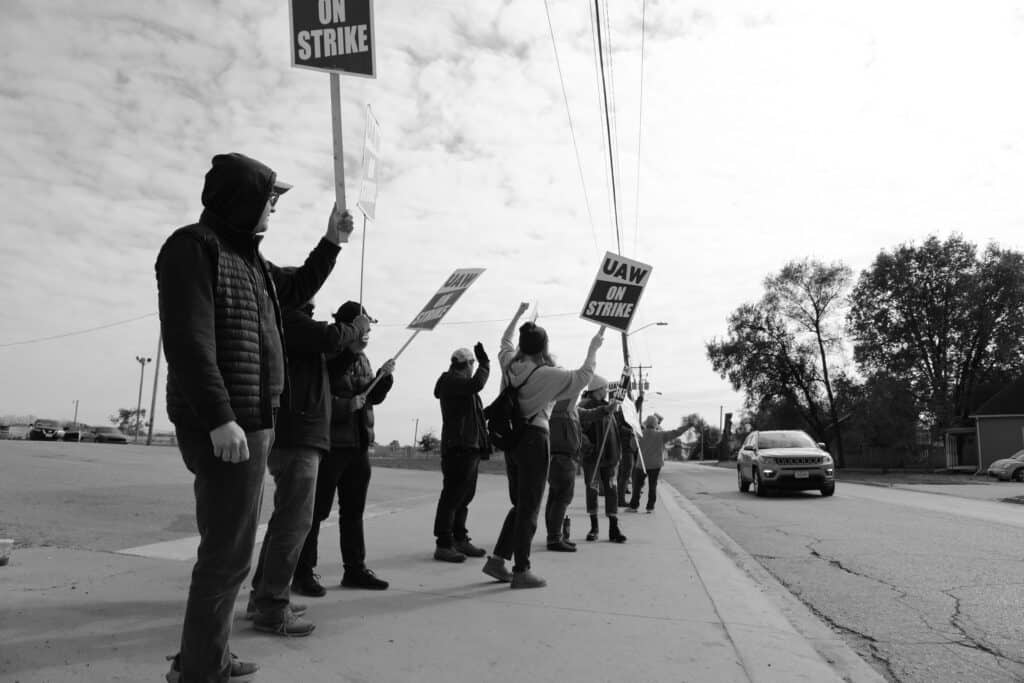
7. The John Deere Strike of 1986-7
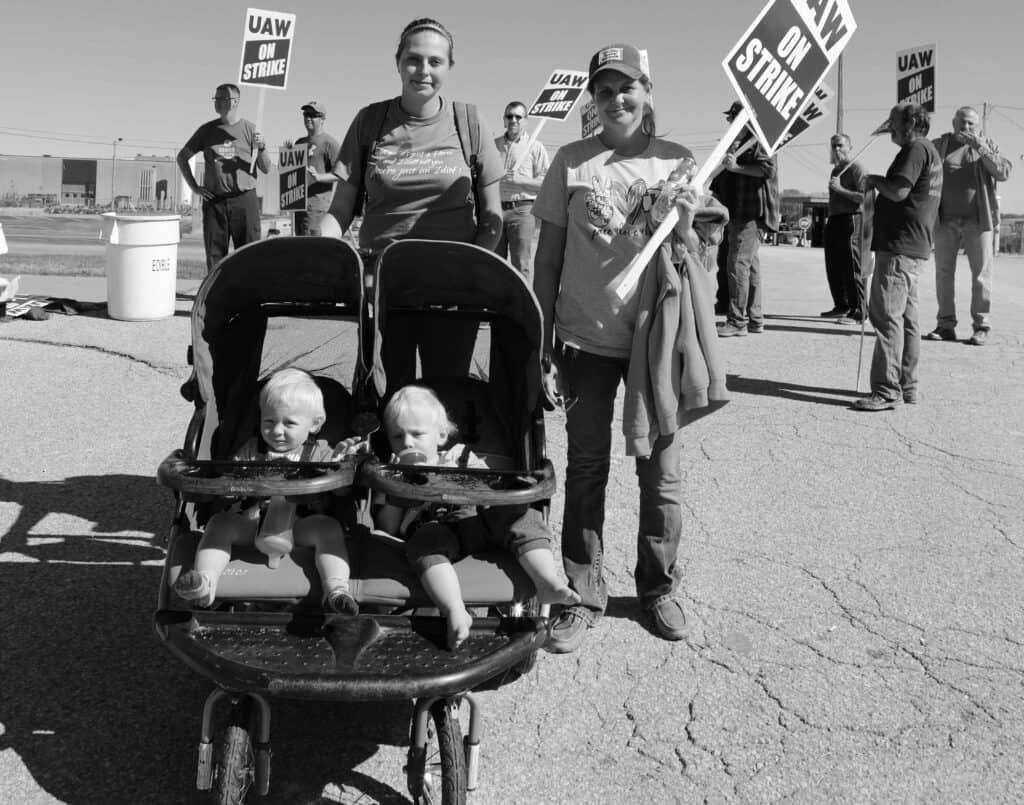
John Deere is an iconic and longstanding American brand, but in the 1980s, workers at two Iowa John Deere factories (and one in Illinois) went on strike for 163 days, the longest strike in the company’s history. The striking workers wanted assurances against layoffs and a commitment to prevent salary cuts.
After nearly six months of striking, the workers won job security for roughly 90% of employees, which was considered a major victory. It may have served as inspiration for John Deere workers in 2021, who once again took to the picket lines to demand a pay increase.