Munch or sip on these one-of-a-kind cuisines around the city that never sleeps.
Move over Eurosummer—it’s all about New York in 2026. First it was the Knicks in five, then it was the World Cup. Now you have New Yorkers known for walking around with headphones and poker faces rediscovering the simple joy of face-to-face interactions with people from all walks of life.
Watching international tourists devour all the decadent food we have to offer and seeing people from different cultures celebrate together has also been a reminder of what NYC does better than anywhere else. After all, in a city where 38% of the population are immigrants, fusion cuisine isn’t a trend. It’s a quintessential part of the culinary culture.
Inspired by the largest and most culturally representative single-sport event in the world, I set out to find seven fusion foods and drinks that reflected the melting pot that NYC is—and unlike some of the VAR calls FIFA referees have been making lately, I was not left disappointed.
This Indian deli offers a spicy take on the classic breakfast sandwich
One World Cup-related story that went viral was the enthusiasm Norway’s Erling Haaland showed for a pastrami sandwich from the iconic Katz’s Delicatessen. The city and the state to the west of the Hudson, *cough* New Jersey, are now world-famous for their deli sandwiches, which stem from the culinary traditions of Jewish immigrants who arrived in the area at the turn of the century. And there is a new deli in New York City that integrates Indian flavors with their sandwiches—Fonty’s Deli + Dukaan in West Village.
Not to sound like a basic transplant, but West Village is one of my favorite neighborhoods in the city for its restaurant and nightlife scene, and Fonty’s Deli + Dukaan is the most recent addition to my list of go-to West Village restaurants I’ve “hearted” on Google Maps.
As I stood in line, some passersby talked about how they had stopped by the week before and how good the sandwiches were. So I knew it was an instance of good things coming to those who wait.
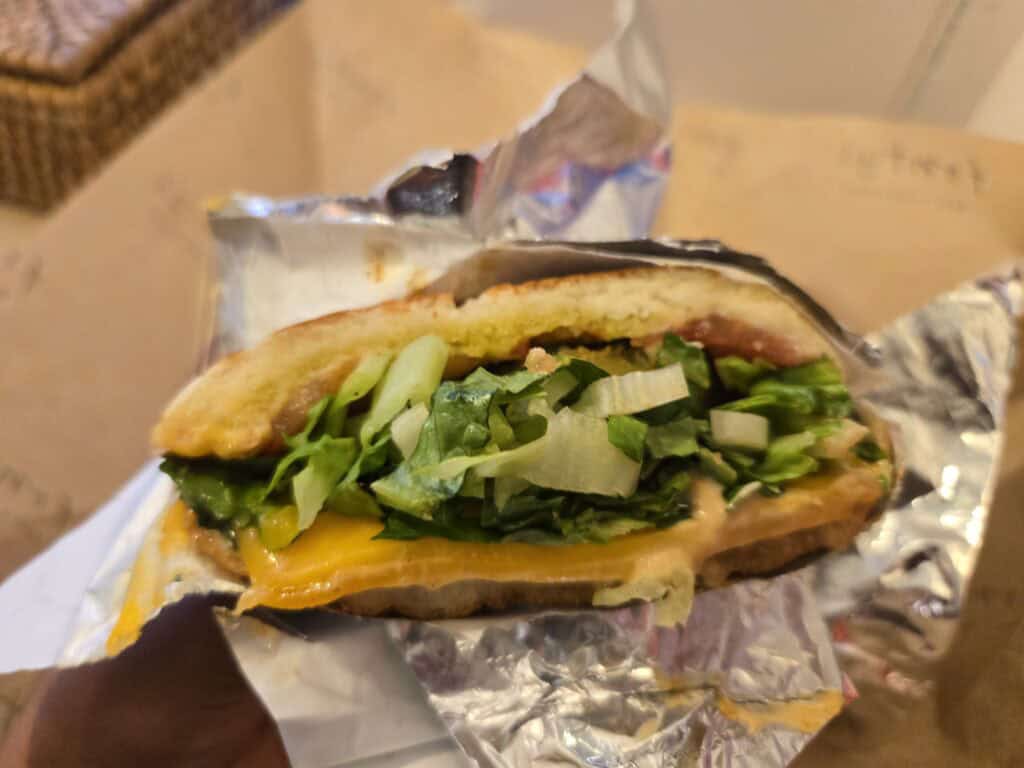
I ordered the B.E.L.T Breakfast Sandwich, which consists of Bombay omelette, romaine lettuce, tomatoes, cheese, bacon, hot spread, and the deli’s secret sauce. As a vegetarian, I asked them to hold the bacon, but the sandwich was still packed with plenty of flavor.
The Indian spices in the omelette helped balance out the eggs, while the hot spread and secret sauce elevated the sandwich beyond your typical “Bacon Egg and Cheese.” The other, more standard ingredients all complemented the omelette well with crisp Romaine lettuce, juicy tomatoes, and perfectly-melted cheese.
I’ll definitely be revisiting to try some of their vegan options, such as the Chickpea Patty Sandwich and Eggplant Bhaja Sandwich.
This diner with a Thai twist has Massaman curry-flavored disco fries
Another iconic part of New Jersey’s culinary culture is the diner, and a New Jersey delicacy that has become popular in the tri-state area is Disco Fries. Disco Fries are crinkle-cut fries topped with a brown gravy and shredded mozzarella cheese. Thai Diner in NYC’s Nolita neighborhood offers a Thai take on a N.J. classic.
The diner is another place where you may have to wait to get a table, but the atmosphere alone, which features bamboo lining the walls, is worth dining in. It almost makes you feel like you’re a guest at the Anantara Mai Khao Phuket Villas featured in Season 3 of White Lotus.
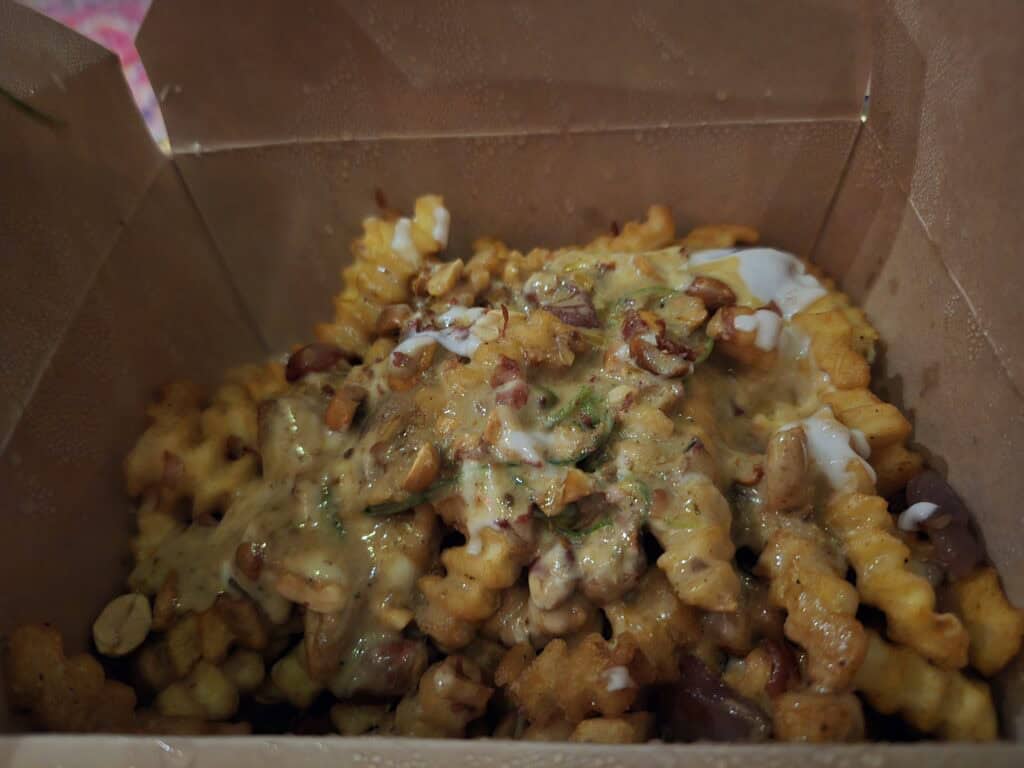
While Disco Fries typically have cheese, these Thai Disco Fries are vegan and come topped with Massaman Curry, red onions, peanuts, cilantro, pickled green peppercorn, and coconut cream. While I do love loading my dishes with ground pepper, I just didn’t like the taste of biting into the peppercorns. So I would suggest setting those aside while eating the fries.
Otherwise, I enjoyed how all of the flavors surprisingly coalesced with the crinkle-cut fries. The Massaman Curry sauce stole the show, and although it is a typically milder Thai curry, it still had enough heat to kick the fries up a notch.
Massaman Curry itself has fusion origins—historians trace it to spice traders from India and Persia, and the name is thought to derive from “Musulman,” an archaic word for Muslim.
If you’re a fellow curry connoisseur, this restaurant belongs on your restaurant bucket list for the eclectic menu and, as The New Yorker calls it, ”transportive” ambiance. Thai Diner has also been listed as a “top 10 reader favorite” according to The New York Times.
This legendary pastry chef’s Malaysian-inspired banana bread melts in your mouth
For New Yorkers who are passionate about their desserts, Chef Dominique Ansel needs no introduction. A local legendary pastry chef, Ansel is known as a visionary, having created the Cookie Shot, Frozen S’more, and more. His namesake Dominique Ansel Bakery in Soho is especially known for its Cronut®, a croissant-doughnut hybrid that has drawn long lines for over a decade and sells out within the first two hours of opening.
In May 2025, Ansel opened a fusion bakery near Union Square, named Papa d’Amour. Literally translated to “Papa, my love,” it is a love letter to “Asian bread culture” and is inspired by his kids, who are Taiwanese and French. Ansel says that while he’s been named as the “Best Pastry Chef” by the James Beard Foundation, he’s “simply known as papa,” to his kids—and “especially when they want something.”
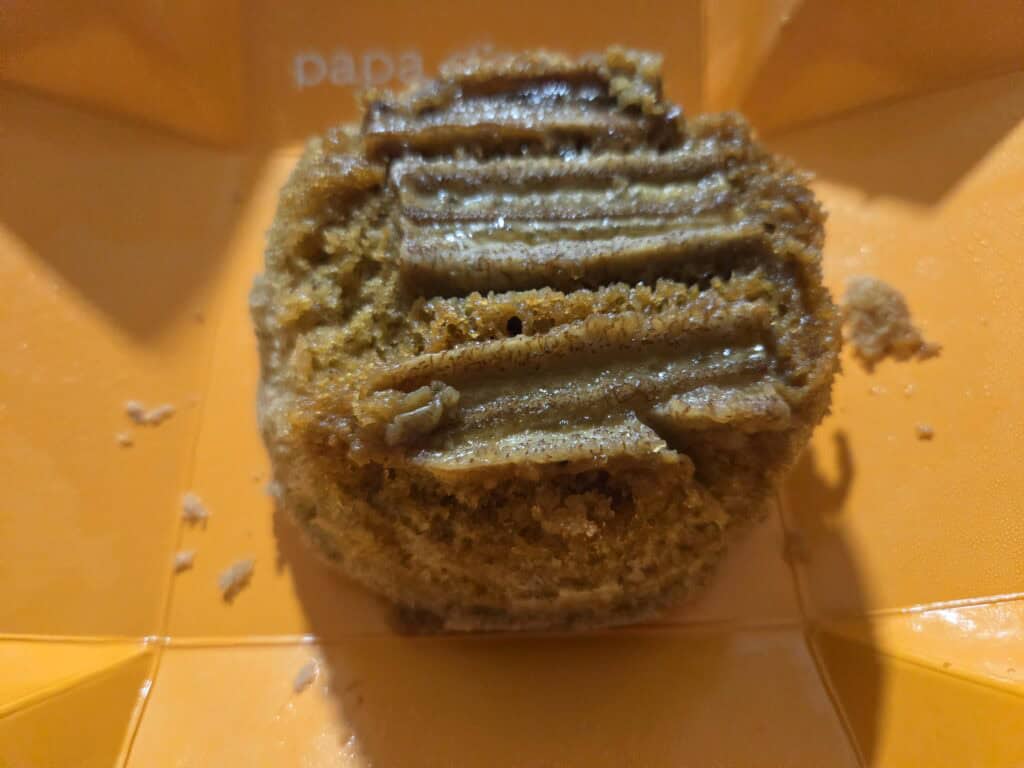
I decided to try the Banana Bread Malay Cake from the bakery and wash it down with some tangy Yuzu Lemonade. Malay Cake is thought to be a combination of Western influences and Eastern techniques.
When the British initially colonized Malaysia in 1826, British settlers wanted to bake their signature Victorian Sponge Cakes but lacked ovens in Malaysia. Local cooks in Malaysia caught on at the time and decided to create the cakes by steaming them with pandan leaves, rather than baking. They also used coconut milk instead of dairy and opted for dark brown sugar to bring out a rich caramelized flavor. This recipe is said to have traveled from Malaysia to Hong Kong where the dessert became a cultural staple.
This version consists of a “fluffy brown sugar cake” that has been steamed and “topped with caramelized bananas.” I always say “caramelized bananas” are like candy for adults, and the sweet banana topping on the Malay cake certainly didn’t disappoint. The melt-in-your-mouth cake had rich, deep undertones of molasses.
If you love banana bread but are looking for something that stands out with a cultural flair, this is the pastry for you.
This latte blends chicory-infused coffee with an Indian dessert
When you think of India, you may think of chai over coffee. While the latter is the more overlooked of the two caffeinated beverages in India, you shouldn’t sleep on some traditional South Indian filter coffee (not that you will sleep much after drinking it anyway).
Coffee is generally more popular than chai in South India and typically uses a special blend that incorporates chicory—a product of French colonizers who were rationing coffee in India during World War II. The filtering process involves a two-chamber steel filter that involves putting the coffee grounds and hot water into the upper chamber that has small holes. The brewed coffee slowly drips into the bottom chamber, which results in a bold, rich coffee and is traditionally served with milk and sugar.
IndiCo Coffee Company serves traditional South Indian filter coffee in the Flatiron area and it is even approved by my South Indian mom, who is a notorious coffee snob. When she visited for my birthday, I took her there and she bought extra coffee concentrate to take back to the hotel for her morning cup of joe the next day.
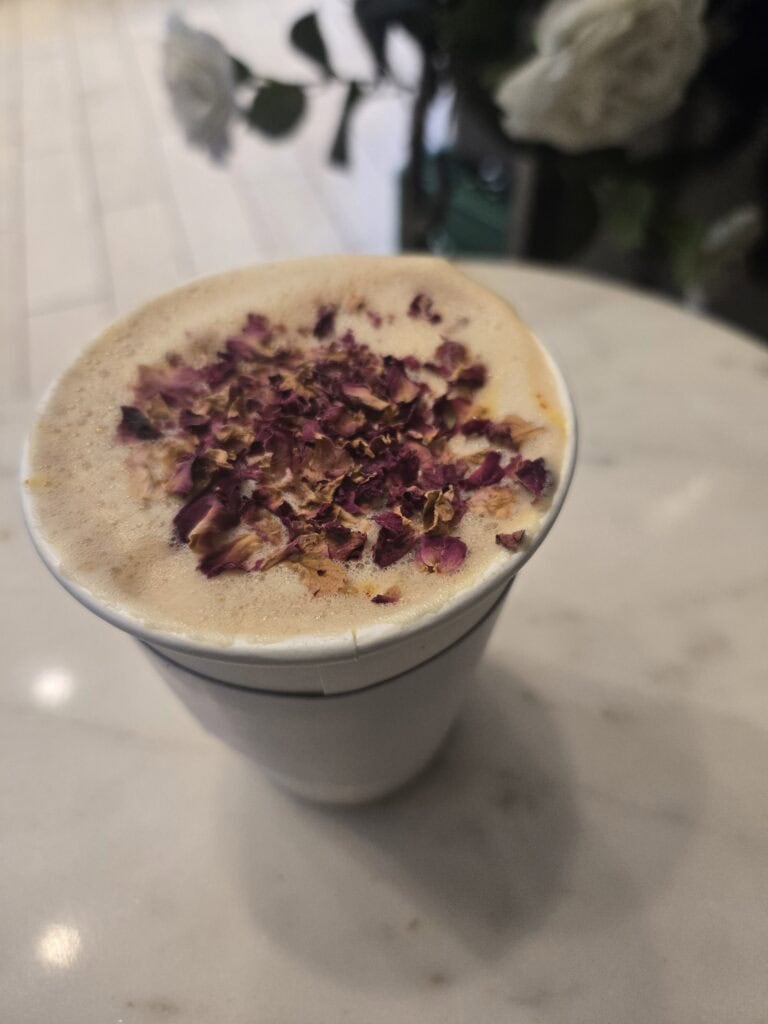
The coffee shop has started experimenting with seasonal dessert-inspired flavors as well and has a new Rasmalai Latte for the summer. Rasmalai is an Indian dessert that consists of “cardamom-flavored paneer cheese” that is soaked in a sugary milk liquid infused with almonds, cashews, and saffron.
The Rasmalai Latte incorporates “notes of cardamom, saffron, and a nut-blend” so that it really tastes like you’re sipping a rasmalai with hints of filter coffee. I’m lactose-intolerant and therefore had to order the latte with oat milk, which did make it a more expensive drink at just under $10. However, the spiced, lactonic overtones of the Rasmalai flavoring paired with the rich undertones of the slow-brewed filter coffee—not to mention the rose petals sprinkled on top—made the unique fusion coffee drink worth the splurge.
This Lebanese taqueria adds Mexican spice to a classic Middle Eastern favorite
Loved around the world, Mexican cuisine is ranked as the 11th best cuisine globally by Taste Atlas, and has also lent itself to many fusion dish concepts such as roti tacos and horchata lattes.
But there’s one no-frills taqueria that especially offers unique Mexican-Lebanese dishes. Based in the Cobble Hill neighborhood of Brooklyn, El Cedro opened in 2024 and the concept is inspired by a fusion of the flavors co-owner and chef Maher Chebaro grew up with in Beirut, along with the food he grew to love in Mexico City.
While El Cedro’s menu focuses on the intersection of Lebanese and Mexican ingredients and flavors, the two cultures have had history together. During the 1880s and 90s, Lebanese immigrants started moving to parts of Mexico such as Yucatán, Puebla, and Veracruz, with a wave of migration following the 1948 Arab-Israeli War and 1967 Six-Day War.
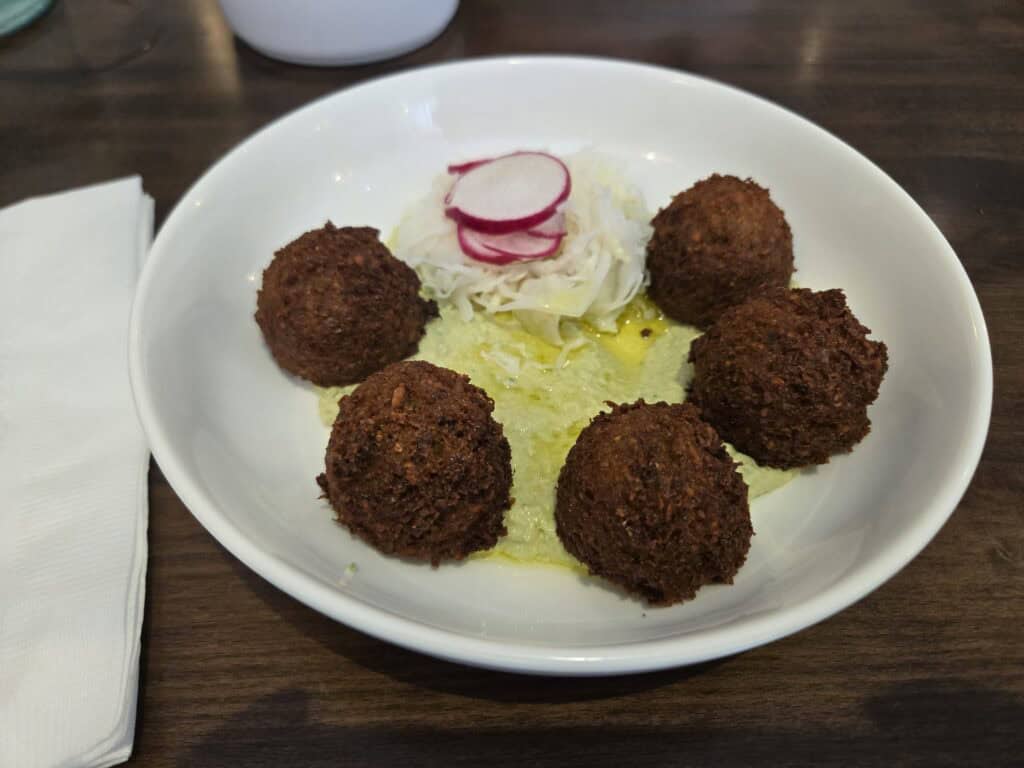
My friend works in downtown Brooklyn and joined me at El Cedro for a workday lunch hour. Looking at the menu, the Chipotle Falafel immediately stood out to both of us—can you name a better duo?
The restaurant adds chipotle flavoring to the falafel mix and serves the falafel with green hummus, citrus herb slaw, and a side of pita. The dish is vegan, which my friend appreciated, and we both noticed that it was the perfect size for a quick bite to eat that was still satiating, without being too heavy.
The falafel was packed with just the right amount of chipotle seasoning to complement the traditional Middle Eastern spices in the falafel. The warm, pillowy pita that came with the falafel was easily the best I’ve ever tasted and the falafel itself was absolute perfection with a crispy exterior that was soft inside.
I especially loved eating the dish as a stuffed pita by putting the falafel and hummus in the middle of the pita. We only wished we had more of the zesty green hummus, as the earthy undertones perfectly grounded the fiery falafel.
Chef Chebaro strictly believes in keeping things casual when it comes to restaurants, and it’s a belief system I will gladly co-sign. In the age of street food being sanitized into expensive “table-side” experiences and restaurants with impossibly long waitlists for reservations, Chebaro’s laidback take on dining is refreshing.
This pizza slice is topped with pasta for the ultimate carb-lover cheat meal
There are very few things as emblematic to NYC as a large slice of NY-style pizza. It wasn’t until I moved to the area that I realized how many different toppings are available by the slice. As a carboholic, I was pleasantly surprised to see pasta as one of those said topping options.
The origins of the penne pizza aren’t quite clear, but one of the earliest instances of the pasta-pizza fusion was from the mid-1980s when Famous Original Ray’s started getting calls from customers that recommended penne as a topping. Pizza shops all over NYC started selling penne-topped slices during the 1990s and it has now become a NYC specialty you can find at various pizzerias.
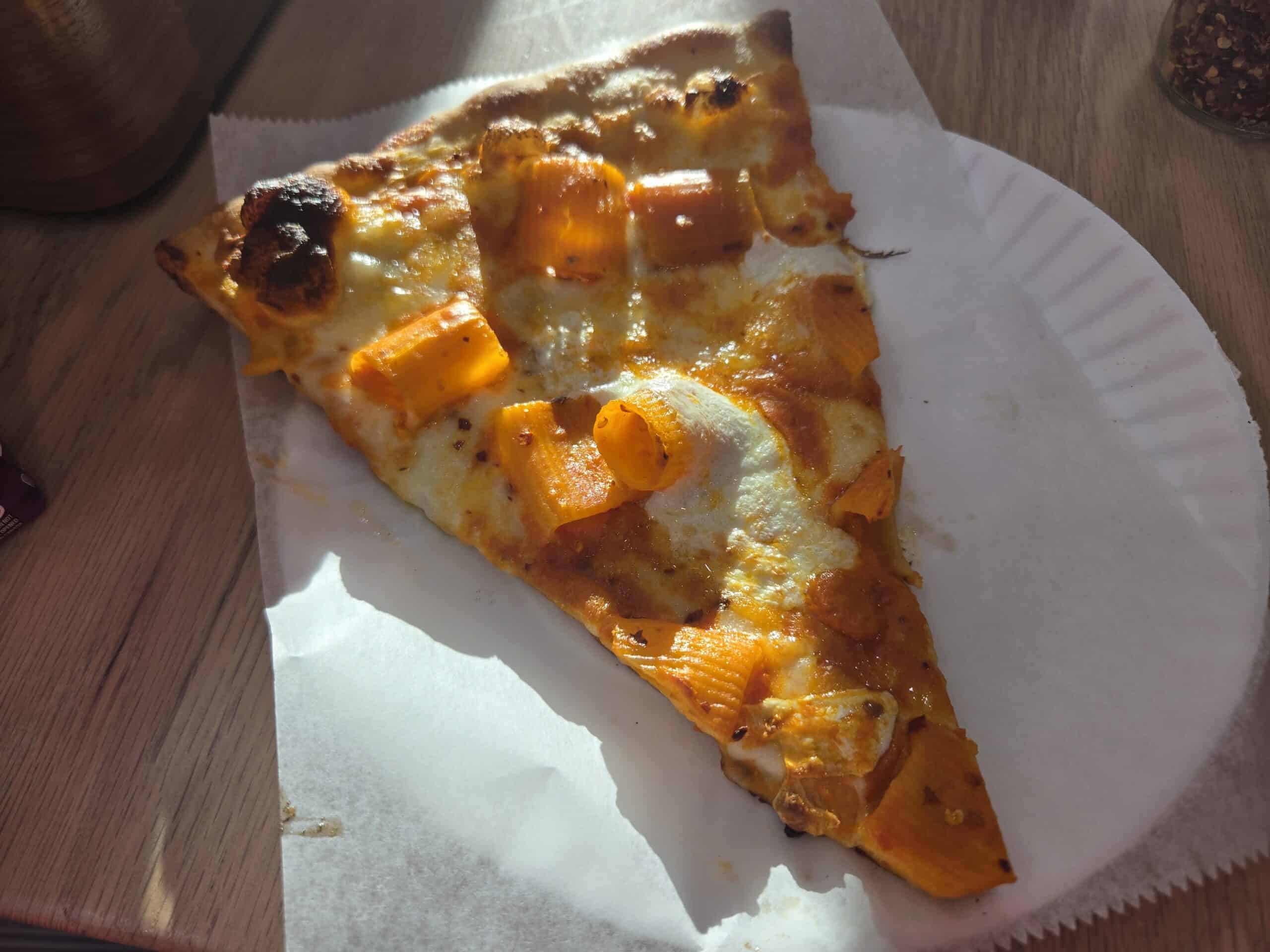
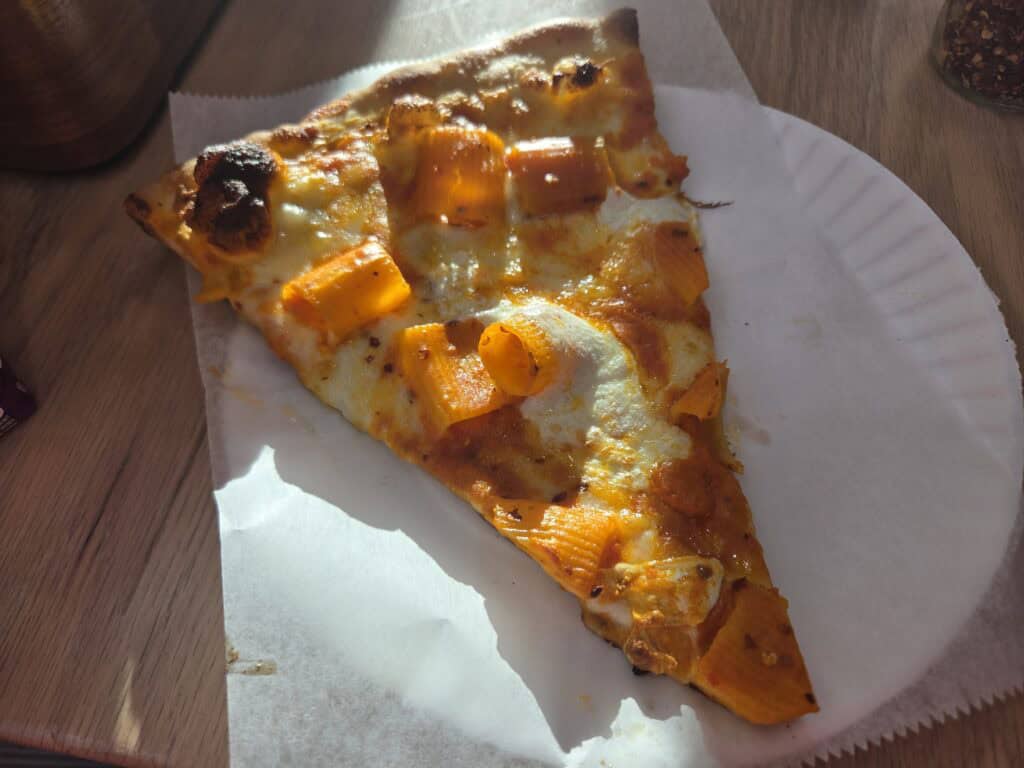
One local pizza chain, Marinara Pizza, expanded the “pasta-bilities” by adding spicy rigatoni as a topping to its pizza slices. I went to the chain’s Tribeca location after a workout and one Spicy Rigatoni slice was enough to completely fill me up.
I even preferred the texture of the rigatoni over penne as a pizza topping, as it was more tender and easier to bite into. I find that penne can sometimes harden, feel dense as a topping, and become overly chewy when baked in the pizza oven. The pizza came topped with fresh mozzarella that melts in your mouth, but the spicy vodka sauce was the highlight as it really did have the perfect kick to it.
So many times I’ve ordered a pizza or pasta dish that claimed to be “spicy,” but I couldn’t even tell. This pizza slice didn’t lie to me though like my trainer does when he says “no burpees.” I’m now hankering to try the chain’s Spicy Rigatoni Pasta on another one of my carb-loading cheat days.
This tiramisu cafe offers a coconut and pandan-infused flavor
Just recently, a couple of World Cup fans visiting from Austria and of Croatian descent spotted me walking past The Tailor Public House, which had all of its doors open. Although I had just finished a workout class, I couldn’t help but stop by for a chat. Within minutes, I was answering all of their questions about the city over a drink.
While there were many things that perplexed them about life in NYC and the U.S., they were pleasantly surprised to hear that some of the best cuisine in the city is Italian food—thanks to the generations of Italian-Americans who made New York City home and shared their delicious dishes with us.
Arguably one of the best of those dishes is tiramisu, and while there are plenty of restaurants that offer authentic tiramisu, there’s one cafe that has fusion takes on the classic for the more adventurous foodies.
Cafe2by2 calls itself “NYC’s first tiramisu cafe,” with a wide variety of tiramisu flavors (19 to be exact) that I have never seen before.
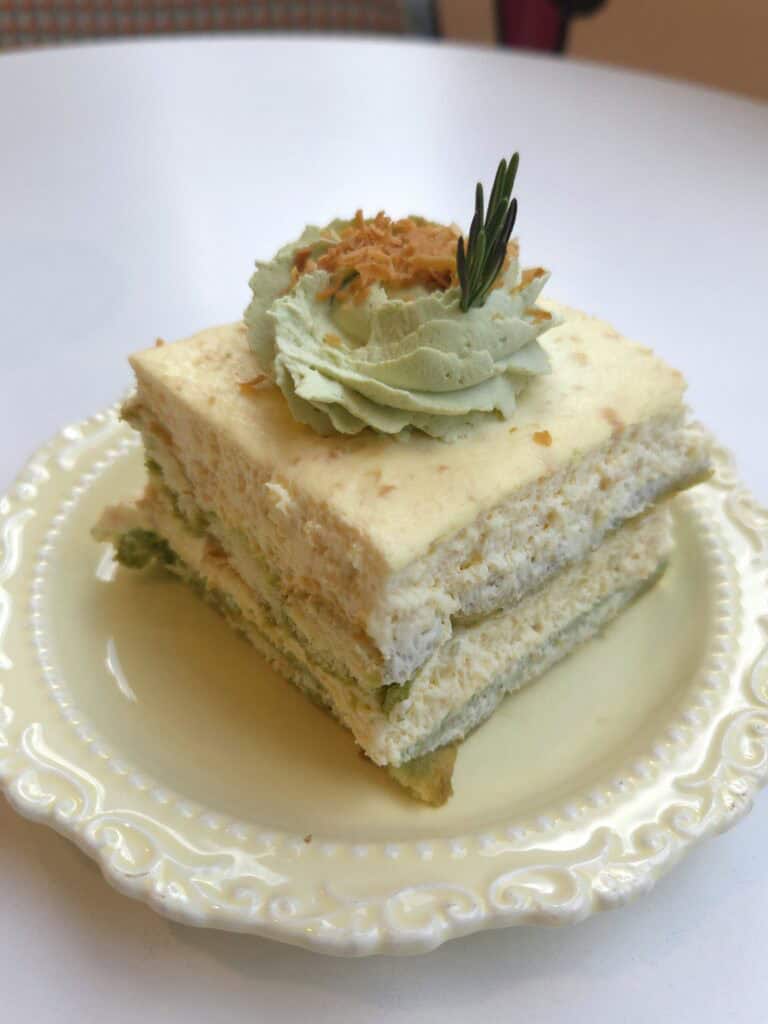
My last article that involved trying out Guy Fieri’s restaurant recommendations left me disappointed with a Pandan French Toast for lacking flavor. Since I’ve been curious as to what pandan actually tastes like, I opted for a redo and got the Pandan Coconut Tiramisu. The cafe describes the cake as being “light, fragrant, and made for the perfect tropical bite.”
The cake consists of ladyfingers soaked in pandan juice filled with coconut mascarpone cream, a top layer of pandan cream, and coconut flake topping. Within the very first bite, I noticed how the description actually matched the taste in real life. It really felt like I was transported to Phuket all over again with the creamy yet verdant flavors packed within the cake.
If you’re someone who doesn’t like chocolate or coffee-flavored desserts, this is the perfect tiramisu alternative. It’s also a great dessert to share with a date as the generous portion slice of the cake can easily be two servings. Since I personally love pistachio and chocolate, I’ll probably be going back for the Dubai Chocolate Tiramisu as well and bringing a fellow friend with a sweet tooth to help out.