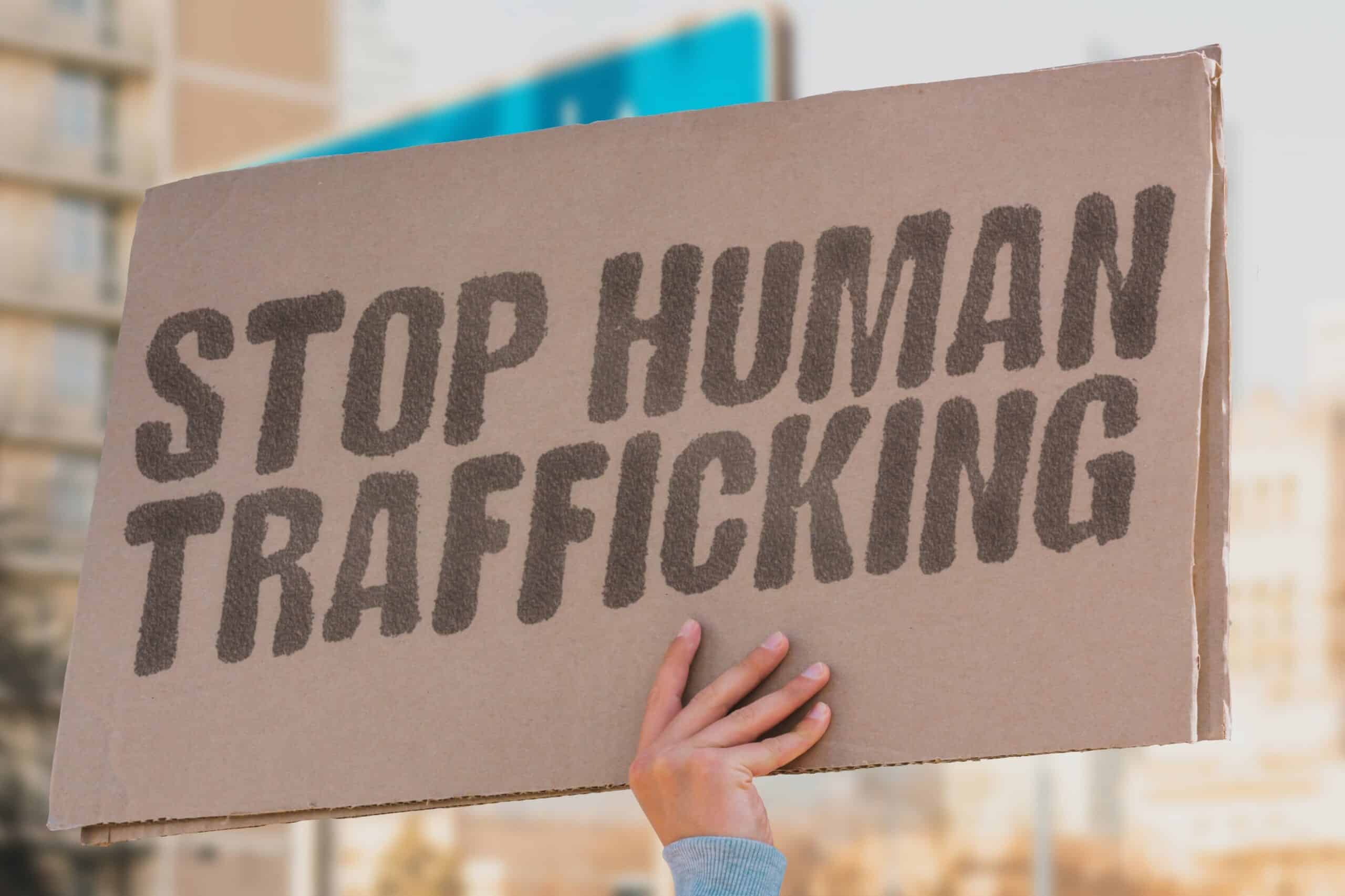
January is Slavery & Human Trafficking Prevention Month. Discover nine North Carolina organizations fighting trafficking and learn how to support their mission.
Human trafficking and modern-day slavery are gaining attention in the news lately, especially with the partial release of the Epstein files and the involvement of high-level leaders from around the world. However, it’s a pervasive issue that predates these recent headlines and extends beyond high-profile cases.
Right at home, N.C. has often been listed as one of the top ten states for volume of human trafficking reports, according to Speak Up NC. The N.C. Department of Administration cites that in the 2024-2025 fiscal year, “state-funded victim services agencies reported serving 507 human trafficking survivors” in N.C. Amid these statistics, several organizations throughout the state have been working tirelessly with policymakers to enact legislation against trafficking and have been showing signs of progress.
In fact, the state government passed several policies in 2024 that provided more resources toward survivors and required anyone working at “lodging establishments and vacation rentals” to go through mandatory training to help them spot the signs of human trafficking.
These were the signs of progress former President Barack Obama hoped to see come from his 2010 presidential proclamation, in which he declared January as National Slavery & Human Trafficking Prevention Month, to increase public awareness on the issue of modern slavery and promote organizations that are dedicated to fighting human trafficking.
Whether you’re looking to donate to an organization this month or are interested in serving as a volunteer, there are several organizations across N.C. that provide support to human trafficking survivors and generate awareness on the issue. For a comprehensive list of all N.C. organizations that are dedicated to supporting human trafficking survivors, the North Carolina Human Trafficking Commission, which is a part of the N.C. Judicial Branch, has an updated directory of resources.
The North Carolina Coalition Against Sexual Assault believes human trafficking needs more attention
Human trafficking is defined as the exploitation of people through force, fraudulent tactics, or coercion for commercial sex or forced labor. The North Carolina Coalition Against Sexual Assault (NCCASA) believes that sexual violence organizations cannot continue to ignore human trafficking, as even labor trafficking often involves sexual coercion and violence. NCCASA collaborated with the NC Attorney General and set up an interdisciplinary meeting on human trafficking in 2004.
After the meeting, N.C. was named as one of the country’s 42 “National Specialized Task Forces.” NCCASA assists rape crisis centers that are increasingly receiving calls from human trafficking survivors by providing technical training. The organization believes in utilizing a holistic public health approach toward human trafficking that considers cultural risk factors.
According to NCCASA, racism, xenophobia, and transphobia create significant social and economic barriers that can leave certain populations more vulnerable to exploitation. Addressing these root causes empowers the community and proactively prevents human trafficking. The organization takes donations through PayPal and encourages people to sign up to their e-newsletter to stay informed on legislative actions being taken to target human trafficking.
NC Coalition Against Human Trafficking uses an interdisciplinary team to tackle trafficking
NC Coalition Against Human Trafficking (NCCAHT) formed after the 2004 N.C. Attorney General meeting on human trafficking, which identified “recognition, identification, protection, prosecution, liberation, and empowerment” as important factors to pinpoint when addressing human trafficking cases. The group consists of interdisciplinary professionals working across fields such as law enforcement, social services, public policy, and the legal sector. Together they work to prosecute traffickers, in addition to identifying survivors and providing them resources.
The organization takes donations online.
Contact Info: nccaht@gmail.com
North Carolina Stop Human Trafficking advocates for anti-trafficking legislation
North Carolina Stop Human Trafficking is an advocacy organization that works with lawmakers to promote legislation geared toward combatting human trafficking and providing resources for survivors. Examples of bills they’ve backed include the SAFE Child Act, House Bill 198/Senate Bill 200 – Human Trafficking Commission Recommendations, and House Bill 37 – Child Sex Abuse/Extend Statute of Limitations. The organization also provides educational training for professionals whose work may involve assisting trafficking survivors such as law enforcement, healthcare workers, people working in the judicial system, etc.
To promote ethical labor practices, North Carolina Stop Human Trafficking also sells fair trade products through an online shop called Fair Traders Project, and uses the money to fund their community awareness programs. The organization also takes donations and has several volunteer roles, including fundraising, event management, public speaking, and office assistance. Community members are also encouraged to attend the monthly awareness meetings in Greenville, N.C., and to speak out—whether that means calling state political leaders on important anti-trafficking legislation, or reporting any suspicious activity.
Contact Info:
- Founder: Pam Strickland, pam@ncstophumantrafficking.org
- General Email: info@ncstophumantrafficking.org
A Safe Place to Go gives survivors the resources for a fresh start
If you live in Eastern N.C., A Safe Place To Go in Wilmington is an organization dedicated to supporting sex trafficking survivors who are adult women, specifically targeting commercial sexual exploitation. While the group is based in Wilmington, they offer support on a regional, national, and international scale. The organization offers a long-term housing program, mental health counseling, therapy for substance use, career support and training in life skills.
A Safe Place to Go provides direct outreach in area jails and spreads awareness to the community. The group also has several volunteer roles for those who want to support the cause involving duties such as packing supply bags for survivors, teaching life skills workshops, and helping out at an outreach shelter. The organization takes monetary donations in addition to gently used clothing and household supplies.
Contact Info:
- Executive Director: Dawn Ferrer, dawn@asafeplacetogo.com, 855-723- 7529 ext. 4 24/7
- Crisis Hotline: 855-723-7529 ext. 1
- General Email: info@asafeplacetogo.com
Project NO REST protects youth trafficking survivors
In conjunction with the University of North Carolina – Chapel Hill’s School of Social Work, this initiative sheds light on the sexual exploitation and trafficking of minors and young adults. Project NO REST focuses on the labor and sexual trafficking of N.C. survivors, ages 25 and below, especially those who were in the child welfare system. NO REST is an acronym that stands for North Carolina Organizing and Responding to the Exploitation and Sexual Trafficking of Children.
The goal is to reduce human trafficking and provide better outcomes for survivors. Project NO REST has worked alongside various stakeholders in the state to map out a tangible plan that addresses youth trafficking. The organization is forming pilot projects to help youth trafficking survivors and plans to share the information they gather to assist other states in stopping human trafficking, as well as developing policy ideas geared toward protecting youth from being trafficked.
Child welfare social workers and foster parents can inform themselves regarding the trafficking of youth in N.C. by looking through the curriculum and short training videos Project NO REST has created on its website. People interested in volunteering can fill out the online form.
Contact Info:
- Professor Dean Duncan, dfduncan@email.unc.edu, 919-962-7897
- General Email: project_no_rest@unc.edu
CrossRoads: Sexual Assault Response & Resource Center, Inc. supports survivors through the justice system
Human trafficking survivors in the Triad area can reach out to CrossRoads: Sexual Assault Response & Resource Center for support. The organization offers mental health therapy, case management, emergency shelter/supplies for survivors, and collaborates with Project Hope to help “divert individuals with prostitution charges” at local jails. CrossRoads also provides advocacy support, working with the District Attorney’s office if a survivor is pursuing legal action.
If law enforcement officials or social services have requested for a forensic interview, CrossRoads provides interview space with a trained specialist that uses “the RADAR (Recognizing Abuse Disclosure types and Responding) interviewing protocol.” The organization also raises awareness about this issue in the wider community.
CrossRoads works with The North Carolina Human Trafficking Commission, NCCAHT, and Project NO REST. The organization is open to community volunteers and takes donations.
Contact Info:
- Meredith Peffley, mpeffley@crossroadscares.org
- General Email: crossroads@crossroadscares.org
- Alamance Co. Phone: 336-228-0813
- Caswell Co. Phone: 336-694-4250
- Person Co. Phone: 336-228-0813
- 24/7 Crisis Line: 336-228-0360
Goodwill Industries of Eastern North Carolina offers educational and occupational resources
Based in Durham, the Goodwill Industries of Eastern North Carolina (GIENC) covers Eastern N.C. counties and the Triangle area, including Wake, Orange, and Durham counties. The organization offers a multitude of resources to minor and adult victims of human trafficking, both labor and sexual exploitation. GIENC assists survivors in securing employment through its Accelerated Career Training Program, which provides services such as resume writing, leadership development, and interview coaching.
There is also a Cultural Immersion Program that specifically focuses on helping refugees become acclimated to life here as they search for job opportunities. Survivors can also request for customized educational workshops. GIENC conducts outreach to “vulnerable and high-risk populations,” provides resources to tackle food insecurity, and offers programming support toward community police initiatives.
GIENC also has a Community Action Team of volunteers that helps survivors with any pressing needs. To volunteer, you can fill out their interest form. GIENC also takes monetary donations and gently used clothing and household items.
Contact Info: vigilant-one@goodwillenc.org
The NC Justice Center focuses on immigrant workers’ rights and labor trafficking survivors
Based in Raleigh, NC Justice Center has a workers’ rights initiative called the Immigrant and Refugee Rights Program, which provides coverage to the whole state. Their target population includes survivors of labor trafficking, offering legal representation for significant cases involving a “large number of workers,” and information on policies and financial support for survivors. The organization checks in on employees at farmworker labor sites as a part of its outreach efforts.
NC Justice Center also conducts research that it uses to make policy recommendations, advocates for public policy proposals, and produces informative content for media outlets. The organization takes donations and encourages people to be vocal in supporting economic justice causes.
Contact Info:
- Senior Attorney: Carol Brooke, carol@ncjustice.org, 919-856-2144
- General Phone: 919-856-2570, General Email: contact@ncjustice.org
Our Voice Asheville provides comprehensive support to survivors
For those who live in Western N.C., Our Voice Asheville is an organization that offers several resources to primary and secondary survivors who are 13+ years old. Available 24/7, Our Voice Asheville provides mental health counseling services, crisis case management, and connects you to legal resources. The organization conducts outreach at bars in Western N.C., and spreads prevention-based awareness throughout the community.
For those interested in volunteering, several outreach and crisis line management opportunities are available to those who complete one of the mandatory Volunteer Advocate Training sessions. There are several upcoming awareness workshops and fundraisers, as well as a t-shirt contest centered on the theme “Believe Survivors.” The winning t-shirt design will be the organization’s 2026 t-shirt.
The organization also takes donations and has informative resources online, including blog articles and a podcast.
Contact Info:
- Executive Director: Rita Sneider-Cotter, ritas@ourvoicenc.org
- 24/7 Crisis Line: 828-255-7576
- General Phone: 828-252-2562
If you or a loved one are a victim of human trafficking and need immediate assistance, call the National Human Trafficking Hotline at 1-888-373-7888 or text BeFree to 233733. The hotline is available 24/7 everyday and offers over 200 different languages.