Human trafficking and slavery seem like faraway problems, but they can happen in Wisconsin. Fortunately, these organizations find local solutions.
Slavery and human trafficking might seem like problems that could never happen close to home. It’s easy to think of them as things that happened in the past, or on different continents, but certainly not in a place like Wisconsin, right? The National Human Trafficking Hotline has identified more than 218,000 victims of human trafficking in the country since 2007, when the hotline first began operating, with 111 cases of human trafficking identified in Wisconsin in 2024.
That’s why Slavery and Human Trafficking Prevention Month, which is recognized in the United States each January, is so important—it raises awareness of the oftentimes overlooked issue that impacts local communities throughout the country.
The month has been observed since 2010, when former President Barack Obama declared that January would be National Slavery and Human Trafficking Prevention Month in the United States in a presidential proclamation. According to the United States Department of State, the tradition has been continued each year by subsequent presidents.
The goal of the proclamation was to raise awareness of human trafficking. They also serve to highlight some of the achievements that the country has made toward ending human trafficking, including the first convening of the U.S. Advisory Council on Human Trafficking in 2016, and the launch of an anti-trafficking program, the Program to End Modern Slavery, in 2017.
It’s not just large, national efforts to end human trafficking that can make a difference, though. There are numerous organizations throughout the State of Wisconsin that work to eradicate trafficking and modern slavery and offer support and resources to survivors. Each organization accepts monetary donations and donations of needed items, and some also offer volunteer opportunities, giving Wisconsinites plenty of ways to support the effort to end human trafficking.
1. 5-stones
P.O. Box 2163, Appleton
When 5-stones founder Connie Campbell went on a mission trip in 2010, it served as an eye-opening experience. The Wisconsin resident witnessed young girls being used in a brothel, according to 5-stones’ website. After returning home, Campbell founded and served as director of 5-stones, an Appleton-based organization that serves to raise awareness of and help prevent human trafficking.
The organization has five main priorities, or “stones,” that it focuses on: raising awareness of human trafficking, increasing education on the subject, helping to prevent human trafficking from happening, networking and connecting local partners and organizations with victims and survivors of human trafficking, and collaborating with state and local agencies to fight against human trafficking.
5-stones accepts tax-deductible donations through the organization’s website. Proceeds go toward 5-stones’ education and awareness initiatives, as well as advocacy and training programs. Additionally, the Fox Valley-based organization can be supported through volunteering opportunities.
2. The Bridge to Hope
2110 4th Ave. N, Menomonie
For more than four decades, The Bridge to Hope has been working toward the goal of ending domestic abuse, sexual assault, and human trafficking. The organization, which is available 24/7, has a mission to offer support to survivors, as well as educate the community to help raise awareness and ideally prevent domestic abuse, sexual assault, and human trafficking from happening.
The Bridge to Hope works toward its mission by offering several services targeted toward aiding survivors of sexual assault, domestic abuse, and human trafficking, including offering housing and food assistance, support groups, and shelter services. It also hosts fundraising events, including paint-and-sip, bingo nights, and walkathons.
The organization, which has locations in Menomonie and Durand, accepts donations over the phone, through mailed checks, or online. Additionally, The Bridge to Hope accepts donations of items like tampons, diapers, and food. A full list of items the organization regularly needs is available on its website.

3. United Migrant Opportunity Services (UMOS)
2701 South Chase Ave., Suite B, Milwaukee
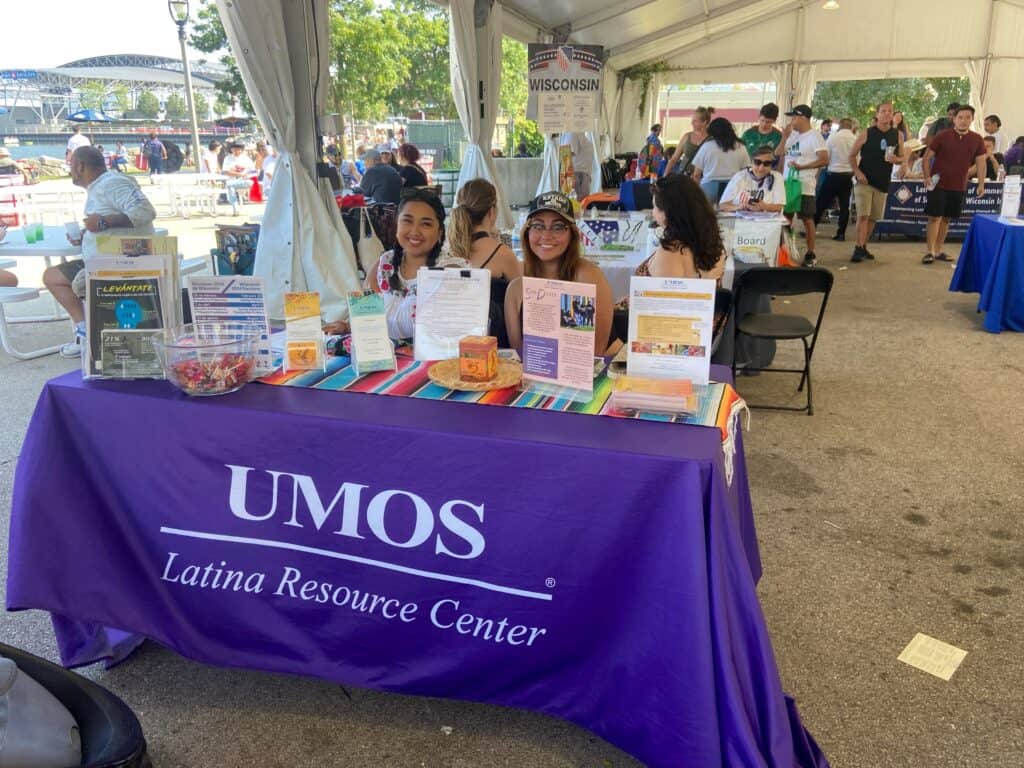
Providing support and services to human trafficking survivors is just one of the many services that United Migrant Opportunity Services (UMOS), a Milwaukee-based organization, offers. The organization, founded in 1965, also helps community members receive training, education, and access to jobs through its workforce development initiatives. Additionally, it offers childcare, a food pantry, and a Latina Resource Center.
The organization’s Latina Resource Center operates the Wisconsin Regional Anti-Human Trafficking Program throughout the state. The goals of the program are to raise awareness about human trafficking statewide, so it can be more easily identified and victims can be protected, and it offers training for professionals who might encounter human trafficking victims, as well as screening services for survivors.
UMOS accepts donations on its website.
4. Hope House of South Central Wisconsin
720 Ash St., Baraboo
The Hope House of South Central Wisconsin has undergone some transformation over its four decades of existence. First formed as the Sauk County Task Force on Domestic Abuse in 1983, the organization has grown and expanded in its mission, changing its name to Hope House of South Central Wisconsin in 1997.
Human trafficking survivors, or anyone who is concerned about a potential victim, can access the organization through its 24/7 confidential helpline, where advocates can provide support. Hope House of South Central Wisconsin also offers advocacy, supportive counseling, and resources for human trafficking survivors.
Anyone interested in donating to Hope House of South Central Wisconsin can visit the organization’s donation page on its website or deliver a check to its headquarters in Baraboo. Hope House of South Central Wisconsin also has a regularly updated wish list on its website, listing items that are currently in high demand, like deodorant, wipes, and diapers.
5. Sojourner Family Peace Center
619 West Walnut St., Milwaukee
Serving more than 10,000 clients per year, Sojourner Family Peace Center in Milwaukee is the state’s largest nonprofit provider of domestic violence prevention services. The nonprofit offers resources like a 24-hour hotline, a 53-bed emergency crisis shelter, and support groups to survivors of sexual assault, domestic violence, and human trafficking.
The organization also works as part of the core team that makes up the Milwaukee Joint Human Trafficking Task Force, alongside the Milwaukee Police Department and the United States Attorney’s Office.
Donations to Sojourner Family Peace Center can be made through the organization’s website or by purchasing something from its Amazon Wish List. It also regularly seeks volunteers in a variety of settings, including hotline administrative roles and shelter kitchen volunteers. For current volunteer opportunities, check out Sojourner Family Peace Center’s website.
6. Fight to End Exploitation
P.O. Box 85687, Racine
The Fight to End Exploitation initially started small, as a group of Racine Dominicans, a group of religious sisters based in the southeastern Wisconsin city, who launched a campaign to raise awareness about human trafficking in 2012. The organization grew quickly and evolved into the Racine Coalition Against Human Trafficking, participating in federal initiatives to recover juvenile victims of human trafficking in 2014, 2015, and 2016, and becoming a 501(c)(3) in 2015.
In 2017, the organization changed its name to Fight to End Exploitation to showcase its goals of expanding its reach beyond Racine County and partnering with statewide and national anti-trafficking organizations. Some of its goals include preventing trafficking through raising awareness of it, and how it can be a local issue, and also offering training to professionals who may encounter victims of human trafficking.
Donations to Fight to End Exploitation can be made on its website, and the organization also accepts donations by check.
7. End Domestic Abuse Wisconsin
1400 East Washington Ave. #227, Madison
First founded in 1978, End Domestic Abuse Wisconsin has been working with survivors of sexual assault, domestic abuse, and human trafficking for nearly 50 years. At its founding, the organization was named the Wisconsin Coalition Against Woman Abuse, and was led by volunteers who would discuss the need for statewide advocacy on the topic.
The organization primarily focuses on working with survivors of domestic abuse, but has broadened its scope since its founding. In its work to help end the problem of domestic abuse, as well as sexual assault and human trafficking, End Domestic Abuse Wisconsin offers a variety of services to survivors, from legal counseling to helping survivors find housing. The organization also provides resources on its website specifically for survivors of human trafficking.
Donations to the organization can be made through its website.
8. HER Alliance
P.O. Box 956, Green Bay
One of the most recent nonprofit organizations that is seeking to help combat human trafficking, HER (which stands for Heal, Empower, and Restore) Alliance started up in 2025. Formerly known as Awaken, HER Alliance became an independent nonprofit organization with a goal to empower survivors of sexual exploitation and sex trafficking, and also raise awareness of the issue through educating the local community.
The Green Bay-based organization recently canvassed more than 370 businesses in the city, distributing awareness materials. It also operates a hotline, which connected 10 individuals to services and resources last year, according to the organization’s newsletter.
HER Alliance accepts donations on its website and also has an online store selling merchandise like t-shirts, mugs, and tote bags, with proceeds going back to the nonprofit organization. Volunteers are also welcome, and can fill out an interest form online.
9. Fierce Freedom
421 Graham Ave., Eau Claire
Some people don’t realize how close to home human trafficking can be, but Fierce Freedom, a nonprofit organization based in Eau Claire, wants to raise awareness that it can be happening anywhere. They are doing that through several of the organization’s initiatives, such as offering free virtual training, including one that showcases the real faces of human trafficking. The organization also lists warning signs to look out for that someone might be being trafficked. Fierce Freedom offers training to community members, including police officers and workers in the hospitality industry in identifying and reacting to human trafficking if they encounter it.
Additionally, the organization speaks to numerous groups, such as schools and churches, to raise awareness of the issue and how it may be happening locally.
Fierce Freedom accepts donations on its website and encourages donors to use their birthday as an opportunity to raise funds for the organization.