Many of Wisconsin’s place names have Native American origins. Learn the history behind nine of them.
Ever wonder why so many Wisconsin towns start with “Wau”? The answer lies in the state’s Native American heritage.
UW-Madison professors Monica Macaulay and Brian McInnes told Wisconsin Public Radio that while “wau” appears frequently, each name has its own distinct meaning—from Wausau’s “far away” to Wauwatosa’s “firefly.” We do know they’re all derived from a handful of language families, including Algonquian, Siouan, and Iroquoian. But in many cases, it’s difficult to determine exactly what prompted the naming of certain places, especially given how much of Indigenous history and languages have been erased over time.
That’s why McInnes and Macaulay think it’s so important to investigate these subjects and ensure that Native American languages, traditions, and origins are preserved, protected, and maintained. In an effort to aid in that preservation, let’s explore the history behind nine Native American town names in the state.
Milwaukee
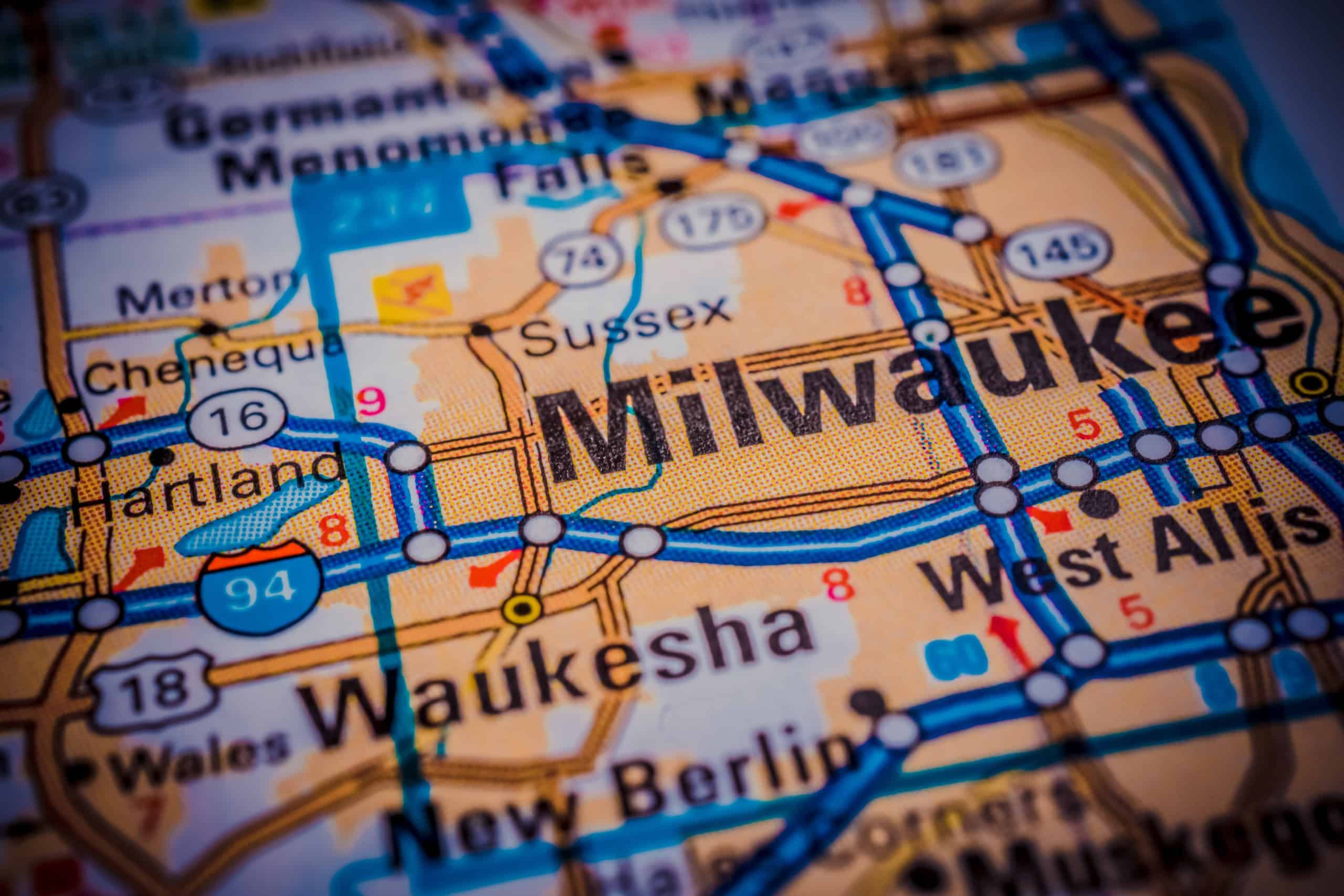
The city of Milwaukee’s website notes that its name is likely derived from a Potawatomi word pronounced as “Mahn-ah-wauk,” which translates to “council grounds.” The first record of the name dates back to 1761, when a British officer by the name of James Gorrell wrote it down as “Milwacky.”
Manitowoc
According to Discover Wisconsin, Manitowoc has Ojibwe origins. The name was originally “Munedowk,” which means “river of bad spirits” or “spirit woods” in the Native American language. Some translations say that it means “Devil’s den.” The publication notes that, regardless of the exact translation, Ojibwe members likely referred to the area as “Munedowk” as a general way to describe the surrounding woods. The “spirit” and “Devil” aspects of the translation were reportedly influenced by the tribe’s folkloric tales.
Kenosha
The origins of Kenosha have been debated over the years, with some historians believing the name derives from the Potawatomi and others thinking it came from the Menominee. The most commonly accepted origin of the name is that it comes from the Chippewa word “kinoje,” meaning “pike,” “pickerel,” or “place of the pike.”
It was originally called Southport in 1837 and was not officially referred to as Kenosha until 1850. Peter Vieau, a fur trader, wrote in 1889 that the Native people he encountered always called the area Keeneau-sha-Kau-ning, which translates to “pickerel’s abiding place.” This is just one of many examples of how Indigenous languages overlap, as each of these terms refers to pike and pickerel, even though it’s hard to pinpoint the exact origins of the name itself.
Wauwatosa
The Milwaukee Journal Sentinel notes that Wauwatosa was spelled as “Wauwautosa” in 1842 when it was originally incorporated as a town. The name draws inspiration from two sources: the Potawatomi Chief Wauwataesie and the Potawatomi word meaning “firefly.” This aligns with something Brian McInnes told Wisconsin Public Radio in 2020. He said, “So when you hear Wauwatosa, it makes you think of the old Potawatomi word for ‘firefly.’ Especially with the reduplicated—the double “wau,” refers to something which might be flashing or intermittent in its frequency. Something bright, some kind of light, beautiful effervescence coming off of something. To have that meaning or association, would be a very positive kind of meaning, and most welcome.”
Ashippun
Ashippun has Potawatomi, Menominee, and Chippewa origins, according to the town’s website. It’s similar to a term the Native tribes used to describe a raccoon: “ashippun,” “aissibun,” and “aspipun.” The website states that the name Ashippun can also be traced to the Native Algonquin tribe in Virginia.
Mequon
The name Mequon is derived from the word “Miguan,” which translates to “ladle.” The Milwaukee Journal Sentinel wrote in 2021 that the Menominee and Potawatomi people occupied the area before it was taken over by European settlers, suggesting the name likely has origins in both tribes. The region was called Mequon because the rounded bends of nearby rivers mimic the shape of a ladle.
Sheboygan
Sheboygan is another town name that can trace its origins to several Native American tribes in Wisconsin. The city’s website states that the most likely translation is derived from the Chippewa people, who used the word to describe a “passage or waterway between the lakes.” The Ojibwe reportedly share a similar translation meaning “the passage.” The first official mention of it came in the 1600s, when French explorers referred to it as Sheboygan in their writings.
Ozaukee
The Chippewa people used the word “Osagig” to describe the Sauk tribe, and this is likely where the name Ozaukee comes from. The original term, “Osagig,” translates to both “people of yellow earth” and “people living at the mouth of a river.” The “yellow earth” the Chippewa referred to is most likely the clay and sand found throughout the county.
Nashotah
Nashotah is a name stemming from the word “nijode” or “twin” in the Potawatomi language. It’s essentially a rough translation of “nishota” or “the twins” and “neesh-sh-da,” which means “one of a pair.”