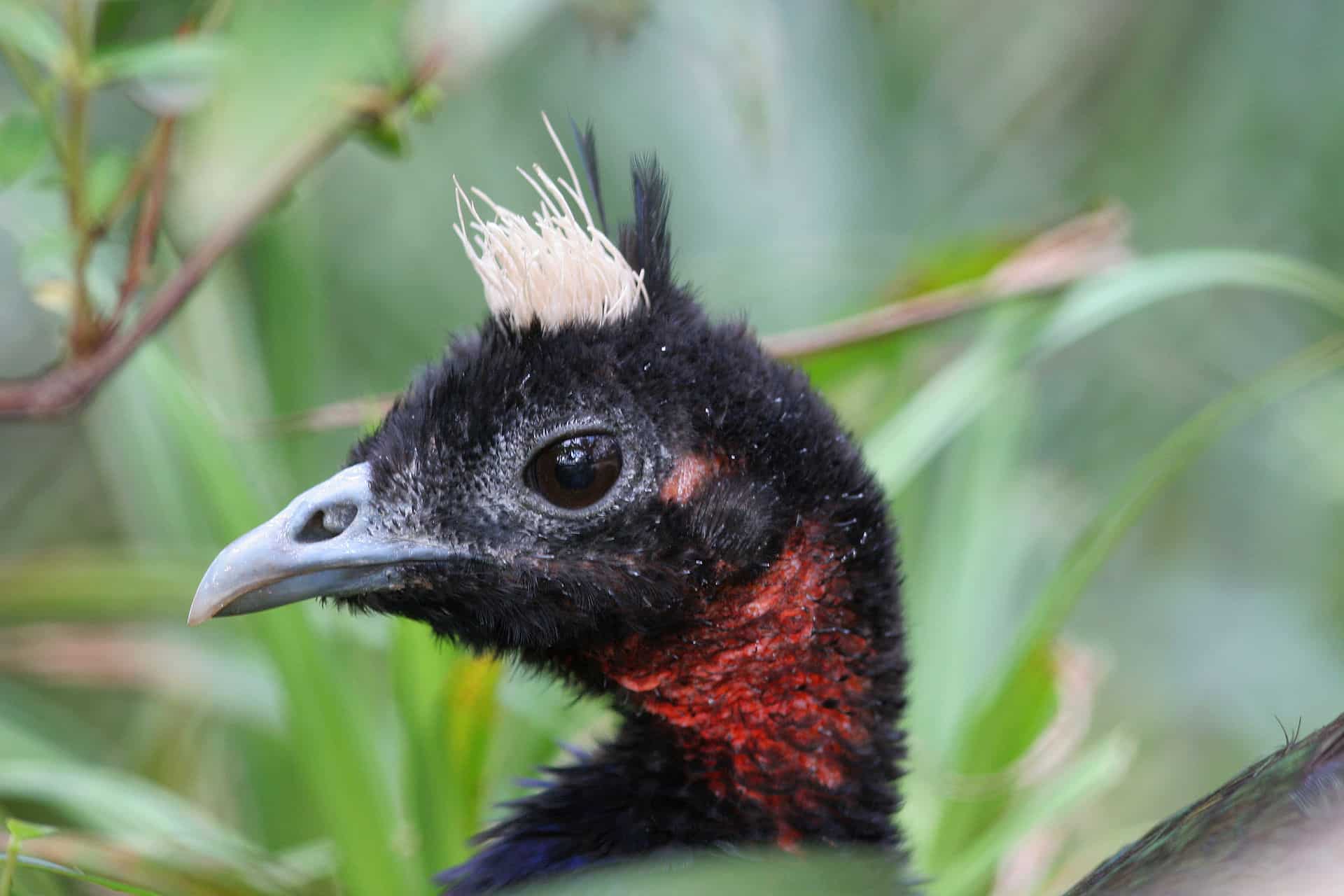
Two Congo peafowl chicks recently hatched at the San Antonio Zoo. Here’s everything you need to know about this rare bird.
The San Antonio Zoo is celebrating the recent hatching of two Congo peafowl chicks. The species is considered “Near Threatened,” which means they aren’t at risk of going extinct yet, but are likely to become endangered in the near future. Many zoos, like the one in San Antonio, have been working for decades to help breed and protect the rare birds through sustained conservation efforts. Congo peafowls have been raised and cared for at the San Antonio Zoo since the late 1980s, which has seen 67 chicks born over the decades. Its breeding program was shut down for several years but reopened in 2024. Since then, 14 new chicks have hatched, which is more than every other zoo in the US combined! Sounds pretty incredible if you ask me.
What’s even more impressive is that these adorable creatures are only naturally found in the Democratic Republic of the Congo, and it’s uncommon to see them in most zoos. The CEO and president of the San Antonio Zoo, Tim Morrow, said of the momentous occasion, “These Congo peafowl chicks represent an important step forward for a species that is rarely seen and found only in one part of the world.” The newest hatchlings will be cared for by the organization’s Aviculture team inside of a facility specially designed to raise chicks, fittingly deemed “The Nest.” Visitors are not currently allowed to see the two Congo peafowl chicks, however, their parents can be visited in Bird Alley. Older hatchlings may be seen in the F.C. Hixon Birdhouse on the zoo’s property as well.
For more information on how to plan your visit to the San Antonio Zoo to see the Congo peafowls, among many other animals, click here.
What are Congo peafowls?
View this post on Instagram
Congo peafowls are related to peacocks and are equally colorful, though peafowls are more similar in size to a chicken. This rare breed from Congo is “Near Threatened” due to contributing factors like hunting and a loss of natural habitat. In the wild, they’re primarily found in the lowland portion of the Democratic Republic of the Congo’s rainforest. It’s believed that Congo peafowls are omnivores, meaning they eat both plants and animals. Hatchlings tend to survive on insects alone in the first week after they’re born.
There’s still much to be learned about this rare bird, including its reproduction habits in the wild. Scientists and researchers know, though, that female Congo peafowls only lay two or three eggs at a time. This makes conservation efforts even more important as so few birds are being born, and those that are face numerous challenges in the wild.
The Congo peafowl was originally discovered by Dr. James P. Chapin. In 1913, Chapin was on a three-year expedition in the Congo when he met a man in the Ituri forest wearing a Congolese headdress containing a unique feather Chapin hadn’t seen before. It wasn’t until 26 years later, though, that Chapin was able to match that feather to another he found in a Belgian museum.
Writing about the discovery, he said, “Thus it became perfectly clear that there lived a large member of the pheasant family with some resemblance to a peacock, apparently so scarce that it is rarely killed.” He was able to return to the Congo to find four peafowl in the wild, which he then named “afropavo congensis,” or “Congo peafowl.”