Dr. Lincoln Ragsdale Sr. was an instrumental member of Phoenix’s community. Here’s how he became one of the city’s pioneers despite an onslaught of racism.
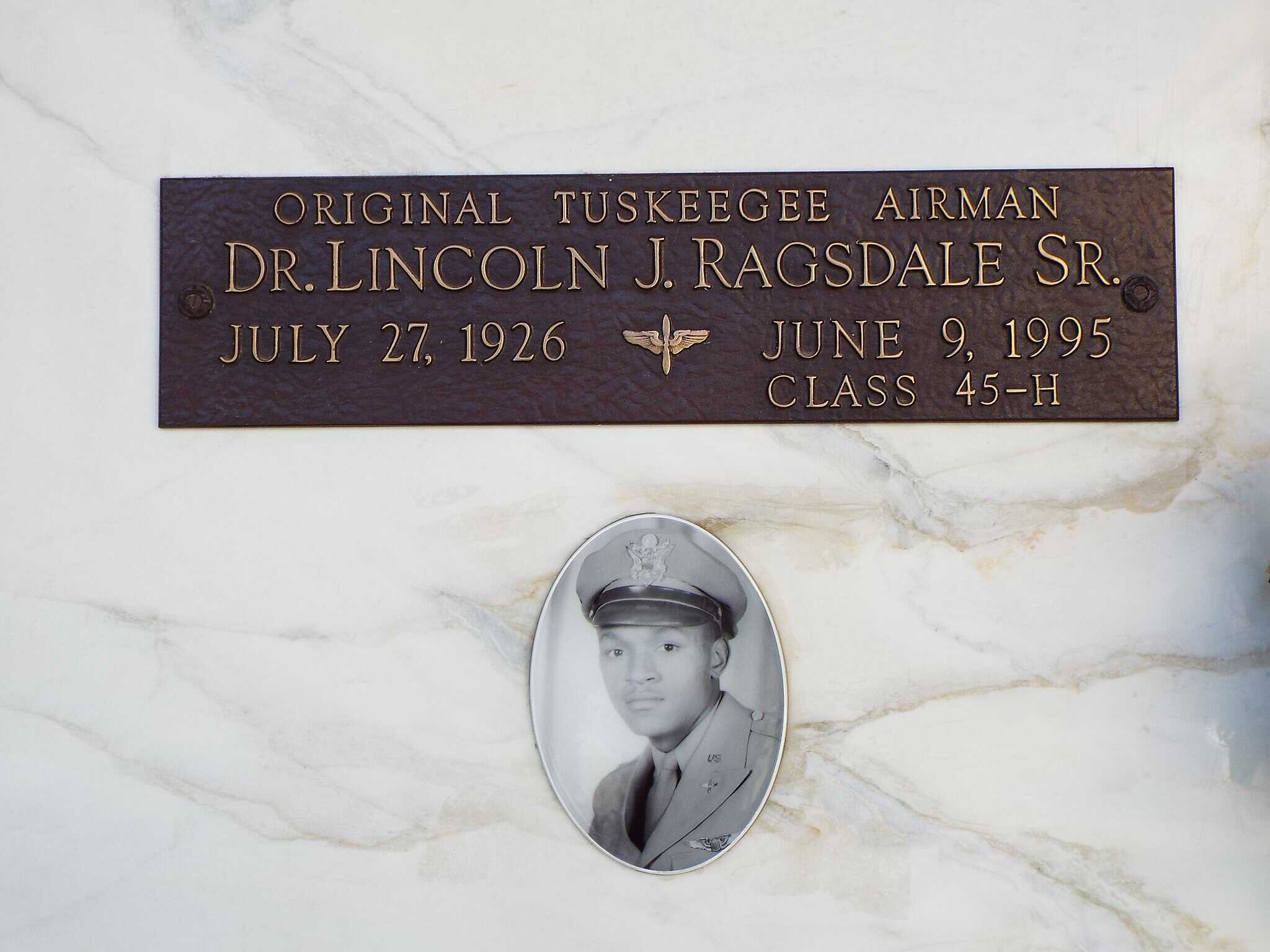
Dr. Lincoln Ragsdale Sr. was a Tuskegee Airman, a Civil Rights activist, a business entrepreneur, a father, a husband, and an unending source of inspiration for Phoenix’s Black community. It would be impossible to talk about the city’s Civil Rights Movement, or its economic prosperity, without speaking about what Lincoln and his wife, Eleanor Ragsdale, were able to accomplish there.
Jessica Salow, who works as an assistant archivist at Arizona State University (ASU) Library’s Black Collections, offered beneficial insight, saying: “The Ragsdales are one of those families that are integral to the understanding of Black history here in the Phoenix metropolitan area.” Not only were they outspoken advocates for equal rights, but they played a direct hand in bringing about reform. They helped desegregate Valley neighborhoods, schools, and businesses through sustained efforts and an unyielding sense of dedication and bravery.
The history of this instrumental family is now more accessible than ever, thanks to ASU, which acquired the Ragsdale Family Papers, a collection of interviews, correspondence, photographs, and other assorted materials from Lincoln and Eleanor, along with their kin. These items help tell the story of a man born to a schoolteacher, Onlia Violet Ragsdale, and a mortician, Hartwell Ragsdale—who narrowly escaped the Tulsa race riots in 1921—and how he understood the importance of bettering himself and the world around him from an early age. They also show how that same man used his experiences at a segregated school and as a Tuskegee Airman to bring about widespread change.
“For people to know the depth and breadth of the work that this family did in the Phoenix area regarding Black history with all of the organizations that they were a part of, and how they advocated for Black rights here in the Southwest, is going to be very impactful in ensuring that people continue to realize the contributions of the Black community in this state,” Salow said of the collection. While we’re unable to capture in one article how much the Ragsdales meant to this area, and how the lasting impact of their work can still be seen today, we’re going to do our best to provide you with a snapshot of Lincoln’s accomplishments so he can be celebrated properly this Black History Month and beyond.
Lincoln Ragsdale Sr.’s time with the Tuskegee Airmen
In 1944, Lincoln Ragsdale Sr. graduated from a segregated high school in Oklahoma and enlisted in the newly established Tuskegee Airmen. The group was composed of the military’s first-ever Black pilots and served in World War II. Lincoln had a longstanding fascination with flying and wanted to use his enlistment as an opportunity to not only become a pilot but to take part in what many hoped would be a step toward racial equality. He traveled to Alabama a year later to complete his training at the Tuskegee Army Air Corps Field there. Lincoln credited this experience with giving him “a whole new self-image.” He would later recall that, “when we [Tuskegee Airmen] used to walk through Black neighborhoods right after the war, and little kids would run up to us and touch our uniforms. ‘Mister, can you really fly an airplane’ they’d ask. The Tuskegee Airmen gave Blacks a reason to be proud.”
Ultimately, he was unable to complete military combat missions since he wasn’t commissioned until the end of World War II, but he gained invaluable knowledge and skills through his training. He would go on to learn lessons of a completely different nature when he was stationed at Luke Air Force Base in Maricopa County, though. In Lincoln’s own words, “Phoenix was unquestionably the Mississippi of the West.” His white roommate refused to stay in the same room as him on Lincoln’s first night there. It was this interaction (compounded by other blatant acts of racism) that motivated Lincoln to join the Greater Phoenix Council for Civic Unity, the NAACP, and the Phoenix Urban League to help fight back against the Valley’s rampant prejudices.
The Ragsdales’ Civil Rights work
When looking at the breadth of Lincoln Ragsdale Sr.’s Civil Rights accomplishments, 1953 is a particularly meaningful year. He helped desegregate high schools in Phoenix (a full year prior to the landmark Brown v. Board of Education decision), as well as the city’s affluent Encanto District. If you were to ask Lincoln about his success during this time, he’d gently remind you that it was actually his wife, Eleanor Ragsdale, whose activism led to these sweeping accomplishments. “She had more guts about these things than I have ever had,” he said.
Eleanor began by helping Black families buy houses in predominantly white Phoenix neighborhoods. From there, she and Lincoln protested, lobbied, marched, and held fundraisers to persuade the Legislature to desegregate schools. In 1953, they saw the fruits of their labor manifest tenfold after Judge Fred C. Struckmeyer declared that segregating schools went against the Constitution, and that “A half-century of intolerance is enough.” Eleanor believed this was the first step toward creating racial equality, and she and Lincoln continued to put one foot in front of the other to make sure that other crucial steps were taken with equal success.
This work continued into the early 1960s, when many Black residents were refused service at restaurants and rejected from jobs across Phoenix. The Ragsdales organized marches and protests. Eleanor went directly to the state Legislature and penned letters to the state’s representatives calling for an end to public discrimination. When Dr. Martin Luther King, Jr. visited the Valley in June 1964, he stayed with the Ragsdales. But their involvement and influence didn’t end there. They continued to work through the 1970s, ‘80s, and ‘90s to establish scholarship funds for Black and Mexican students, assist students in obtaining the additional financial aid needed to attend college, and protest alongside 10,000 others to ensure the Martin Luther King holiday was approved by the Arizona Legislature in 1989.
Lincoln Ragsdale Sr. had an entrepreneurial spirit
We would be remiss if we didn’t end this article by touching on Lincoln Ragsdale Sr.’s business ventures, of which there were many. He saved for several years to purchase property he could turn into a funeral home in the hopes of carrying on his family’s mortician business, which had been in operation since the late 1890s. Lincoln attempted to acquire loans from several local banks, all of which turned him away because he was Black. His son, Lincoln Ragsdale Jr., told Arizona PBS that a member of one institution said, “Lincoln Ragsdale, I just want to let you know this bank will never ever let you borrow any money.”
Lincoln Sr. refused to be discouraged from his ambition, and he eventually secured a loan from E. Harry Herrscher, an architect who wanted to support Lincoln Sr.’s funeral home aspirations. Herrscher went on to design the Ragsdale’s property, and told Lincoln Sr. he could take 15 years to pay him back for the loan. As Arizona PBS proudly notes, Lincoln Sr. was able to repay Herrscher in just 10 years. And that wasn’t the only business venture the Ragsdales tackled. According to Jessica Salow at the Arizona State University Library, “They were powerhouses in the business industry, and they owned an incredible number of businesses, from insurance and mortuary work to the Century Sky Room restaurant and jazz club. Everything that they cultivated and did as a family was so unique.”
Lincoln Jr. summarized the importance of his father and mother’s entrepreneurship when speaking with Arizona PBS. He said that being Black business owners during that time was “one of the hardest jobs in America because you don’t have support. You aren’t in the room where the deals are made, and obviously they were not interested in helping Black people. You are forced to stay within a realm which the people of power will let you move within.” But his parents weren’t interested in allowing other people to have the final say over which spaces they could move into, or how.
Lincoln Sr. and Eleanor saw these imposed limitations not as unmovable lines in the sand, but as starting lines for their quest to establish equality. It is because of this optimistic view that Phoenix’s landscape was forever changed, and it is this optimistic view that serves as a reminder during our currently troubling times that equality is always worth fighting for, no matter how bleak the circumstances may seem.