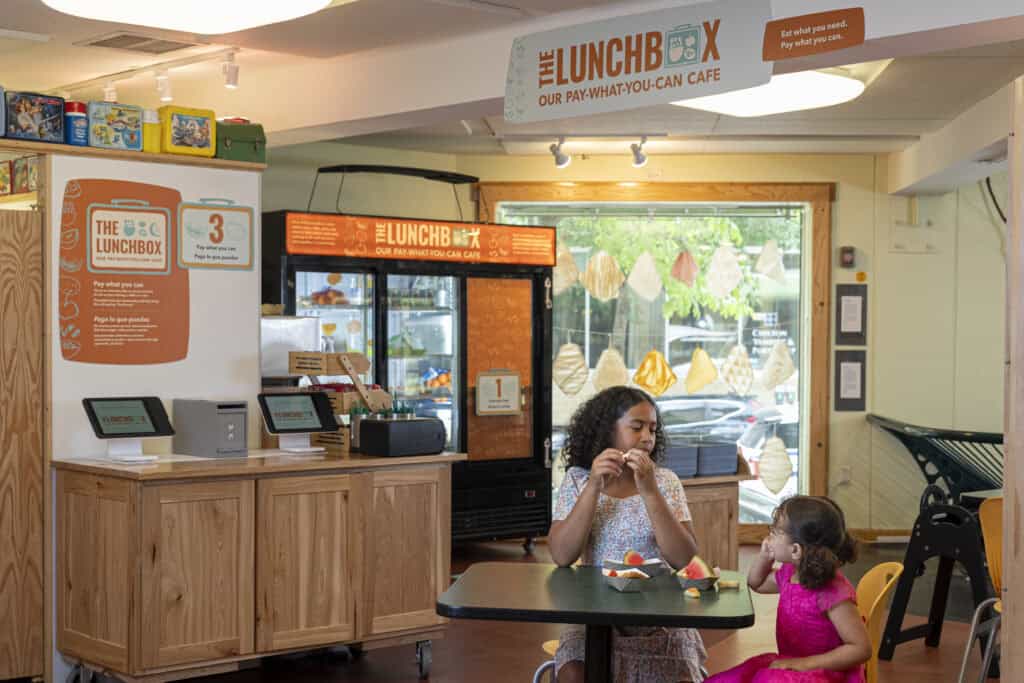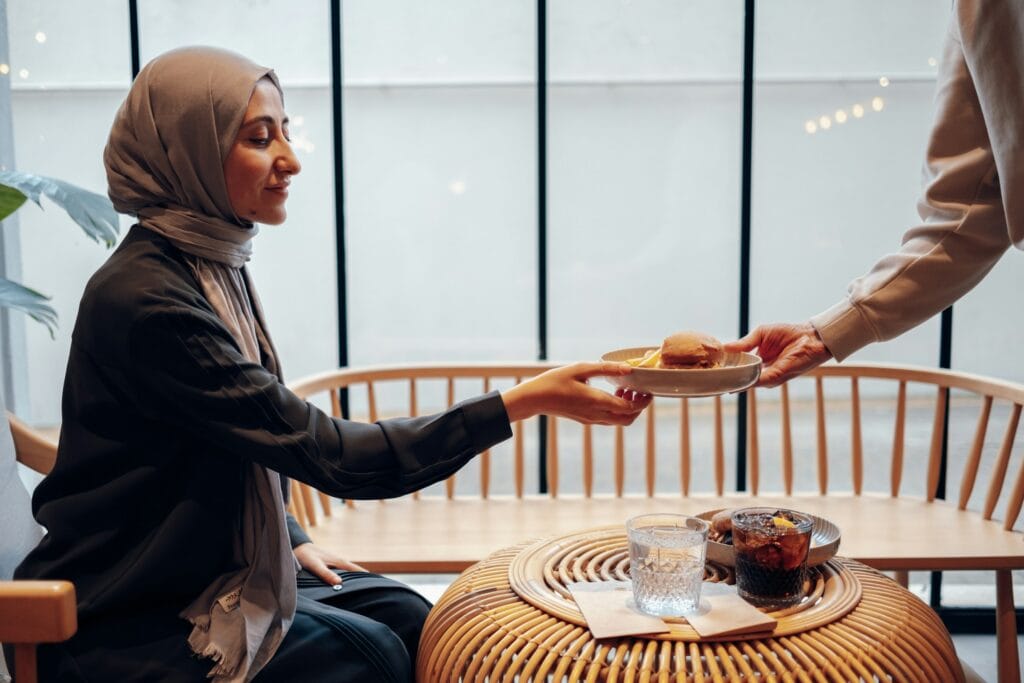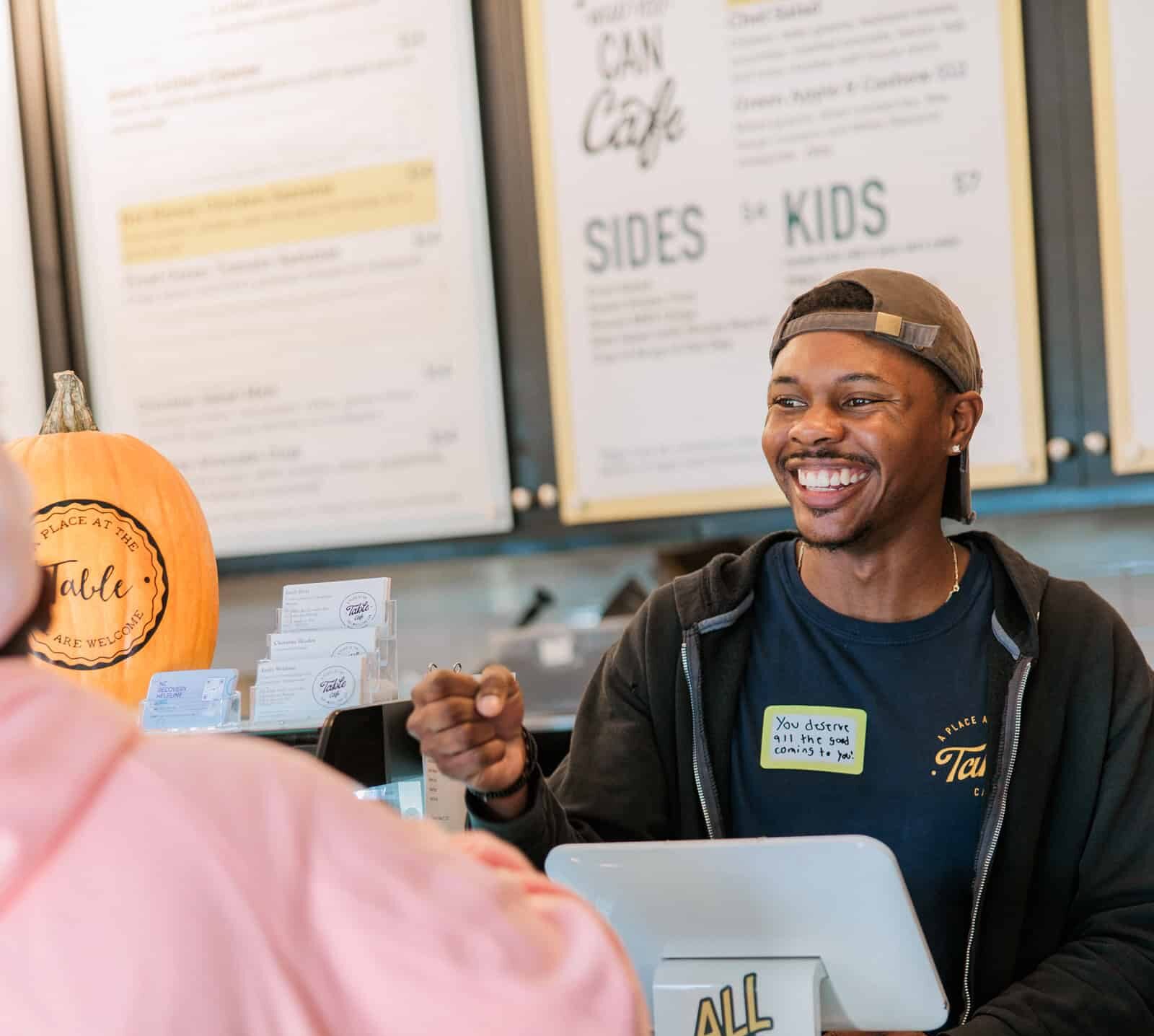
Community cafés with a pay-what-you-can model bring together people from all different backgrounds through dining experiences and volunteer opportunities.
More than 10 years ago, Marcus Gupton visited F.A.R.M. (Feed All Regardless of Means) Café in Boone after learning about the pay-what-you-can restaurant through a friend.
“I had the misfortune of being homeless for 10 or 12 years, here in Boone,” Gupton explains. “A friend told me about F.A.R.M. and how it was possible to work in exchange for a meal. That particular day, I was rather hungry, and I decided to give it a try. I came to F.A.R.M. and I was met at the door by the staff and treated very well.”
F.A.R.M. opened in 2012, one of more than 60 community cafés across the country following the One World Everybody Eats (OWEE) model. OWEE is “dedicated to increasing food security and building community through the pay-what-you-can nonprofit restaurant model.” Member cafés receive support through regular meetings, mentorship, and shared data collection.
Eventually, Gupton became an employee at F.A.R.M., washing dishes and training and supervising volunteers in the dishroom. For more than three years, he’s been living in an apartment in Boone.
“I think the majority of people are beginning to recognize that even something as simple and basic as food is becoming difficult for more and more people to obtain,” Gupton says. “Most of the locals at least agree with us in principle that food insecurity is a very dangerous problem, and it’s one that Watauga County suffers from, like so many others.”

How pay-what-you-can cafés work
This spring, The Quiltmaker Café will open its brick-and-mortar location in Pittsboro. The nonprofit has been operating as a pop-up and mobile concept for the past five years as the team searched for the right space within walking distance of downtown Pittsboro.
Similar to F.A.R.M., Quiltmaker customers will be greeted by a volunteer who explains the café’s model: Order your meal at the counter and then pay what you can, or volunteer for a shift and receive a meal for free. Families who are food insecure may eat for free once a week.
Some cafés list the full price on their menu; it’s up to each nonprofit to decide what works best for its community.
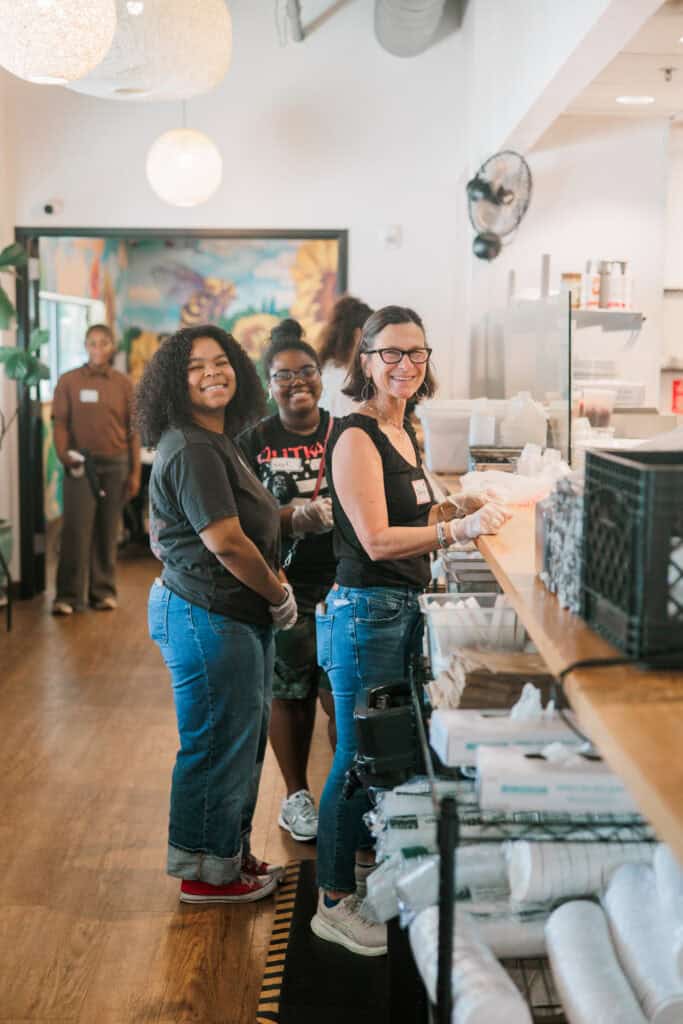
At pay-what-you-can cafés, volunteers typically greet customers, bus tables, and wash dishes. Depending on how the restaurant is set up for receiving volunteers, they may just show up, call, or sign up online for a shift.
“With our model, we want to draw in people from all different financial situations,” says Jennie Knowlton, executive director of The Quiltmaker Café. “Whether you’re in need of a meal or not, every volunteer gets a meal. No one is being separated from the rest of the group.”
Why these cafés are important to communities
When Maggie Kane, the executive director at A Place at the Table in downtown Raleigh, opened the pay-what-you-can café in 2018, she wanted “to provide community and good food for all, regardless of means.” While working at a day shelter, Kane had the idea to create a place where people from all backgrounds could gather.
Kane found OWEE, and over the next four years, she gathered information and resources. She leaned on the staff at F.A.R.M. Café in Boone for mentorship as she developed a similar nonprofit in the state’s capital.
“At Table, we say we’re fighting food insecurity, and we’re feeding a lot of people, but we’re really fighting community insecurity for all of us,” Kane says. “Finding a place for us to be seen, known and loved and cared for. For me, it means I have a place where I can walk in and immediately be loved and where I belong. I want others to feel that way too.”
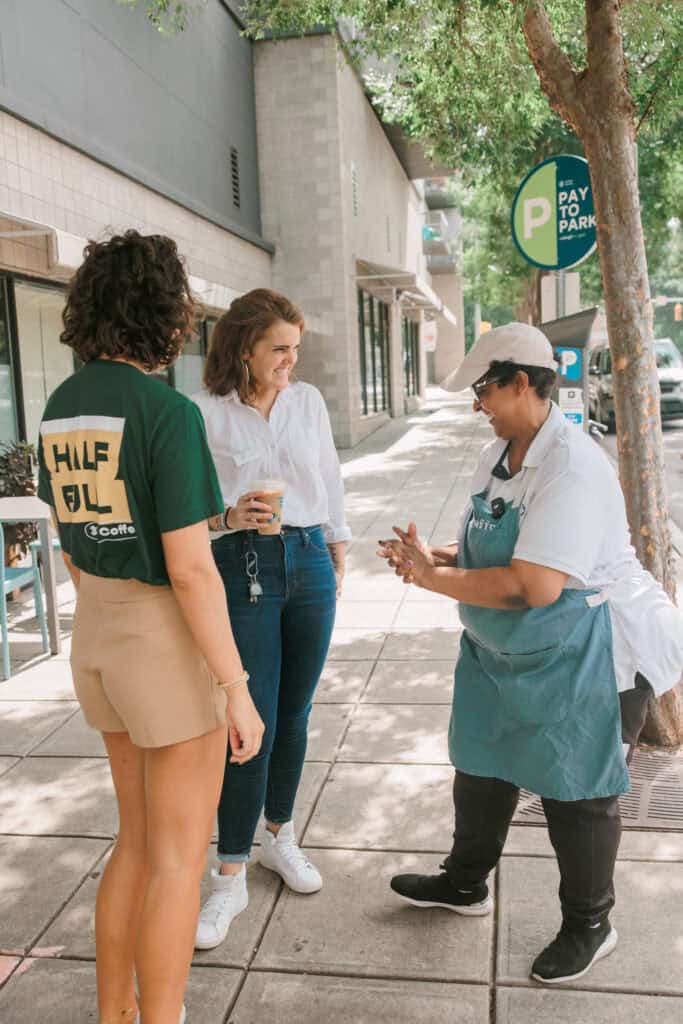
Table is open Tuesday through Sunday, and it serves 250-300 meals a day, including 150-200 meals under the pay less, volunteer, and family meal categories. Most days, 100 to 150 people volunteer.
When Table first opened, 70 percent of the café’s customers paid full price, and 30 percent paid less than full price or volunteered. Since the pandemic, these numbers have flipped: 30 percent are paying full price, and 70 percent are paying less or volunteering.
Kane attributes the shift to an increase in food costs and more people finding out about Table as a resource. The nonprofit’s fundraising goals had to change to support a significant portion of the annual budget.
“So many people found out they needed an extra meal,” Kane says. “The needs aren’t going away.”
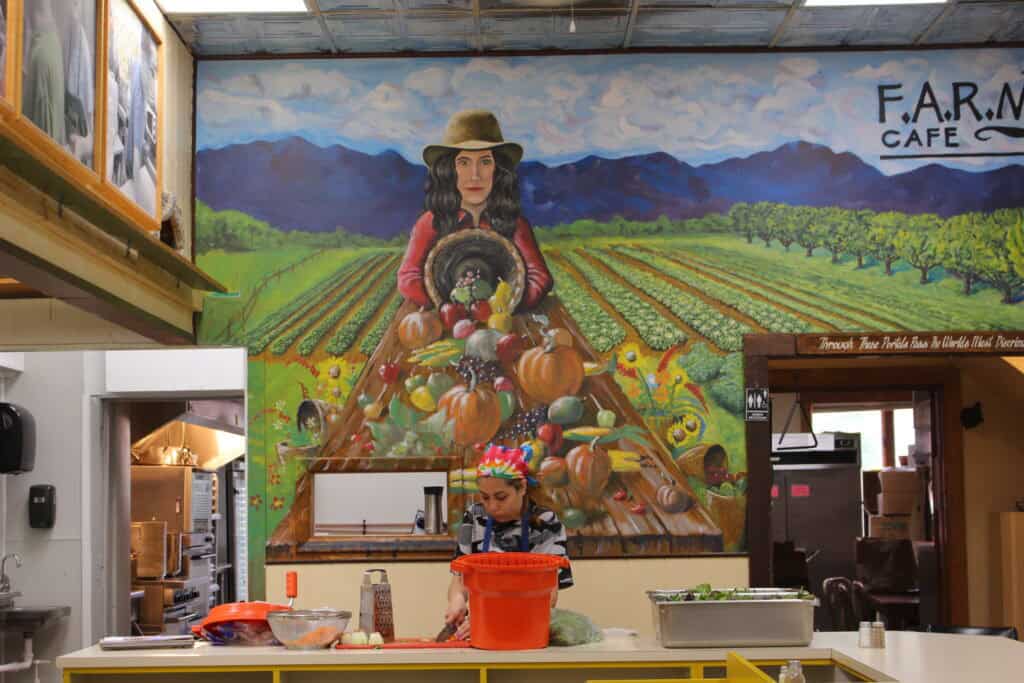
“A philosophical shift”
Last year, Renee Boughman, the former executive director and chef at F.A.R.M. Café, launched a podcast, Everybody Eats – A Movement, to introduce more people to the pay-what-you-can concept. For 30 minutes, Boughman interviews founders and executive directors of cafés across the United States to discuss what they do and why they do it.
“As much as this is a physical reality, it’s also a philosophical shift in how people do business,” Boughman says.