See a sky full of stars, nocturnal wildlife, and more on a guided or self-guided moonlit hike at Valley of Fire State Park.
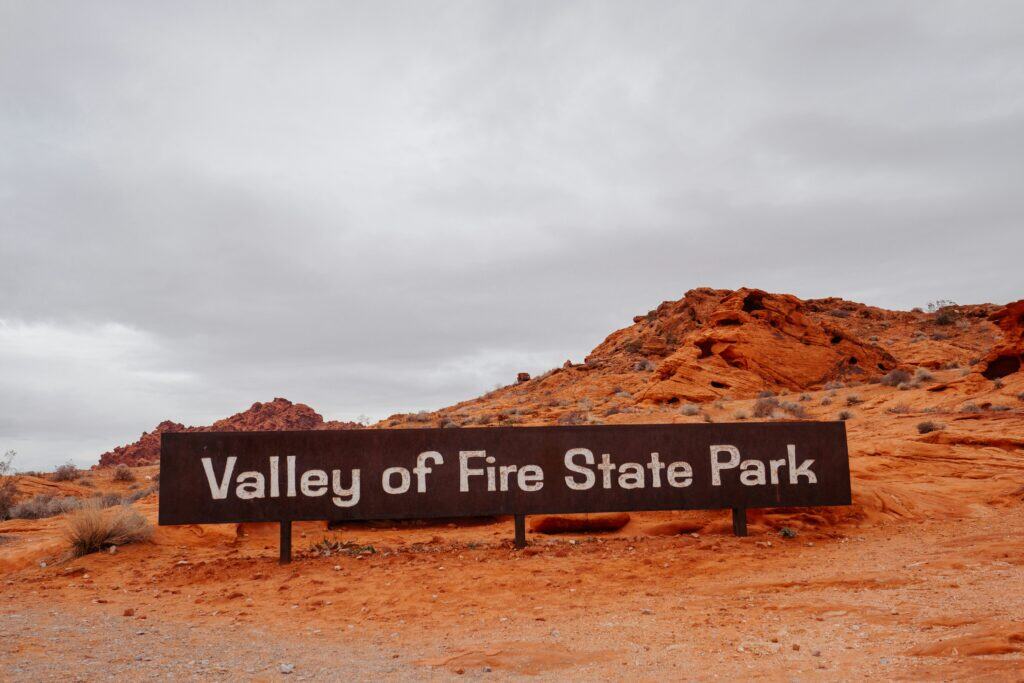
Many moons ago, in dinosaur times, forces of nature had a field day with the dunes and sediment we now know as the Valley of Fire near Overton, Nevada. Over thousands of years, they were blown and twisted by the wind, among other weathering processes, into red sandstone formations like geological magic. Early man walked beneath the same moon, carving petroglyphs into the rocks 2,500 years ago.
And though the 40,000-acre state park—located about 50 miles from Las Vegas via Interstate 15—closes at sunset each day, you can walk beneath it, too, on a guided or self-guided moonlit hike. Valley of Fire rangers typically offer these nighttime hikes once a month, providing outdoor enthusiasts with the opportunity to gain a new perspective on these classic rocks.
“Since the park closes at sunset, we really appreciate being able to provide ways for guests to safely and legally explore different areas of the park at night,” Kayla Wolfe, park interpreter for Valley of Fire State Park, told us, adding that it “gives people an experience you just can’t get in the city. Personally, I feel most connected to the desert at nighttime.”
A hike as different as night and day
If you’re a regular adventurer at Valley of Fire, you may be wondering how it’s possible to enjoy the park’s iconic shades of red, pink, orange, and yellow in the dark. You may also think you’ve hiked and seen everything there is to hike and see.
Elephant Rock Loop, check. Mouse’s Tank, check. Rainbow Vista, check.
But hiking those trails, or Fire Wave/Seven Wonders and White Domes Loop, under a full moon or new moon and a Southern Nevada sky full of stars, is a completely new and different experience.
“It’s incredible how the same one or two-mile-long trail can feel so different just by doing it at a different time of day/night,” says Wolfe. “During a full moon, the light from the moon is bright enough to illuminate the whole landscape. The colors don’t stand out, but the overall shape of the landscape is amplified. On starry nights, the lack of light pollution allows a blanket of stars to shine through.”
On one night hike at Valley of Fire State Park, a hiker told Wolfe that, despite normally using Orion’s belt as a reference since it’s easy to find in the city, “out here it doesn’t stand out, and I can’t find it because there are so many other stars in the sky.”
Exploring a Valley of Fire trail on a guided moonlit hike also means you may encounter a variety of nighttime visitors, such as kit fox, toads, snakes, and nocturnal ringtails. Wolfe has also seen kangaroo rats hopping about.
“Kit fox sometimes explore the perimeter of the parking lots and picnic areas or peer out from behind bushes along the roadways—they’re quite curious creatures,” says Wolfe. “Ringtails have been spotted on the rooftops of our bathroom facilities at night, and at certain times of year, you can hear toads singing. Snakes sometimes bask on roadways at night, soaking up the heat held in the asphalt.”
One of Wolfe’s favorite memories at Valley of Fire happened during a self-guided night hike. She was greeting guests at the trailhead and answering questions when bats flew overhead.
“Over the hours, I noticed the sound of their clicks and wing flaps changed, indicating that different species were becoming active as the night went on,” she says. “I knew different species wake up at different times, but it was interesting to actually hear it happen.”
Staying safe on self-guided hikes
While hiking at night without a guide at Valley of Fire isn’t always possible, there are occasionally opportunities for self-guided night hikes on specific trails. During these events, staff or volunteers will place tealights along the trail as markers, and they will stay at the trailhead to make sure everyone makes it back safely.
“Our rangers have done enough search and rescues at night to learn that even people who are knowledgeable and seemingly prepared can make a simple mistake that takes them miles off course,” explains Wolfe. “Even during the day, with a downloaded map, track, and trail markers visible in the sunlight, it can be difficult to accurately navigate these areas. A missed turn or a wrong turn can lead someone into a confusing network of sandy washes and nondescript towering sandstone formations.”
Few areas of the park have cell service, so calling for help in case of an emergency may not be possible.
“By nature of the terrain here, it’s easy to get lost at night because most of our trails don’t follow a clearly defined path,” says Wolfe. “Being able to see the trail markers is important.”
Keep an eye out for night hike events on the Valley of Fire State Park Instagram or the state park’s event calendar.
A night (and other things) to remember
Wolfe suggests bringing a flashlight with a red, green, or blue setting since these colors are less disturbing to other hikers and wildlife and help preserve your night vision.
“On starry nights, we do a couple of activities on the trail that demonstrate how human night vision works and how exposure to white light inhibits our ability to see at night,” says Wolfe, noting that it’s often so bright during full moon hikes that you won’t need flashlights though they’re good to have in case of cloud cover and shadows.
UV or blacklights can be used to spot scorpions, though Wolfe hasn’t seen many on night hikes.
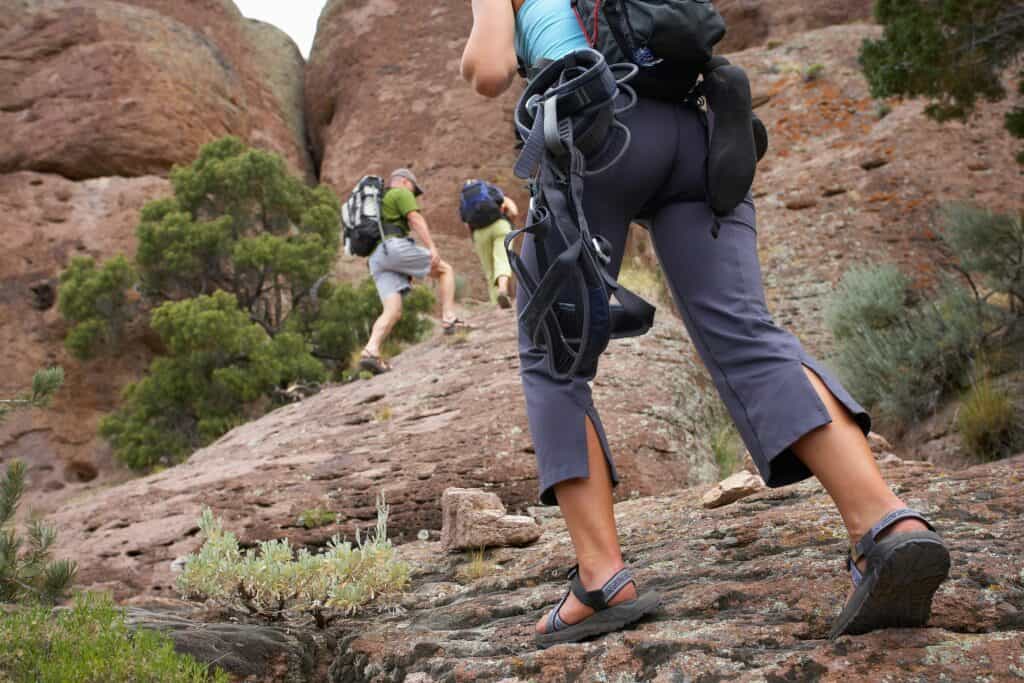
Proper footwear is also important, since the ground here can be rocky and uneven.
“When there’s a layer of sand atop sandstone, the sand particles act like tiny marbles,” says Wolfe, “very easy to slip, especially on shoes with flat soles.”
Lastly, bring water. Even though it’s cooler at night, it’s still the desert.
No need to call it a night just yet
If you’re going on a moonlit hike and you want to stay the night at Valley of Fire State Park, you’re in luck. The park has two campgrounds with a combined total of 72 units, as well as RV sites and water hookups.
Just be sure to reserve a campsite at ReserveNevada.com at least three days in advance, as availability is on a first-come, first-served basis, and sites cannot be guaranteed.
If all the campgrounds are full, dispersed camping is available in the public lands just outside the park’s boundaries.