Explore the stunning wildflowers in Iowa with our expert-backed guide covering top trails, bloom timelines, and 10 easy-to-identify flowers to find this year.
Iowa’s wildflower season will soon begin, with the first pops of color likely to appear in March as the winter snow finally melts away. Whether you are a budding backyard botanical enthusiast or just want to get outside for a nature-filled scavenger hunt, this guide is for you.
To create this guide, we spoke with District Forester Joe Herring and Wildlife Biologist Laura Miner from the Iowa Department of Natural Resources (DNR). They shared their top picks for beginners, along with their favorite local spots to find them.
Spring: A woodland wonderland
Spring is the time of year when we finally get to trade the cold and snow for a little color and warmth. Some of the first pops of life each year appear in Iowa’s woodlands. There, ephemerals bloom in quick succession, appearing only briefly before fading away until next year. Their short-lived nature makes them all the more special.
Where to go
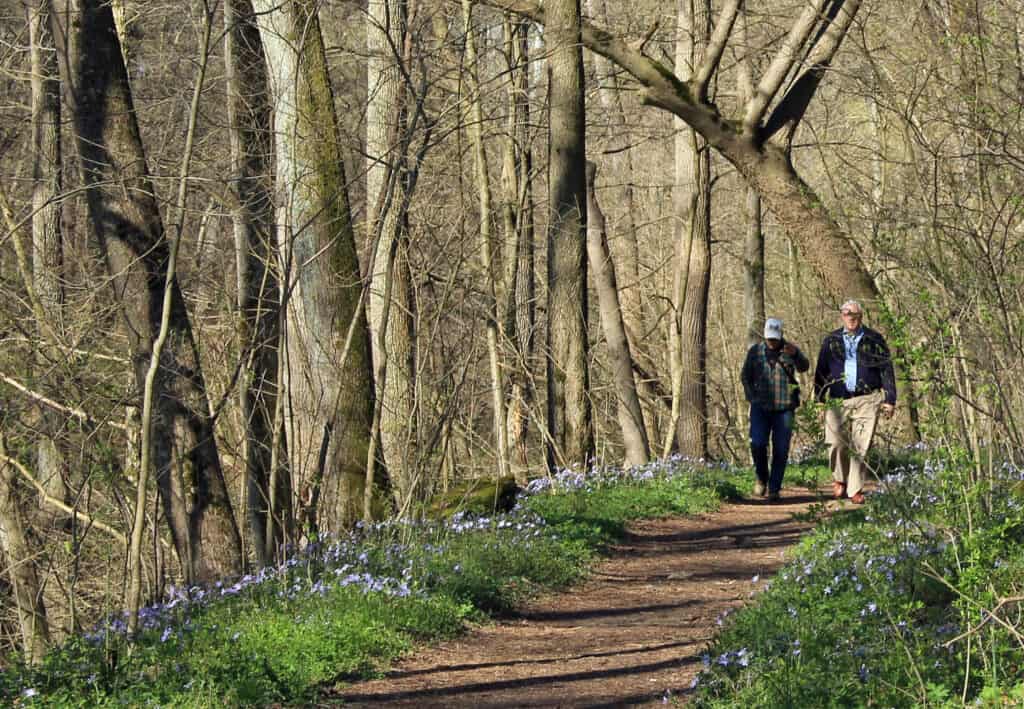
“You shouldn’t have to drive far to see great woodland wildflowers,” says Herring. There are many good viewing areas across the state. Seeing wildflowers in Iowa could be as easy as a quick walk to your local park. That said, one of Herring’s favorite spots is the Oak Woods and Hogsback trails at Ledges State Park. He recommends going in mid-April for the best chance of seeing blooms. Other great spots to visit include Backbone State Park, Palisades-Kepler State Park, and Wildcat Den State Park.
What to look for
While there are more than a dozen species of flowers to look out for this spring, here are five beginner-friendly options to get you started.
Snow trillium: As its name suggests, this flower can be found when snow is still on the ground and is one of the first things to bloom in late winter. It typically flowers from mid-March to early April and features three prominent white petals.
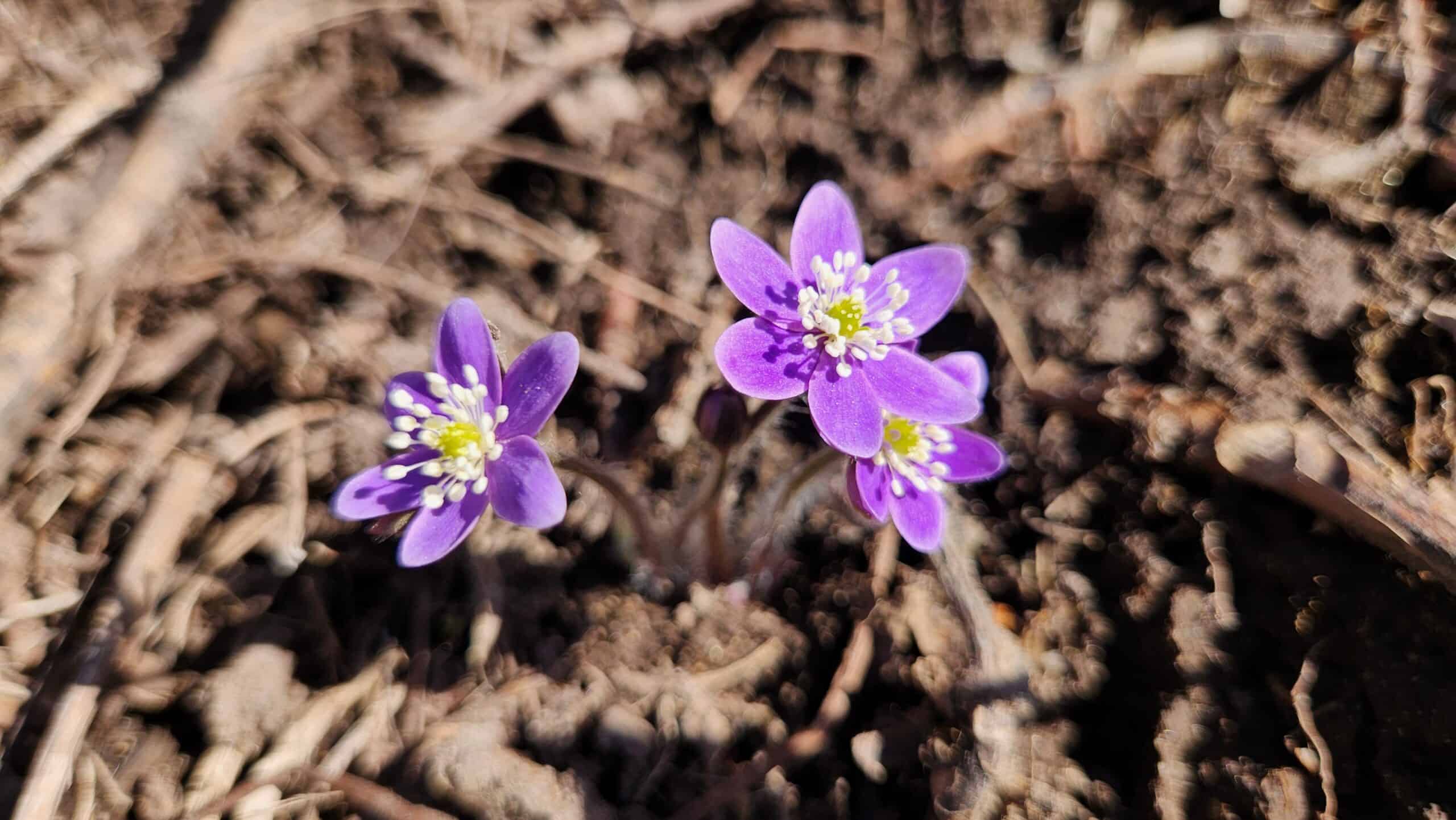
Hepatica: Also known as “liverwort” because its leaves resemble the human liver, this early bloomer is a favorite for its wide variety of colors. You can expect to see blooms in shades ranging from white and pink to lavender and purple. The flowers usually appear as early as March and can continue to bloom throughout the spring.
Virginia bluebells: Named for its distinctive blue, trumpet-shaped flowers, this plant is a popular choice for native gardens across Iowa and is relatively easy to identify in the wild. It is often found in moist, wooded areas and river bottomlands and blooms from March through May.
Bloodroot: One of the most photogenic wildflowers, it’s known for its bright white petals, which flower in March and April. The plant gets its name from the blood-red sap found in its roots, which is poisonous if ingested and can irritate your skin when touched.
Dutchman’s breeches: A close relative of the popular garden bleeding heart, this plant is named for its pant-shaped flowers that hang upside down from the stalk. The flowers are white, sometimes tinged with pink, and appear in April and May.
Summer and fall: Prairie perfection
Eventually, the delicate beauty of spring gives way to the vibrant energy of summer and, finally, the golden tones of fall. Both are great seasons for spotting prairie wildflowers across Iowa. Essential for our local ecosystem, these sun-loving blooms are often teeming with butterflies, native bees, and moths—adding a fluttering layer of life to the colorful landscape.
Where to go
“A great place to experience the prairie is Hitchcock Nature Center in Pottawattamie County, where hiking opportunities and flowers abound,” says Miner. She recommends visiting in September and October when the heat and crowds of mid-summer die down. Miner’s other favorite spots include:
- Hayden Prairie State Preserve: The largest protected tract of prairie outside of the Loess Hills
- Loess Hills State Forest: Get gorgeous views from Preparation Canyon State Park’s Scenic Overlook
- Marietta Sand Prairie: It’s a rare example of a protected sand prairie
- Brushy Creek State Recreation Area: Check out the all-weather Lake Trail
What to look for
As the season transitions into summer and fall, here are five of Miner’s favorite flowers to look for.
Compass plant: This iconic prairie flower is very tall and easy to pick out in a crowd. Its leaves orient themselves according to the sun, giving the plant its name. Its yellow flowers are typically seen between early July and early August.
Butterfly milkweed: Featuring bright orange flowers, this plant serves as a host for monarch butterflies. It tends to bloom from July through September and grows up to three feet tall.
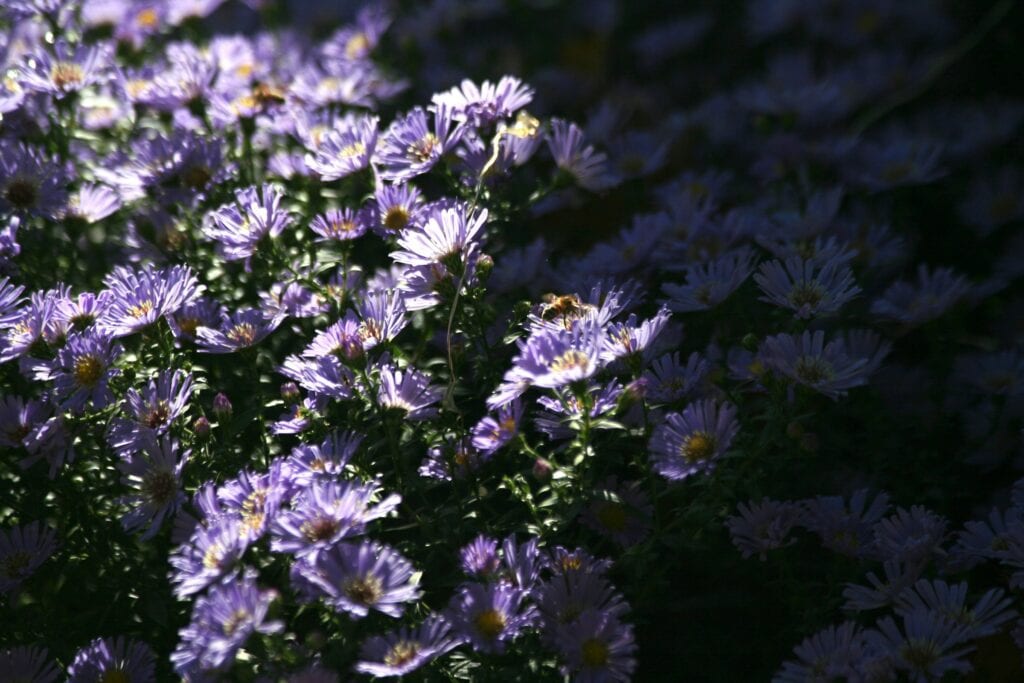
New England Aster: A favorite among bees and butterflies, this late-summer bloomer features dramatic dark-purple flowers and grows in large patches in low-lying areas, including road ditches. It flowers from August to October.
Showy goldenrod: These plants sometimes have a bad reputation for being weedy, says Miner, but they’re important pollinator sources in the late growing season. It stands out for its bright yellow plumelike flower stalks that bloom from late August to early October.
Sneezeweed: One of the last blooming plants on wet prairies, it features many small, yellow, daisy-like flowers. You can expect to see blooms between early August and mid-September.
Wildflower etiquette
To ensure these wildflowers bloom again next year, here are a few things to keep in mind.
- Don’t pick the flowers. Native plants are delicate and, unlike store-bought flowers, aren’t bred to survive in vases. If you’d like to take some Iowa wildflowers home, consider ordering some seeds and planting them in your own yard. Not only will they look beautiful, but they’ll also boost your local ecosystem.
- Stay on the trails. This minimizes soil compaction and injury to the native plants. It also gives you a better chance of avoiding poison ivy or ticks.
- Share your experience with friends and family. Whether you invite someone else along for your spring hike or show off some beautiful flower photos on social media, one of the best things you can do to ensure many more wildflower seasons to come is to spread awareness.