The “Electric City” moniker is thanks to an electrical innovation Scranton was among the first to adopt.
You’ve seen it on signs and T-shirts and heard it sung by the dulcet tones of Steve Carell and Rainn Wilson on “The Office.” But why is Scranton called the “Electric City”? Do people, as Michael Scott raps, “call it that because of the electri-city”? Not exactly.
The nickname isn’t because of electricity in general. It traces back to the late 1800s, when Scranton became an early adopter of electric technologies, particularly electric streetcars—a cutting-edge innovation that ignited civic pride and transformed how people moved through the city.
Read on to learn more about how Scranton earned its Electric City nickname—and why it’s stuck even more than a century later.
The electric streetcar in Scranton
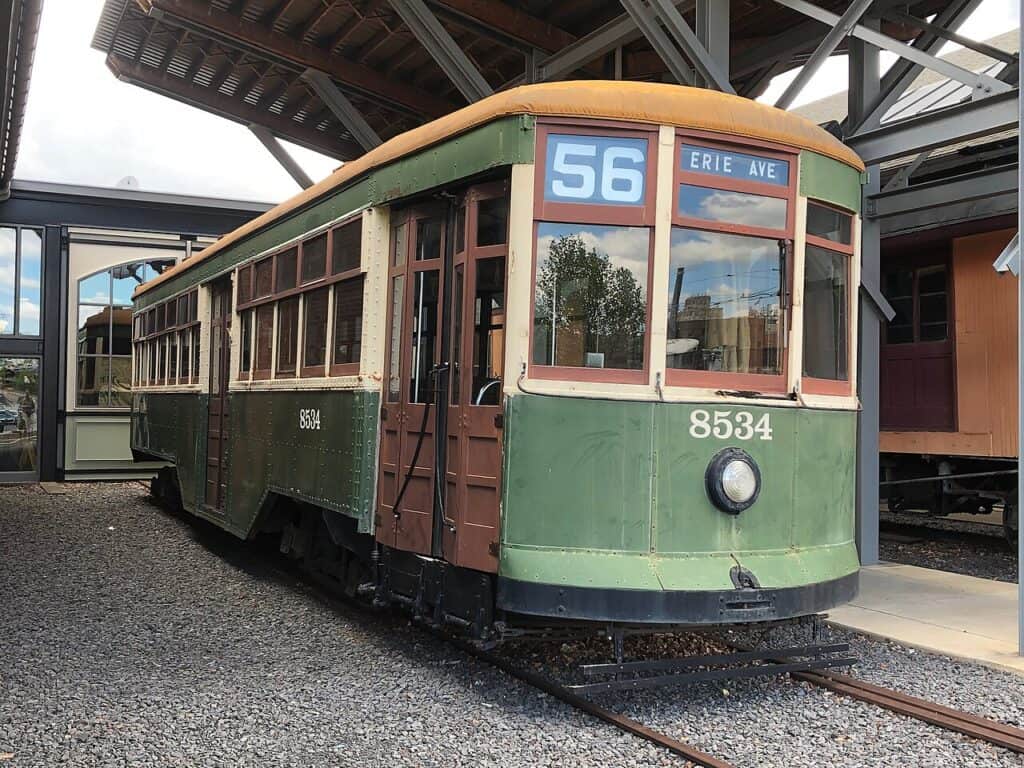
Before buses and cars populated the roads of Scranton, the streets were revolutionized with the introduction of the electric streetcar. After all, before the streetcar, people either walked or used horse-drawn trolleys or carriages to get around. That meant that people spent their daily lives within a relatively small radius, working and shopping close to home.
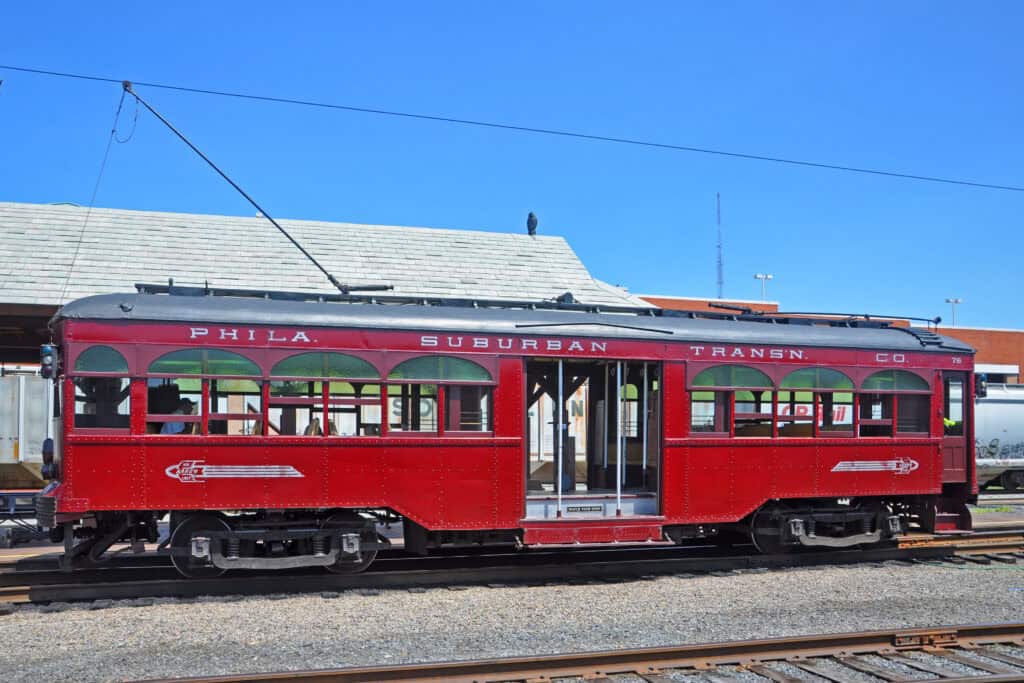
In November 1886, new company Scranton Suburban Electric Railway tested its electric streetcars in Scranton for the first time—making Scranton the first city in Pennsylvania to introduce electric streetcars, and the first in the country that ran entirely on electricity. The streetcars were powered by overhead electric wires connected to wheeled devices called “trollers” that collected the current—hence the name “trolley” for streetcars. The first fares were five cents.
Life changed with the adoption of the streetcar. As people became more mobile, cities reshaped the urban map, building up “streetcar suburbs”—like Scranton’s Green Ridge—since the streetcar enabled residents to live farther from their jobs.
The rise of the Electric City nickname
Even before the streetcar, Scranton had embraced electricity. In 1880, the Dickson Manufacturing Company in Scranton installed electric lighting in the early days of the technology—inventor Thomas Edison had only tested it for the first time in 1879. By 1883, electricity was lighting up some residential homes in the city.
So, when the electric streetcar came onto the scene in Scranton, the city’s modern reputation was only reinforced. Not long after, the pastor of the local Penn Avenue Baptist Church, David Spencer, began to call Scranton the “Electric City.”
The nickname made even more sense as electric companies and power plants popped up in Scranton, soon consolidating under the Scranton Electric Company. Lackawanna Avenue, lit up with incandescent bulbs at night, started to be known as the “Great White Way.”
The landmark sign
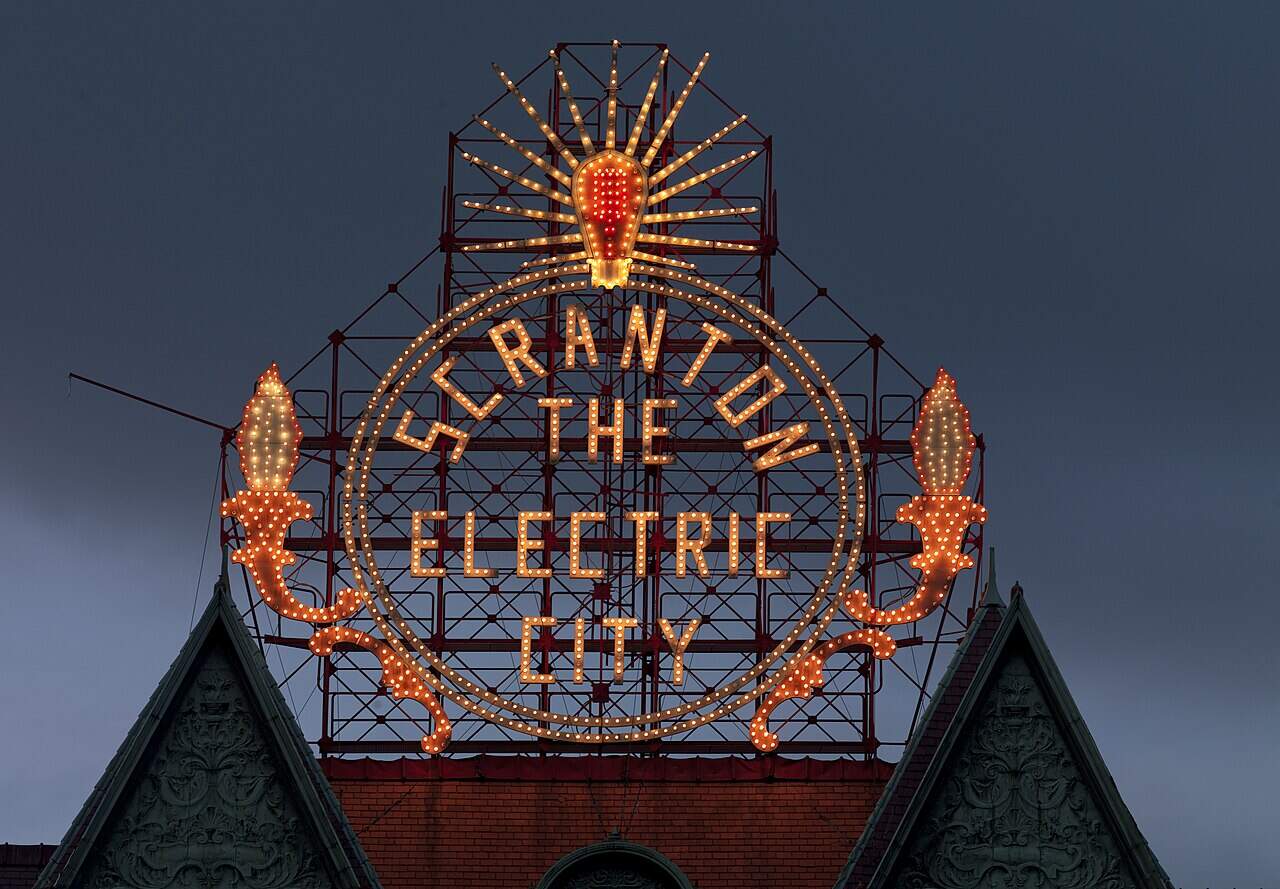
In 1913, the famous sign proclaiming “Scranton The Electric City” made its debut atop what would eventually become the Scranton Electric Company building. The sign had 1,200 incandescent bulbs in shades of red, green, and white. It lit up downtown Scranton until it was eventually turned off in the middle of the century, going dark for decades. A community effort brought the sign back in all its electric glory in 2004.
“The Office” and the nickname today
The success of “The Office” pushed Scranton firmly into the pop culture zeitgeist and brought more attention to its Electric City nickname, particularly when the characters’ video for the “Lazy Scranton” rap included a shot of the iconic Electric City sign.
As Scranton leans into tourism associated with “The Office,” its Electric City branding doesn’t just nod at its industrial history, but also its connection to the popular show. T-shirts and merch bearing the Electric City name are common at local gift shops, alongside gear inspired by “The Office.”
Learn more at the Electric City Trolley Museum
Scranton’s Electric City Trolley Museum, located on the grounds of the railroad-focused Steamtown National Historic Site, showcases eastern Pennsylvania’s electric railway history by way of engaging exhibits featuring a number of real, vintage trolleys. In addition to the interpretive exhibits that, for example, explain how electricity powered trolleys, the museum also operates restored trolleys for excursions.
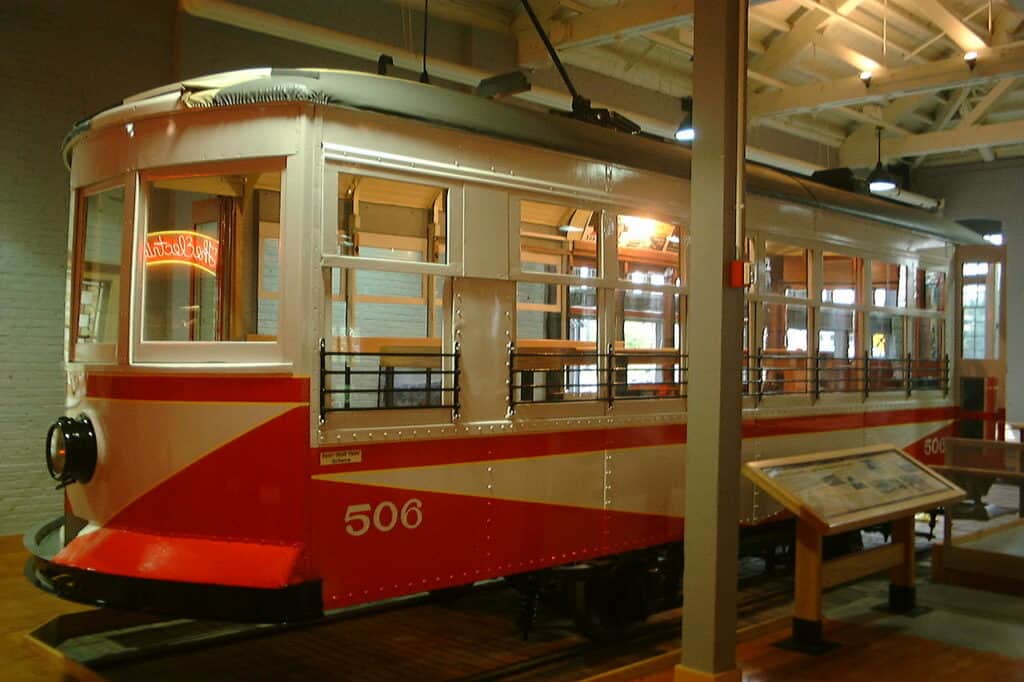
While the museum is open year-round, trolley rides are available April through October, departing from a passenger platform at Steamtown. The five-and-a-half-mile journey includes a mile-long tunnel and takes place aboard an antique trolley that’s roughly a century old. It tours part of the historic “Laurel Line,” an interurban streetcar line that connected Scranton and Wilkes-Barre.
On some summer Sundays, you can also book a trolley ride to PNC Field to catch a Minor League Baseball game featuring the area’s Scranton/Wilkes-Barre RailRiders.