Experience steeplechase season the way countless Virginians have throughout the past 100+ years by attending the Virginia Gold Cup this May.
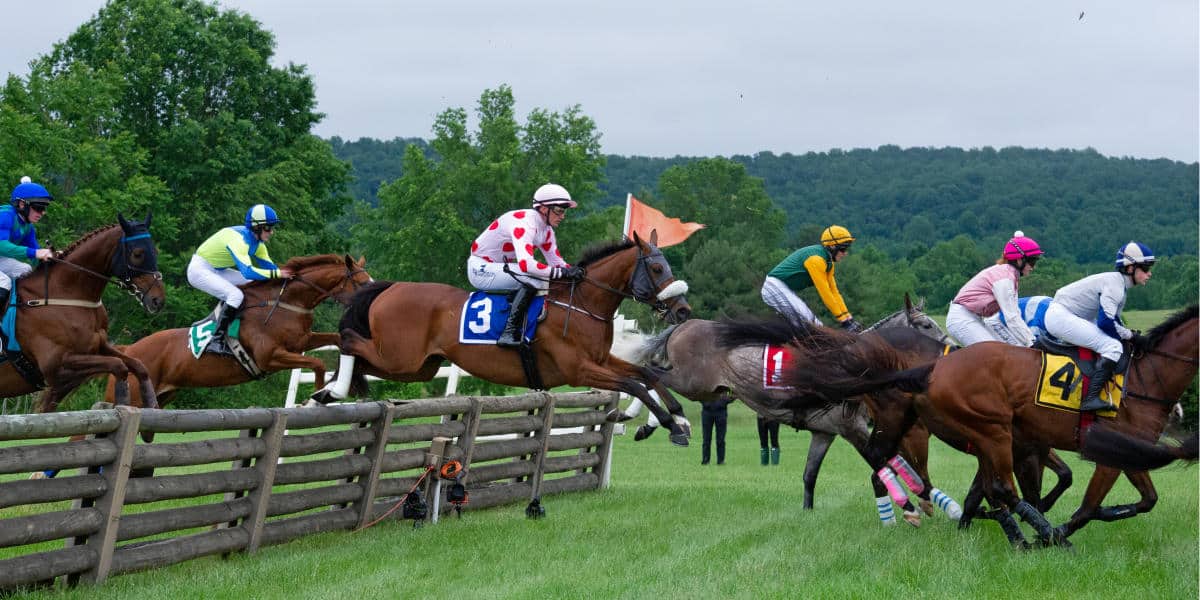
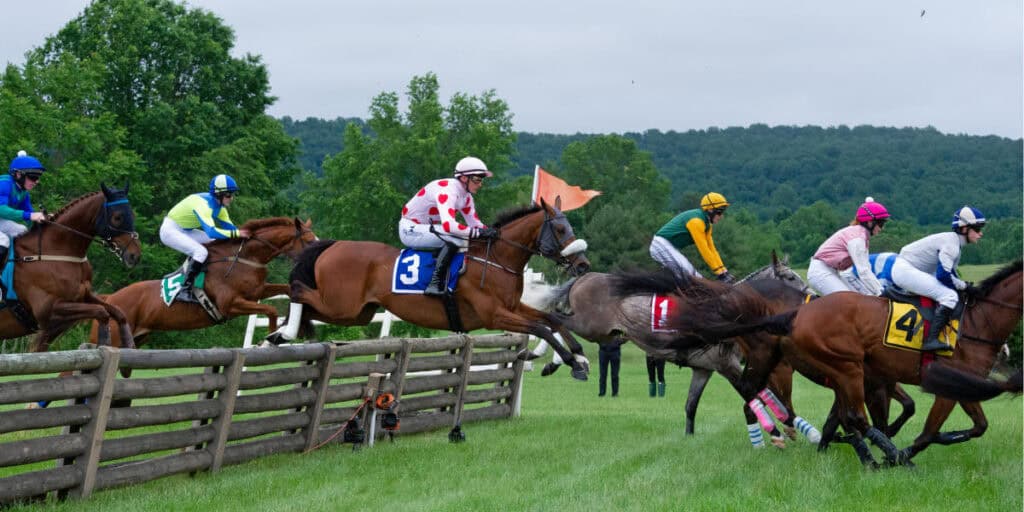
The Virginia Gold Cup is where steeplechasing in Virginia reaches its zenith. Unlike the dirt oval track at Churchill Downs, the Virginia Gold Cup racetrack places unique demands on its horses and riders, given that it spans a long and varied terrain with a range of fences.
Slated for Saturday, May 2, the 2026 cup represents the 101st year the race has been held. Here’s your guide to all things the Virginia Gold Cup, including its history, what to expect, how to purchase tickets, the iconic hat contest, and a how-to guide for placing a wager.
History
Despite drawing annual crowds of more than 60,000 today, the cup has a humble origin story dating to 1844, when the first organized steeplechase was held in Fauquier County. But it wasn’t until 1922 that a small group of racing enthusiasts decided to establish a 4-mile race through the countryside, an event that has come to be known as the Virginia Gold Cup. A total of nine horses participated in a single race that year. Today, there are seven races.
Two years later, the cup moved locations and was conducted under nationally recognized steeplechasing regulations. In those early years, it was common for horses and their riders to participate in both the Maryland Hunt Cup and the Virginia Gold Cup, which were held roughly one week apart. Despite the crossover appeal, only one horse, Billy Barton, and one rider, Albert Ober, have clinched both titles in the same year, in 1926. Surprisingly, the race has been held continuously since its establishment, aside from a few years during World War II.
Other titles that have held to this day were set in the 1960s, such as when Leeds Don, a locally bred big gray, became the first horse to win the race three times. Through cold and rainy conditions, his jockey, Joe Aitcheson, kept him on his feet despite several falters. After Aitcheson’s early success, he went on to become an eight-time Virginia Gold Cup winner. He did so on eight different horses. To this day, the record stands.
The 1980s brought with it location difficulties for the cup. The Broadview Farm location became untenable due to a nearby development. Seeing the need for a new home for the cup, Arthur Arundel, a news executive, stepped in with the idea of turning a 500-acre abandoned farm that was 10 miles away into the new racecourse. In doing so, he kept the site as open space rather than turning it into another housing development.
The 1985 race, the 60th, was the first one to be held in the new The Plains location at 5089 Old Tavern Rd., The Plains, VA 20198. The new location, known as Great Meadow, meant that a greater degree of professionalism was brought to the cup. The previous racecourse was used for cattle grazing 11 months out of the year, a common occurrence in early 20th century racing. However, the new site was more conducive to large crowds. Additionally, the fences were raised.
As a result of the racecourse changes, a different style of racing emerged. This also meant that different horses were better suited for the course, with those that were able to jump larger fences and run for longer distances doing better. One cup winner commented that horses that won at Great Meadow were likely better performers than those that at Broadview.
Patrick Worrall became the youngest rider to win the cup in 1988 at age 16 when he and his horse, Von Csadek clinched the title by finishing 25 seconds ahead of the pack. Both the rider and horse won the cup again two years later.
However, the horse with the most gold cups to its name is Saluter, a big bay gelding. In 1999, at the age of 11, he won his sixth gold cup. He previously set an 11-year record by achieving an 8-minute and 27-second race time over the 4-mile course in 1995. It was later broken by 2020-winner Doc Cebu, which came in at 8 minutes and 15 seconds. Saluter lived until the age of 28 when he passed away in 2017.
What to expect
Gates will open at 10 a.m. and close at 7 p.m., with the first race starting at 1 p.m.
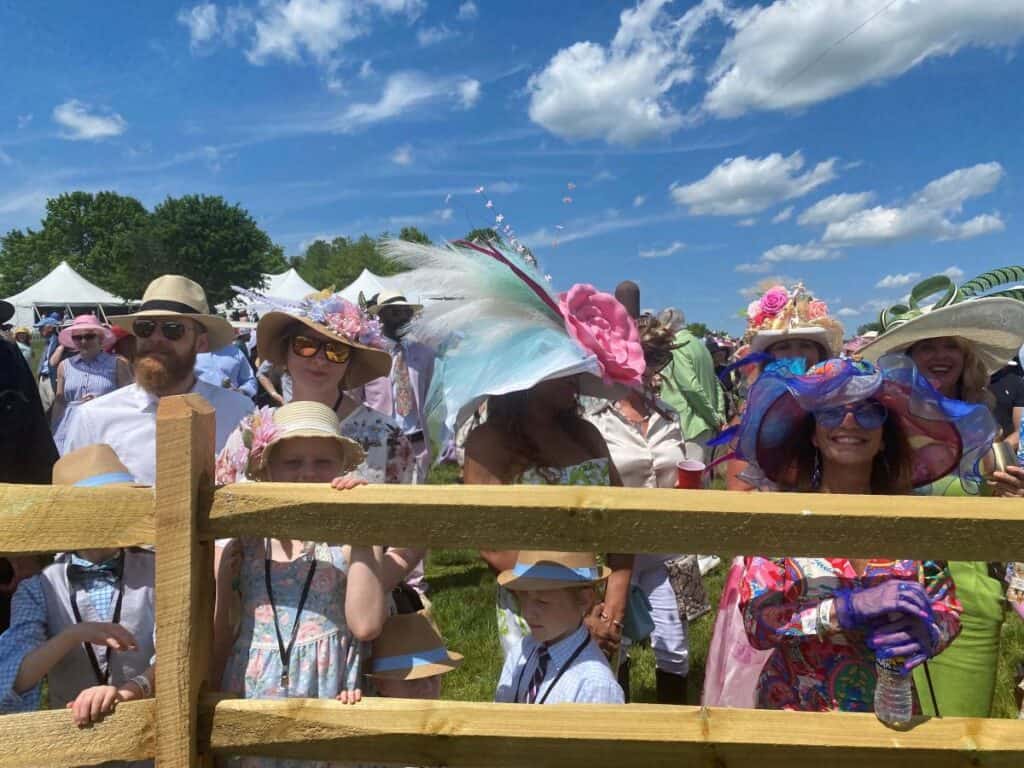
Attendees are encouraged to wear afternoon dress for the event. Women normally wear spring or summer dresses, hats, and flat heels, while men normally wear lightweight sports coats and ties. Shorts are not permitted.
Food and drinks will be available for purchase in the North and South vendor areas.
Tickets
Ticket options for the event include: $54 for general admission, $162 for The Pavilion, and $270 for the 1922 VIP Club. General admission tickets do not include parking, so parking options include the $108 parking pass for the north or south rail or the $10.80 rideshare pass.
Those interested in tailgating will find a range of options, including the front rail experience for up to 10 people and three parking spaces for $1,074.64.
Children 12 and under are admitted free of charge with an accompanying adult.
When you purchase a ticket, you automatically become a member of the Virginia Gold Cup Association, which means you’ll be placed on the mailing list. However, no annual dues are expected from members.
Hat contest
One of the most unique ways to participate in the event is to partake in the hat contest, which allows those with a creative side to develop a hat entry that aligns with one of these categories: Most Glamorous/Elegant, Best Racing Theme, Funniest/Most Outrageous, Best Child’s Hat, Best Men’s Hat. To participate, make sure you’re at the Winners Circle at 2 p.m.
Wagers
You can participate in the race by placing a wager at one of the betting stations where you can arrange your bet with a teller. You’ll want to have your money in hand, as well as have your race number and the horse’s name and number in mind. You’ll be given a ticket that you can redeem if your horse wins. There is a $2 minimum bet.
Wager options include The Win Wager, betting that a horse will win a particular race, The Place Wager, betting a horse will end up in first or second place, and The Show Wager, betting that a horse will show up in the top three. The win wager offers the highest payoff, but the show wager is encouraged for those who simply want the greatest chance of placing a winning bet.
More experienced betters can try wagering an Exacta, which consists of selecting the two horses that will finish first or second place. The Trifecta takes it one step further by trying to select the three horses that will finish in first, second, and third place in the correct order.