Workers built Pennsylvania—and they’ve also been building labor power since the first crews laid railroad tracks and miners descended beneath the earth.
From garment workers in Philadelphia and coal miners in the northeast to steel workers in the west and service employees across the state, Pennsylvania has seen strikes, setbacks, and victories that have shaped the nation’s labor movement. Some of these moments were exciting wins, while others were crushing defeats that nevertheless influenced public opinion, labor law, and the future of the labor movement.
Take a trip through the state’s labor history from its early—and sometimes violent—beginnings, to the labor battles workers are still fighting today.
The tragedy of the Molly Maguires (1870s)
In the late 1800s, Irish coal miners in northeastern Pennsylvania’s anthracite region were rumored to belong to a secret society, known as the Molly Maguires, organizing against oppressive mine owners. Historians debate how active—and how violent—the group really was, but miners were indeed resisting brutal working conditions in secret. Back then, union organizing was effectively illegal, often considered a criminal conspiracy.
When the Philadelphia and Reading Coal and Iron Company caught wind of organizing, it responded aggressively, hiring the Pinkerton Detective Agency and dispatching its own private police to investigate and arrest suspected union sympathizers, accusing them of murder. After deeply flawed trials—one prosecuted by the company president acting as district attorney—20 miners were convicted and executed. The saga drew international attention and exposed the harsh conditions miners faced, laying the groundwork for further labor organizing.
More than 130 years later, Bethlehem attorney Donald Russo, writing in the Morning Call, noted that the state had surrendered its sovereignty in allowing a private corporation to investigate, arrest, and prosecute the miners. “The state provided only the courtroom, the gallows, and the rope,” he said.
The Great Railroad Strike of 1877
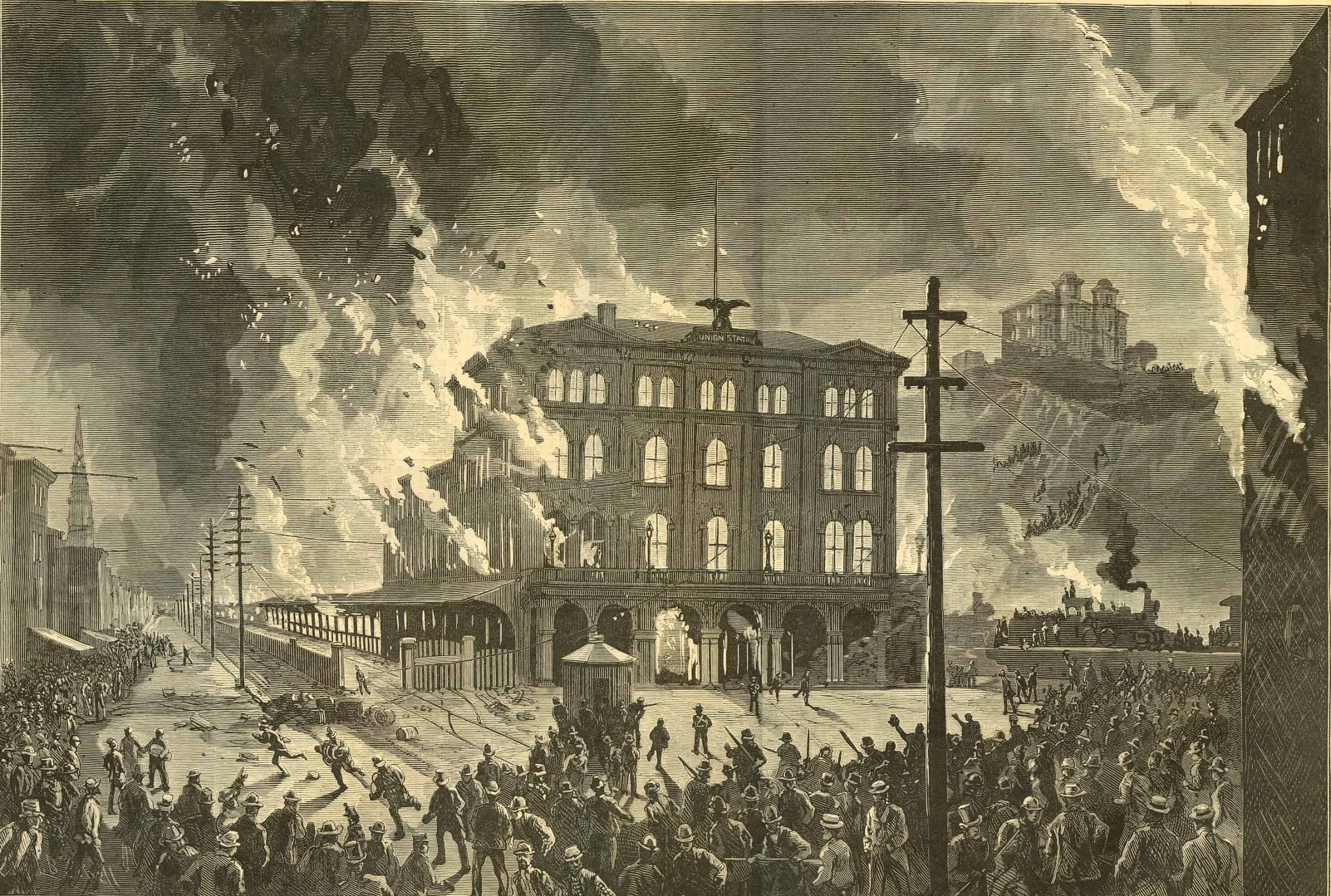
The Great Railroad Strike of 1877 was the first strike in the U.S. to spread across state lines. It began when railroad workers in West Virginia walked off the job over wage cuts, quickly inspiring more than 100,000 workers in other states—including Pennsylvania—to strike, even without the protection of a union and risking violent retaliation. Their efforts brought the railroads—and their movement of goods and people—to a halt. In Pittsburgh and Philadelphia, clashes with militia left dozens dead.
After nearly two months, federal troops, the National Guard, and private militias ultimately suppressed the strikes, but the demonstrations marked a turning point in the U.S. labor movement and inspired many workers to later organize unions.
The Homestead Strike of 1892
The Homestead Strike of 1892—and the bloody battle that followed—remains a pivotal moment in U.S. labor history that highlighted the extreme lengths industrialists would go to exert control over workers. At the Homestead Steel Works, owned by millionaire Andrew Carnegie, management led by Henry Frick attempted to break the union of the Amalgamated Association of Iron and Steel Workers. Frick imposed heavy wage cuts and refused to negotiate, locking out workers and hiring strikebreakers. In response, workers seized the mill to block them.
When Frick attempted to sneak in 300 Pinkerton agents as a strikebreaking force, workers rushed to confront them. Gunfire broke out, and at the end of the skirmish, seven workers and three agents were dead. Frick called in the National Guard, and strikebreakers restarted the mill. Handed a crushing defeat, it wasn’t long before the union collapsed. Wages fell, and shifts rose from eight hours a day to 12.
The battle tarnished Carnegie’s previously pro-labor reputation and fueled public backlash against companies hiring private forces like the Pinkertons. By 1899, 26 states had passed laws banning companies from employing their own security forces in labor disputes. That same year, Carnegie Steel’s annual profits reached $21 million, or roughly $820 million today.
The Lattimer Massacre
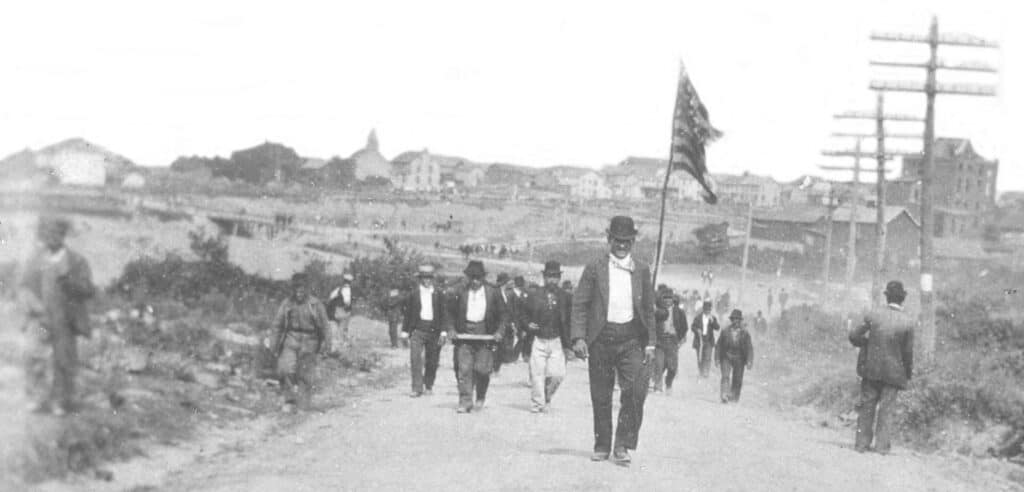
The Lattimer Massacre took place in 1897 in the northeastern Pennsylvania town of Lattimer, near Hazleton, when sheriff’s deputies confronted hundreds of unarmed, striking miners—mostly Eastern European immigrants—who were marching for better wages and union recognition in one of the most dangerous industries in the country. Deputies opened fire, killing 19 miners, nearly all of whom were shot in the back.
Although the sheriff and his deputies were acquitted from any wrongdoing, public outrage spread throughout mining communities, inspiring an influx of thousands of members into the fledgling United Mine Workers, expanding the labor movement in Pennsylvania’s coal fields and strengthening solidarity among immigrant workers.
The anthracite coal strike of 1902
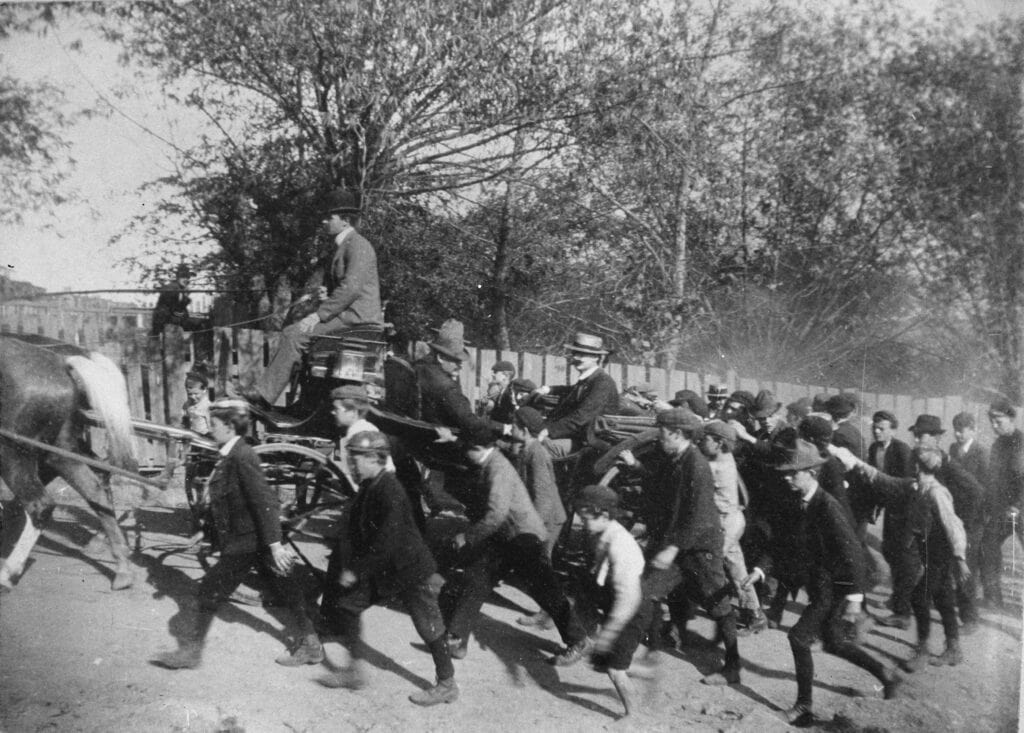
Did you know the Pennsylvania State Police traces its roots to a labor strike? The force was established in the wake of the anthracite coal strike of 1902, a major work stoppage that disrupted the country’s fuel supply and set a precedent for government intervention in labor disputes.
In 1902, northeastern Pennsylvania miners represented by the United Mine Workers went on strike for better wages, a shorter workday, and recognition of their union by company management. The coal companies, however, refused to negotiate—even as coal production ground to a standstill. President Theodore Roosevelt intervened, establishing a federal commission to arbitrate the conflict—the first time the federal government stepped in as a neutral mediator rather than on behalf of industry. Based upon the commission’s recommendations, miners won a 10% wage increase and a 9-hour workday, which the union considered a victory.
Philadelphia Shirtwaist Strike of 1909
You may have heard of the Triangle Shirtwaist Factory Fire, which in 1911 destroyed a New York garment factory and killed 146 mostly immigrant women workers, who had been locked inside by their employer to prevent theft. Working conditions were similar in Philadelphia’s garment industry (which also experienced at least one factory fire in 1910), where immigrant women workers were expected to purchase their own materials and pay for factory expenses like heat and electricity, all while making extremely low wages.
In 1909, 7,000 of these Philadelphia garment workers—most of whom were Jewish immigrants from Russia—went on strike for better wages and working conditions as well as union recognition. “I personally will fight in this strike until after the last morsel of bread that I can buy will pass my lips,” said garment worker Alice Sabowitz, who was 15 years old. Workers, who had the support of famed activist Mother Jones and Helen Taft, President William Taft’s daughter, won their demands after two months of striking.
The United Steelworkers and the rise of the CIO
In the 1930s, steelworkers in Western Pennsylvania began organizing for better pay, safer working conditions, and collective bargaining rights, eventually joining the United Steelworkers union, which formed in 1942 as part of the Congress of Industrial Organizations.
The CIO—which held its founding convention in 1938 in Pittsburgh—presented a new, more inclusive model of unionization that organized all workers in an industry together, rather than separating them by craft or trade. Militant tactics like sit-down strikes shut down production and forced negotiations, and over the next couple of decades the union won major victories bargaining with U.S. Steel and other steel companies, while dozens of other CIO-affiliated unions ushered in a golden age of labor organizing.
Nate Smith and the Black Construction Coalition
A little-known civil rights and labor activist in Pittsburgh helped break the color barrier in trade unions during the civil rights era of the 1960s. Nate Smith, who was both a prizefighter and a union construction worker, laid the groundwork for inclusive organizing in trade unions and built a model adopted in states across the country. He founded a project called “Operation Dig” that sought to train Black workers in construction and help them access union cards. But Smith soon learned that upskilling couldn’t defeat racism, and the Black Construction Coalition was formed. The coalition organized a march in downtown Pittsburgh in 1969 where hundreds of people protested the exclusion of Black union labor during the construction of Three Rivers Stadium and the U.S. Steel Tower. Smith himself lay down in front of a bulldozer to disrupt construction. The Black Construction Coalition negotiated with city leaders and ultimately won a construction plan that would include more than 1,000 Black trade laborers. By the time of his death in 2011, Smith had helped thousands of Black workers join unions.
Continued resistance against so-called “right-to-work”
Labor history is sometimes shaped by what doesn’t happen. More than half of states have passed so-called “right-to-work” laws, which limit the power of unions to collect dues and effectively represent workers. These states have lower rates of unionization, as well as lower wages and fewer benefits, as compared to states—such as Pennsylvania—that haven’t adopted such laws, according to research from the Economic Policy Institute. Over the past decades that “right-to-work” arguments have proliferated, Pennsylvania workers and lawmakers have resisted such legislation.
Service and white-collar worker wins
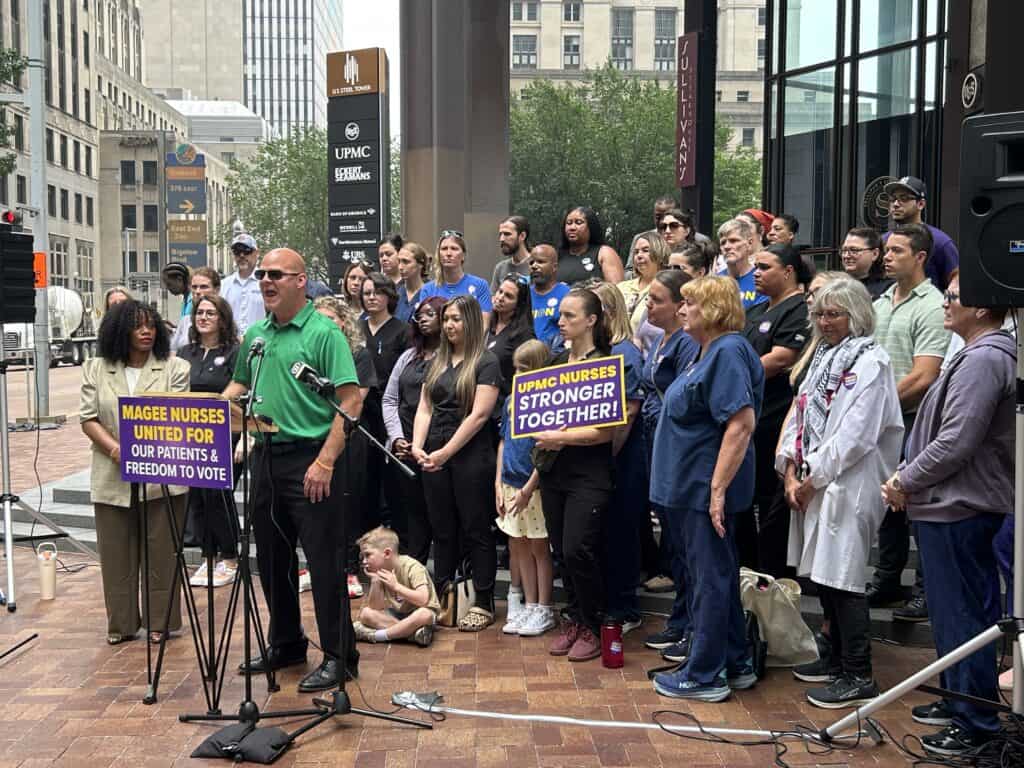
Perhaps you’ve scratched your head when, in recent years, the United Steelworkers organized the University of Pittsburgh faculty in 2021 and staff in 2024, or when Philadelphia public defenders joined the United Auto Workers in 2020. Yet as the nature of work has shifted from factories to service and white-collar work, labor unions have changed too, embracing the tenets of industrial unionism that unite all workers without regard for job title or skill. Unions are organizing baristas, academics, museum workers, home care workers, nurses, and other workers all across Pennsylvania—in addition to traditional factory workers. These workers have won better wages, improved benefits, and more say on the job.
While Pennsylvania has the lowest unionization rate it’s had since 1989, its share of union members is still higher than the national average. And even after decades of declining unionization, people have amore positive view of unions than they have in years. Plus, a wave of labor drives have taken placeall over the state (and country) in recent years, adding new members and redefining what it means to be in a union.