Learn about Alaska’s gold rush history, spend time panning for gold, and seek out your own rocks and minerals with this guide to rock hunting in Alaska.
In the 1890s, thousands of people embarked on a harrowing journey to reach Canada’s Yukon Territory and Alaska in search of gold during the Klondike Gold Rush. When gold was discovered in Nome in the late 1890s, and then in Fairbanks in 1902, even more people sought out the region as a place to seek their fortunes.
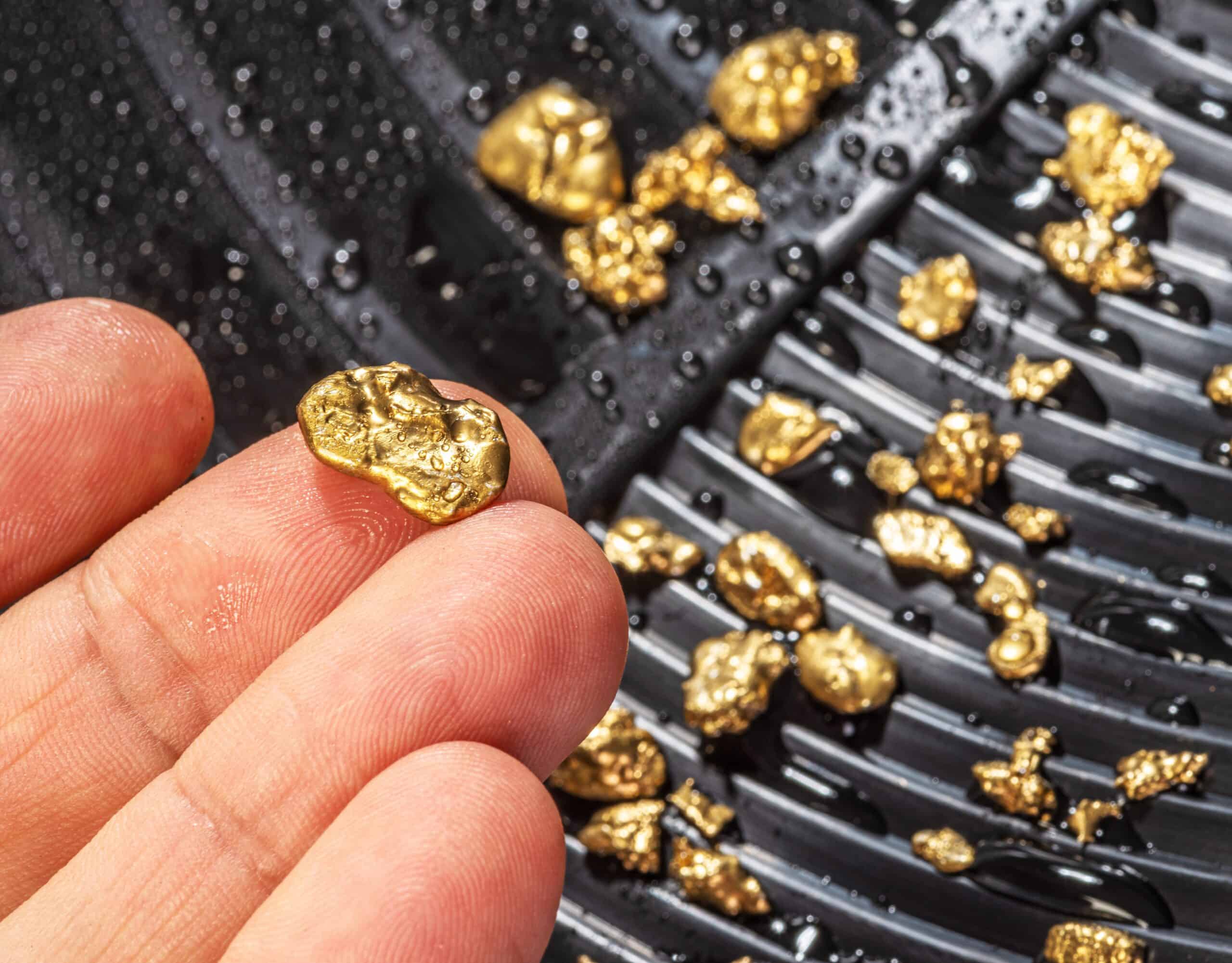
Alaska officially became a state in 1959, and gold is the state’s official mineral. Searching for gold flakes and nuggets is still a popular recreational activity. In addition to gold, Alaska is also known for a variety of gems, including jade, which is the official state gem.
Learn more about Alaska’s rocks, minerals, and gems with this guide to rock hunting in Alaska.
Be prepared and know the rules for rockhounding
When rockhounding in the wilds of Alaska, be aware of hazards and plan for a safe trip. Take precautions to make sure you are safe, and prepare for wildlife, including bears, harsh elements, navigational challenges, and environmental concerns like quicksand in some areas, in addition to numerous other hazards.
Be sure to always know who owns the land you plan to search on, and make sure that you have the necessary permission to be on that land and to collect specimens there.
Land ownership in the state includes a wide variety of federal, state, private, and other land types, so be sure to do your research and know exactly where you’re going. Always confirm your plans are legal. Mining is still quite active in Alaska, with operations focusing on gold, silver, and other materials.
Generally, it is illegal to collect in national parks and monuments. Bureau of Land Management (BLM) and Forest Service lands often allow for collecting for noncommercial purposes, though they generally have specific rules in place about where and how you can collect, as well as limits on quantity.
Be sure to check with the specific landowner where you would like to collect to confirm that it is allowed, and to find out about permits or other requirements.
The BLM generally allows people to collect rocks, minerals, and semiprecious gems as long as they are being collected for noncommercial purposes. However, there are many rules, so be sure to check your specific situation and ask the agency if you have questions or are unsure about the rules.
Even on land where it is allowed to search for rocks and minerals, there are generally rules about which tools and techniques are allowed.
According to Alaska’s Department of Natural Resources Geological & Geophysical Surveys (DGGS), the BLM generally allows people to search for gold using only hand tools like gold pans, sluice boxes, and picks and shovels. Using more extensive equipment requires applying for a permit.
With any tools, be sure to check with the appropriate agency or landowner to obtain permission and know all the rules and regulations before heading out.
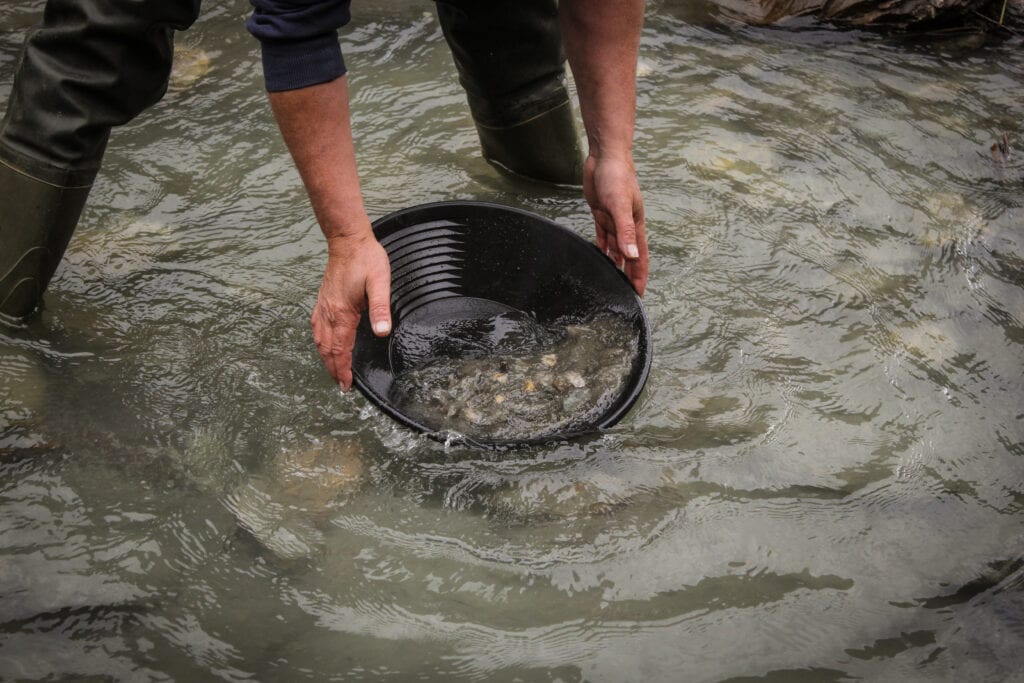
Learn about gold rush history and try gold panning
Learn about Alaska’s rich Gold Rush history and try your hand at gold panning at a number of locations throughout the state.
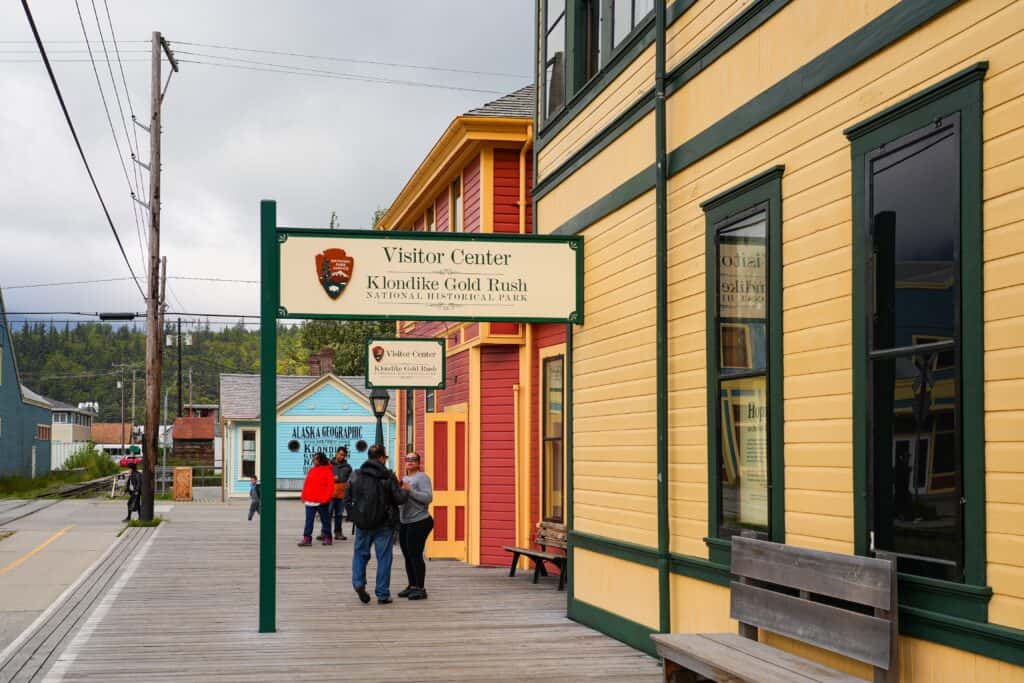
Go to Klondike Gold Rush National Historical Park in Skagway, where you can go on a self-guided walking tour, visit the park’s museum, and learn more about the gold rush.
In Fairbanks, go for a gold panning tour with Gold Daughters. The experience provides a bag of paydirt and some simple training on how to pan for gold, so you can search for your own treasures.
Some people also like to head out on public lands to search for gold. On its website, DGGS shares a number of locations throughout the state that the agency says allow gold panning and prospecting. Be sure to check current rules and regulations for each location and see if you need to obtain a permit.
The Alaska Department of Natural Resources also published a handy guide that includes tips for gold seekers.
Additionally, the BLM and Forest Service published a gold panning guide focusing on the Kenai Peninsula and Chugach National Forest. You can download it for free on the BLM website. This resource shares mining history, techniques, and a few popular areas to pan for gold.
Try your hand at rock hunting
Throughout Alaska, there are numerous areas where you can search for rocks, minerals, and other finds. Rockhounding.org is a site some rockhounds use to find out about locations and research potential dig sites.
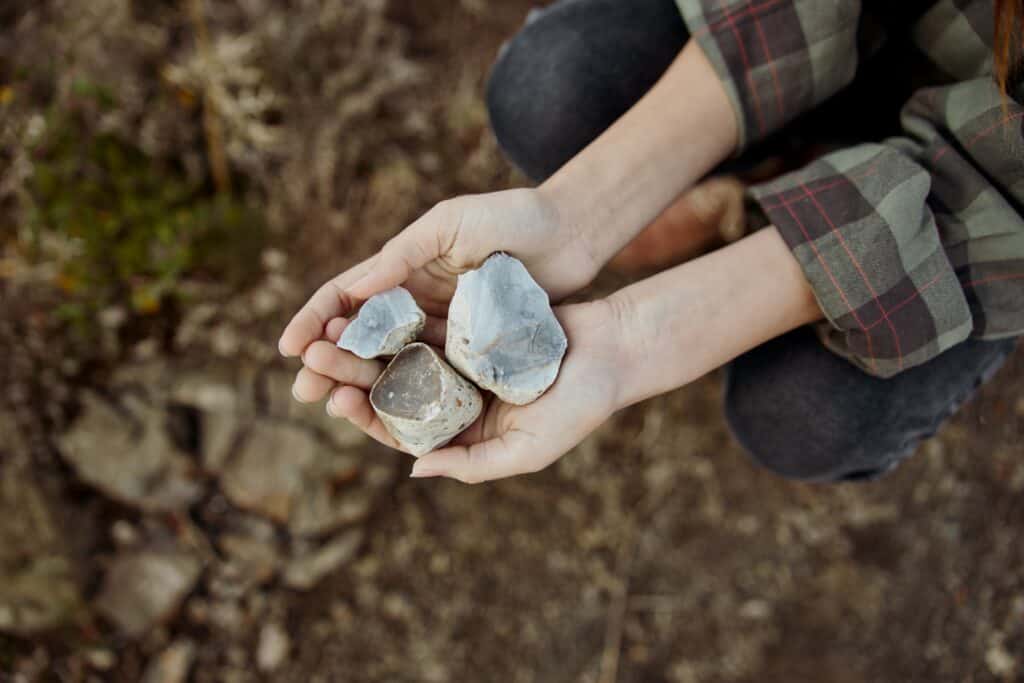
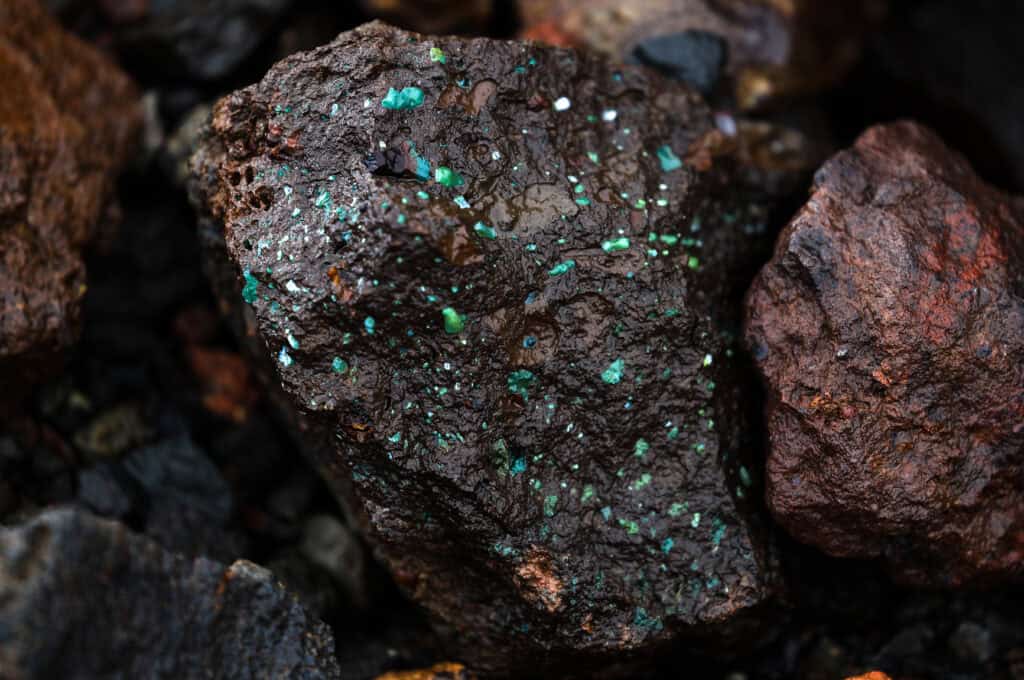
There are numerous different rocks, minerals, and gems people can search for throughout the state.
Jade is Alaska’s official state gemstone, and it can be found in a number of locations around the state, such as in the Kobuk River region.
Other gems people search for include garnets. One unique spot to search for garnets is located near Wrangell.
Garnet Ledge is a favorite location to search for garnets. However, the catch is you have to be accompanied by a child from Wrangell to access the actual ledge. There is a longstanding tradition of children collecting and selling garnets from this location.
Garnet Ledge is located seven miles from Wrangell by boat, and the Forest Service rents out a cabin nearby.
Find gems and gold at local museums
Alaska’s museums host rich collections of rocks and other specimens to enjoy. If hiking out to find your own isn’t quite what you’re looking for, check out these museums to enjoy their wealth of options.
The Alaska Museum of Science & Nature in Anchorage is home to a number of incredible exhibits focused on the natural world. Be sure to spend some time in the Rocks & Minerals Gallery, which contains many stunning specimens. The museum’s collection includes rocks and minerals that are found within the state of Alaska, as well as those found all around the world, including pieces of amethyst, amazonite, and wavellite.
In Fairbanks, be sure to spend some time at the University of Alaska’s Museum of the North. This museum holds an extensive display of gold, as well as numerous other Alaskan highlights.
Join a rockhounding group or attend an event
To learn more about rockhounding, or find a group of like-minded people to join on outdoor explorations, consider joining a group.
The Chugach Gem and Mineral Society hosts a number of trips for rockhounds throughout the year. The group also has a Facebook page sharing their activities and schedule.
Events include everything from workshops on rock cutting and polishing to rockhounding expeditions and symposiums on topics related to rockhounding.
In order to be able to participate in the Chugach Gem and Mineral Society’s field trips, you must be a paid member of the organization.
The group also hosts other events that may be of interest to rockhounds, including the Fur Rondy Rock and Mineral Show. The event features a number of vendors selling items such as minerals, rocks, fossils, and items made from these materials, as well as crafts, jewelry, and more.