These are the customs that linger, linking today’s students with everyone who came before.
College traditions can start with a joke, a superstition, or a lucky charm. Repeat them long enough, and a shoe tree, a towel, or even a shower of ping-pong balls can become part of a campus identity.
Across the state, students kiss beneath trees, rub bronze toes, leave snacks at a Supreme Court justice’s grave, and carry on rituals from one class to the next. Here are eight of the state’s quirkiest college traditions.
1. Love takes root at Murray State
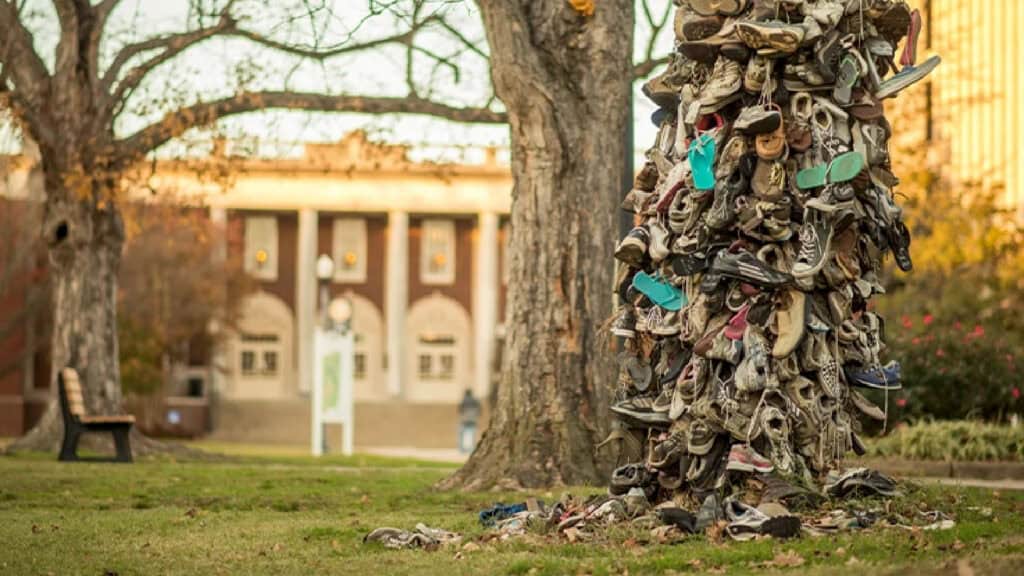
At Murray State University, couples who meet on campus and later marry return to nail their shoes to the Shoe Tree near Pogue Library. They often add names or wedding dates. Some return years later with baby shoes after starting a family.
The tradition dates to about 1965, although its origins remain uncertain. It may have begun with a student leaving unwanted shoes behind while moving out of a residence hall or as a student art project. Murray State prefers the romantic explanation: The shoes represent the lasting devotion of “Racer sole mates.”
The tree standing today is the university’s third. Lightning struck the first tree, and the university removed the second in 2015 after its limbs began to fall. The trees may come and go, but the shoes keep piling up.
2. Animal crackers for justice
During exams, University of Louisville law students leave coins, stones, and animal crackers at the gravesite of U.S. Supreme Court Justice Louis Brandeis.
Brandeis and his wife, Alice Goldmark Brandeis, are buried beneath the portico of the law school that bears his name. Students have left coins there for luck for decades. The stones reflect the Jewish custom of marking a visit to a grave.
Animal crackers joined the mix after a former dean told students that Brandeis liked the snack. Boxes began appearing during finals, although campus squirrels sometimes get to the offerings first.
3. Centre’s impossible formula
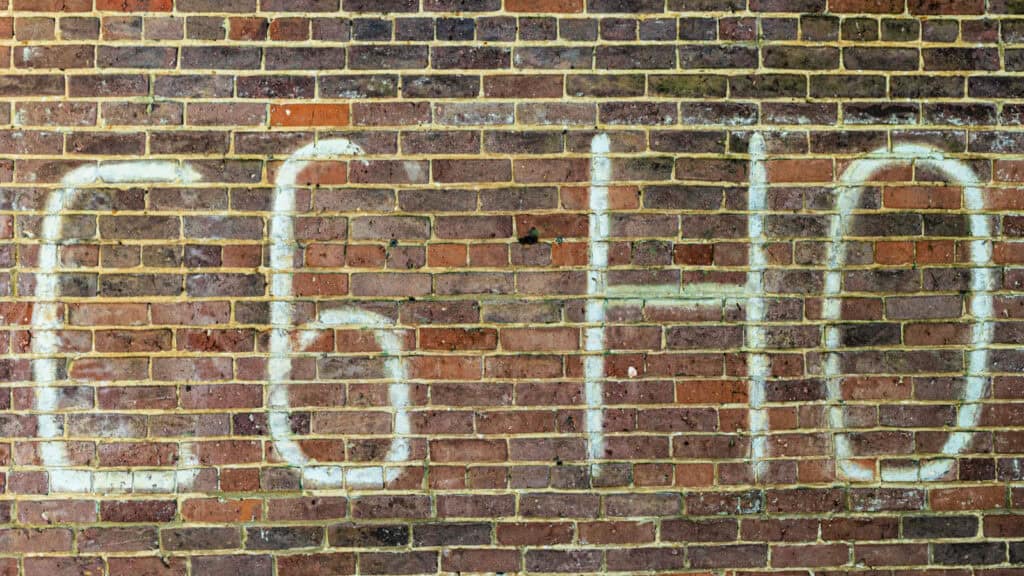
The characters painted on a building at Centre College look like a chemical formula: C6H0. Instead, they record one of the biggest upsets in college football history.
On Oct. 29, 1921, Centre’s Praying Colonels traveled from Danville to Harvard Stadium and beat Harvard 6-0. Both teams entered the game undefeated. Students back home celebrated by painting the score on buildings, signs, and even cows.
The arrangement became known as the “impossible formula,” accompanied by a joke that Centre had poisoned Harvard. More than a century later, the game has inspired a book, play, and documentary. C6H0 still marks the day a small Kentucky school toppled a national football powerhouse.
4. A kiss beneath Transylvania’s tree
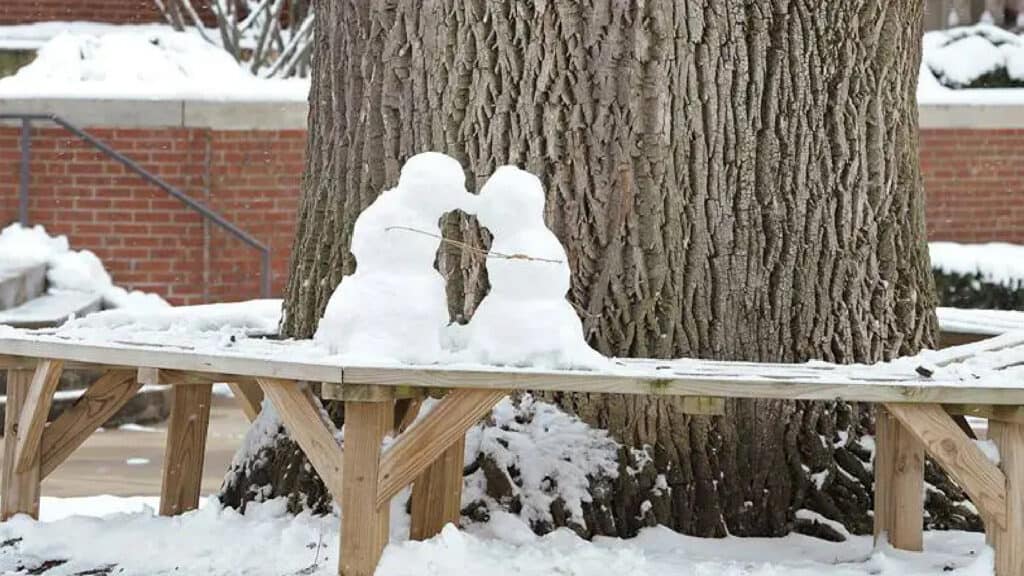
Outside Transylvania University’s library in Lexington stands a centuries-old white ash known as the Kissing Tree.
At a time when colleges frowned on public displays of affection, the tree offered courting couples a rare exception. Administrators reportedly looked the other way when students kissed beneath its branches.
The tree became a romantic rite of passage. Campus lore now promises a lifelong connection to couples who kiss beneath it. That is a lot of responsibility for one tree, even one that has been around for decades.
5. Northern Kentucky’s battle horn
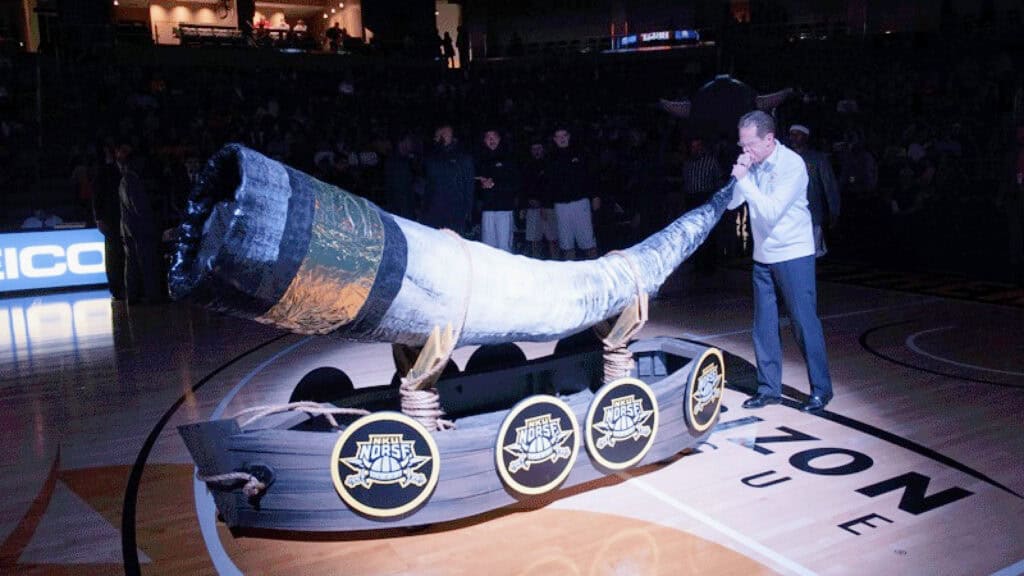
Northern Kentucky University’s teams are called the Norse, so it may be fitting that the basketball games begin with the blast of a mythical horn.
Before the team takes the court, a guest steps up to a 10-foot replica of a Gjallarhorn, the battle horn associated with Heimdall in Norse mythology. The horn rolls into the arena aboard a handmade Viking ship.
The spectacle has one theatrical secret. The guest leans into the horn, but the arena sound system supplies the mighty blast. It may not be a working Viking horn, but the entrance is hard to miss.
6. Rub Daniel Boone’s toe for luck at EKU
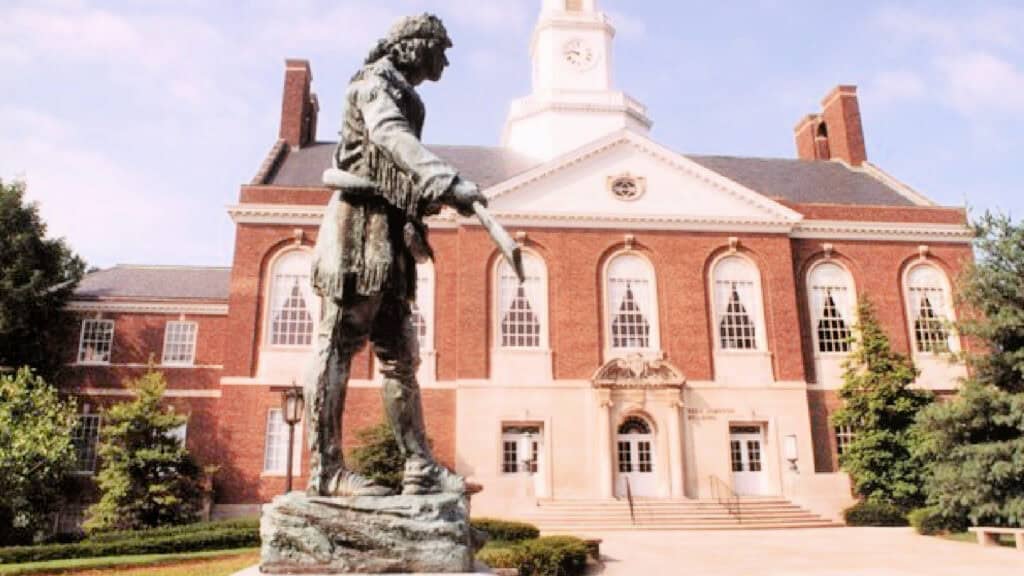
Before a difficult exam, Eastern Kentucky University students can ask Daniel Boone for a little extra luck.
A bronze statue of the frontiersman has stood outside the Keen Johnson Building in Richmond since 1967. Students rub the toe of Boone’s shoe for luck on final exams. Athletes have been known to stop before games, and alums revisit the statue when they return to campus.
Years of rubbing have left the lucky toe noticeably shinier than the rest of the statue.
7. Catch a lucky ping-pong ball at UK
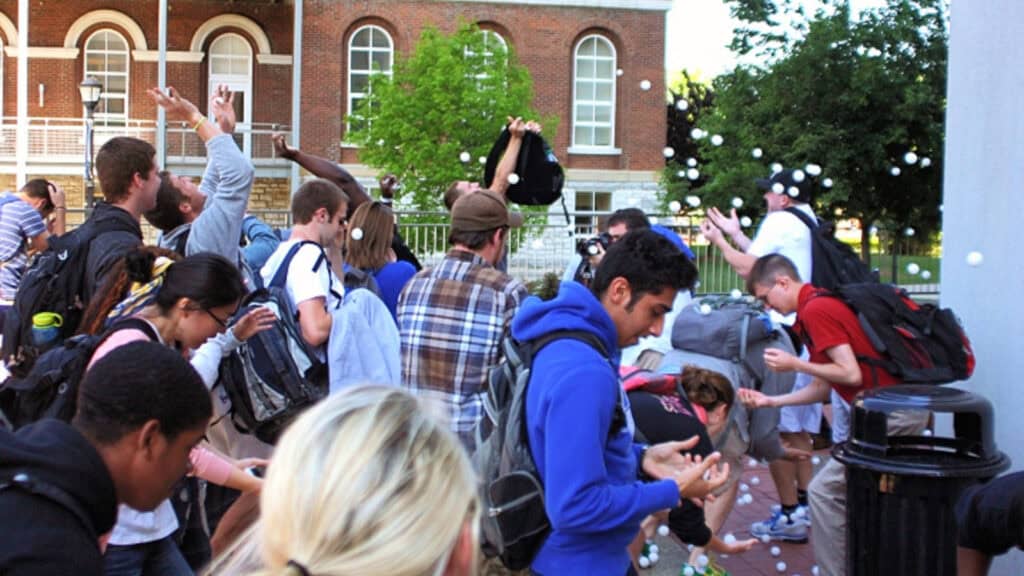
At the University of Kentucky, spring brings a brief shower of ping-pong balls. During the annual Ping Pong Ball Drop, students gather on campus and try to snag specially marked balls that can be traded for prizes. The Student Activities Board has hosted versions of the event for years. Prizes have included headphones, cameras, video game systems, and flat-screen TVs.
Students have been known to arrive armed with backpacks, boxes, and even upside-down umbrellas to catch as many balls as possible. For a few frantic minutes, looking up can pay off.
8. Western Kentucky’s traveling red towel

Western Kentucky University’s basketball Coach Edgar Allen “E.A.” Diddle carried a red towel through more than 1,000 games from 1922 to 1964.
Diddle waved it at fans, signaled players with it, tossed it in frustration, and sometimes chewed on it. The towel became so closely linked to the coach that it eventually became a symbol of the university.
Students and alumni now wave red towels at games, commencement ceremonies, and other celebrations. They carry red towels on trips and pose with them in graduation and wedding photos. A coach’s sideline habit became something Hilltoppers could carry with them long after leaving Bowling Green.
Why the rituals last
A shoe, a towel, a ping-pong ball, or a polished piece of bronze may not look like campus history. But generations of students give those objects meaning by repeating the same rituals and passing along the stories behind them.
These traditions offer students a connection to the people who stood on the same campus years or even decades before them, doing the same wonderfully strange things.