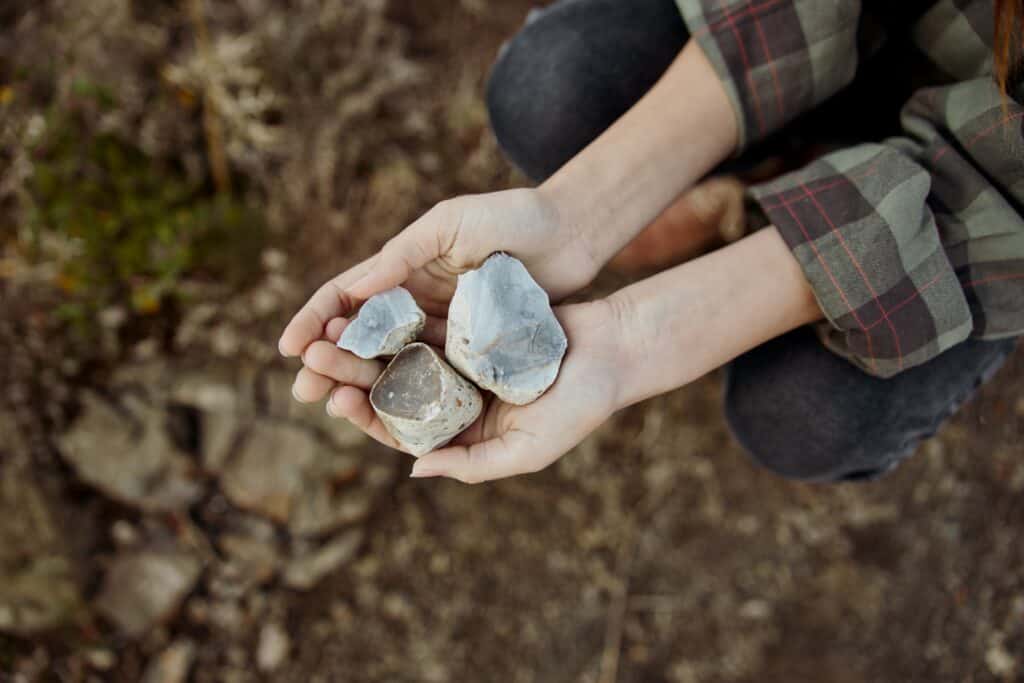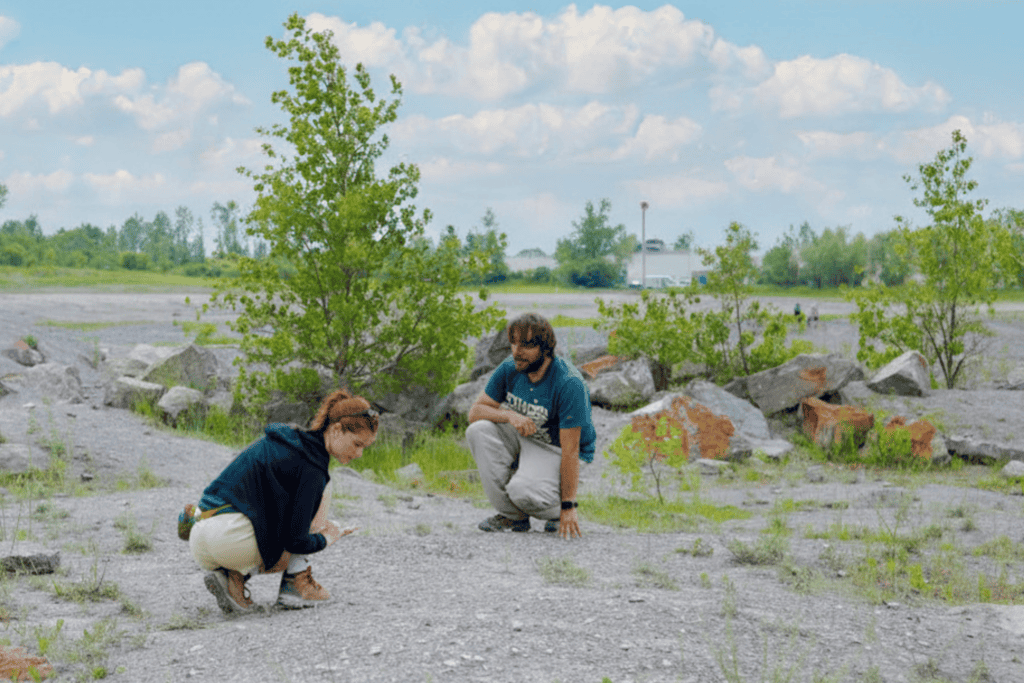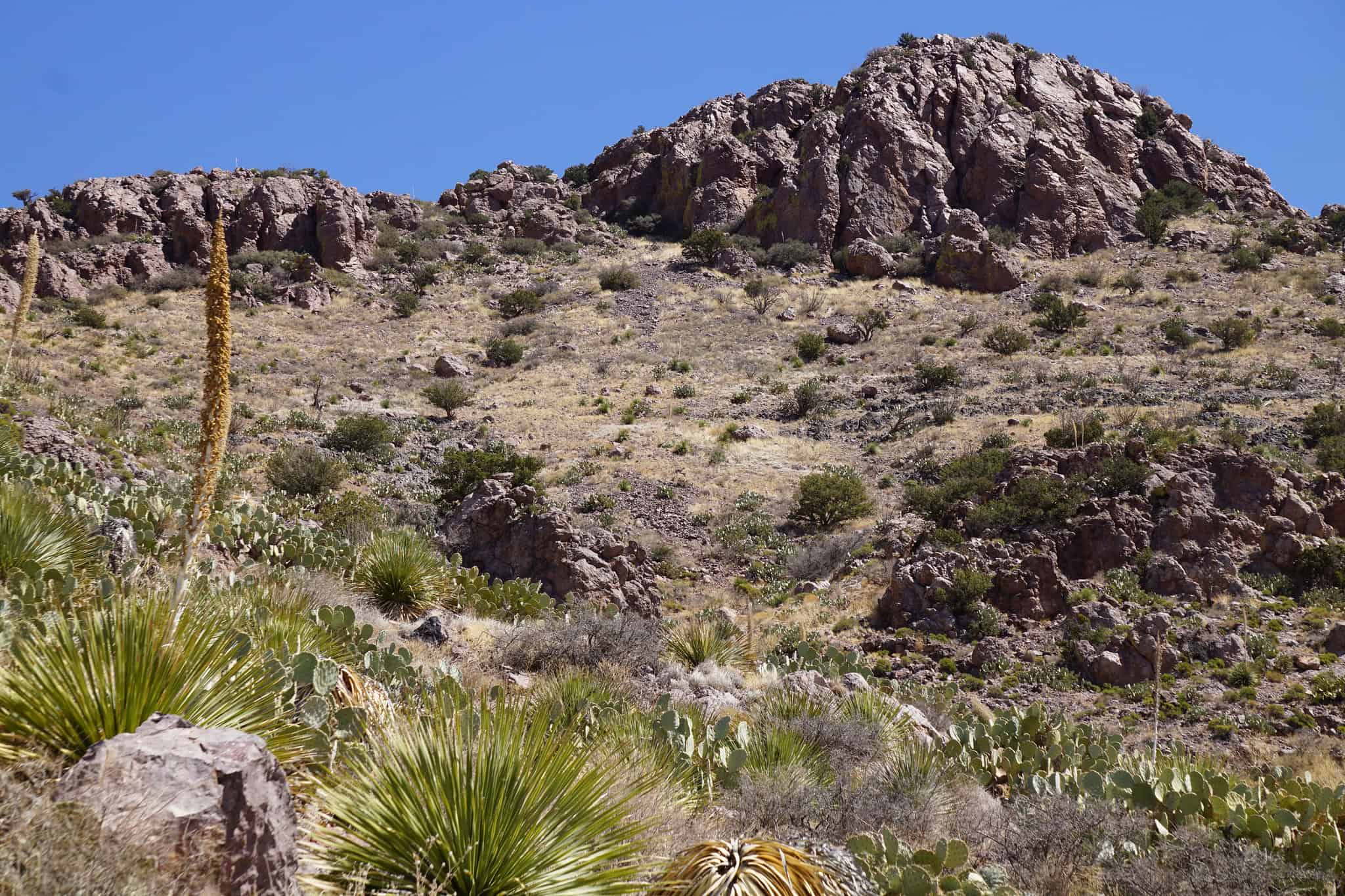
Experienced rockhounds and newbies alike can enjoy a variety of rock hunting in New Mexico experiences, with a stunning array of items to admire and collect.
Are you ready to rock? Before you throw up your index and pinky fingers, we’re not talking about the music, though you can certainly jam out to some tunes on your headphones while adventuring. Rather, it’s time for a little rock hunting in New Mexico.
The Land of Enchantment has several stunning landscapes and impressive state and national parks, many of which are home to rocks, minerals, and other pieces of nature that are hundreds or even thousands of years old.
Discover what you can see when rock hunting in New Mexico, plus some of the best spots to check out to add to your collection.
The top highlights of rock hunting in New Mexico
New Mexico is home to a wide variety of rocks and minerals. Beauty is in the eye of the beholder, of course, though most of us would agree this bunch is impressive.
Pecos diamonds
Despite the name, Pecos diamonds are not actually diamonds. They’re doubly terminated quartz crystals, meaning they have points on both ends. The rocks are unique to New Mexico, and they come in a variety of colors, including clear and translucent, pink, and deep brown and red.
Red jasper
Red jasper is a frequent material for rocky decor and garden stones, and for good reason: it’s quite eye-catching and pleasing to gaze upon. This opaque variety of quartz gains its color from iron inclusions, with the results ranging from a more brick-like hue to a vibrant, waxy red.
Petrified wood
Petrification happens when wood gets buried beneath water or volcanic ash, and the end result is a pretty cool stone. Petrified wood is also unique in that it’s a 3D representation of the original organic material, so it’s like having a little mini keepsake of something that’s likely hundreds to thousands of years old. There are around 40 minerals in petrified wood, with silica leading the charge through hydrogen bonding.
Azurite
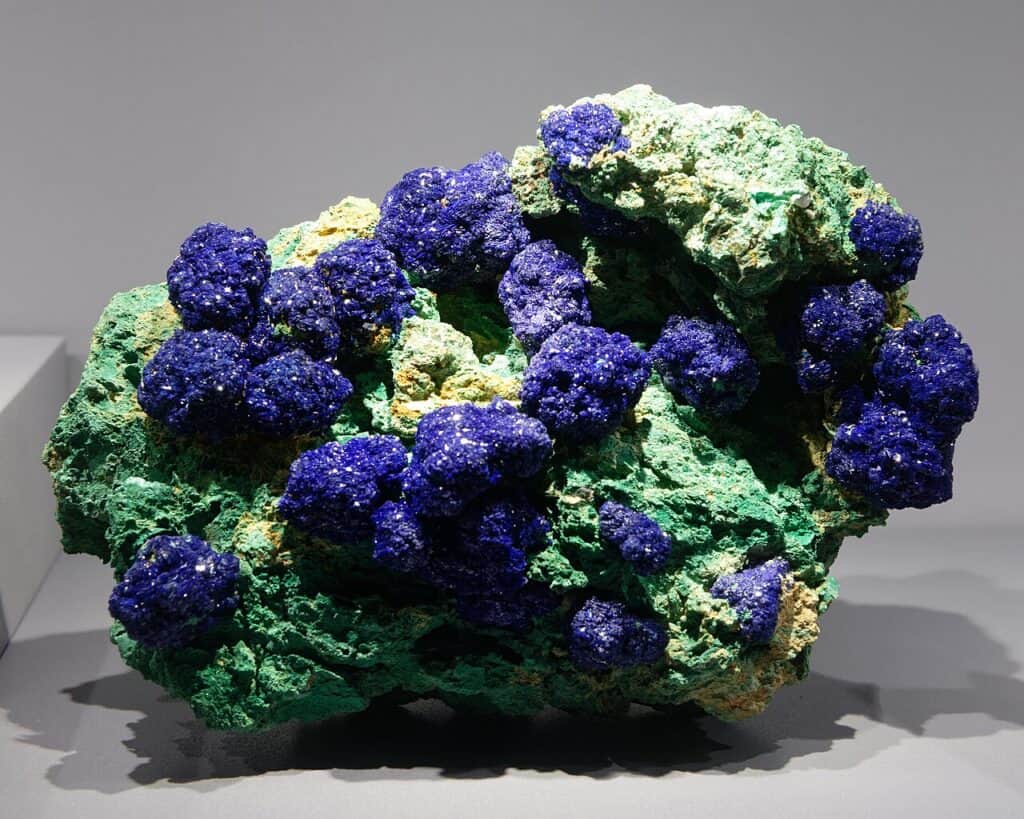
Azurites are so vividly blue (and occasionally indigo) that you might think you’ve encountered a batch of blueberries out in the wild. We wouldn’t recommend chomping down on an azurite, though they sure are pretty to look at. They’re located throughout New Mexico, though they’re most frequent in the southwest part of the state.
Malachite
With a chemical formula that could be mistaken for a rooster’s call—Cu₂CO₃(OH)₂—malachite is a dynamic green mineral with hypnotic swirling bands. It’s also one of the softer rocks to find in New Mexico. Malachite is a common jewelry material, and it was even historically used as powder for eye makeup. On extremely rare occasions, you might spot malachite in crystallized form, making it look like a dark green stalactite.
Apache tears
Apache tears are rounded pebbles of obsidian, gaining their black color from natural volcanic glass. The rocks are often not evenly rounded and have indentations along their surface. Sometimes, they’ll sport small bands and appear translucent when held at certain angles.
Apache tears also have the coolest backstory for any of the rocks in New Mexico. As an Apache tribe legend goes, during a battle between the Apaches and U.S. Cavalry, the outnumbered Apache warriors rode their horses off a mountain rather than allow the cavalry to defeat them. The warriors’ family heard about this fight and cried. When their tears hit the ground, they turned into stone.
Smithsonite
If you like rocks and minerals that provide a mix of colors, smithsonite just might be your favorite. This trigonal zinc carbonate mineral comes in blue, pink, green, white, and yellow varieties; the latter goes by the very charming nickname of “turkey fat ore.” Smithsonite occurs due to weathering or oxidation of ore deposits, so perhaps the name is appropriate. Its bubble bunches are striking, and you’ll find the majority of the state’s collection in the Magdalena Mining District in Socorro County.
9 great spots for rock hunting in New Mexico
Good news for rockhounds: You can find rocks just about everywhere throughout the state. In fact, New Mexico has over 400 documented rockhounding and rock hunting sites. If you’re short on time, chances are a quick stroll around the neighborhood might yield at least one cool reward. But when you’ve got a few hours for a hunt, these options are even better.
1. Rockhound State Park
Sometimes, the name of a place is an excellent clue of what you’ll find inside. Rockhound State Park, located in the Little Florida Mountains, was the first U.S. park to allow people to collect rocks and minerals for personal use. That was true when the park opened in 1966, and it remains true today. The trails are accompanied by unique geology and wildflower displays. You’ll certainly be able to find geodes among the rocks, and with each visitor allowed to take up to 15 pounds home with them, you’ll have ample opportunities to add to your collection.
2. The bootheel of the state
The southwest corner of New Mexico may not have a ton of people in it. Lordsburg, the county seat of Hidalgo County, has a population of fewer than 2,500 people. There are far more rocks and minerals to uncover in the state’s “bootheel,” making it a rockhound’s dream. Beyond Shakespeare Ghost Town, which has finds like bornite, galena, and linarite, there are a handful of mines to explore. Our favorites are Anita, Ruth, and Waldo, where copper, gold, silver, and sphalerite can be uncovered.
3. Caballo Mountains
The Caballo Mountains, just outside of Truth or Consequences, are a hotspot for rockhounds. Agate and jasper are the most common finds around the Elephant Butte and Paseo del Rio camping area. East of the mountains, in the aptly named Carnelian Grounds, you may come across some gorgeous red-orange carnelian. Alas, you won’t be able to collect any rocks from Caballo Lake State Park, though you’ll see plenty as you traverse the stunning area. In addition to agate, jasper, and carnelian, you might also encounter petrified wood and quartz.
4. Artesia
Artesia boasts over 300 days of sunshine each year, so it’s a terrific spot for some rockhounding. The most frequent rocks are Pecos diamonds, double-terminated quartz that come in a host of hues, notably gray, brown, and red. When you need a post-collecting break, Artesia is home to the beautiful Artesia Public Library and near Roswell, a destination for close encounters with aliens (probably, though we can neither confirm nor deny this statement).
5. Albuquerque
The most populous city in the state also has an extensive collection of rocks to discover, especially when you consider the greater ABQ area. For instance, Arroyo de las Calabacillas is a consistent source for collecting petrified wood, red jasper, and quartz. The arroyo also has some cool artwork; artificial fossils have been cast into the walls of the channel to showcase New Mexico’s geologic past. In the case of heavy rainfall, this is one area to skip, since flooding is possible. Pajarito Mesa is a public spot for agatized wood and agate, while Shakespeare Mine in Bernalillo has a half-dozen minerals, such as azurite, barite, and malachite.
6. Cerrillos Hills State Park
New Mexico’s state gem is turquoise, and Cerrillos Hills State Park is one of the best spots to find it. About halfway between Santa Fe and Albuquerque, the park sports over 1,100 years of mining history and five miles of trails. With an elevation of up to 6,100 feet, it’ll certainly give you a workout as you search for turquoise, igneous rock, and sandstone. Whether you’re hiking, biking, or riding a horse, you’ll have spectacular sights all around.
7. Glorieta Mountain
For more advanced rockhounds, Glorieta Mountain in Santa Fe County offers an abundance of meteorites. The problem is that they’re hard to find, thanks to a mix of steep ravines, wooded areas, and loose gravel along many pathways. However, persistent hunters can go after Pallasites, iron-nickel metal with yellow-green olivine crystals embedded inside, and Siderites, which do not have the crystals. Both are quite stunning, so if you’re up for a challenge, it’s well worth the trip.
8. Magdalena
Socorro County is one of the best areas for rock hunting in New Mexico, and Magdalena hosts a variety of collectibles. The Kelly Mine sports deep blue smithsonite and fluorite, while Water Canyon is home to rhyolite and some volcanic rocks, including andesite and latite. Bill’s Gem and Mineral Shop is also worth stopping by, and the owners offer great advice on additional areas to check out. Prefer to rock climb instead of rock hunt? Head to Box Canyon, where there are several spots to scale.
9. New Mexico Bureau of Geology Mineral Museum
This one might not technically qualify as rock hunting in New Mexico, but you’ll at least get to see a massive variety. Located on the NM Tech Campus in Socorro, the Mineral Museum has been open since 1889 and is home to over 15,000 mineral specimens. Its aim is to help engineers and geologists with their education, though the general public benefits from it, too. Aside from the thousands of different rocks and minerals, visitors can admire tools and equipment on display. Free admission is the cherry (jasper) on top.
What to know before you go
First-timers might have some questions about rock hunting. Before diving in, prepare yourself to have the best possible experience.
Follow laws and rules about rock hunting in New Mexico
Among the biggest considerations is knowing the laws and rules about rock hunting in New Mexico. The New Mexico Bureau of Geology and Mineral Resources has a guide with pointers and additional resources.
In general, respect the areas where you go hunting. Take only what you need, and leave the rest. Some areas have landowners or private property alongside public areas, so be careful about trespassing. Old mines and mine shafts in particular necessitate special care when entering. They’re usually better handled with an experienced guide.
Specific destinations might also have certain requirements. Some state or national parks won’t allow you to remove anything at all—for example, White Sands National Park prohibits the collection of sand from the dunes—while others may have weight or quantity restrictions.
Bring proper gear
Rockhounding is an activity unlike many others in that you technically only need your eyes and a curious spirit. However, bringing a bit of gear with you can be helpful for excavating finds more quickly. Here are a few things to pack:
- Rock hammer and chisel for helping excavate
- Brushes and gloves for proper handling
- Jeweler’s loupe to help examine rocks
- Black light for spotting rocks in darker locations
- Wrapping material and sandwich bags for your finds
- Closed-toed shoes for easier hiking
- Water to stay hydrated, since New Mexico’s desert climate can become quite taxing
- Backpack or drawstring bag for storing your items
If you’re newer to rockhounding, you may not have all these items handy. Luckily, you can buy kits like this one from Amazon or from an outdoors retailer.
And just like that, you’re ready for your next (or first) rock hunting adventure. The beauty of New Mexico awaits!