These tried-and-true traditions at Minnesota’s colleges and universities show real school spirit.
School spirit can’t be manufactured. True school spirit comes from the students who make their schools more fun, more welcoming, more irreverent, and—dare we say—better. Call it character, pride, or simply je ne sais quoi.
These are the stories of the wholesome hobbies and mischievous hijinks giving Minnesota’s colleges and universities lore we love.
The Ski-U-Mah Cheer | University of Minnesota
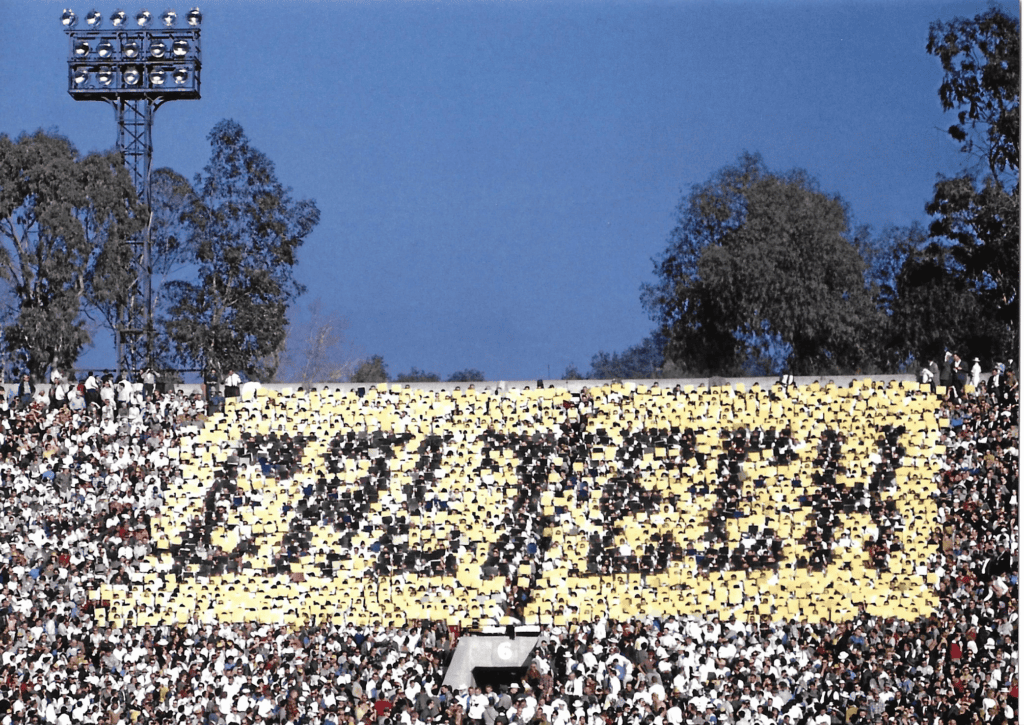
Ski-U-Mah (sky-yoo-maw) is the University of Minnesota’s iconic cheer. It’s like “skol,” but for collegiate sports. But Ski-U-Mah is much more than a quirky Golden Gophers athletic chant—it’s central to the origin story of cheerleading.
It was common for cheers and chants to spontaneously emerge from crowds at games. And Princeton had its own cheer, but no cheerleader. But when a Princeton graduate became the U of M’s football coach, everything fell into place.
A student-athlete came up with “Ski-U-Mah” as part of a team cheer he invented, and a football fan began leading the crowd in a group chant, which would go down in history as the first instance of cheerleading. According to usacheer.org, the original chant went like this, and variations live on in the U of M’s school songs:
Rah, rah, rah!
Ski-u-mah!
Hoo-rah! Hoo-rah!
Varsity! Varsity! Varsity,
Minn-e-so-tah!
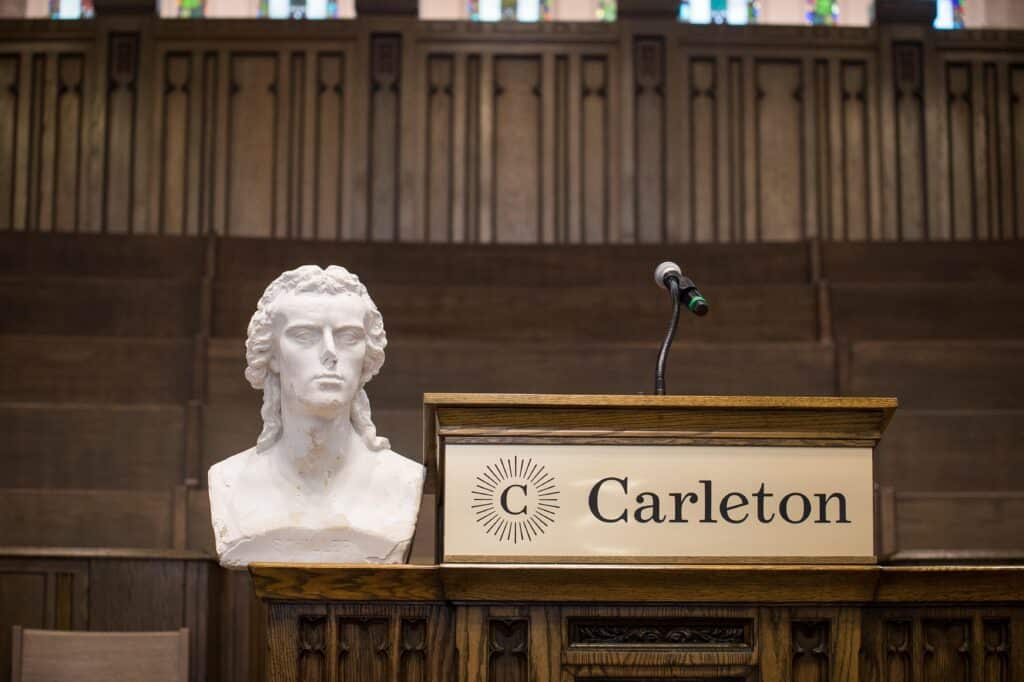
The Bust of Schiller | Carleton College
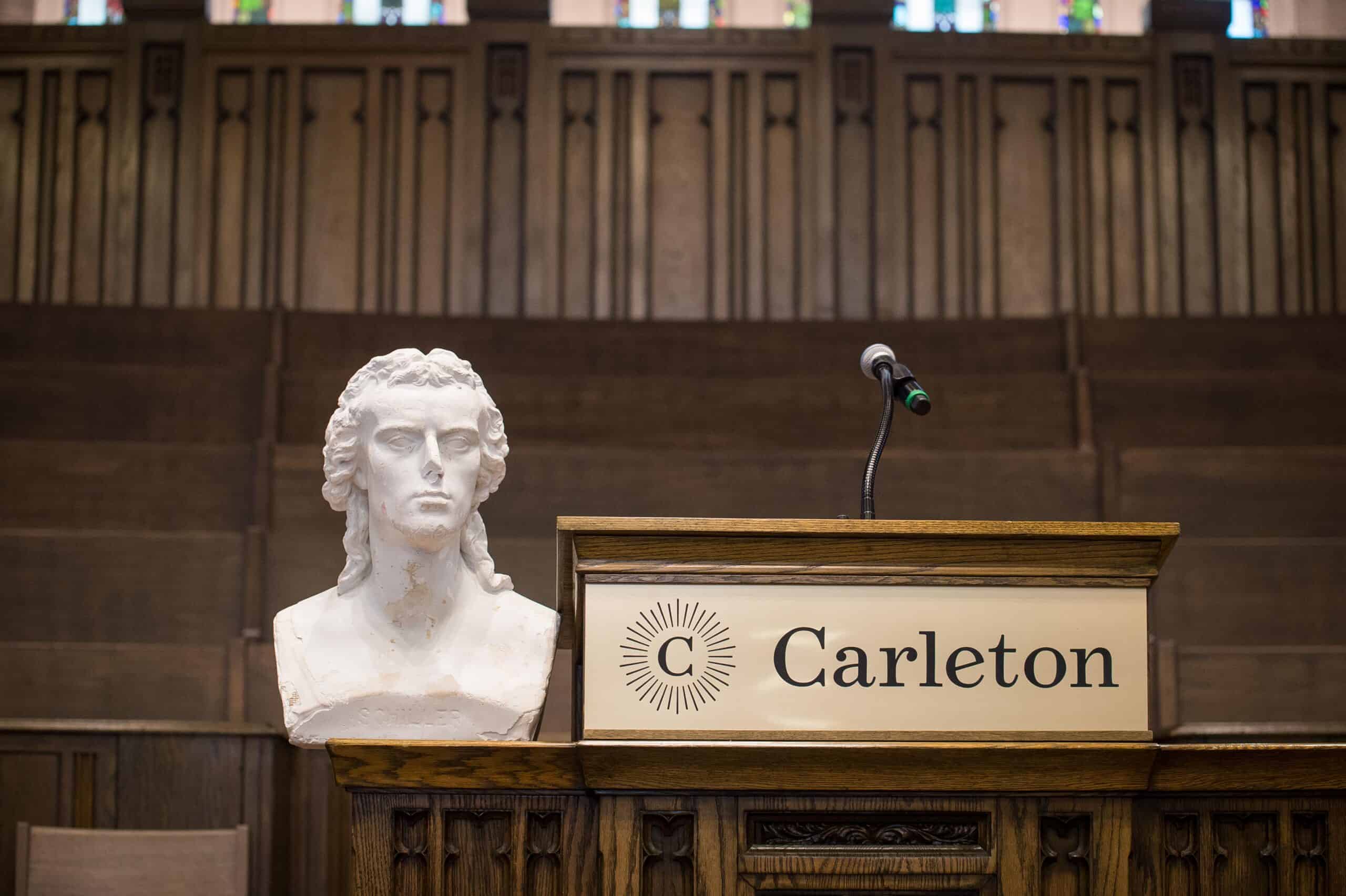
Johann Christoph Friedrich von Schiller, an important German writer and philosopher, is Carleton College’s very own meme.
As the legend goes, a bust of the literary figure was reclaimed from storage by a student in the class of 1957, where it served as decor for his dorm. It was then stolen by others and erected in their dorm, and thus the tradition of stealing and revealing Schiller began.
The rule is that whoever possesses the iconic bust of Schiller must, at some point, display it for the school-going public (making him vulnerable, perhaps?).
Crafty keepers of Schiller have managed to dangle him from a helicopter, get him into the hands of Bill Clinton, and he even appeared on primetime television—twice. Thanks to Carleton alumni behind the scenes, Schiller was on the Colbert Report and the series finale of ABC’s Desperate Housewives.
Forget about Waldo. Where’s Schiller?
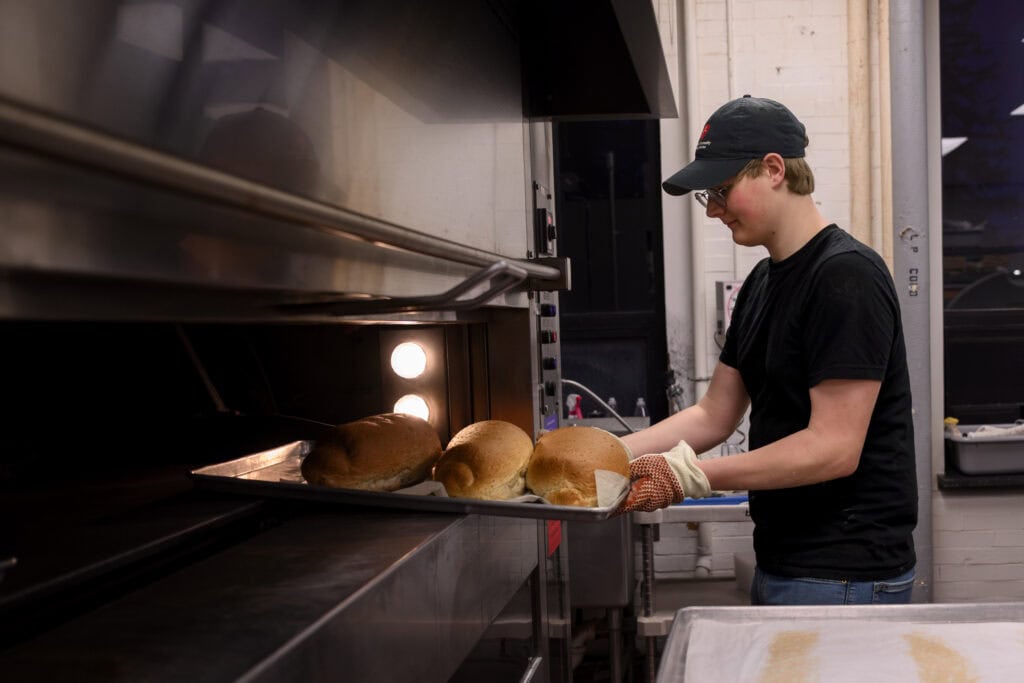
Johnnie Bread | Saint John’s University
One of the warmest traditions at Saint John’s University is that of baking (and breaking) Johnnie Bread. Students knead, proof, and bake the wheat-rye dough for these legendary loaves every day—just like they have for more than a century.
The tradition of baking Johnnie Bread is thought to have started with a Bavarian monk from Saint John’s Abbey, where the college was established. Brother William Baldus, who baked the first Johnnie loaves with flour milled on site, is credited with the recipe, which is inspired by traditional Bavarian bread.
Students now run Johnnie Bread operations and pass the recipe down from generation to generation. The bread is enjoyed all over campus, all the time, where it’s served in the campus cafeteria and shared among students in the dorms twice a week.
The Cookie House | Carleton College
Dacie Moses, a librarian at Carleton College for 50 years, left her home to the Carleton College Alumni Association after her death. Moses was known for welcoming students into her home, where it served as a gathering place for students to enjoy cookies, brunch, and conversation. In her will, Moses wrote:
“In appreciation of the many years of close friendships with the many Carleton College students who have brought joy and warmth to our home. […] I request, but do not direct, that the Carleton Alumni Association use said homestead in substantially the same manner as it was used during my lifetime, so that it may continue to be available as a hostel to the students and alumni of Carleton College.”
In accordance with her will, Carleton College keeps the home stocked with all the accouterments required for baking cookies, which are replenished by staff when they run out. The kitchen is open from 8 a.m. to midnight. Student residents preside over the home and, as part of their tenure, are responsible for hosting Sunday brunches.
Pushball | Macalester
Since 1914, students at Macalester have kept the spirit of a dead sport alive: pushball. A pushball is a giant, 50-pound leather ball (picture a hollow medicine ball about six feet in diameter) central to the eponymous, century-old sport.
Invented at the turn of the 20th century, and falling out of fashion just a few decades later, the idea is that two opposing teams push the gigantic sphere across a field toward their opponent’s goal. With enough opposing hands pushing and shoving, the ball lifts into the air (and hopefully away from your side of the field).
Each March, in celebration of Founding Day, Macalester students play pushball on the Great Lawn. Call it Macalester’s unofficial sport.
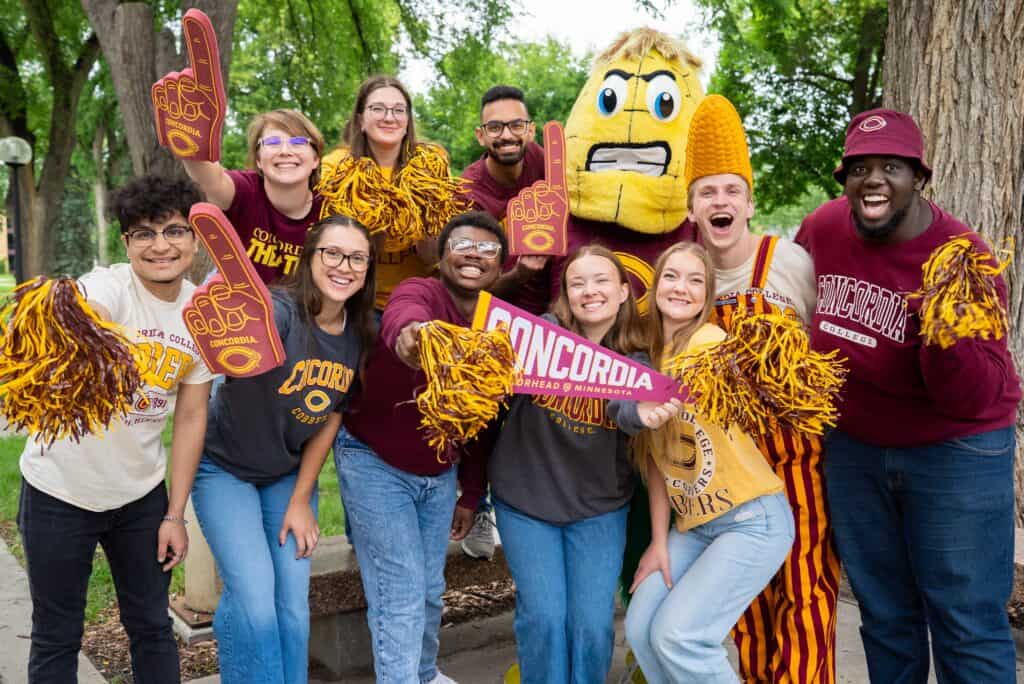
Corn Feeds | Concordia College
Students and alumni (aka Cobbers) have enjoyed annual corn feeds since 1974. Every year, when the corn harvesting season is at its peak, alumni organize corn feeds around the state—and beyond.
Six Cobber corn feeds are scheduled to take place across Minnesota this August, as well as in Washington, D.C., Colorado, and California. Fittingly, the school’s mascot is an anthropomorphic ear of corn.
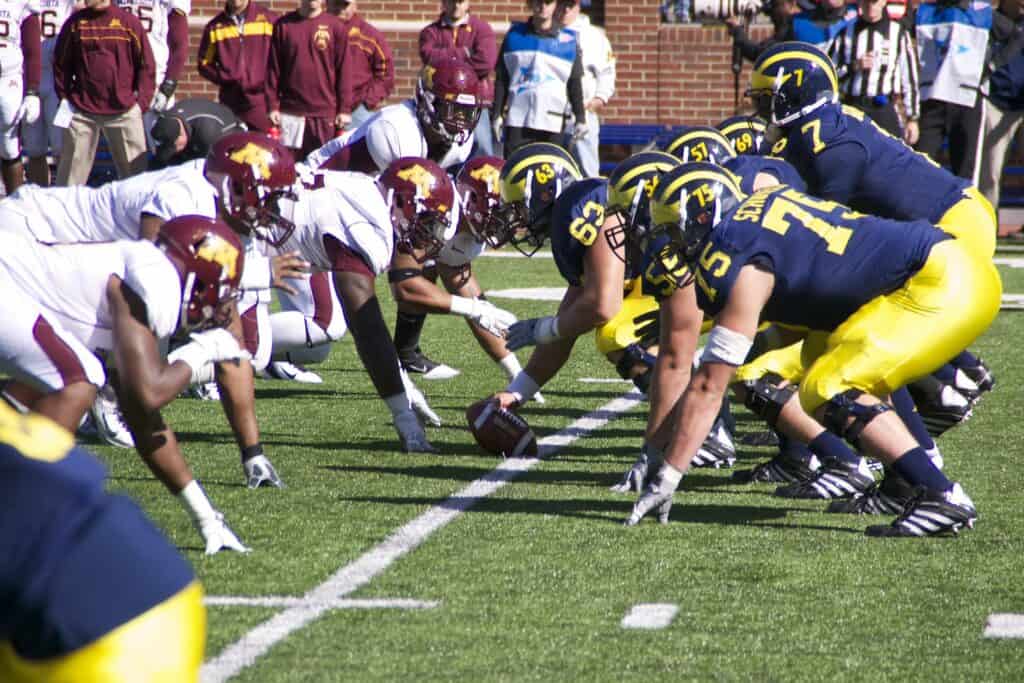
Little Brown Jug | University of Minnesota
The Little Brown Jug is a symbol of the epic football rivalry between the University of Minnesota and the University of Michigan. The quirky trophy has been traded between the Gophers and the Wolverines since 1903, when the U Mich team left their water jug behind following a particularly close game with the U of M.
The Minnesota team reveled in the 6-6 tie, breaking Michigan’s streak, and kept the water jug as a token. When the teams played again in 1909, U Mich won, and the Gophers returned the trophy.
The side of the jug is painted with a scorecard, a living record of subsequent games played between the two teams over the last 120-plus years. As of 2024, the University of Michigan currently holds the Little Brown Jug.
Rottblat | Carleton College
An annual softball game known as Rottblat has taken place at Carleton College since 1964. The marathon game begins when the first pitch is thrown at the crack of dawn. The game proceeds with an inning for each year of the school’s existence. Founded in 1866, that makes 160 innings for the 2026 game!
Rottblat is a fixture of Carleton student camaraderie. The unsanctioned, yet robust and widely documented, tradition is carried out by the student body along with cheeky commemorative merch.
Painting the Rock | Gustavus Adolphus College
Since 1967, a boulder on the Gustavus Adolphus College campus has been the site of mischief. In the dead of night, students paint the rock in acts of shameless self-promotion and celebration—posing by their creations for photos. It’s not unusual for the rock to be painted over multiple times a week!
Students have shared their film photos of their personal stone billboards dating back to the 70s. The rock has donned everything from Greek sorority letters to romantic declarations (complete with wedding day photographs).
The Platonic Statue | University of Minnesota
Tucked within the University of Minnesota Twin Cities’ East Bank campus is a sculpture subject to much speculation. Known colloquially as The Tin Man, this mysterious “Platonic Figure” stands tall, arms outstretched, at the intersection of a campus walkway.
Looking upon the 24-foot abstract figure, it’s no wonder the ambiguous and monumental form is the subject of campus superstition. Some students say that walking beneath his legs means you won’t graduate in four years. Others claim that the statue possesses the mystical power to boost the intelligence of students who are weary about an upcoming exam.
Meanwhile, the university’s universal good luck charm? Rubbing the teeth of the Goldy the Gopher statue at Coffman Union, which can apparently break the Tin Man’s curse.
Cardboard Boat Races | University of Minnesota Duluth
Each year during homecoming, enterprising University of Minnesota Duluth students construct boats from cardboard and duct tape and test their seaworthiness on Bagley Pond in a cutthroat race. Whose craft shall sink, and whose shall swim? The most competitive aquatic engineers take notes about successful (and unsuccessful) boat construction tactics, in preparation for next year’s race.
Local media covers the event, securing the race’s presence in the UMD canon. In 2025, the event featured other wet-and-wild activities: a dunk tank, watercoloring station, and water balloon toss. Swimsuits recommended!