Nevada’s portion of the Mojave Desert is dry yet diverse, with wetlands, lakes, dunes, mountains, and wildlife. Here are some of the top spots.
The smallest and driest desert in the country, the Mojave Desert is home to more than 2 million people, primarily in Nevada.
Named after the indigenous Mohave people, the 54,000-square-mile high desert sprawls across southeastern California and Southern Nevada and spills into Arizona and Utah. It’s like the PB-J on a desert sandwich, smooshed between the Great Basin Desert to the north and the Sonoran Desert to the south.
Though development, military training, mining, hunting, and farming are shrinking the Mojave’s wilderness, it remains a year-round destination for outdoor adventure, with wetlands, dunes, striking sandstone, mountain ranges, lakes, wildlife, and endemic plants.
Here’s a look at some of the best places to explore in the Mojave Desert.
Ash Meadows National Wildlife Refuge
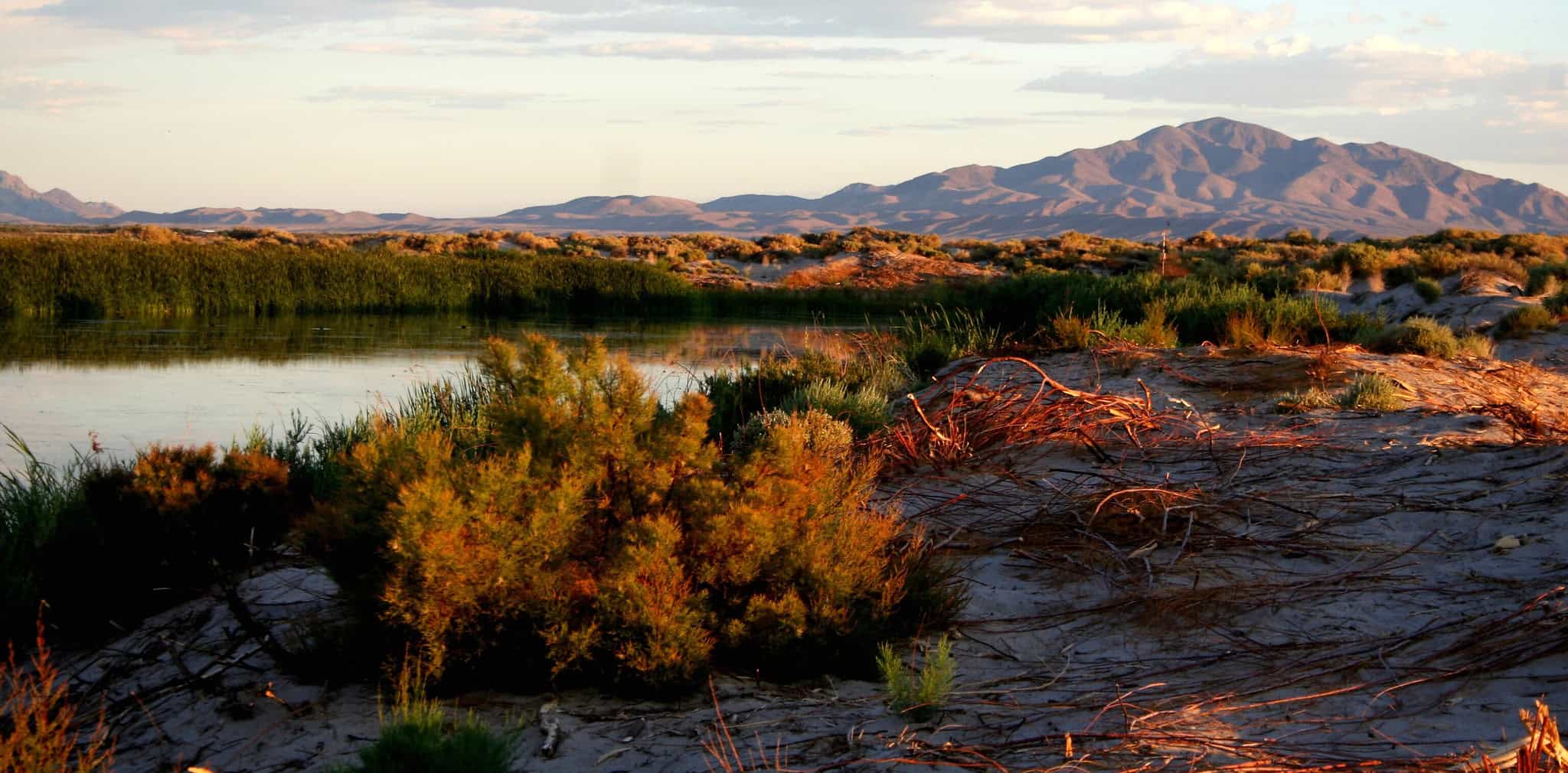
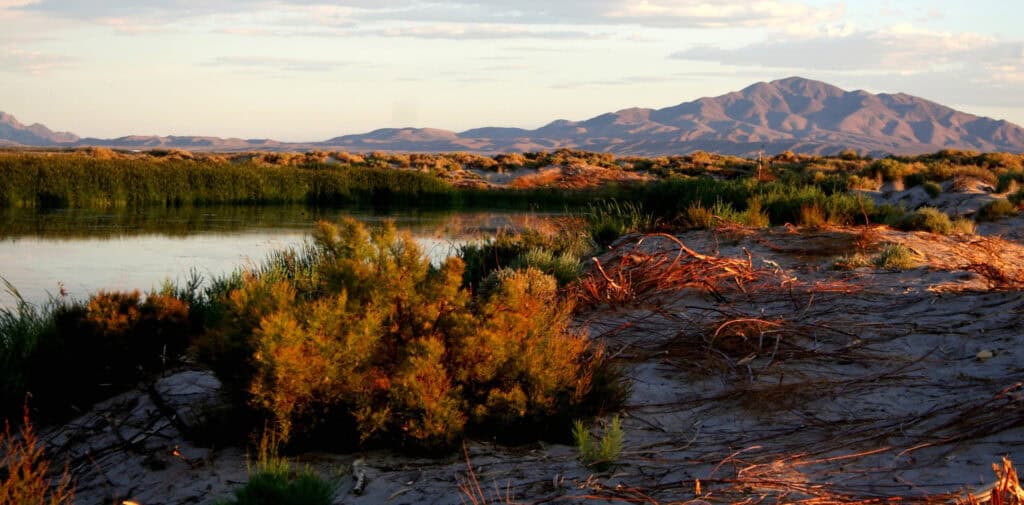
A destination for birding, photography, sightseeing, picnicking, and hunting, Ash Meadows National Wildlife Refuge is the Mojave Desert’s largest remaining oasis, fed by springs from an Ice Age aquifer.
This protected 23,000-acre refuge sits on the western border of Southern Nevada, 90 miles northwest of Las Vegas, near Pahrump, Beatty, and Death Valley National Park.
Ash Meadows is known for its biodiversity and Ice Age connections. It’s home to a couple dozen species of fish, plants, insects, and snails found exclusively in the refuge, including the world’s most endangered fish, the Devils Hole Pupfish. The area also includes the Amargosa River, one of the country’s most endangered rivers. Nearby, on BLM land north of the refuge, the 500-foot-high Amargosa Big Dune draws off-road riders.
Stop by the Visitor Center to learn more about the area, join a ranger-led program, take an audio tour, or explore Ash Meadows yourself on a short hike or via wheelchair-accessible boardwalks, such as the wooden Crystal Springs boardwalk. The refuge is open from sunrise to sunset, seven days a week, for a quick visit on the way to Death Valley or a day of outdoor adventure.
There’s no admission fee.
Mount Charleston
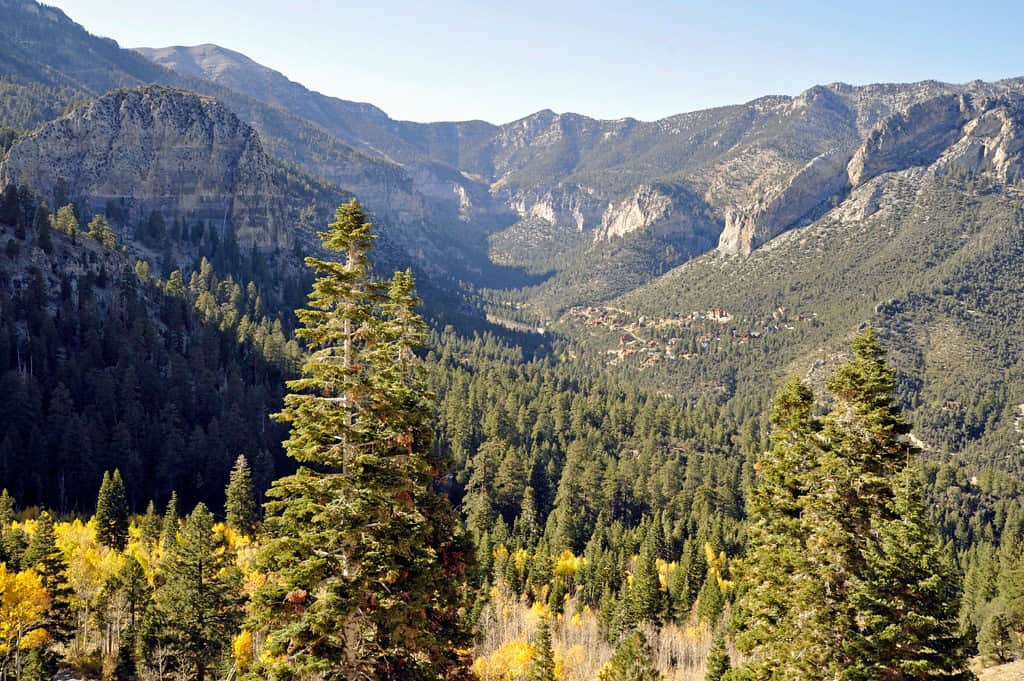
Cold enough for snow in the winter, wildflowers in spring, leaf-peeping in fall, and a great place to escape the summer heat, Mount Charleston is worth a visit year-round, and it’s only 45 minutes from the Las Vegas Strip.
Located in the 317,000-acre Spring Mountains National Recreation Area, the 11,918-foot forested Mojave Desert mountain attracts more than a million visitors every year for hiking, camping, horseback riding, biking, rock climbing, lodging, dining, and skiing.
Mount Charleston is composed of two canyons connected by a scenic byway. Kyle Canyon includes a 128-acre visitor center, two hotels, picnic areas, campsites, and more than 60 miles of hiking trails. Lee Canyon has a ski lodge and ski lift, a bike park, and hiking trails.
There is no fee to enter the Spring Mountains Recreation Area.
Red Rock Canyon National Conservation Area
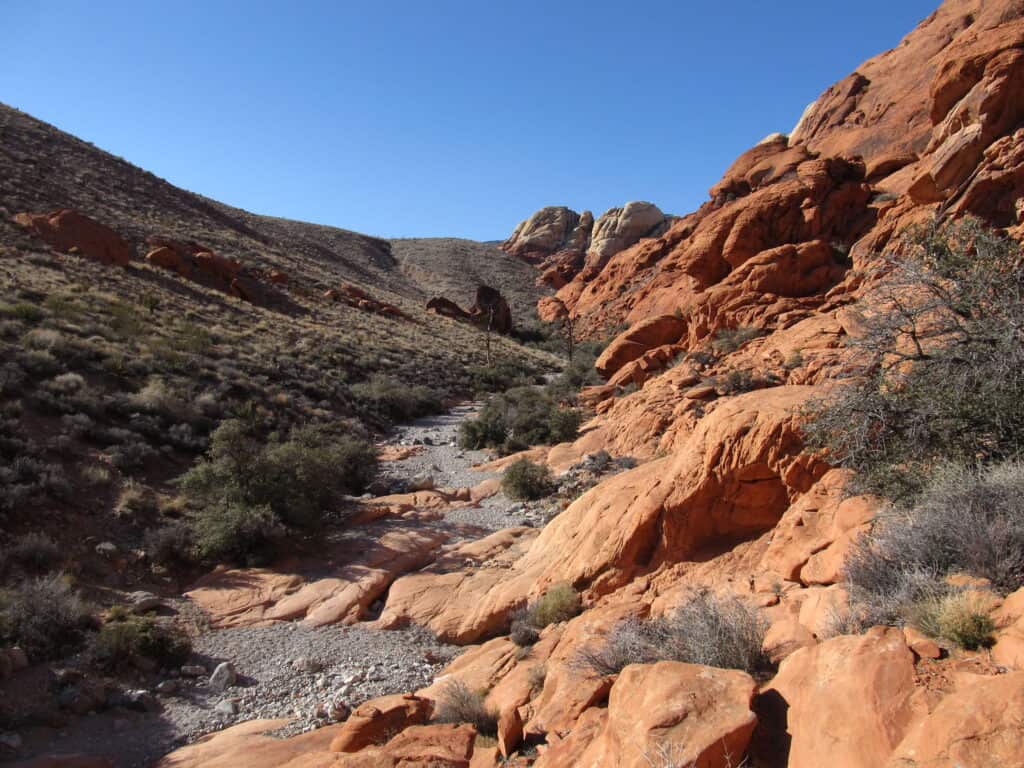
Only 17 miles from the Las Vegas Strip, Red Rock Canyon National Conservation Area attracts more than three million visitors a year to its iconic Mojave Desert landscape of red, orange, and cream-colored Aztec sandstone.
Visitors enjoy dramatic scenery and Instagram-worthy photo opportunities from the comfort of their car ($20) or on a bike ($8) as they drive or ride along the one-way, 13-mile Red Rock Canyon Scenic Drive. Several places along the way offer opportunities for hiking, rock climbing, horse riding, biking, picnicking, and camping.
You can visit Red Rock on your own, but from Oct. 1 through May 31, you need a reservation to enter by vehicle. You might also consider a guided adventure, such as a Pink Jeep Tour, which includes off-roading in a custom 4×4 pink Jeep.
Stop by the Red Rock visitor center, open daily, to see interactive exhibits, including a live Desert Tortoise habitat, and to buy books and gifts.
Valley of Fire State Park
Boasting awe-inspiring crimson red sandstone formations, Valley of Fire State Park is Nevada’s oldest state park and one of the most otherworldly places in the Mojave Desert.
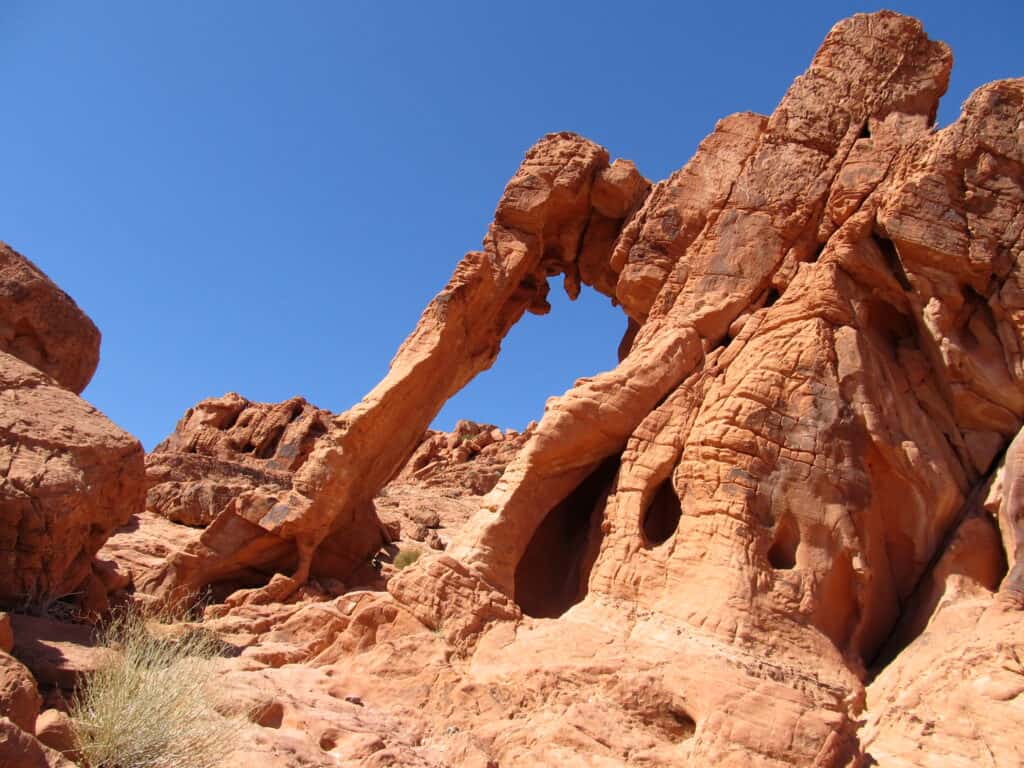
Located about 49 miles from Las Vegas in the eastern corner of Nevada near Overton, the 40,000-acre park is a popular outdoor recreation destination with attractions like the photo-friendly Elephant Rock, 2,000-year-old petroglyphs, petrified trees, stone cabins from the 1930s, and easy-to-hike Mouse’s Tank, though some trails are closed due to heat from May 15-Sept. 30. There are also plenty of campsites and shaded picnic areas.
Learn about the geology, ecology, and history of Valley of Fire, or pick up a memento, at the visitor center. The park closes at sunset, but rangers usually offer guided moonlit hikes once a month.
Entry is $10 per vehicle for Nevada residents and $15 for out-of-state vehicles.
Lake Mead National Recreation Area
The country’s first and biggest national recreation area, Lake Mead National Recreation Area covers 1.5 million acres in Southern Nevada and Northwestern Arizona, encompassing Lake Mead, Hoover Dam, Lake Mohave, Davis Dam, and the Colorado River. It’s a hotspot for outdoor activities, including swimming, boating, kayaking, hiking, camping, and fishing.
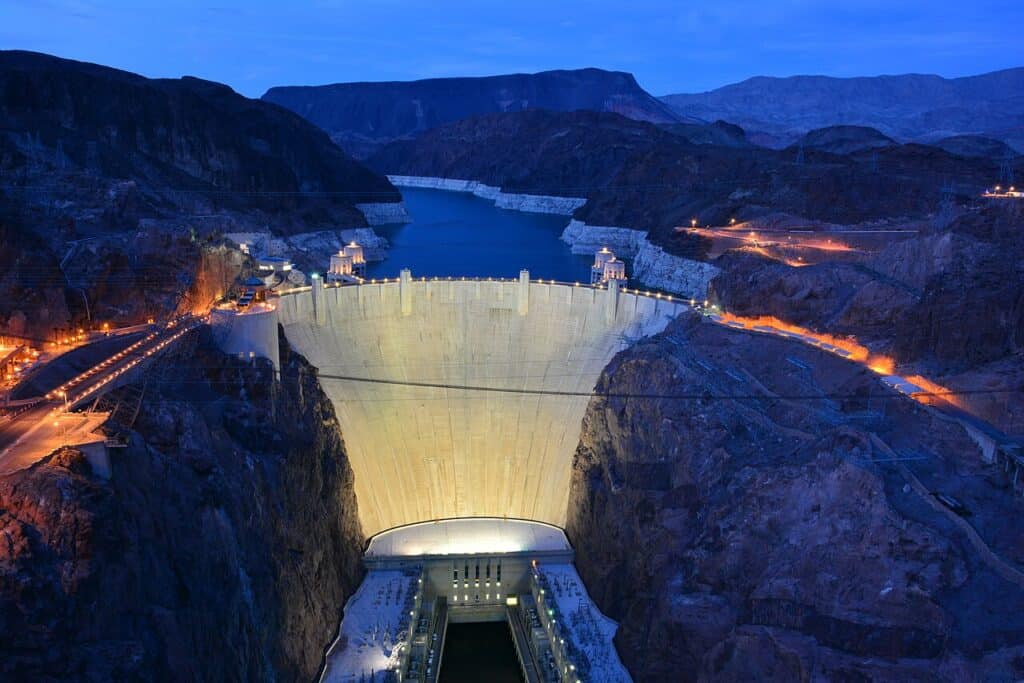
Lake Mead is the largest human-made reservoir in the United States, created when the Hoover Dam was constructed. A concrete arch-gravity dam, it’s a feat of American engineering visited by more than seven million people every year. You can admire the dam up close or from above on the Mike O’Callaghan-Pat Tillman Memorial Bridge.
Lake Mohave is another Colorado River reservoir, impounded by Davis Dam. The 4-mile-wide lake stays warm enough to enjoy year-round.
In addition to water activities at LMNRA, you’ll find 200 miles of hiking trails, including the Historic Railroad Trail, a scenic 10-mile round trip hike between the Lake Mead Visitor Center and Hoover Dam. Many hot springs lie between Hoover Dam and Lake Mohave, including Gold Strike Hot Springs, accessible from a trailhead 1.2 miles south of the Hoover Dam.
The park entrance fee is $25 per car.
Sloan Canyon National Conservation Area
Sloan Canyon National Conservation Area (NCA) preserves 48,438 acres of the Mojave Desert stretching to the mountains at the southern point of Las Vegas and Henderson.
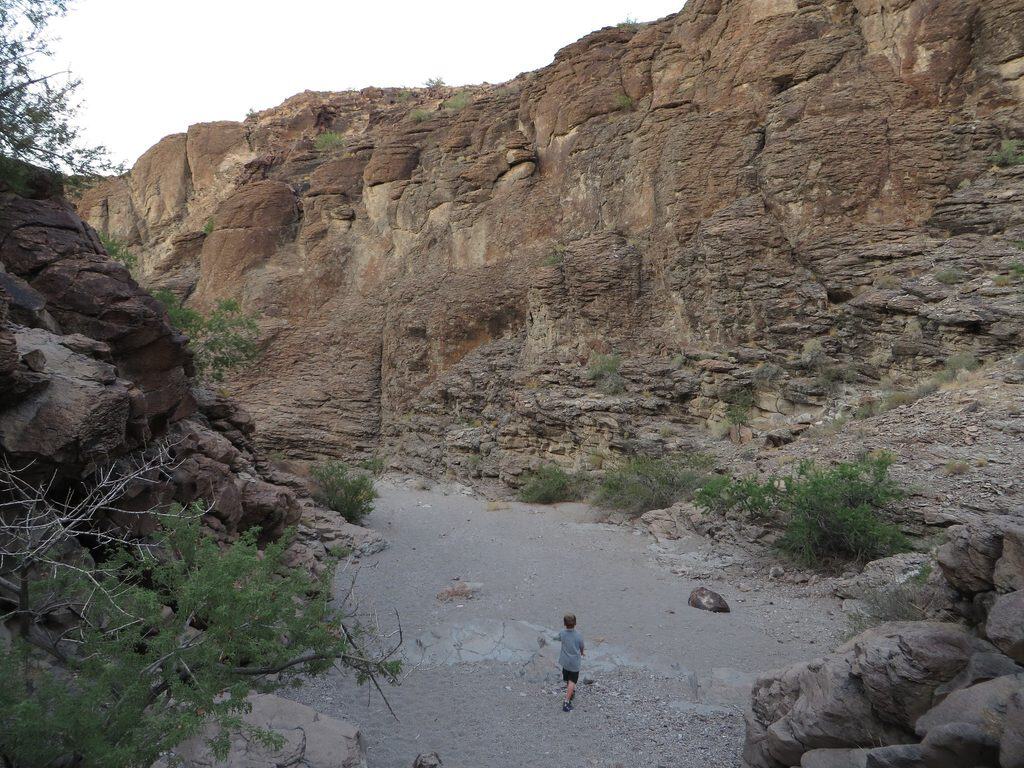
A great place to hike, view wildlife, and take photos, the recreational area includes culturally significant sites, like the Sloan Canyon Petroglyph Site, and unique geological features, including volcanic topography.
The visitor center is currently under construction and is slated for completion in November. There is no entrance fee.
Gold Butte National Monument
With twisting canyons, chiseled red sandstone, and tree-covered mountains, the 300,000-acre Gold Butte National Monument is located 90 miles northeast of Las Vegas and five miles south of Mesquite.
This remote, rugged section of the Mojave Desert offers plenty of outdoor recreation, including hiking and camping. You might even spot desert bighorn sheep.
Along with enjoying its stunning rocks, wildlife, petroglyphs, and views of the Muddy Mountains and Lake Mead, you can drive the Gold Butte Backcountry Byway, a 62-mile scenic trip with stops including the historic mining town of Gold Butte, though the last 19 miles are for high-clearance vehicles only.
There is no entrance fee.