
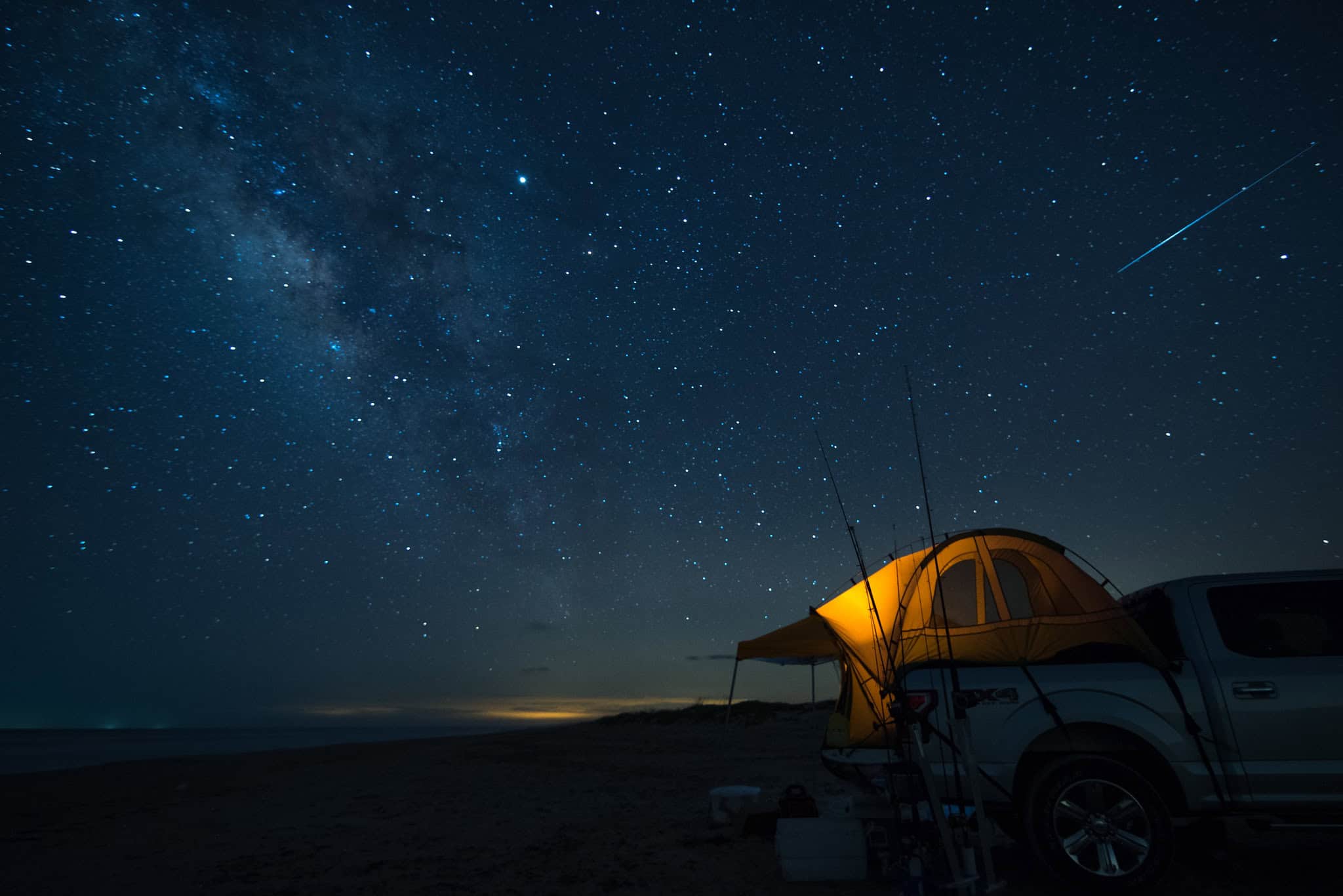
If your head is filled with stars, you’ll love the night skies spread across the RGV. Here’s our guide to the best and brightest spots for stargazing.
If you’re a night owl, romantic, or lover of all things astronomical, you’ve come to the right place. Stargazing draws everyone from late-night revelers to couples with a blanket and bottle of wine to science nerds with a checklist of every constellation they’ve identified.
In the Rio Grande Valley, they all come out at night to find the darkest, clearest skies, and maybe even a shooting star or two. For nature lovers, South Texas is especially interesting because the very places that make for great birdwatching by day also make for fantastic stargazing by night.
Let’s take a look at how stargazing spots are rated, where the most highly-rated stargazing can be found in the RGV, and what you can do to see the Milky Way and a sky full of diamonds on your next stargazing excursion.
How are dark skies rated?
Like everything to do with science, dark-sky ratings are largely black and white, but there are certainly some blurred lines, too.
The Bortle Scale measures the level of black skies. It ranges from Class 1 skies, considered the darkest you’ll see on Earth, to Class 9, usually found in big cities where housing and commercial lights obscure much of what you can see overhead.
The scale is determined by how much of the planetary system can be discerned from a particular vantage point. Big Texas cities like Houston and Dallas rate a Class 9—the skies there are almost entirely obscured by artificial lighting.
In the Rio Grande Valley, however, dark skies vary from a Class 3 to about a Class 6, so visibility here makes this a great location for spotting Orion’s Belt.
What spots in the RGV offer the best stargazing?
Check out these spots across the Rio Grande Valley, ranked by Bortle Class. We’re starting with the darkest skies you can find, followed by those that offer good visibility away from city lights.
South Padre Island
Darkness Level: Bortle Class 3
For some of the best night sky views in South Texas, look no further than South Padre Island, which offers rural sky conditions, mostly unaffected by civilian lights.
For the best views, take to the beach. If you have access to a 4-wheel drive vehicle that can handle deep sand or don’t mind renting a Jeep for the evening, the payoff is totally black skies and the sound of the ocean at your tires.
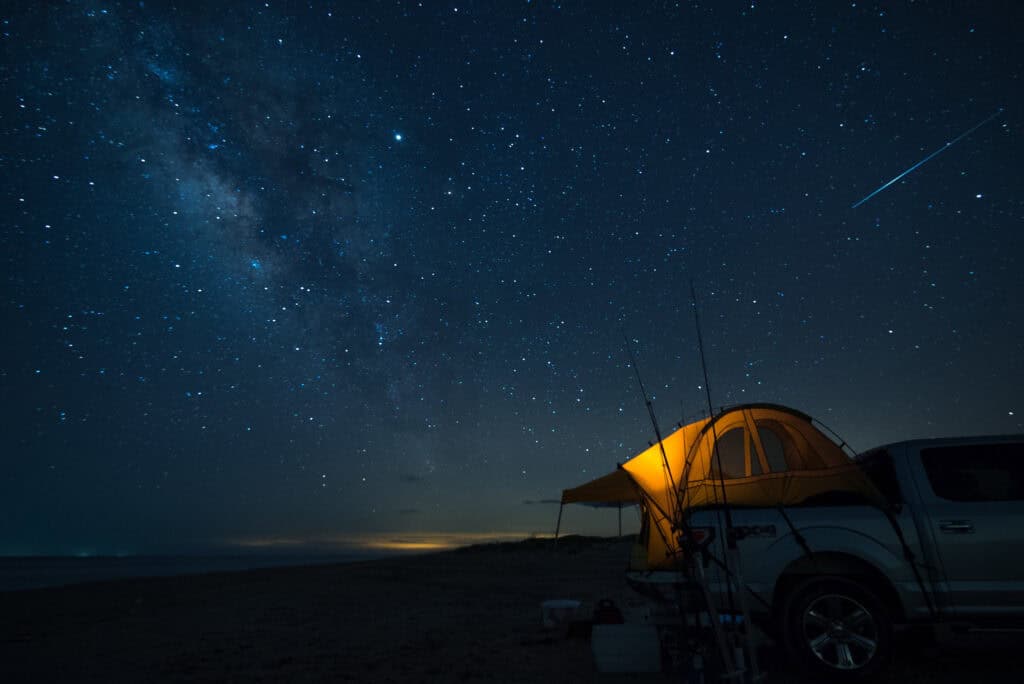
You’ll need to pay a $12 fee to drive on the beach (payable by cash) and can enter at Cameron County Beach Access #5 and #6. When you do, you’ll be wowed by the Milky Way, cosmic dust, shooting stars, and a sky lit by millions of stars.
Delta Lake and Monte Cristo Road
Darkness Level: Bortle Class 4
Along Highway 186, you’ll find vantage points where you’ll want to pull over and take it all in. The sky along the stretch west of Monte Cristo Road is particularly stunning, and the best part is that you don’t have to trek anywhere to see it.
On FM 88 about three miles north of Monte Alto, you’ll find Delta Lake Park, a place not usually listed in dark-sky Google searches but a hidden gem favored by the locals. Without having to venture deep into remote territory, you can simply settle in at the park and watch the sunset make way for astral fireworks (just know that the park closes at 8 p.m., so this location is best for winter stargazing).
RGV wildlife and state parks
Darkness Level: Bortle Class 4 to 6
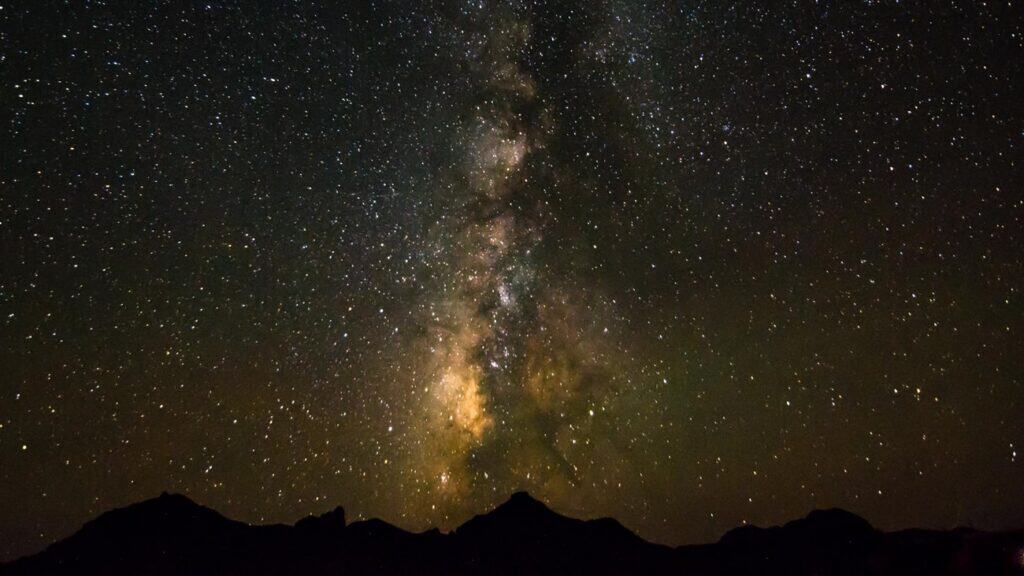
State parks in South Texas are always a good bet, especially the three that are known for dark skies, clarity, and full-on nature vibe.
Rated the best of the three at Class 4 is Falcon State Park at 146 Park Rd. 46 in Falcon Heights. The park offers occasional New Moon Night Hikes at 8 p.m., a perfect intro to nature at night. Then stay on for optimal night sky viewing, with peak time around midnight.
Both Bentsen-Rio Grande Valley State Park and Estero Llano Grande State Park welcome you at night, with naturalists who will introduce you to all sorts of creatures of the night. These parks are closer to cities, taking their Bortle Class to a 6, but you can find darker areas as you make your way through.
The city of Harlingen
Darkness Level: Too high for this list, but pay attention
Harlingen deserves a shoutout because, even though it doesn’t yet make the lower Bortle Class cut, it’s definitely one to watch for the future.
Located in Cameron Country, right in the center of the RGV, Harlingen is the first city in this neck of Texas to pursue official International Dark Sky Community certification. That means it’s working hard to establish protections that will open up the dark skies for future stargazers.
Bonus: Padre Island National Seashore
Darkness Level: Bortle Class 3 to 4
Technically just a smidge north of the Rio Grande Valley (but about three hours away by car), Padre Island National Seashore must be included on any list of “Best Places to Stargaze in Texas.” And since you can practically throw a stone in the RGV and hit it, we’re including it as one of the darkest of dark skies in this area.
The best viewing is always in coastal regions, so shuffle into the sand and look up. You won’t have to wait long until the celestial show begins. If you’re near Malaquite Campground, the nearby boardwalk and amphitheater offer benches and space to set up beach blankets and midnight snacks for the ultimate grazing-while-gazing experience.
In that same area, you’ll find the Night Sky Observatory near the Visitor Center. It’s shielded from wind and nearby light for optimal viewing.
Tips for Stargazing in the Rio Grande Valley and beyond
Here in South Texas, and really anywhere you’re trying to maximize your views of our solar system, we’ve got some tips that will make it a whole lot easier to capture epic night skies.
- It generally takes 30 minutes for your eyes to adjust to the nighttime sky. Your vision will improve considerably if you just take the time to sit a spell.
- Wherever you are, it’s going to be dark, but don’t bring a standard flashlight or rely on your phone light—both will disrupt your vision and make it harder to see the brightness in the sky. Instead, carry a red-light flashlight, which won’t affect your night vision.
- Check both the weather and the moon phase. Optimal viewing relies on clear, cloudless nights and a new moon, when the moon is dark and out of the way. A full moon provides so much light that it makes starlight appear dim in comparison.
- You can lug a telescope if you want, but on a clear night, you likely won’t need it. What can be more fun is to bring a stargazing map or consult a phone app to confirm what you’re seeing, identify constellations, and save your sightings. Binoculars are never a bad idea, either.
- Pack for comfort, whether that’s a reclining chair, snacks and drinks, or a jacket on one of the RGV’s rare cold nights. Comfort will encourage you to stay and enjoy the sky’s nocturnal splendor.


