Planning a rock hunting adventure in Colorado? Discover the best places to rockhound, what to bring, and 10 unique rocks, minerals, and gemstones to look for.
Admit it. You totally had a pet rock as a kid. Don’t worry, this is a judgment-free zone. And in fact, you’re in the right place because we’re talking all about rock hunting. Specifically, rock hunting in Colorado: what it is, where to go, and the unique kinds of rocks you can find throughout the state.
Rock hunting? What’s that?
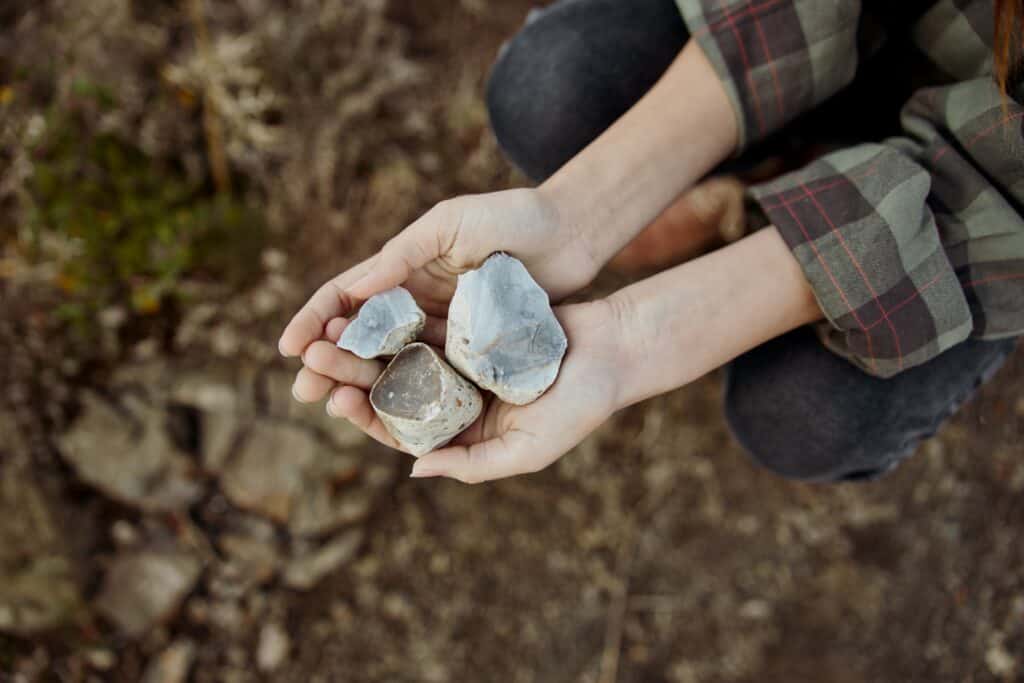
Rock hunting, also known as “rockhounding,” is the recreational search for and collection of rocks, minerals, crystals, gemstones, and fossils from their natural environments. Unlike mining, the goal isn’t extraction or profit; it’s discovery, exploration, and spending time outdoors. It’s also an incredibly accessible hobby that requires very little to get started.
All you really need is a little curiosity and time, but a few simple tools can make the experience easier. A rock hammer, chisel, magnifying glass, collection container, and sturdy backpack are all popular tools to take on your exploration. That said, it’s entirely possible to head out with nothing more than your two eyes, two hands, and a curious mind.
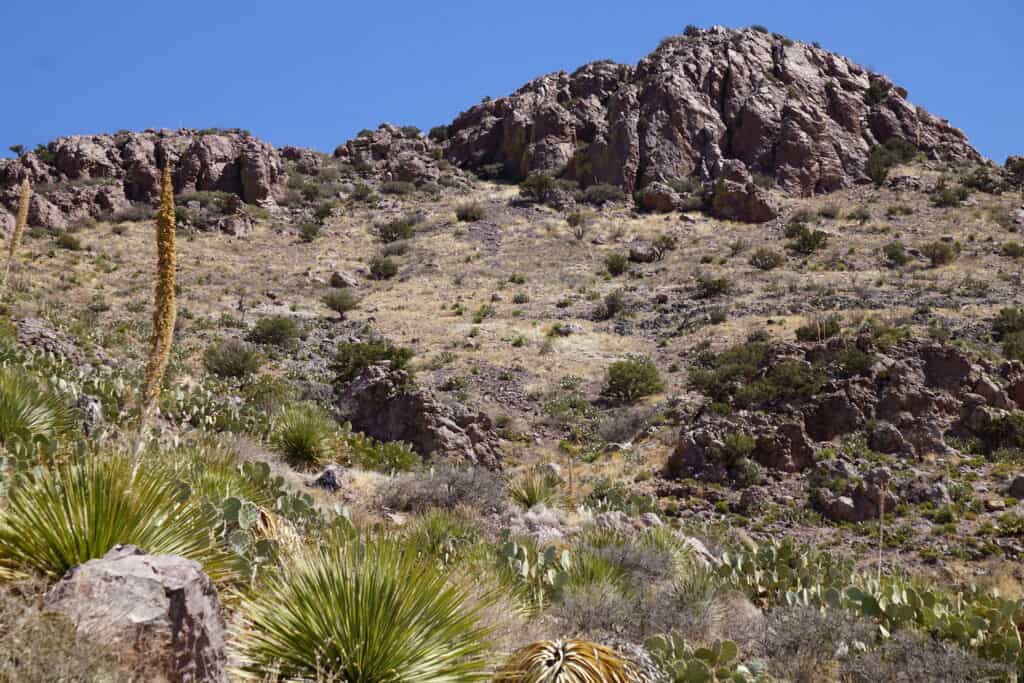
Because of Colorado’s complex geology, its mountain ranges, and rich mining history, it’s one of the best states in the country for rockhounding. The best time to go is from spring through fall (it’s pretty hard to hunt for rocks when the ground is buried under snow and ice, but you probably already knew that).
Before you head out, it’s important to know where collecting is allowed. Rockhounding is generally permitted on many U.S. Forest Service and Bureau of Land Management (BLM) lands, but national parks and designated wilderness areas are off-limits. You’ll also need permission before collecting on private property, and it’s always a good idea to check local regulations before you go.
Unique rocks and where to find them
Part of the fun of rockhounding is never knowing what you’ll uncover. But it helps to know what you’re looking for. Here are 10 of the most popular rocks, minerals, gemstones, and fossils to hunt for in Colorado.
Quartz (including Smoky Quartz & Amethyst)
Quartz is one of the most common minerals you’ll find in Colorado (and one of the most abundant in the world), making it a great place to start if you’re new to rockhounding. While clear quartz is plentiful throughout the state, Colorado is especially known for its smoky quartz (light grayish brown) and amethyst (deep violet), which are rarer and more difficult to find.
Where to look: Crystal Peak (Pikes Peak region), Devils Head area, Rampart Range, Mount Antero
Amazonite
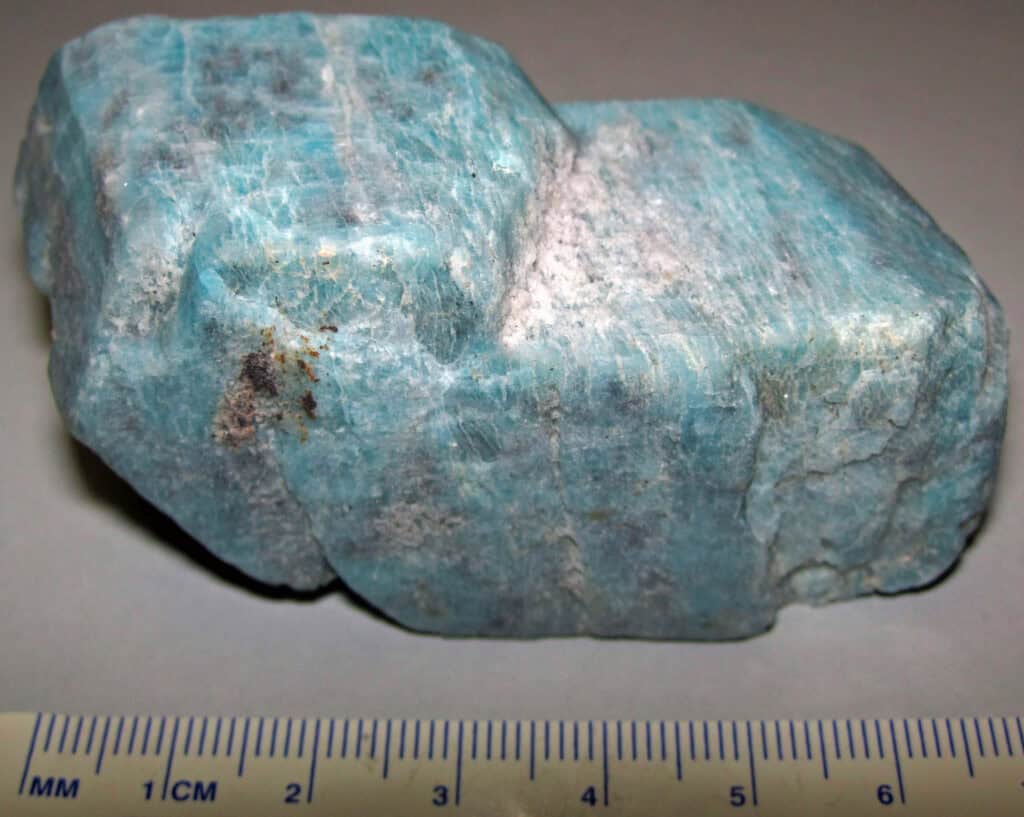
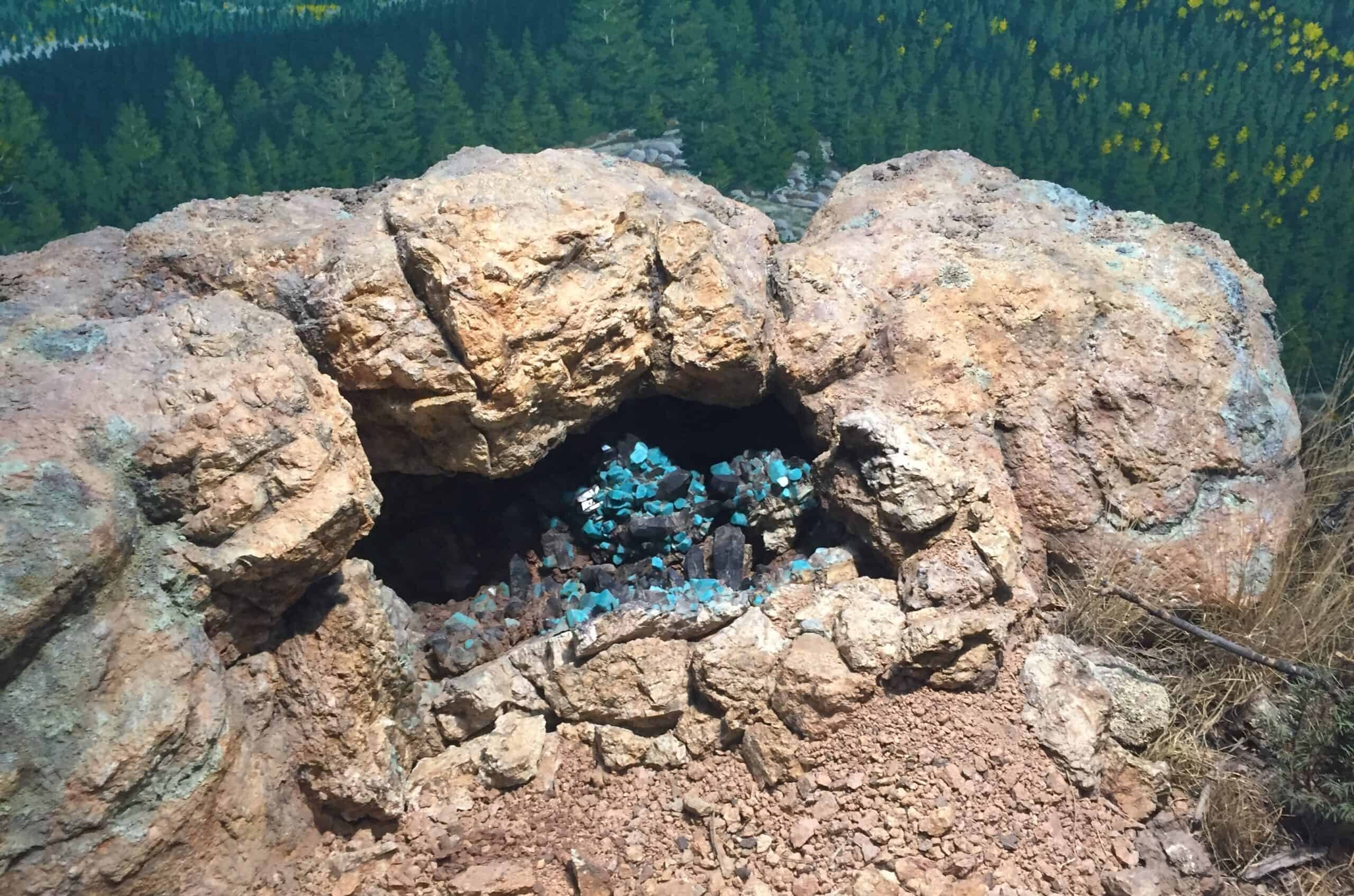
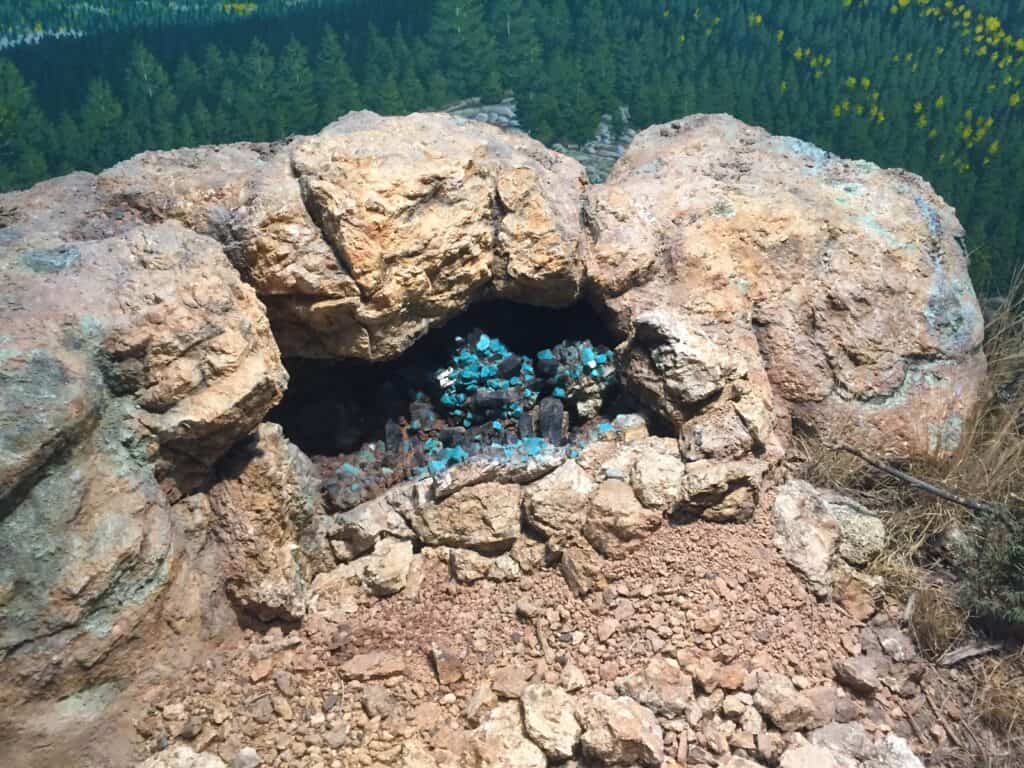
If there’s one mineral Colorado is known for, it’s amazonite. With its vibrant blue-green color, it’s one of the state’s most popular finds and a favorite among rockhounds. Amazonite is a variety of feldspar, and while it’s found in a handful of places around the world, Colorado is most famous for producing some of its finest specimens. If you’re lucky, you might find it growing alongside smoky quartz, a common occurrence that results in beautiful, contrasting crystal combinations.
Where to look: Crystal Peak, Pikes Peak region, Lake George area, Devils Head
Aquamarine (Beryl)

If you love amazonite, meet its blue-green cousin: aquamarine. A member of the beryl family (the same family as emeralds), aquamarine gets its name from the Latin words for “water” and “sea.” While its color can range from pale blue to deep teal, the most prized specimens have an ocean-like hue. The color comes from small amounts of iron within the crystal. Colorado is known for producing some incredible aquamarine crystals. In fact, in 1971, aquamarine was designated as Colorado’s official state gemstone, making it a bucket list find for many rockhounds.
Where to look: Mount Antero, White Mountain, Mount White
Agate
Agate is the rock version of snowflakes. They may not be as flashy as sparkling crystals, but they’re known for their colorful bands and swirls, and like snowflakes, no two are exactly alike. Formed inside ancient volcanic rock millions of years ago, Agates come in just about every color imaginable, from shades of white and gray to red, orange, yellow, blue, and even green. They’re a great (and relatively easy) find for beginner rockhounds since they’re fairly common and easy to spot once you know what you’re looking for.
Where to look: Pawnee National Grassland, Eastern Plains, South Platte River gravels, Arkansas River gravels
Jasper
Jewelry lovers unite. Our next rock, jasper, has been used in jewelry for thousands of years. Unlike agates, which are known for their translucent bands, jasper is completely opaque and gets its earthy colors from trace minerals like iron. Depending on the minerals present, jasper can be shades of red, yellow, brown, green, or even blue. It’s a popular find for beginner rockhounds and can often be found among riverbeds, gravel deposits, and other rocky areas throughout Colorado.
Where to look: Eastern Plains, San Luis Valley, Arkansas River, BLM lands in western Colorado
Petrified Wood
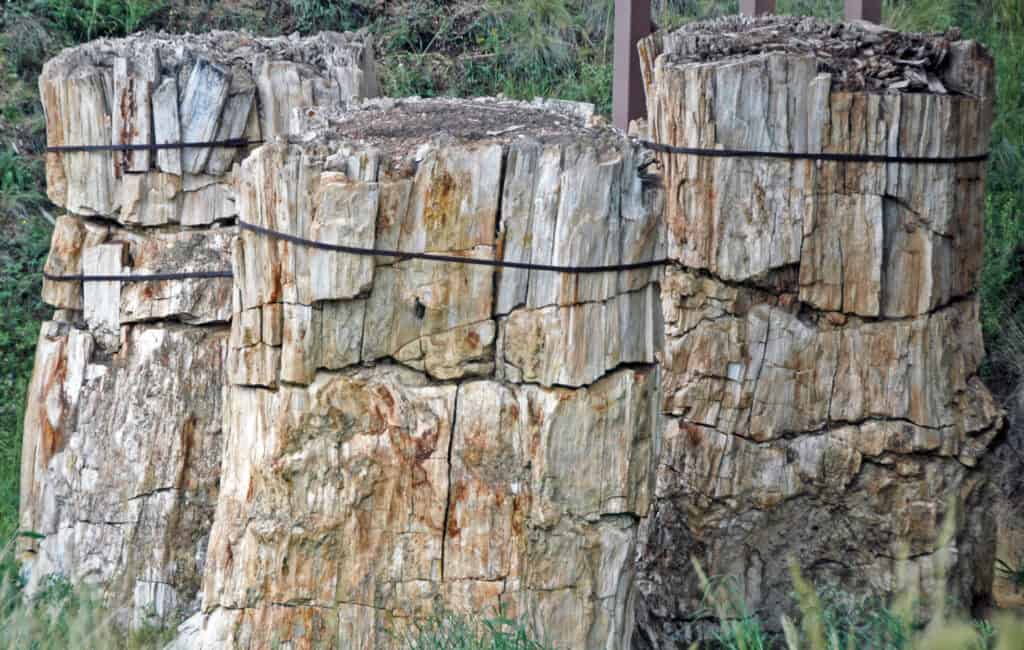
Tree huggers, I have the perfect rock for you. Petrified wood dates back to ancient times when trees were buried beneath layers of sediment, and their organic material was slowly replaced by minerals over millions of years. While the composition changes, petrified wood keeps the original shape and even the grain patterns of the tree as it transforms into a fossilized rock.
When you come across it, it will still resemble its former plant-ness, but with more color and weight.
If you’re interested in just seeing, not “hunting” some petrified wood, you can visit Florissant Fossil Beds National Monument, which has petrified tree stumps measuring over 14 feet tall. Just remember that you cannot disturb or remove any fossils, rocks, antlers, or other natural or cultural items while you’re there.
Where to look: Eastern Plains, North Park, Grand Junction area, BLM land near Rangely and Meeker
Fluorite
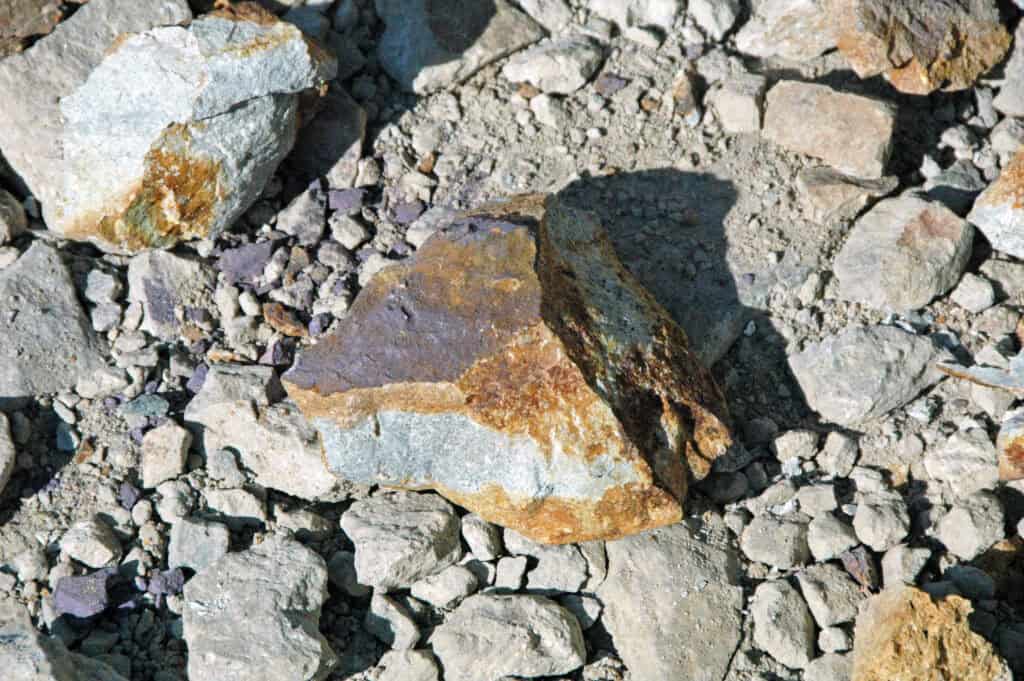
Fluorite is for those who want to find something especially colorful. Known as one of the most colorful minerals on Earth, fluorite comes in shades of purple, green, blue, yellow, and even clear. Its name comes from the Latin word fluere, meaning “to flow,” because it was historically used as a flux to help minerals melt during metalworking. Beyond its beautiful colors, fluorite is also known for forming perfect cube-shaped crystals.
Since it is not as common as some of the other minerals on this list, finding a piece of fluorite in Colorado is a pretty exciting discovery.
Where to look: St. Peter’s Dome, Cripple Creek mining district, Northgate district, Jamestown area
Garnet
Garnets have long been associated with passion, power, and protection. Though they’re nicknamed “the inner fire” because of their deep red color, garnets also come in a variety of shades, including orange, green, brown, and black. Like most minerals, their color depends on the elements found within the crystal, including iron, magnesium, and calcium. In Colorado, garnets are often found within metamorphic and igneous rocks, where the intense heat and pressure needed to form them millions of years ago also created these fiery little gems inside them.
Where to look: Salida area, Arkansas River Valley, Ruby Mountain near Crestone, San Isabel National Forest
Topaz
As someone with a December birthday, I love topaz because it has always been my birthstone. Most of us think of blue when we hear topaz, but naturally, it is actually colorless; different impurities and elements within the gem can create a whole spectrum of colors, including shades of brown, green, yellow, orange, red, pink, and purple. Though not a super common discovery, topaz has become increasingly popular among Colorado rockhounds in recent years. It is most commonly found high in Colorado’s mountains, where it forms inside pockets of granite and other igneous rocks.
Where to look: Mount Antero, White Mountain, Chalk Creek area, Kenosha Mountains
Pyrite (Fool’s Gold)
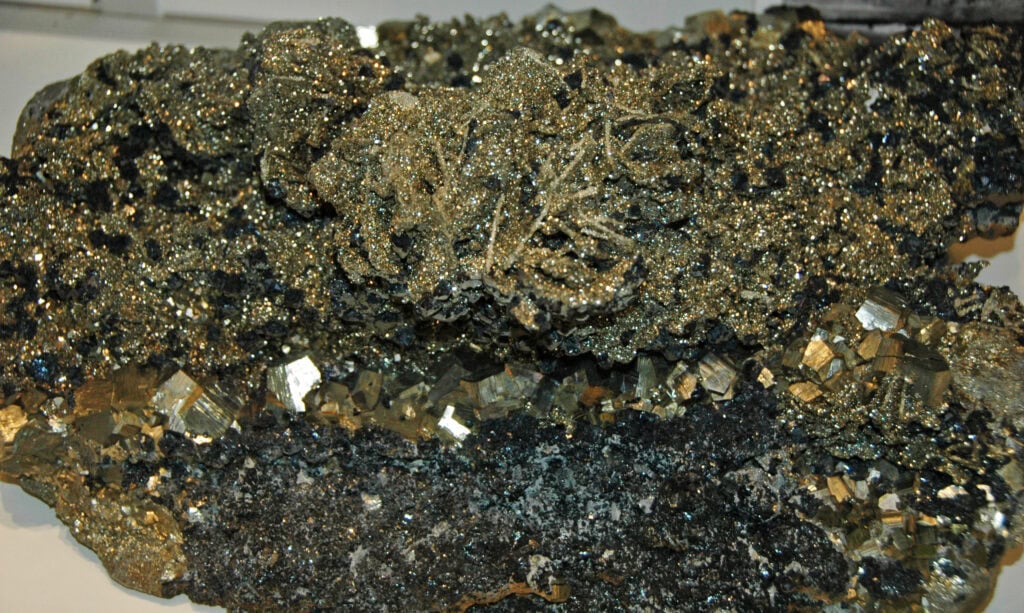
Growing up in Colorado, I fondly remember a number of field trips into the mountains that ended with us panning for, or searching for, “gold” in or along a river. Even though we were all hoping to strike it rich, we were more likely to find pyrite, a mineral better known as “fool’s gold.”
Don’t let the nickname fool you; pyrite is still an exciting mineral to discover. Its metallic golden color and shiny appearance can make it look similar to real gold. Unlike gold, however, pyrite often forms into sharp, geometric crystals. So while it may not make you rich, finding a piece of pyrite is still a fun Colorado treasure to find.
Where to look: Central City, Idaho Springs, Leadville, San Juan Mountains, Georgetown area