The Colonial Parkway Murders took place between 1986 and 1989. Most cases remained unsolved until recently.
Content warning: This article contains some graphic descriptions of murder.
Cathy Thomas was 27 years old when she was murdered in October 1986. She was a stockbroker who previously served in the US Navy and was known for being compassionate, vibrant, and intelligent. She had dreams of attending grad school.
Her girlfriend, 21-year-old Rebecca Dowski, was also senselessly killed on the same evening. Rebecca was a business major at William & Mary and worked in its English department. When she wasn’t at the Williamsburg university, she pursued her love of music and filled in at a local daycare. She is remembered for being kind and creative.
When they were last seen together, the pair were heading to Colonial Parkway, a serene 23-mile stretch of road connecting Williamsburg, Yorktown, and Jamestown. You wouldn’t think that anything awful could happen in a place of such beauty. Couples often went there for privacy, and it’s believed Cathy and Rebecca had this idea in mind when they set out from William & Mary’s computer lab at 6:30 p.m. on Oct. 9.
Three days later, on Oct. 12, a jogger discovered Cathy’s car in an embankment close to the Cheatham Annex Overlook and contacted Virginia State Police. A responding patrolman found Cathy and Rebecca’s bodies inside the vehicle. For the next 40 years, their murders would remain unsolved.
It is oftentimes only possible to connect the dots of a serial killer’s actions in retrospect. In their book, “A Special Kind Of Evil: The Colonial Parkway Serial Killings,” Blaine L. Pardoe and Victoria R. Hester write, “Crimes are complex, held together in a spiderweb of coincidences, similarities, and speculation.” When multiple murders happened in Colonial Parkway over a three-year period, “authorities flip-flopped numerous times on whether the cases were related or not.” And as law enforcement mulled over similarities, debated coincidences, and speculated on motives and suspects, a stranger stalked through the darkness on a one-man path of destruction.
The murderer mostly targeted couples, though, ever the opportunist, he went after lone individuals on at least two occasions. By 2026, he would have six confirmed murders attributed to him and would be suspected of another five. Three more people are believed to be his possible victims, though one may have actually fallen prey to his brother.
He instilled a sense of dread in the hearts of Virginians as he wove his “tapestry of terror” along the popular thoroughfare. And, despite being conclusively identified in 2024 as the main suspect for multiple murders, he would never be brought to justice because he died alone at his Lancaster County home in 2017.
This is the story of the Colonial Parkway Murders and the local fisherman, Alan Wade Wilmer Sr., who carried out these heinous crimes.
2024: The case’s first major breakthrough
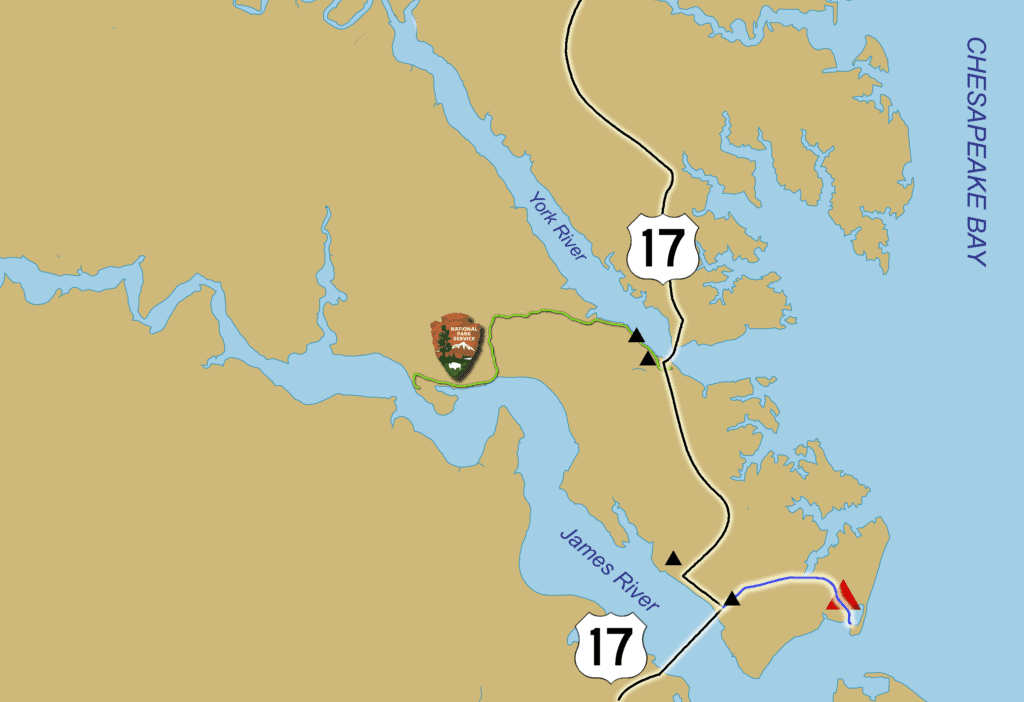
In 2024, Alan Wade Wilmer Sr. was identified as a suspect in the murders of David Knobling, Robin Edwards, and Teresa Lynn Spaw Howell. David (20) and Robin (14) were killed together in September 1987. Their bodies were found in Isle of Wight County along the bank of the James River, close to the Ragged Island Wildlife Management and Refuge Area. Two years later, in July 1989, Teresa (29) was murdered in Hampton.
The two cases would have been difficult to link back then because of their vast differences. David and Robin were murdered together, and Teresa was murdered alone. Their causes of death were different, and they lived in different areas.
For those unfamiliar with the work of serial killers, they typically—but not always—have a consistent pattern when it comes to how they attack their victims and the type of people they target. David and Robin, being a couple, bore similarities to Cathy Thomas and Rebecca Dowski’s case, and all of these victims, including Teresa, were found along the Colonial Parkway. But the more you dive into the details, the easier it becomes to see why law enforcement had such a tough time linking the killings, let alone solving them.
Making matters more complicated is the fact that Wilmer had not been arrested on any felony charges during his lifetime and thus didn’t have a criminal record, which made it nearly impossible to find a match for the DNA found at the crime scenes. The DNA linking him to these killings was only obtained after he died. From there, the Virginia Department of Forensic Science confirmed he was a genetic match for evidence that had previously been collected at the scenes of David, Robin, and Teresa’s murders. The announcement of this finding also came with a plea to the public for more information.
Brian Dugan, FBI Norfolk Special Agent in Charge, said at the time, “As investigators look toward solving other crimes the suspect may have committed, we’re asking the public to come forward and share information about any encounters they may have had with him. We recognize relationships and loyalties change over time, as do people and their perspectives. There are occasions where people who may have had knowledge of an incident didn’t feel comfortable coming forward with that information in the past, but we want them to know it’s not too late for them to step forward.”
For Robin, David, and Teresa’s families, identifying the person who murdered their loved one brought on a complicated flood of emotions. Robin and David’s relatives released a joint statement in 2024, reading in part, “For 36 years our families have lived in a vacuum of the unknown. We have lived in the fear of worrying that a person capable of deliberately killing Robin and David could attack and kill another victim. Now we have a sense of relief and justice knowing that he can no longer victimize another. His death will not allow us to seek out the answer to countless questions that have haunted us for so long.”
There is immense tragedy in knowing that their worst fears had been realized repeatedly as Wilmer claimed the lives of several others in the 1980s, including Teresa. Her family released a statement alongside Robin’s and David’s, with theirs reading, “We would like to express our gratitude to all investigators involved in the investigation of Terri’s death. Their dedication, relentless efforts and evolving technology has brought us closure that we have sought over the last 34 years. While we are grateful for the closure that has been provided, nothing will bring Terri back. The void left by her absence over the years is inexpressible. We kindly request privacy as we navigate through a host of new emotions that this brings.”
2025: Wilmer is identified as a suspect in Laurie Ann Powell’s murder
Once his DNA was on file, law enforcement officials were able to link Alan Wade Wilmer Sr. to another unsolved murder that took place along the Parkway. In 1988, 19-year-old Laurie Ann Powell was killed in Gloucester County. She had been missing for three weeks before her body was discovered in the Elizabeth River.
During a press conference, Laurie Ann’s sister, Cindy Kirchner, spoke on behalf of her family. “We are profoundly grateful to the dedicated law enforcement professionals, investigators, forensic teams and community members who never gave up on finding justice for Laurie Ann. She didn’t wait for her life to happen, she made it happen. She was bold, brave, spontaneous, full of life, witty, smart and beautifully herself.”
Cindy, like other family members of Wilmer’s victims, expressed gratitude over the case being solved “after 37 years of heartbreak and unanswered questions.” Timothy Reibel, Virginia’s State Police Captain, was relieved his department was finally able to bring justice to Laurie Ann’s family, at least to some degree.
However, he emphasized that more information was still needed to solve additional cases and to gain insight into what led Wilmer to his reign of terror. Capt. Reibel said, “We are asking for the public’s help. Any tip could be useful in solving other cold cases. We will go where the evidence takes us.”
2026: Cathy Thomas and Rebecca Dowski’s murders are solved
The evidence led law enforcement officials to the scene of another cold case, that of Cathy Thomas and Rebecca Dowski’s murders. In January 2026, the FBI Norfolk Field Office issued an announcement saying it was able to definitively identify Alan Wade Wilmer Sr. as the suspect in Cathy and Rebecca’s deaths, who were his first known victims. The announcement noted that this conclusion was reached “through persistent investigation and breakthroughs in forensic technology.” The Eastern District of Virginia’s U.S. Attorney’s Office said the evidence it was able to collect “would have supported federal prosecution” if Wilmer were still alive.
Dominique Evans, who is a special agent in charge of the FBI Norfolk Field Office, said, “I am incredibly proud of the work done by the men and women of FBI Norfolk, whose tenacity and commitment to justice never wavered. This investigation demonstrates the strength of our partnership with the Virginia State Police, the Hampton Police Division, and the Suffolk Police Department, and our shared determination to never give up on victims or their families. We are thankful that advances in technology and DNA evidence allowed us to finally bring answers in this case.”
Virginia State Police’s superintendent, Col. Jeffrey Katz, expressed his condolences to the women’s families and issued a statement of reassurance to those who are still seeking clarity in other unsolved murders and disappearances. “We never give up in the pursuit of justice and will continue to investigate other cold cases with the same resolve,” Col. Katz said. To do this with the same degree of success, the Virginia State Police, Suffolk Police Department, Hampton Police Division, and FBI are still relying on the people of Virginia to act on their consciences.
If you, or anyone you know, has information relating to the Colonial Parkway Murders, you’re encouraged to anonymously submit your tip by calling 1-800-CALL-FBI or visiting tips.fbi.gov.
Several similar murders remain unsolved
As more announcements are made linking Alan Wade Wilmer Sr. to unexplained deaths on the Colonial Parkway, countless families wait on bated breath to see if their loved one died at the hands of this monster. Brian Pettinger (25) disappeared from Hampton in December 1987. His body was found in the James River two months later, near Chuckatuck Creek. Brian’s brother, Steve Pettinger, said in March, “I personally think of Brian almost every day, in one way or the other—I can’t let it go. I can’t forget it—how can you?”
Annamaria Phelps (18) and Daniel Lauer (21) will not be forgotten either. They were killed in September 1989 and discovered in New Kent County. Cassandra Hailey (18) and Keith Call (20) were presumably murdered on Colonial Parkway in 1988, but their bodies have never been recovered. Investigations into Brian, Annamaria, Daniel, Cassandra, and Keith’s deaths are ongoing.
Wilmer, like most killers, is believed to have attacked other people before his 1986 to 1989 spree. In 1984, Mike Margaret (21) and Donna Hall (18) were murdered in Henrico near an apartment complex. Many investigators believe these were Wilmer’s actual first murders, though nothing has officially been proven, and theories abound as to what may have happened to the couple.
Similar issues have arisen in the case of Mary Harding (24), whose body was discovered in the Rappahannock River in 1985. The odd thing about her case, though, is that Alan’s brother, Keith Wilmer, was initially a suspect in Mary’s death. Keith’s wife, Brenda Pittman Wilmer, worked with Mary, thereby establishing a connection between them. Investigators noted that Keith was known to make “obscene phone calls,” but they were never able to conclusively tie him to the crime.
Another fisherman, Emerson Stevens, was accused and convicted of Mary’s murder and served 32 years in prison before he was found to have been innocent of any wrongdoing. It has not yet been definitively proven whether Keith or Alan was responsible for what really happened to Mary that fateful night in August, but the idea of two brothers operating as killers within the area is not completely far-fetched, though it is disturbing to think about.
The unfortunate reality is that we will never understand why Alan Wade Wilmer Sr. claimed so many innocent lives, or how many other murders he may have been responsible for. In Blaine L. Pardoe and Victoria R. Hester’s book, “A Special Kind Of Evil: The Colonial Parkway Serial Killings,” they write, “There are four places where, if the trees could speak, they would speak of murder, death, and horror.” It is this permanent absence of speech, of confession, that remains the most unsettling.