New Mexico’s turquoise and silver jewelry is famous worldwide—read on to learn its history and what to look for when shopping for some.
Every New Mexican who’s ever hosted out-of-state guests is probably familiar with it: the inevitable shopping trip for souvenirs. And along with dried chiles, packs of biscochitos, and hand-painted pottery, there’s always the glance at New Mexico’s iconic turquoise and silver jewelry.
In fact, in the downtown areas of Santa Fe or Albuquerque, you might feel like you can’t throw a rock without hitting a shop selling something made of turquoise (not that you would want to throw rocks at any of them). Turquoise is also one of December’s birthstones, making it especially popular around the holidays.
But turquoise jewelry isn’t just something pretty to wear or give as a gift. Turquoise in New Mexico has a long history and is part of traditions that go back centuries. But where did it all begin? What should you watch for when buying New Mexico turquoise? And where exactly do squash blossoms fit in?
As a historian, I can’t resist digging into the past, so let’s start there.
Where does “New Mexico Turquoise” actually come from?
Obviously, no one is randomly kicking up chunks of turquoise on the streets of Santa Fe (as exciting as that would be). And turquoise isn’t found exclusively in New Mexico—or even exclusively in the American Southwest. Turquoise has been found in Russia, China, and Iran, and some expert jewelers and gemologists can estimate a piece of turquoise’s point of origin by its color and composition.
In New Mexico, turquoise has been mined, traded, and appreciated for centuries. As far back as the sixth century, over 1,400 years ago, Indigenous people in what is now New Mexico mined turquoise, carved and shaped it into beads and other forms, and traded it. Archaeologists uncovering ancient pueblos in northern New Mexico have found thousands of examples of turquoise beads and even mosaic tiles, including as burial items in the mysterious crypt known as “Room 33” in Chaco Canyon’s Pueblo Bonito. These ancient people weren’t simply interested in turquoise because it was readily available; 11,000 turquoise beads were found alongside shells imported from the distant shores of the Pacific Ocean, signaling that it was always seen as something special.
Today, turquoise is still mined in New Mexico. It’s known for its blue-green, almost oceanic color and rich patterns of dark or golden “veins.” Some of the most prized New Mexico turquoise comes from Los Cerrillos, which has been a turquoise-mining hotspot for many, many years. The area is also home to the Casa Grande Trading Post, which includes a museum about the area’s turquoise-mining history, plus shopping opportunities and family-friendly attractions like a petting zoo.
Do different jewelry styles mean different things?
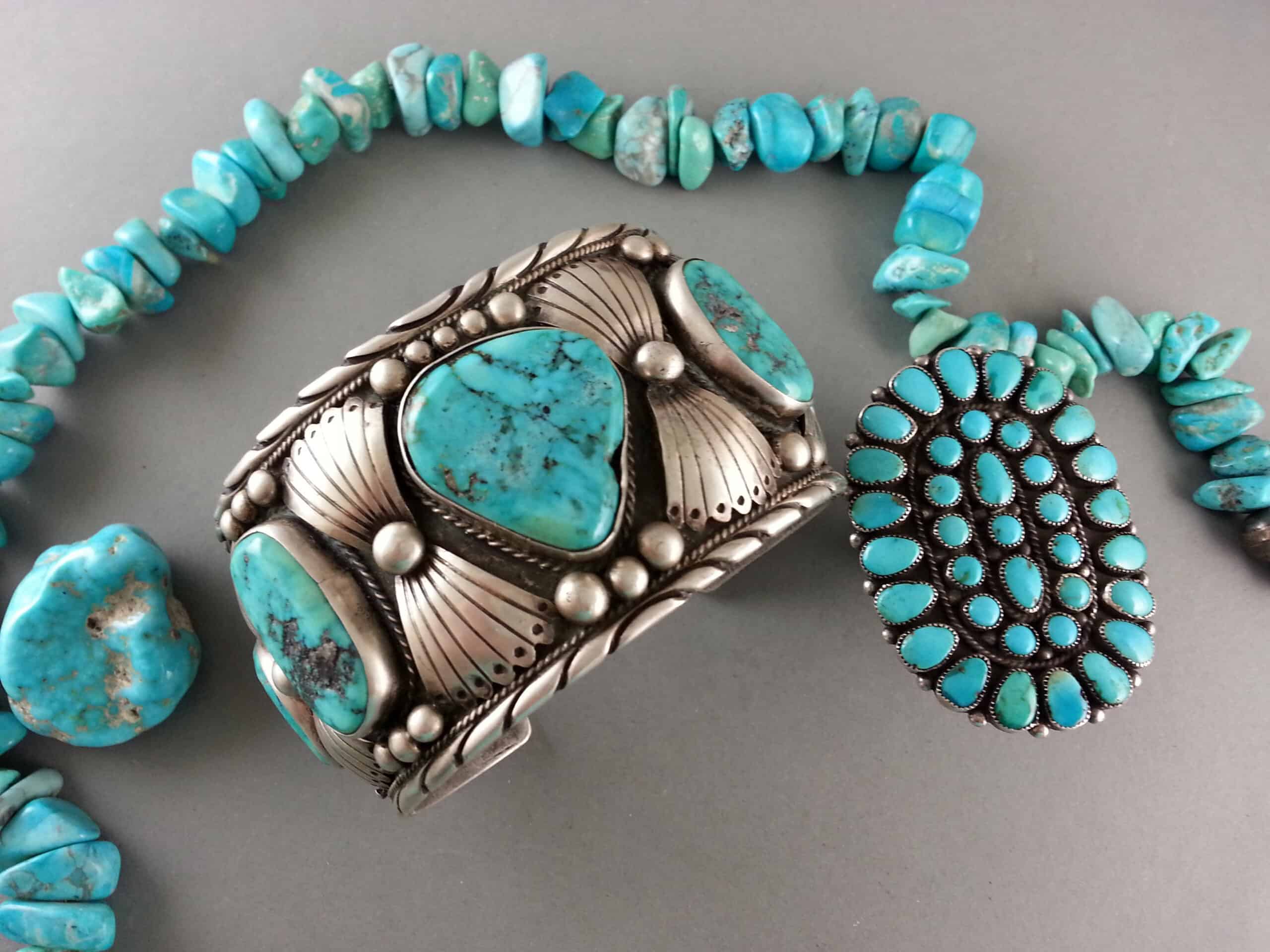
Of course, raw turquoise all on its own isn’t the main attraction for most people looking to buy a little, bright-blue piece of New Mexico. Traditionally, turquoise jewelry is set in silver and can include other stones/materials, including coral and onyx, which also have matte, opaque finishes and colors that complement turquoise’s distinctive look.
Turquoise jewelry available in New Mexico today offers a wide range of styles, from highly traditional to ultra-modern. For those looking for more traditional turquoise and silver jewelry, there are multiple traditions to choose from.
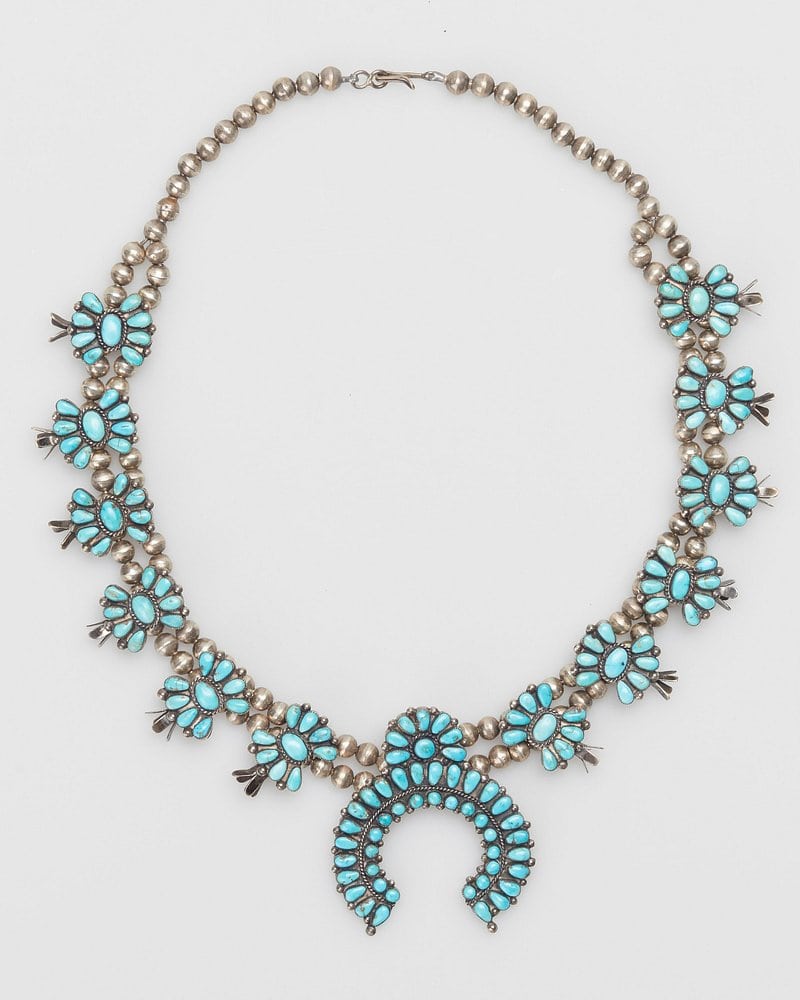
One of the most iconic styles of Southwestern turquoise jewelry is squash blossom necklaces. If you’ve never seen one, these pieces are large necklaces featuring a distinctive horseshoe-shaped pendant called a naja and a chain adorned with smaller pieces shaped like squash blossoms, which give the item its name. They’re associated with Navajo (Diné) culture, have been worn by people of all genders since the 19th century, and can be quite expensive, especially if they’re made with a large amount of turquoise.
Other Southwestern Native peoples have equally distinctive styles, and you’ll find them in New Mexico shops. Zuni jewelry, from the pueblo in western New Mexico, is known for patterned stone inlays, similar to mosaics, as well as the clusterwork jewelry that can be especially popular for cuff bracelets. Hopi jewelry, meanwhile, is typically made only with silver, often in a style called silver overlay, although some contemporary Hopi jewelers do incorporate turquoise into their work.
How can I follow best practices when I buy New Mexico turquoise?
As with many jewelry purchases, New Mexican turquoise jewelry can be a complicated thing to buy. Quality pieces aren’t cheap, and they shouldn’t be; each one represents the labor of miners, designers, and silversmiths, as well as the cost of materials. If you’re looking to make a purchase, there are ways to make sure you’re not being cheated or profiting off of unethical practices.
Often, the best way to buy authentic New Mexico turquoise and silver jewelry is to purchase it directly from the artist who made it. This is especially true if you’re not particularly experienced with or knowledgeable about jewelry, since you won’t be deceived by inaccurate listings from anonymous online sellers. Many artisans sell their items online through personal websites or platforms like Etsy, but buying in person has a lot to recommend it.
Shopping in person lets you see, touch, and even try on the item before you buy, and depending on the shop and your luck, you might even get a chance to talk to the artist about their process. The array of Native American vendors outside the Palace of the Governors on the Santa Fe Plaza is a great place to begin your search. It’s the classic way to buy directly from Native artists in New Mexico.
Another way to buy beautiful turquoise and silver jewelry, often at very reasonable prices, is to buy secondhand or antique. Antique dealers often have specialties, and in New Mexico, turquoise jewelry can be one of them. Many people who are concerned about the environmental impacts of silver and gemstone mining prefer buying jewelry secondhand, as the items have already been made and are not driving demand for continued production.
Of course, beyond concerns of value or even history, remember that jewelry of all kinds is made to be worn. Only buy things you like and will be happy wearing, or that you plan to gift to someone you think will enjoy it. If you’re curious to learn even more about turquoise in New Mexico, consider taking a few hours to explore the Digital Turquoise Museum, where you can even pick up a non-digital souvenir from the online shop. No prizes for guessing what kind of gemstones they sell!