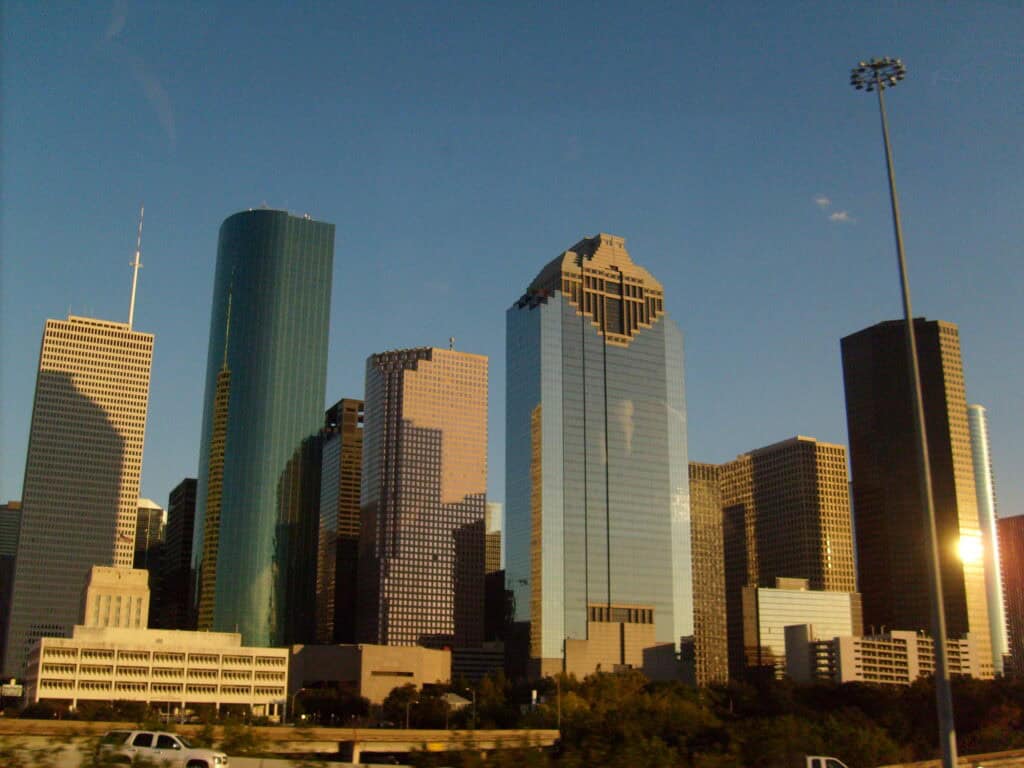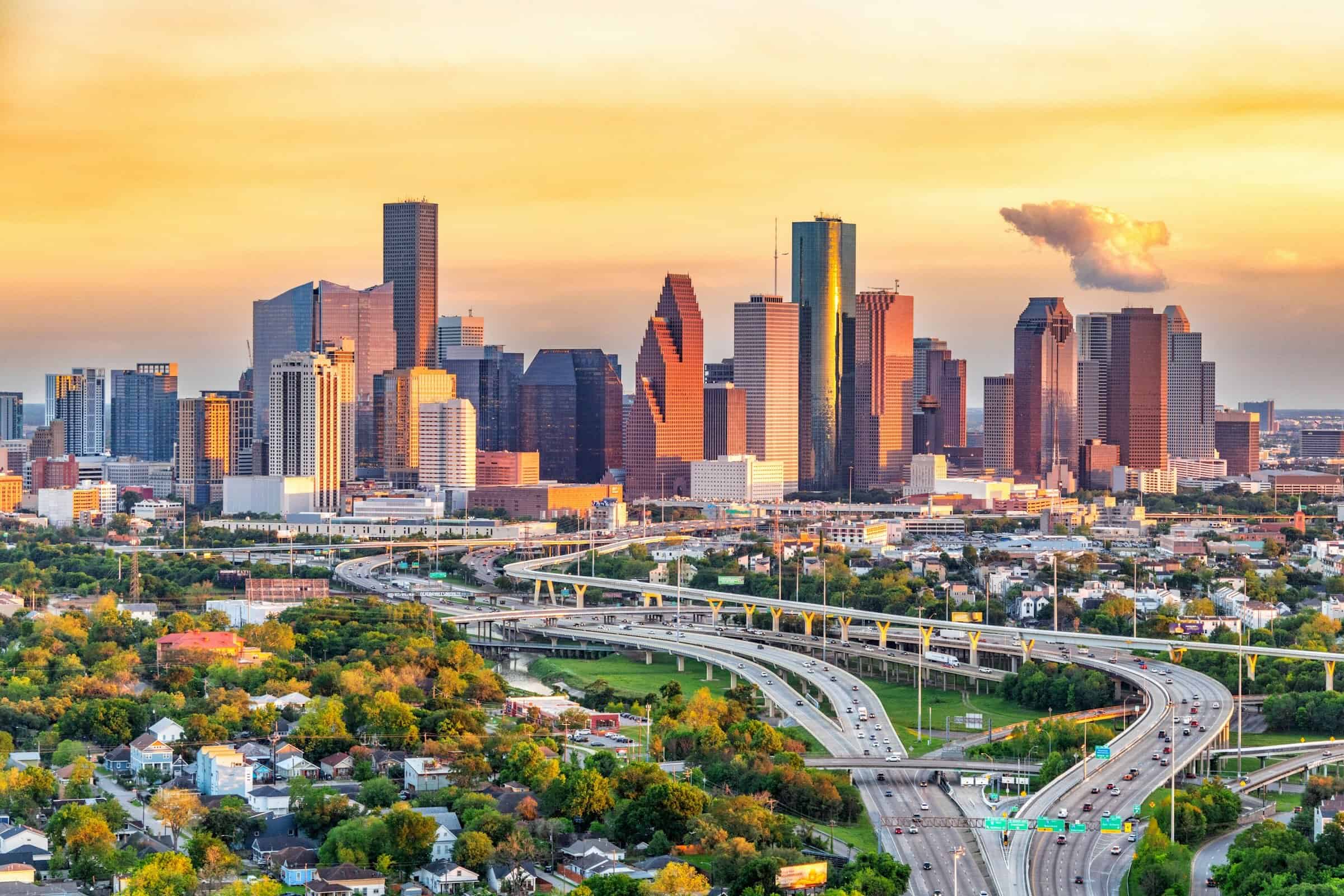
For city amenities and suburban lifestyles, Houstonians are increasingly moving to these counties where they can have the best of both worlds.
Houston was just named the Top Moving Destination in the U.S. for the fifth year in a row, and if you’re a local, that makes perfect sense.
A lower cost of living compared to the national average, a diverse population that makes Houston a true melting pot, and that good ol’ Texan hospitality make the Lone Star State—and H-Town in particular—a highly attractive place to live.
Interestingly, downtown Harris County—at least the part that encompasses Houston proper—isn’t seeing near the growth as neighboring suburbs. Sure, affordable rent can still get you a sweet unit downtown. But when it comes to home buying, researchers at Rice University’s Kinder Institute for Urban Research report that not only are new-to-Texas residents choosing homes in suburbs, but many downtown Houstonians are also opting to explore residential offerings outside city limits.
That’s because as families grow, former downtowners seek out single-family and multigenerational homes with yards, neighborhood camaraderie, and top school systems. Additionally, since the COVID years, employees have transitioned into work-from-home situations, so they no longer need to be in the thick of things. Instead, they’re increasingly opting for grassy lawns over skyline views.
Add to that the fact that huge corporations, tech companies, and medical facilities have chosen suburban locations as their home base, benefiting from larger properties and lower costs. Their employees and families see the value in living in that suburb rather than dealing with Houston’s traffic when leaving the city.
So which suburbs have seen the biggest growth spurts in the last few years? Let’s take a look.
Waller County
This county, just northwest of Houston, includes suburbs like Brookshire, parts of Katy, Hempstead, and Prairie View, and was recently named the fastest-growing county in the state (that’s state, not city) and the second-fastest-growing county in the entire U.S.
From 2020-2025, an additional 13,000 residents chose to hang their hats in Waller, and in
2025 alone, the rate of growth jumped exponentially with a 5.7 percent increase. In other words, interest in suburbs like Brookshire shows no sign of slowing.
Researchers attribute the growth to affordable housing and new industries that appreciate Waller’s available land and choose to open plants and offices in this county. Doing so has created about 10,000 new jobs, bringing new residents from other areas of Houston and across the nation. Those companies then invest in their communities, making these suburbs even more attractive to buyers.
Montgomery County
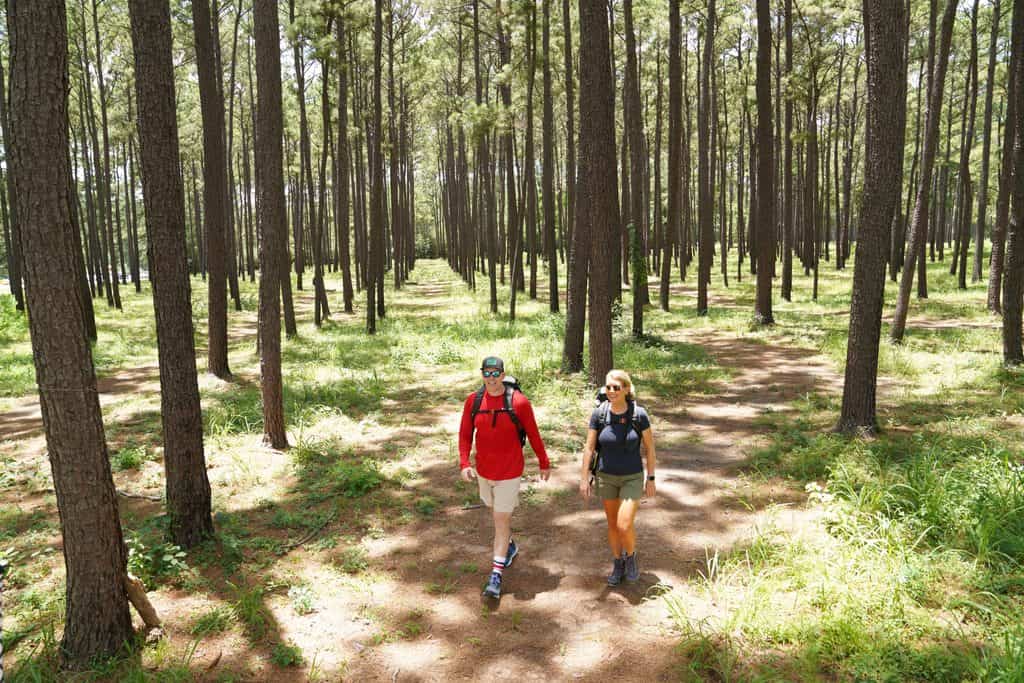
Drive north from the city of Houston, and you’ll notice a distinct change in atmosphere as massive highways give way to tree-lined streets, the beautiful Lake Conroe, and suburbs that meet every single need you can think of.
You have just entered Montgomery County, home to its two biggest suburbs, The Woodlands and Conroe. Since 2022, Montgomery County’s population has grown by 17.4%.
The Houston Chronicle attributes the initial growth here to inexpensive and ample land that attracted developers. A focus on master-planned communities rather than individual neighborhoods created an interwoven community—everything residents ever needed just a short drive away, easy-access neighborhoods, commercial hubs, and multiple entertainment options.
It follows that all of this expansion led to massive job creation. Put it all together, and you’ve got an attractive package for young professionals and families. Add Lake Conroe, and now you have a built-in vacation spot just minutes from home.
Fort Bend County
As a resident of Sugar Land, I lived through its explosive growth in Fort Bend County and talked with a plethora of new residents drawn by Sugar Land’s elite school systems, charming town, and first-class entertainment venue, Smart Financial Center.
But eventually expansion slows and growth catches up with availability. So while Sugar Land is still a coveted suburb for homebuyers in Fort Bend County, its growth statistics haven’t quite kept up with neighboring Fulshear.
Fulshear, which not too long ago was a quiet rural farm community, has exploded with population growth, surpassing anything researchers have seen elsewhere in Houston. Massive housing developments, some containing more than 3,000 homes, are largely responsible for Fulshear’s most recent ranking of Number 4 nationally for suburban growth.
Fulshear is estimated to be growing by about 14 percent a year, but in 2025, that number surged to 21 percent.
Nicole Pope Baldwin, Owner of Blue Bird Real Estate Corp., is also a resident of Fulshear. She says that in her three decades in real estate and development, she’s not surprised by this turn of events.
“Our little town has experienced remarkable growth,” Baldwin says, “and I think that’s due to the people, the land, and the gracious way of life that brought so many of us here in the first place. This is a place to put down roots, and people are realizing that.”
Harris County
While most of Harris County is downtown Houston proper, its outlying suburbs add substantial weight to its portfolio.
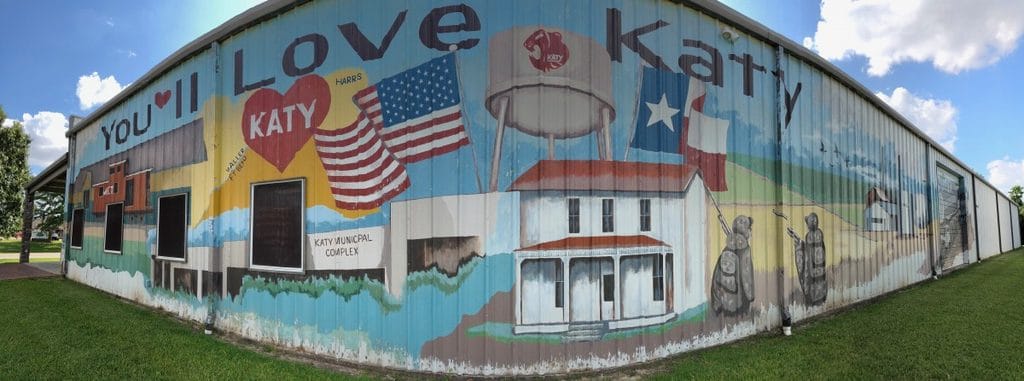
Cypress and Katy, in particular, have appeared on Hottest Zip Codes lists that feature suburbs and neighborhoods where houses sell as soon as they hit the market. Both suburbs are known for their community spirit and their desire to maintain small-town charm. But the fact that they are just a short drive from the city makes them especially appealing.
Master-planned communities, like the 12,000-acre Bridgeland in Cypress, bring fast growth, and the new homes across Cypress and Katy are a draw for busy professionals who want turn-key, move-in-ready homes where they can hit the ground running.
Keep in mind that Katy spans three counties, Harris, Waller, and Fort Bend, so its numbers can be confusing when it comes to each county’s strengths and weaknesses, but that doesn’t take away from Katy’s consistently growing housing market and population boom.
Chambers County
East of Texas, Chambers County is not as well-known as the others, yet it enjoyed a quiet 16.2% population increase last year, and that’s nothing to take lightly. The county lies within the metro Houston area and stretches toward Galveston, so it’s attractive to those who work in the city but want to be a bit closer to island life.
Because Chambers County is also closer to the Houston Ship Channel than most Houston suburbs, it houses a number of petrochemical, manufacturing, and industrial plants and employs tens of thousands of Houstonians. Most are young and starting families, and the lower housing costs, plus the availability of land, are a huge draw.
Like Fulshear, this former farming and ranching area is rapidly changing with residential and commercial development. Some speculate that the addition of SH 99 (Grand Parkway) and improved infrastructure has also played a part in helping commuters see the benefits of Chambers County living.
Mont Belvieu has grown into the residential hub of this county, and suburbs like Beach City on the Trinity Bay and Old River-Winfree along the Trinity River attract homebuyers who want to be close to city amenities but feel a little more off the grid.
Suburban shifts don’t have to signal displeasure with big city living. Instead, they are signs that the metroplex is growing, that families are finding communities that feel just right, and that city traffic may even ease a bit as more people discover the joys of suburban living.