Learn about Native handicrafts, meet local artists, purchase incredible pieces, and even take a class to learn about these cultural art forms.
Native artisans create Alaska’s traditional heritage crafts, typically using materials commonly found in their surroundings. They incorporate natural materials, such as grasses, wood, seeds, shells, and even materials derived from animals, such as porcupine quills and walrus tusks.
Around the state, you can learn about these crafts, meet the artists who make them, and purchase them from Native artists. You can even learn these heritage crafts from experts and try your hand at making them.
What are traditional heritage crafts and who makes them?
Alaska has nine major Alaska Native Cultural Regions and 229 federally recognized tribes. Artists from these regions and tribes create a wide array of arts and handicrafts. Items are commonly made from natural materials that are available in each artist’s region, from sea grasses near the coast to caribou hides in the state’s interior.
Here are a few of Alaska’s regions, the materials artists typically use in each area, and a peek at some of their creations.
Northern Alaska
In northern Alaska, Inupiat people utilize the walruses they harvest for a variety of purposes, including food. They also use the animals’ skins and tusks for art and crafts.
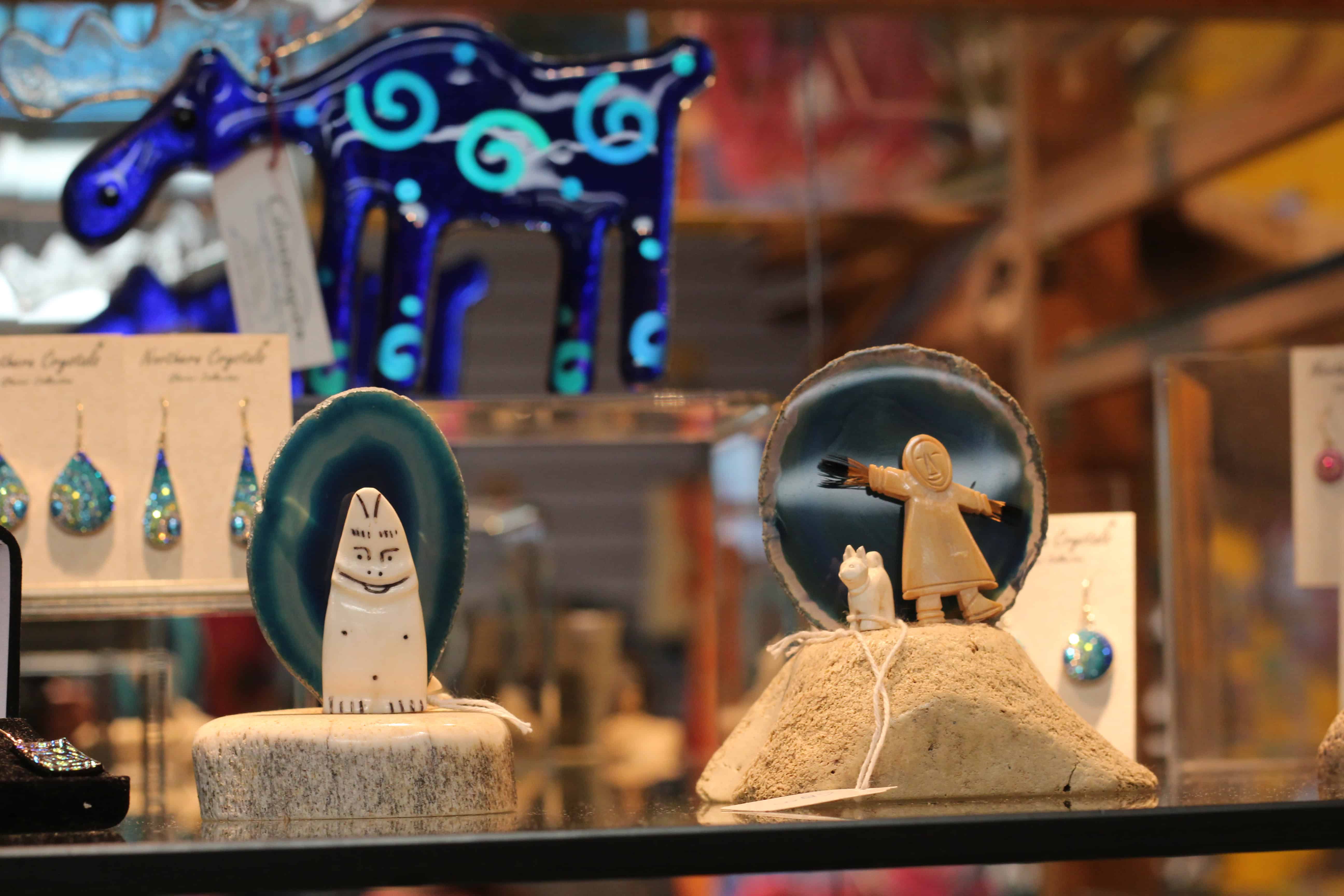
While non-Natives are not allowed to purchase unworked walrus ivory, they are allowed to purchase handicrafts created from it. Other materials commonly used in this region for crafts include whale bones, furs, and baskets made from birch bark and baleen.
Interior Alaska
In interior Alaska, Athabascan artists use materials such as porcupine quills, hides, and furs to make clothing and other items. Additionally, they carve soapstone and wood and weave baskets from willow roots and birch bark.
Athabascan artists are especially well known for their beadwork, and they frequently use seeds, porcupine quills, and carved wood as beading materials. The beads they create embellish garments like mittens and moccasins.
Artists like Emma Hildebrand, who is Koyukon Athabascan, use materials such as porcupine quills and moose and caribou hides to construct and decorate garments and other items.
Southwestern Alaska
In the southwestern region of the state, beach grasses are ubiquitous, and Yupik people’s traditional crafts often utilize these natural materials in items like baskets.
In this region, people also regularly carve walrus ivory into small figures and dolls. Muskox wool, called qiviut, is also used, often being woven into clothing.
Southeastern Alaska
In Southeastern Alaska, Tlingit, Haida, Tsimshian people produce ceremonial blankets, which can be decorated with beads and other items. Other characteristic art forms in the region include silver jewelry, carved wood, and ceremonial masks.
Finding and purchasing heritage crafts
When looking to purchase heritage crafts, make sure the pieces you are buying are authentic. A great way to do this is to purchase them at craft fairs directly from artists and craftspeople. You can meet them, learn about their work, and get help selecting the right piece.
Alaska’s Silver Hand Program is a great resource to identify authentic Alaska Native art. The Alaska State Council on the Arts issues Silver Hand permits to Alaska Native artists who reside in the state. The artists are then allowed to use the Silver Hand seal on original pieces of art that they produce in the state.
Purchase heritage crafts directly from artists at an event
One of the best ways to purchase heritage crafts is to attend an event where you can shop among different artisan booths and buy items directly from Alaska Native artists. You can ask questions, learn about the artist and their work, and you might even be able to see a demo of the artist creating.
Each October, the Alaska Federation of Natives Convention takes place in Anchorage. One of the key inclusions of this gathering is the Alaska Native Customary Art Fair. Here, you can see and buy work from more than 170 Native artists who come from all around Alaska and beyond.
Another place to buy art is the Fur Rondy, which takes place each February and March. It features a jam-packed schedule of events, such as fun runs, fireworks, music, and more.
For a few days during the Fur Rondy, the Charlotte Jensen Native Arts Market showcases the work of Alaskan native artisans. Watch artists masterfully weave, bead, carve, and form art during demonstrations. Wander among the art sale booths and select a few items to bring home.
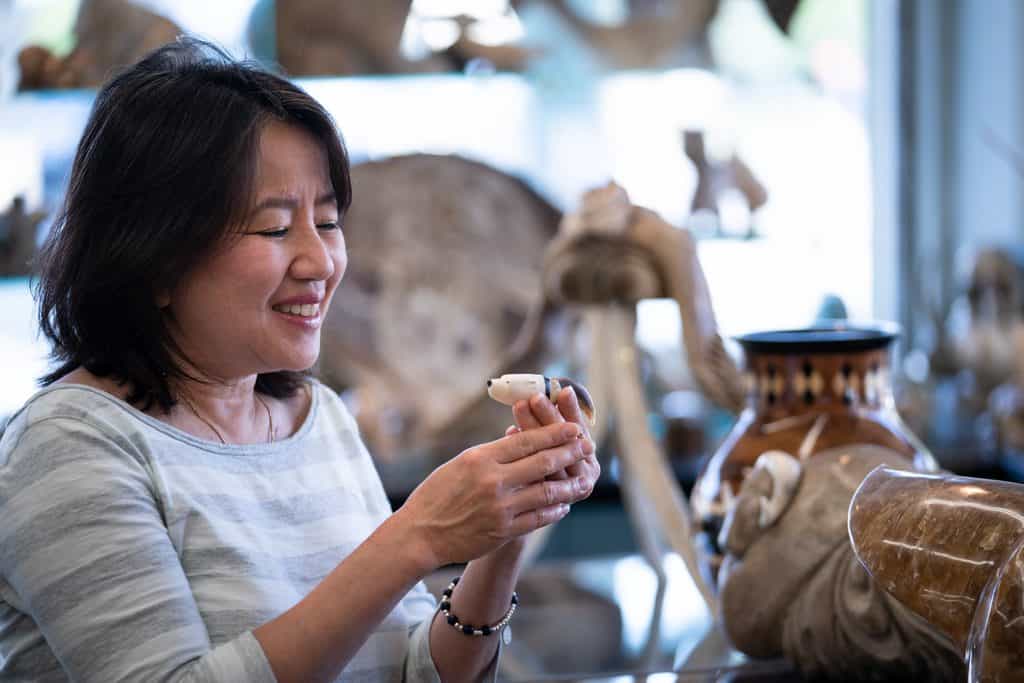
Museums and shops sell heritage crafts
If you can’t make it to an event, you can still find plenty of places to purchase works by Alaska Native artists all around the state. Here are a few museums and shops where you can find a wide range of items.
The Alaska Native Heritage Center’s Ch’k’iqadi Gallery features authentic Native art by artists in every region in Alaska.
The Anchorage Museum Store offers many works for purchase, as well as tips on purchasing Native art and crafts. The museum recommends paying attention to small details and techniques, learning about the piece’s artist, culture, and materials, among other purchasing advice.
Oomingmak Musk Ox Producers Co-operative has been Alaska Native owned since 1969. Around 250 Native Alaskan women are co-owners, and each item is hand-crafted from musk-ox underwool, called qiviut. The co-op is located in Anchorage, and the online store sells skeins of qiviut, as well as items like scarves.
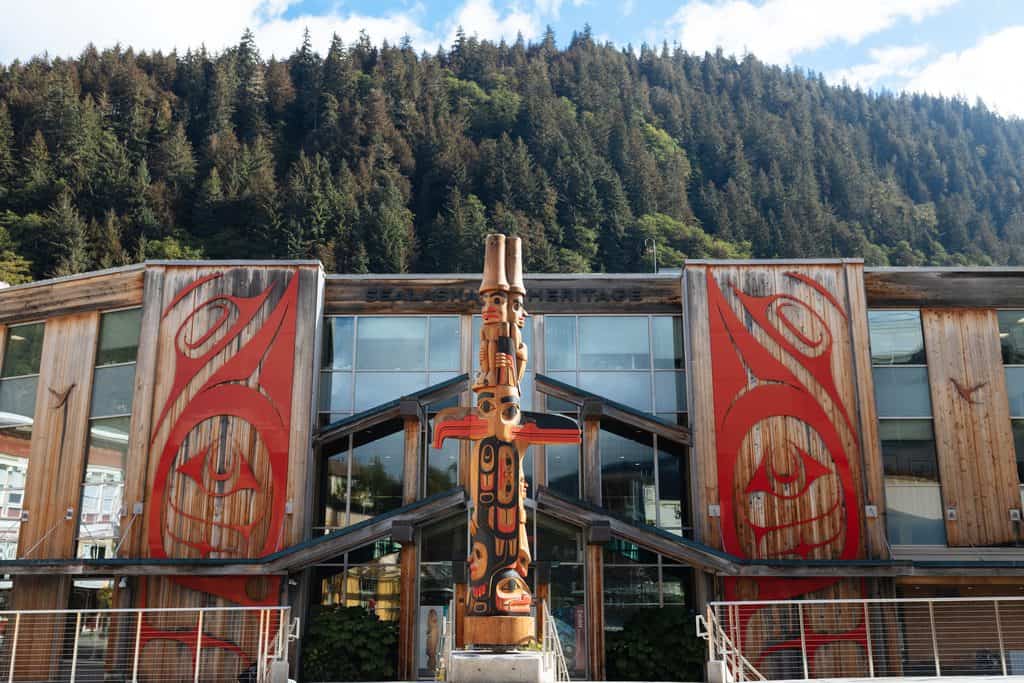
The Sealaska Heritage Store sells jewelry, fine art, and more.
University of Alaska’s Museum of the North Store sells many pieces by Native Alaska Artists, including items like a caribou antler ulu and whalebone walrus figurine.
Crazy Wolf Studio has a retail shop in Ketchikan, as well as an online shop. It also accepts special orders for items, such as drums handcrafted by artist Ken Decker.
Take a class to learn about heritage arts and handicrafts
A few locations around the state offer classes where people can learn about heritage arts and handicrafts, as well as try their hand at making a few pieces.
The University of Alaska Fairbanks offers a number of Applied Arts courses that feature a variety of different arts.
Learn about beading, including how to affix beads to different materials, which stitches to use, and even how to use a loom in a beading course. Or take a skin sewing class to make projects such as mukluks, fur hats, and mittens. Introduction to Traditional Crafts features a rotating selection of options, such as birch bark basket-making, canoe or kayak making, and more.
The Sealaska Heritage Institute focuses on Southeast Alaska’s Tlingit, Haida, and Tsimshian cultures. It offers classes on topics like drum making, skin sewing, jewelry making, and more.