Colorado drought conditions are impacting daily life across the state. Discover ways you can save water, from shorter showers to smarter landscaping.
Drought is impacting Coloradans all across the state, from farmers choosing to fallow fields to golfers playing on brown, dried-up courses to homeowners facing local water consumption restrictions.
Driven in part by a record-low snowpack, this prolonged period of dry conditions has left almost 4.7 million Coloradans living in areas experiencing drought, according to Drought.gov. In response, Governor Polis issued a “Drought Emergency” declaration and activated Phase 3 of the state’s Drought Response Plan in June.
While drought can have serious impacts on communities and the environment, there are practical steps you can take to reduce water use and help conserve one of the Centennial State’s most valuable resources. Keep reading to learn more about what causes drought, how it affects Colorado, and simple ways you can save water at home and in your yard during this current Colorado drought.
What causes a drought?
A drought occurs when an area experiences an extended period of below-average precipitation and can be made worse by high temperatures that cause moisture to evaporate from soil.
Several factors can contribute to drought conditions, including climate change, shifts in weather and wind patterns that limit rainfall, and human activities like deforestation, over-farming, and excessive water use.
In Colorado, prolonged periods of low snowpack and reduced spring runoff can also contribute to drought because much of the state’s water supply depends on mountain snowmelt.
Impacts of drought
Drought can have wide-ranging effects on communities, the environment, and local economies. Reduced rainfall and water availability can damage crops, lower agricultural yields, and increase costs for farmers and ranchers. Dry vegetation and soil also create conditions that can increase the risk and severity of wildfires.
Over time, prolonged drought can impact drinking water supplies and place strain on local water resources.
While many of the ways to combat drought require government action or organized efforts, there are things you can do on an individual level to help out. Keep reading to discover 23 tips for saving water during a drought.
How to save water indoors
There are plenty of adjustments you can make to your daily routine to reduce the amount of water you use. Here are several suggestions:
Bathroom water-saving tips
- Repair leaks quickly: A small drip from your sink faucet or a running toilet can waste a surprising amount of water over time. To test for a toilet leak, add a few drops of food coloring to the tank. If color appears in the bowl within about 30 minutes without flushing, there may be a leak. Replacing a worn flapper often solves the problem at a low cost.
- Keep showers brief: Aim to limit the length of your showers to about five minutes. If five minutes seems impossible, try to shave a minute or two off your typical shower time. Cutting just one minute from your routine can save about two-and-a-half gallons of water. Shutting off the water in between rinses also helps reduce the amount you use.
- Choose showers over baths: Taking a shower typically requires a lot less water than filling the tub for a bath. (About 10 to 25 gallons for a five-minute shower compared to almost 70 gallons for a bath)
- Upgrade your showerhead: Installing a high-efficiency model (sometimes called low flow) can reduce water use while still providing good water pressure. If you’re not sure if the showerhead is high-efficiency, look for a WaterSense label.
- Collect extra shower water: Place a bucket in your shower to catch water that would otherwise go down the drain and reuse it to water your plants.
- Turn off the faucet when not in use: Avoid letting water run while brushing your teeth or shaving. According to the EPA, this simple habit can save several gallons of water each day.
Kitchen and laundry room water-saving tips
- Wait for full loads: Don’t run your dishwasher when it’s half full or your washing machine when there are only a few items in it. Instead, wait until these appliances are completely full to maximize efficiency.
- Use your dishwasher: Modern dishwashers often use less water than washing dishes by hand, especially when you wait until you have a full load.
- Thaw food without running water: Plan ahead when cooking frozen foods by moving them to the refrigerator to defrost, or use your microwave’s defrost function, rather than putting them under running water.
- Reuse water whenever possible: Instead of letting water run down the drain while waiting for it to reach the desired temperature, collect it and use it to water plants or for other household tasks.
Improve water efficiency
- Install faucet aerators: Adding aerators or low-flow attachments to faucets throughout your house can reduce water consumption without significantly affecting their performance. These screw-on devices are easy to install and typically cost less than $20.
How to save water outdoors
From the way you water your grass to how you wash your car, there are many adjustments you can make to your behavior in your yard to help out during a drought.
Water lawns and gardens wisely
- Follow local watering rules: Observe any drought restrictions or watering schedules established by your municipality or water provider. For example, in Denver, outdoor watering is limited to two days per week between 6 p.m. and 10 a.m.
- Water during cooler parts of the day: Early morning and evening watering helps reduce water loss from evaporation.
- Add mulch around plants: A layer of mulch can help your soil hold moisture longer and reduce the need for frequent watering.
- Keep grass slightly taller: Raising your lawn mower height and keeping your grass taller can help shade the soil, reduce evaporation, and support healthier roots.
Create a drought-resistant yard that makes the most of rainwater
- Plant water-wise landscaping: Consider replacing high-water-use turfgrass with native or drought-tolerant plants suited to Colorado’s climate. Resources like Plant Select can help you identify attractive plants that require less irrigation.
- Direct runoff to planting areas: Position your downspouts so that rainwater flows into landscaped areas rather than onto paved surfaces like your driveway.
- Build a rain garden: Rain gardens help capture and absorb stormwater runoff while supporting plants that thrive with natural rainfall. They can also help reduce erosion and improve local water quality.
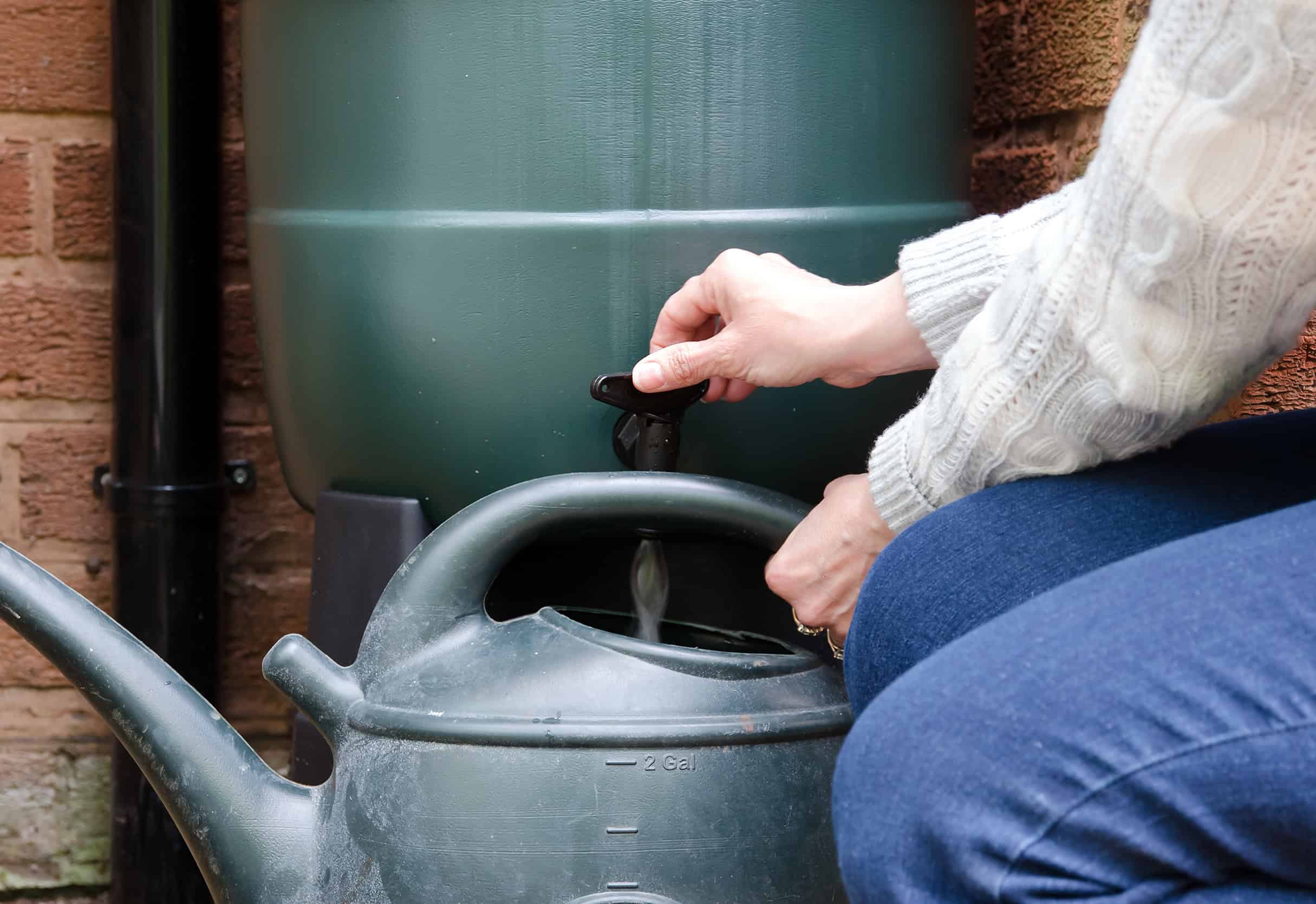
- Store rainwater for later use: Rain barrels can collect runoff from your roof and provide a supplemental water source for gardens and flower beds. In Colorado, most households can have up to two rain barrels with a combined storage of 110 gallons or less.
Reduce outdoor water waste
- Sweep instead of spraying: Use a broom to clean driveways, sidewalks, and patios rather than rinsing them with a hose.
- Wash vehicles efficiently: Commercial car washes that recycle water can be a more water-conscious option than washing your vehicle yourself. However, if you choose to wash your car at home, consider doing so on the lawn so the runoff benefits your landscaping.
Minimize pool and spa water loss
- Use a pool or spa cover: Covering pools and hot tubs when they’re not being used can significantly reduce evaporation.
- Consider a more efficient filtration system: Some water-saving pool filters use less water during maintenance than traditional filters, which can require hundreds of gallons during a single backwash cycle.