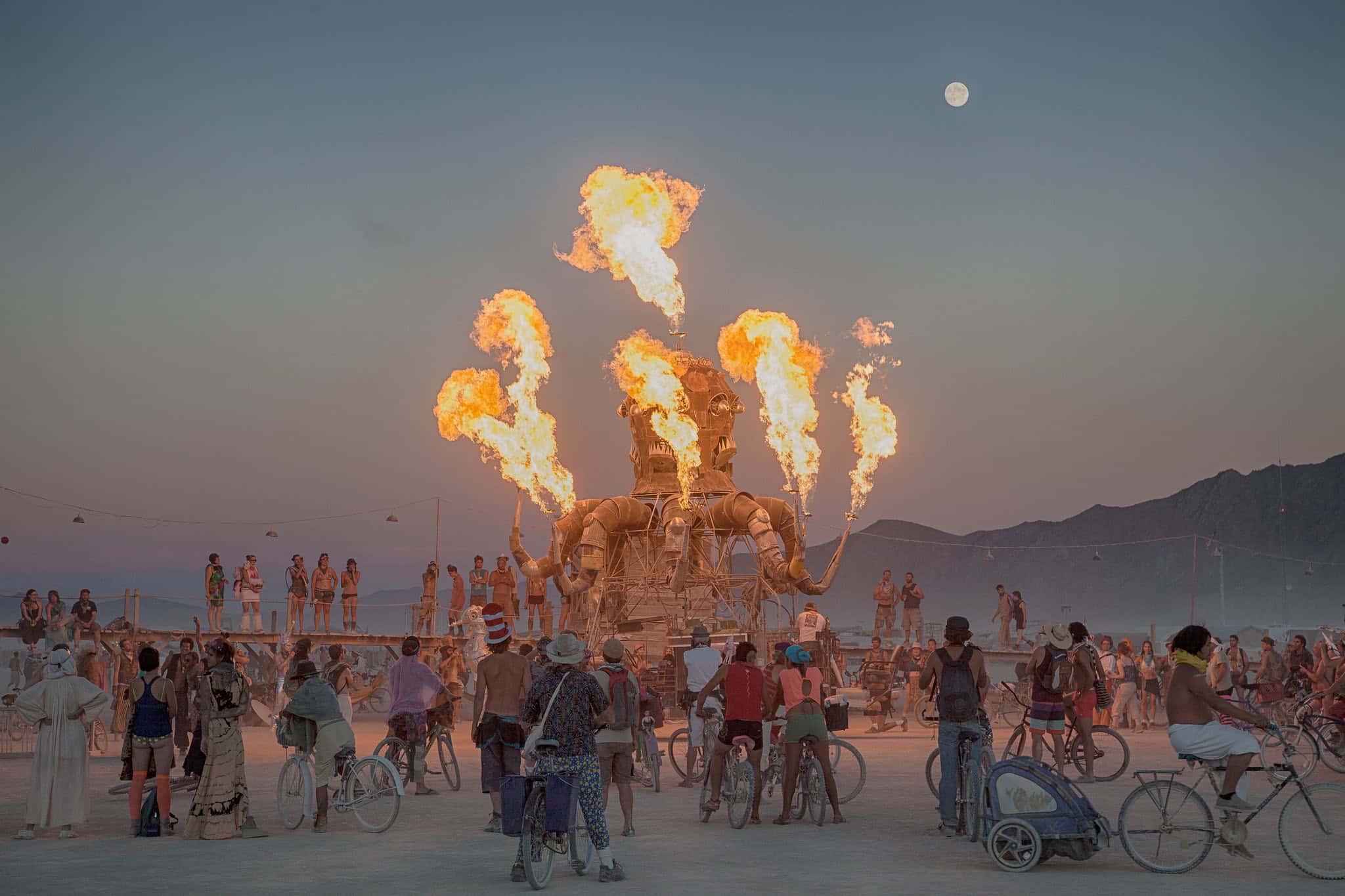
A temporary city full of art and self-expression will rise in the Black Rock Desert during Burning Man 2026, then vanish without a trace.
More than 70,000 artists, tech workers, executives, scientists, musicians, and others from around the globe are expected to flock to Northwestern Nevada, Aug. 30 through Sept. 7, to erect the elusive and experimental Black Rock City for Burning Man 2026.
The temporary metropolis rises for eight days in a remote and arid desert playa, about 100 miles northeast of Reno, before disappearing without a trace.
A celebration of community, art, self-expression, and self-reliance, Burning Man doesn’t have any headliners or scheduled performers. Instead, the pop-up city’s citizens, known as burners, endure the punishing desert heat, near-freezing nights, and whiteout dust storms to build and visit elaborate theme camps; create, explore, and engage with experimental and interactive artwork; join spontaneous dance parties and gatherings; and participate in the event’s gifting economy.
This year’s theme, Axis Mundi, relates to the interconnectedness and shared social realities of Burning Man’s global community, as well as its ties to the natural world.
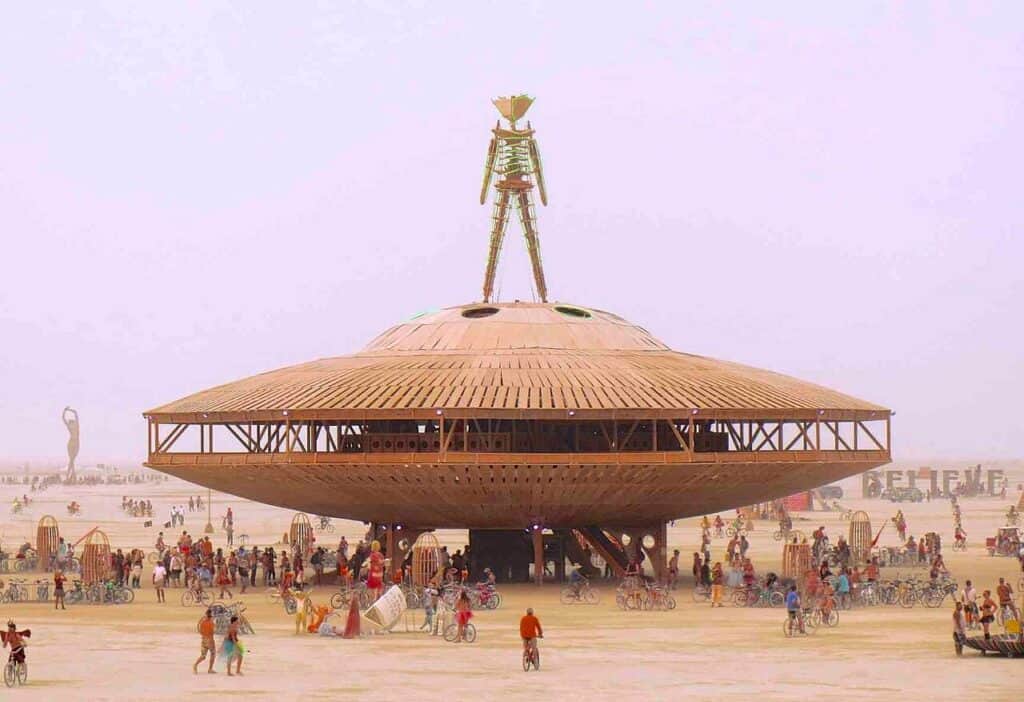
The event will culminate in the symbolic burnings of a large wooden effigy, known as The Man, and a large temple structure that functions as a canvas for the community on the Saturday evening before Labor Day, the second-to-last night of the event. This tradition began on a San Francisco beach as a symbolic bonfire in 1986.
While newcomers are welcome at Burning Man (it’s one of the event’s 10 guiding principles), this isn’t the kind of event that anyone should attend unprepared.
Here’s a look at what you need to know, and more, if you plan to attend Burning Man 2026.
There are 10 principles guiding Burning Man.
Written in 2004 by Burning Man’s co-founder, Larry Harvey, The 10 Principles of Burning Man define the ethos, cultural behaviors, and shared values of the community. These principles are guideposts, not rules, for the annual desert event.
- Radical Inclusion: Everyone is welcome
- Decommodification: There will be no sales of goods, services, or other commodities
- Gifting: Everyone gives without expectation
- Radical Self-Reliance: Everyone relies on one’s own inner resources, abilities, and resilience without depending on others
- Radical Self-Expression: Each individual has unique gifts, which may be respectfully offered to others
- Communal Effort: Creative cooperation and collaboration of the community
- Civic Responsibility: Awareness of the public welfare, one’s civic responsibilities, and following local, state, and federal laws
- Leaving No Trace: Everyone cleans up after themselves to leave the playa in a better state than it was found
- Participation: Everyone is involved in being through doing at a deeply personal level
- Immediacy: Everyone is fully present, mindful, and engaged in the current moment, with any barriers like technology and societal expectations
Participants create all the art and activities
Burning Man is essentially one big experimental art project and a movement that sees art as a human birthright, not a commodity. On the Burning Man website, Harvey describes Burning Man Art as “immediate and involving. It’s collaborative and…breaks down barriers between audience and artwork. It’s based upon participation—it’s radically interactive.”
Most works created at Burning Man are intended for climbing, touching, and interaction, and are illuminated with fire or LEDs after dark.
While anyone who wants to bring art to Black Rock City to create and install on the open playa may do so (and grants are available to artists), it must be registered with the Art Department. This includes installations, fire art, mobile art, art cars, performance art, guerrilla theater, and other media.
The weather is unpredictable, so pack accordingly.
With dust storms, high winds, extreme temperatures, and rain, the weather in the Black Rock Desert is severe and unpredictable. The wind can be strong enough to blow away tents, chairs, card tables, and ice chests. Sometimes, there’s even a whiteout.
Prepare to be playafied (coated in the dust of the Nevada Desert). The powdery residue of playafication, as Burning Man calls it, is an inevitable part of the experience.
Since the highly alkaline gypsum and silica dust at the playa are harmful to your eyes and respiratory system, goggles and masks are a must-have.
When it comes to clothing, outfits range from elaborate, colorful costumes to birthday suits. Here are some packing tips from Redditors in the r/BurningMan thread:
- “Every year, I bring 14 outfits (day/night) and end up wearing about 4 of them. You quickly realize comfort is everything out there.”
- Wrap each planned outfit separately in little plastic bags. When you take off dirty clothes, put them back in the bag so they don’t get everything else dirty.
- “Some people have three outfits for each day, some people have one outfit for the week. You do whatever will make you most comfortable. You do you.”
- Bring a variety of clothes that you can wear in 105-degree and 40-degree weather.
The nonprofit Burning Man Project suggests shopping in your local Chinatown for outfits, fabric, umbrellas, and hats. Here are some other on-playa tips for what to wear and what to bring, based on the wisdom of seasoned Burners.
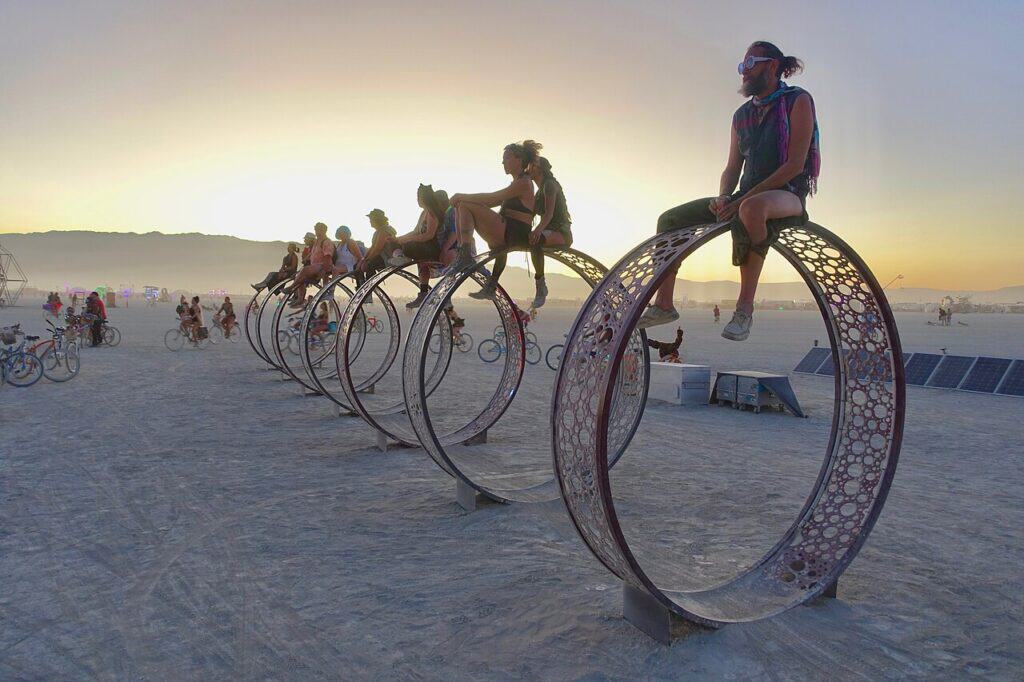
You can’t buy anything at the event, so bring what you need
Burning Man operates on a gifting economy, so there’s nothing to buy there (though ice might be sold at the center of camp). At a minimum, you must bring the basics of survival: water (1.5 gallons per person per day), food, and an enclosed shelter. Beyond that, it’s up to you.
Burners are encouraged to connect to share resources through Spark classifieds.
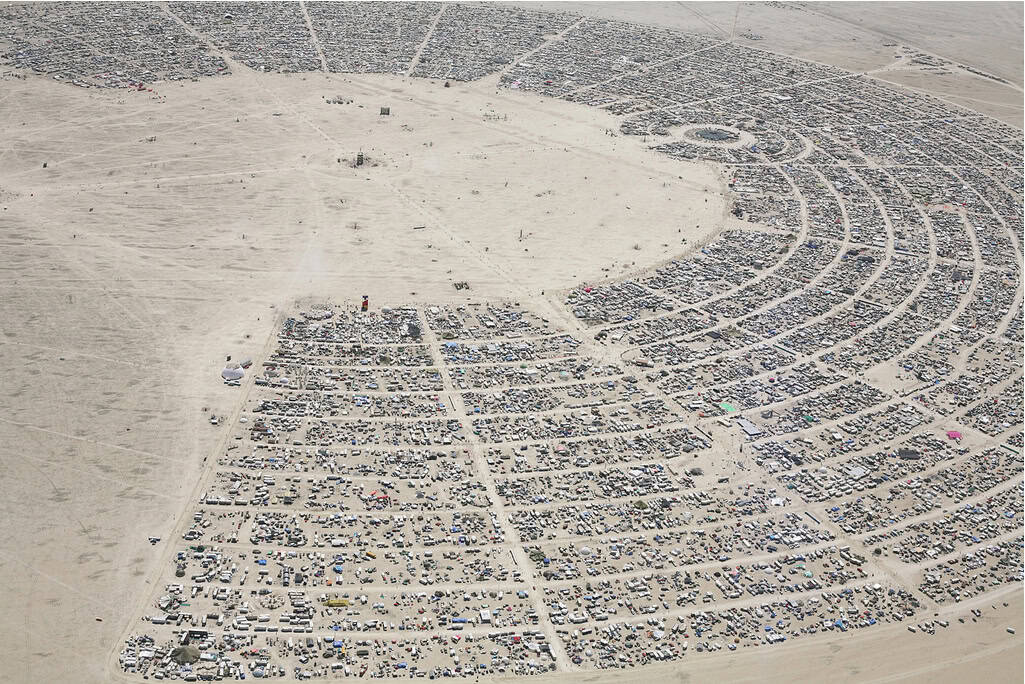
Whether driving in or arriving via the temporary airport, once on site, participants will set up villages, camps, and theme camps in two-thirds of a 1.5-mile arc, with the Man at the center. Check out the Burning Man website for guidance on creating your camp.
Check out the Burning Man 2026 Personal Survival Checklist for more ideas, and be sure to read the Burning Man Survival Guide, essential reading for anyone attending Burning Man 2026.
Tickets to Burning Man 2026 are still for sale
Tickets for Burning Man 2026 for children and adults range from $550 to $3000, plus a $150 pass for any vehicle entering Black Rock City.
Several tiers of tickets are currently available for Burning Man 2026, including Ticket Aid, for participants on a limited income; the Resilience Program, for those severely impacted either by a natural disaster or geopolitical conflict; and the Secure Ticket Exchange Program (STEP) for the safe resale of authentic tickets and vehicle passes.
General tickets will be available through an OMG Sale, opening July 29 at noon. See the Burning Man 2026 ticketing Information page for more information.
I can’t go to Burning Man 2026, but I want to see Burning Man art
Burning Man’s influence spreads beyond the playa of the Black Rock Desert, and events are offered globally. Likewise, many large-scale artworks from Burning Man are installed as public art in Nevada and around the world.
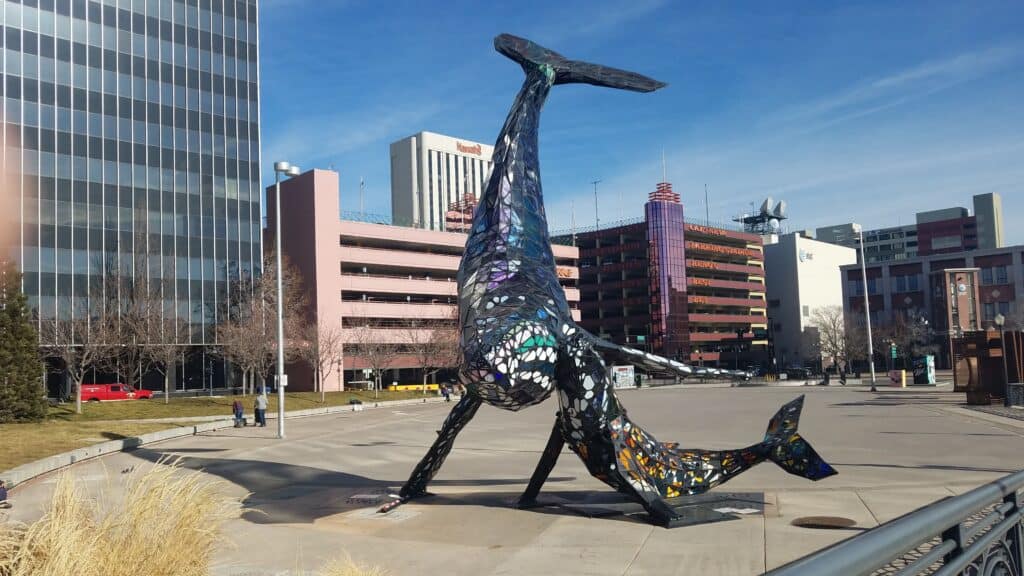
- The Reno City Plaza in Downtown Reno is home to large-scale Burning Man art pieces, including the 2013 Burning Man piece “Believe,” by Laura Kimpton and Jeff Schomberg, and “The Space Whale” by The Pier Group.
- Reno’s Nevada Museum of Art often features burner-inspired exhibits and installations, while the Sparks Art Walk in Victorian Square features rotating playa installations.
- The Downtown Container Park in Downtown Las Vegas is home to the 40-foot-tall, fire-breathing “The Mantis,” by Kirk Jellum. The 50-foot “Big Rig Jig,” by Brooklyn-based artist Mike Ross, stands a few blocks away at Fergusons Downtown.
- The 40-foot, 7,500-pound steel “Bliss Dance,” by Marco Cochrane, towers over pedestrians at The Park Las Vegas, an outdoor mall at Park MGM on the Las Vegas Strip.
- A commercial Boeing 747 used as a mobile disco at Burning Man in 2012 has been repurposed as a permanent fixture of Zone 2 at Area 15 in Las Vegas.