Heritage crafts connect Iowans to generations of makers. From woodworking to Norwegian rosemaling, here’s where to learn hands-on skills around the state.
Heritage crafts are having a moment. They’re appealing in the way that all analog activities are these days. There’s something extremely satisfying about making something with your own two hands and focusing on one task at a time.
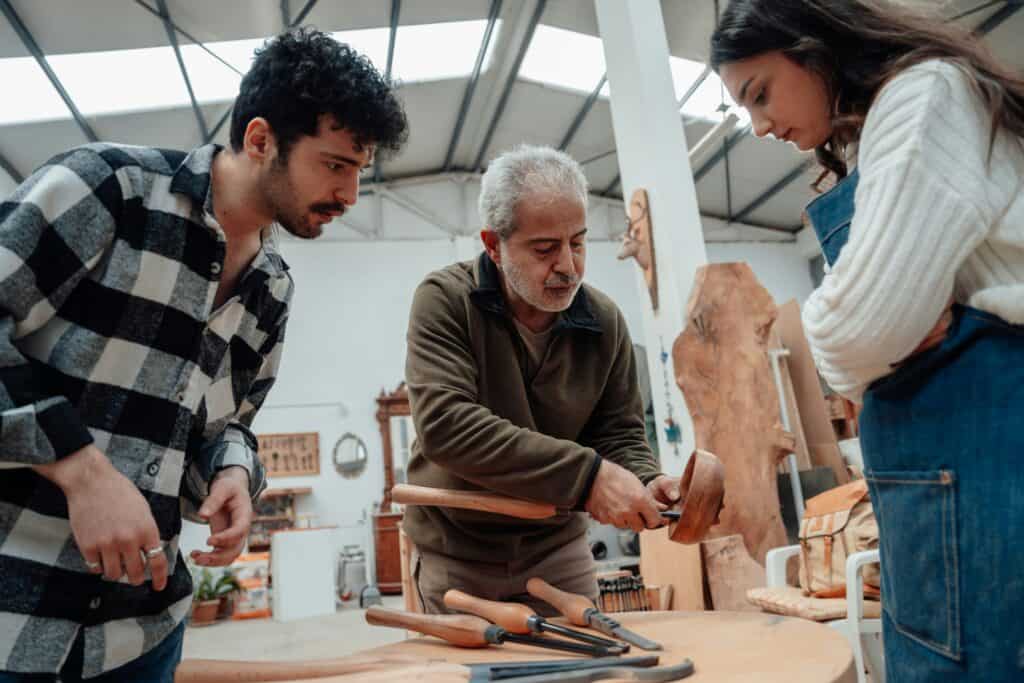
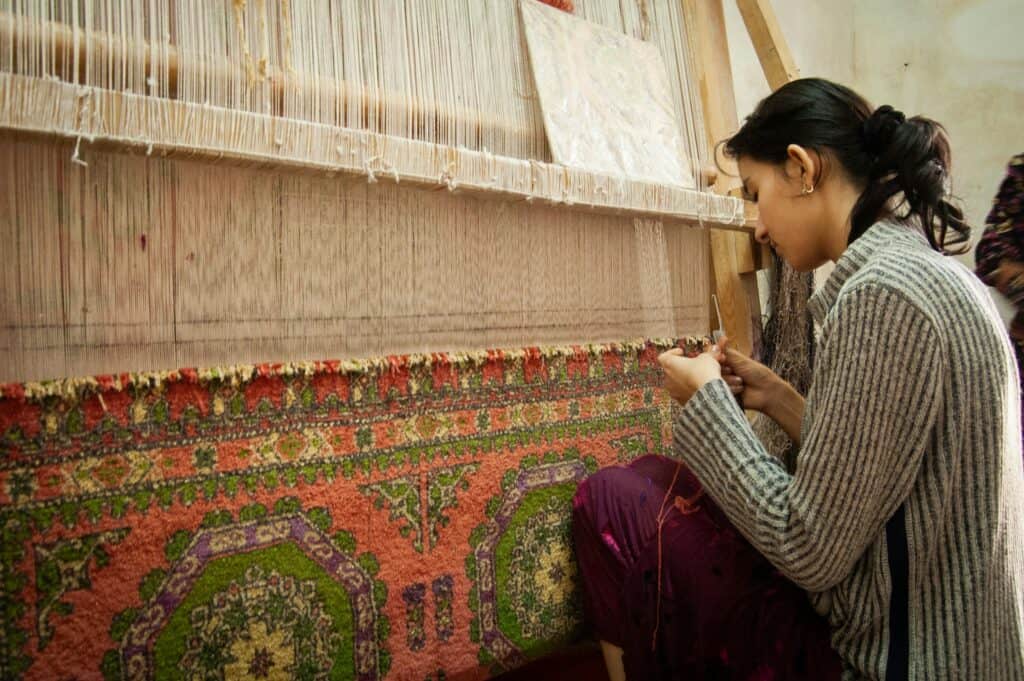
Heritage crafts are traditional skills passed down through generations, including woodworking, weaving, embroidery, blacksmithing, pottery, glassblowing, and other handcrafts. Some developed out of necessity, providing families with clothing, furniture, tools, and household goods. Others grew into art forms that reflect a community’s culture and history.
Today, learning these skills offers a chance to connect with the past while creating something useful, beautiful, or simply fun. You don’t have to be an experienced artist, either. Iowa has several places where you can get hands-on with traditional crafts, whether you want to try a centuries-old technique or spend an afternoon learning a new hobby. Winter feels like the perfect time to do so, so get your calendar ready.
Villages Folk School in Van Buren County
The Villages Folk School offers classes in traditional arts and skills in Van Buren County’s historic villages.
The school’s approach connects the learning experience with the region’s rural character. Classes take place in peaceful settings that encourage students to work with their hands and learn skills that have a long history.
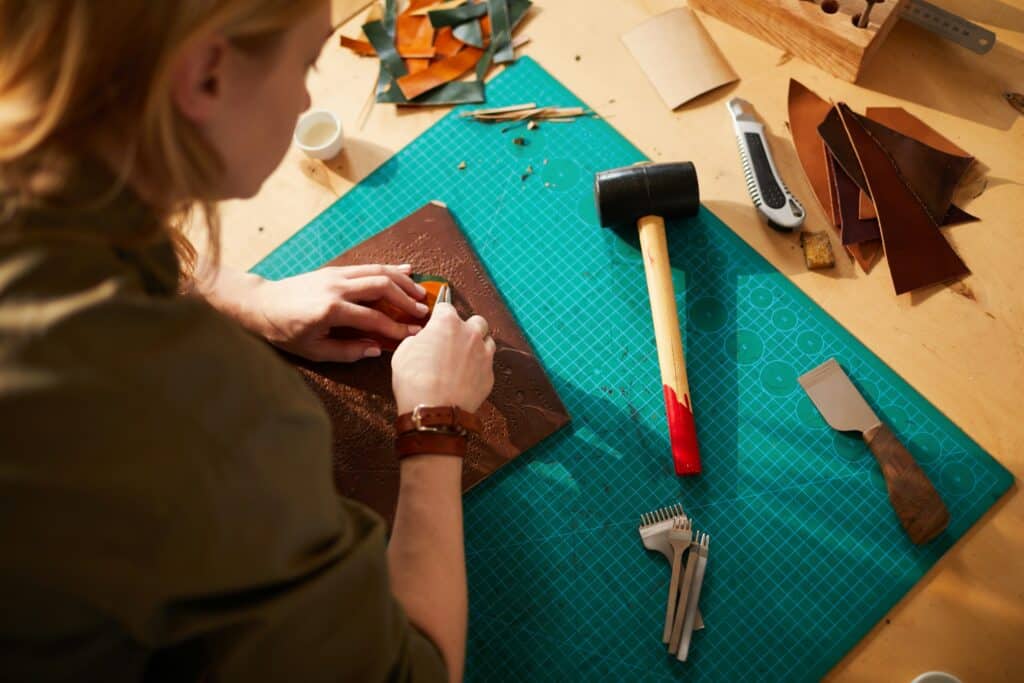
Upcoming examples listed for November and December 2026 include goat milk soapmaking, beaded earrings, leather Christmas ornaments, stained glass, and glass-blown ornaments. Some sessions are already marked full, so check availability before making plans.
It’s important to note the school also works with the Villages of Van Buren to maintain the Van Buren County Welcome Center in Keosauqua. The building features rotating displays about the area’s past, along with visitor information.
Living History Farms in Urbandale
At Living History Farms, learning an old-fashioned skill comes with a bit of historical context.
The museum’s Historic Skills Classes let participants explore trades and everyday activities that were common in earlier centuries. Small class sizes provide opportunities for individual instruction and hands-on practice.
The offerings span cooking, trades, and handcrafts. Depending on the schedule, you might learn the basics of blacksmithing, practice embroidery, or try making quick rolls and churned butter.
These classes also showcase how much knowledge went into ordinary household tasks before modern conveniences took over. Making butter, for example, was once part of the work required to put food on the table. (I’ll still take my grocery delivery, thanks!)
Land Alliance Folk School and Retreat Center in Oxford
Located on a working farm, the Land Alliance Folk School and Retreat Center brings together traditional skills and time outdoors.
The organization provides space for artists and instructors to host classes and retreats designed to connect participants with the land, themselves, and one another. Its hands-on class offerings range from fiber arts to woodworking.
One special feature is the option to arrange on-demand classes. Gather crafty friends or family and explore a subject that interests you, rather than waiting for a particular class to appear on the calendar. There are even various on-site lodging options (glamping, anyone?).
The center also hosts community events. Its Art & Lantern Festival is scheduled for Nov. 15, 2026, from 1 to 6 p.m., with a lantern release planned for 6 p.m. Visitors can shop for local art, enjoy food and drinks, and purchase a lantern to decorate for the evening display.
Vesterheim Folk Art School in Decorah
For those interested in Scandinavian heritage crafts, Vesterheim Folk Art School is the place to be.
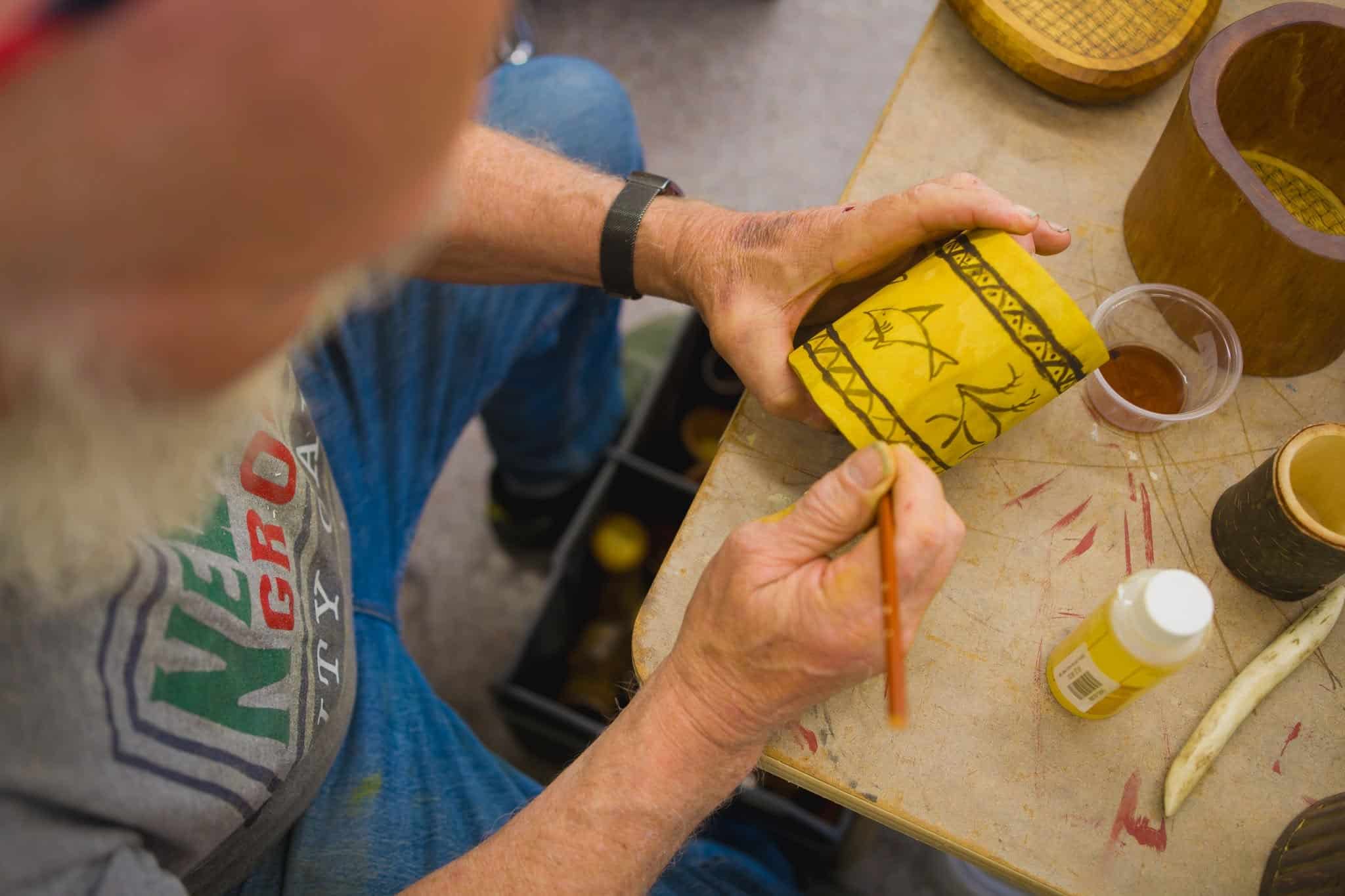
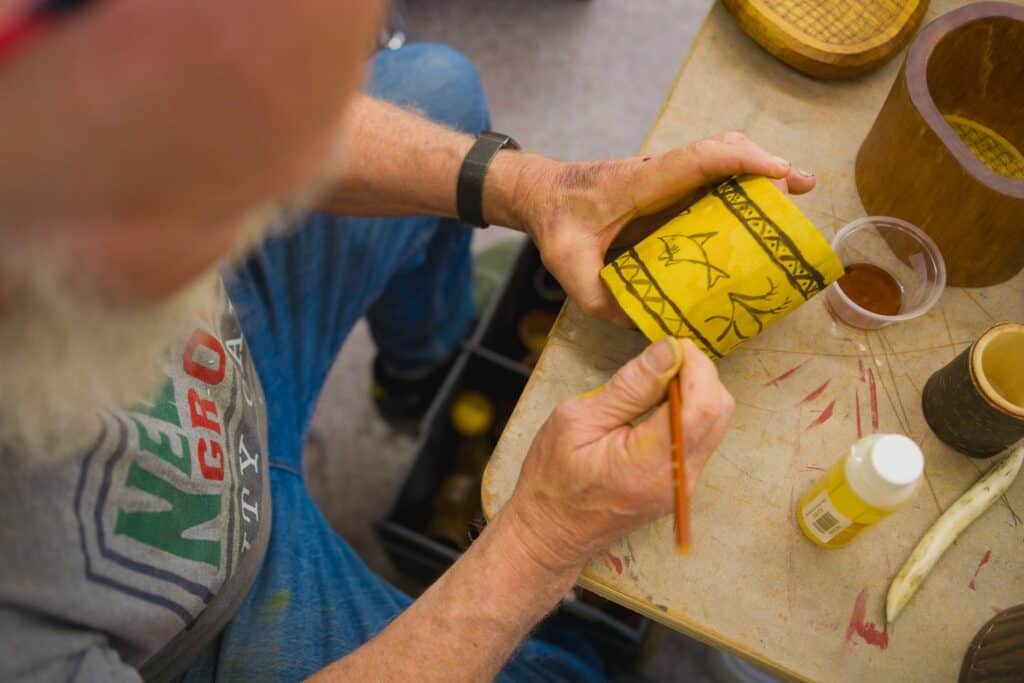
Part of Vesterheim, the Norwegian-American museum in Decorah, the school focuses on traditional arts that immigrants brought over, such as rosemaling, woodworking, and weaving. Rosemaling, a decorative folk-painting tradition, is especially associated with Norwegian culture and features colorful floral designs.
Learning opportunities extend beyond Iowa, too. Vesterheim organizes study tours to Norway, where folk artists can learn directly from Norwegian artists and institutions while experiencing the culture and places connected to their work.
The museum also presents the National Norwegian-American Folk Art Exhibition, celebrating both established and emerging artists.
Amana Colonies in Amana
If you don’t necessarily want to try your hand at a heritage craft and just want to soak up its history, the Amana Colonies are your best bet. At their core, the Amana Colonies are all about craftsmanship. The villages were built around a communal way of life in which residents worked together and made many of the things they needed.
Before smartphones and doomscrolling filled our free time, practical hobbies like knitting and woodworking served a purpose beyond entertainment. Knitting was for essentials like mittens, scarves, and hats, while woodworking turned raw materials into furniture, clocks, and gifts. According to the Amana Colonies, boys and girls learned to knit as part of their school curriculum, and residents continued working on crafts during their free time.
Those traditions haven’t disappeared. Local shops carry handmade items that illustrate the Colonies’ history, and visitors can explore the craftsmanship behind them.
Start with Amana Furniture, which has designed and built furniture from the 1850s to today. Its work draws on traditional building methods to produce furniture, clocks, and home décor designed to last.
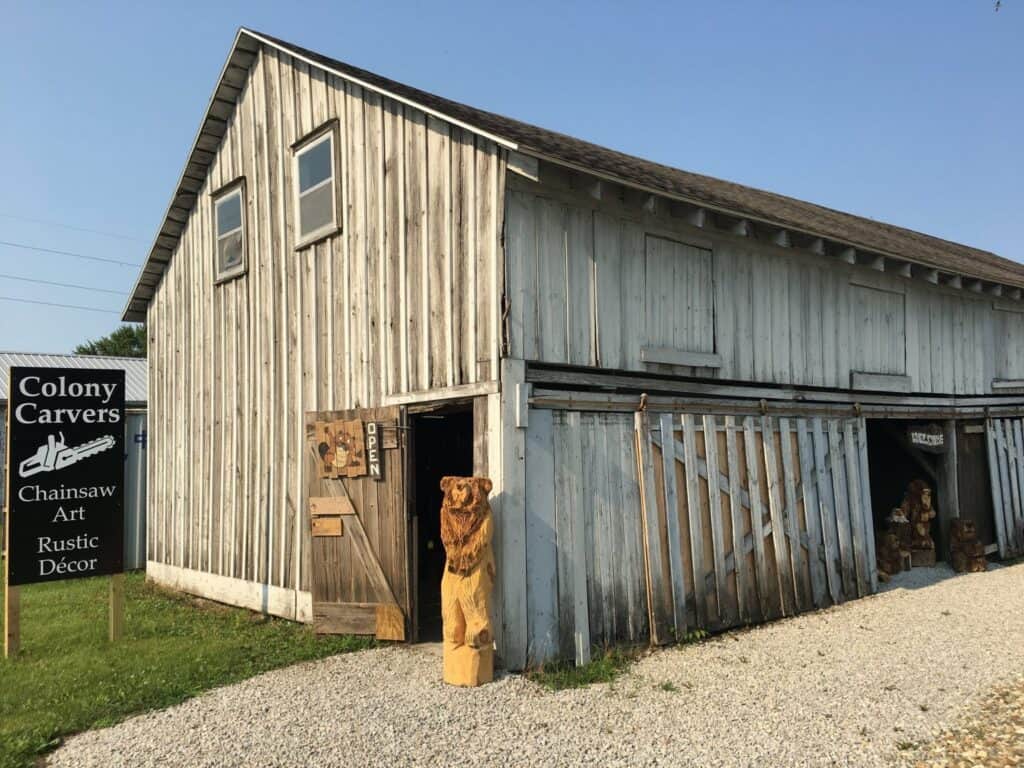
Plan a stop at Colony Carvers, too. Housed in a historic barn, the gallery features chainsaw carvings made on-site from recycled logs. The work ranges from realistic animals to whimsical creations, including bears, eagles, and other woodland creatures.
The Amana Woolen Mill, billed as “Iowa’s only remaining textile mill,” is a must. There, craftsmen create various woven goods using the same techniques (and even the same building) as folks did at the mill’s founding in1855.
To learn more about the people and industries behind the Colonies’ craft traditions, visit the Amana Heritage Society. Its museums explore the community’s history through artifacts, photographs, and exhibits, including stories about the crafts and industries that shaped daily life.
You can also step into the past at the High Amana General Store, which was founded in 1857. Many of the store’s historic features remain, including a tin ceiling.
Find a craft of your own
Heritage crafts aren’t only about recreating the past. They’re about keeping useful skills and creative traditions alive, learning how things are made and finding satisfaction in the finished product. It’s ever so important to encourage these things in the crazy digital era we’re living in. Let’s get back to the good old days.