The Greensboro Sit-Ins started in North Carolina in 1960 before going nationwide. Here’s everything you need to know about this important series of protests.
We all know that history has a way of repeating itself, and at the same time, changes that do come about often take a while to cement. We see that clear as day at a national level, but it’s true in our state, too. There are creepy things you may have never known about North Carolina, such as the nuclear bomb mishap of 1961, but other things are much more personal.
Like other states in the South, North Carolina has a lengthy and problematic history with its treatment of marginalized groups. Namely, Black Americans suffered in North Carolina for years due to the Tar Heel State being a member of the Confederacy in the nineteenth century, and the othering only continued after slavery had been abolished nationwide. The Plessy v. Ferguson Supreme Court case of 1896 legalized segregation, and this wasn’t overturned until Brown v. Board of Education in 1954.
Sadly, this landmark Supreme Court case didn’t entirely end segregation as a practice. Many shops and restaurants, among other businesses, discriminated against Black Americans, who also weren’t being represented in the government in any fair capacity. Martin Luther King Jr. rose to prominence as an activist in the years immediately following Brown v. Board of Education, inspiring folks across the nation to peacefully protest alongside him.
All of this led to the Greensboro Sit-Ins, a series of protests that began on Feb. 1, 1960. This year is the 66th anniversary of the protests, and we’ve still got a ways to go if we want true equity for everyone in this state and country. That’s why we’re taking a glance back to see exactly what these protests were and why they happened. Perhaps we can learn something from them.
Where and when did the Greensboro Sit-Ins begin?
As the movement’s name suggests, the Greensboro Sit-Ins began in Greensboro, N.C., but it wasn’t long before these protests went national. But let’s not get ahead of ourselves.
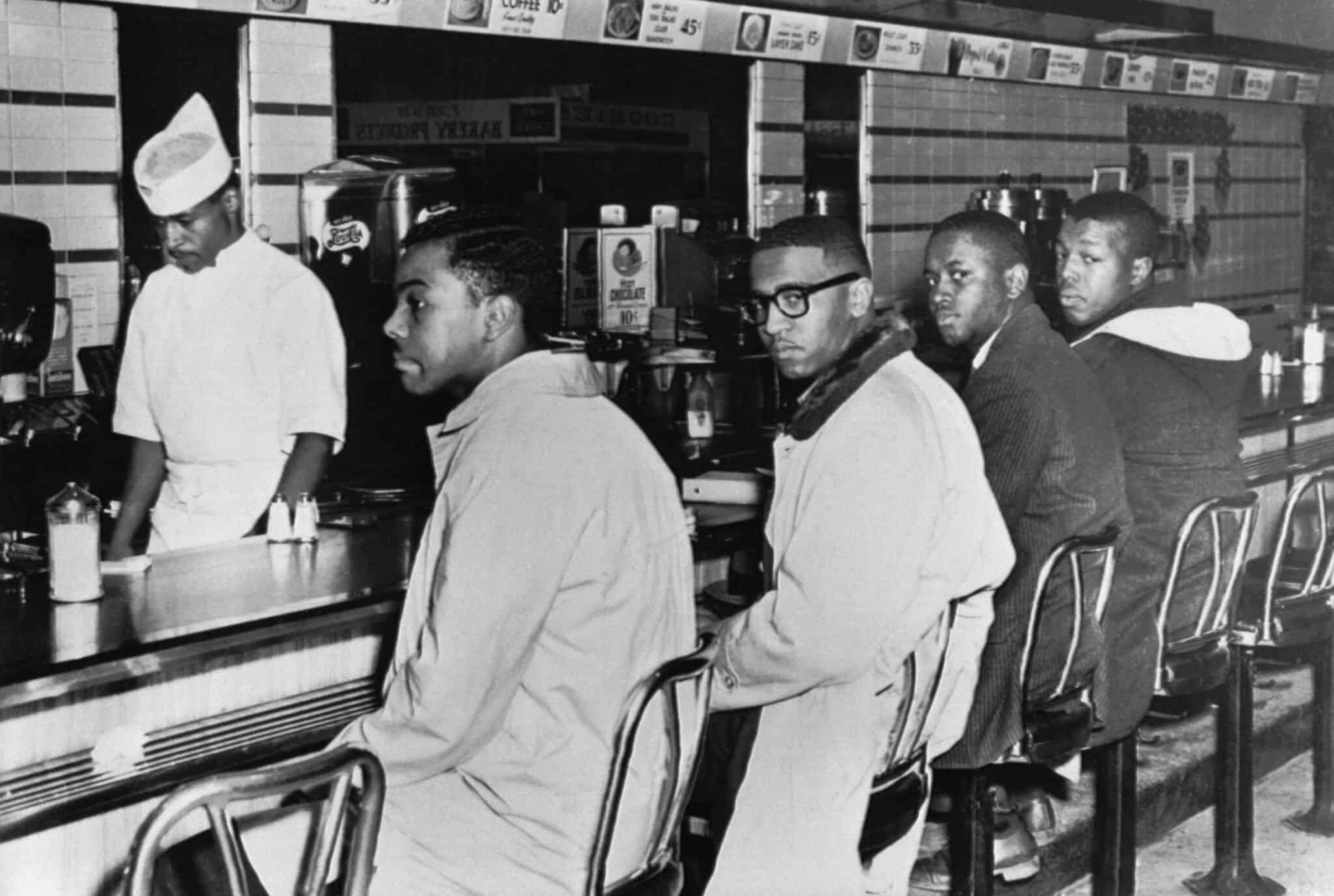
Feb. 1, 1960, saw four students from the local North Carolina Agricultural and Technical State University put their feet down and demand respect. According to the documentary website SNCC Digital Gateway, four students were denied seating at the lunch counter in Woolworth’s Department Store. Rather than being allowed to sit and enjoy any food or beverages, they were told to move to a non-sitting area. The only other option was to leave. This was heartbreakingly common in not only North Carolina but also the South as a whole.
Instead of complying with the discriminatory rules, the four students—Ezell Blair Jr. (now known as Jibreel Khazan), David Richmond, Franklin McCain, and Joseph McNeil—sat down and attempted to order food and drinks. They resisted the verbal demands to leave, and they were never served. No one ended up forcing them to vacate the premises, either. This was enough to encourage them to continue these sit-ins in protest of the way Black Americans were treated, especially in the South.
The Greensboro Sit-Ins began in Woolworth’s intentionally
Knowing where and when to protest can often be key, pushing the needle in your favor. And sure enough, the 17- and 18-year-old students who sparked the Greensboro Sit-Ins movement knew exactly where they needed to start.
“There were many conspicuous forms that we could have chosen, but Woolworth seemed logical because it was national in scope and somehow we had hoped to get sympathies from without as well as from within,” McNeil later said (via the Civil Rights Movement Archive). You see, if they had chosen a local restaurant or store, the news likely wouldn’t have made it outside of Greensboro. This way, they all but guaranteed themselves a wider audience.
This intentionality came from the bonds that the four of these students had built. They all had the same algebra class, but some of them had other connective threads as well. “Junior Blair and I were roommates. Frank McCain lived down the hall from us,” McNeil recalled. Richmond didn’t live as close to them, but their shared class enabled them to bond nonetheless. This led to many conversations about “current events, political events, things that affected us — pretty much as college kids do today,” according to McNeil.

How long did the Greensboro Sit-Ins last?
The four students who began the Greensboro Sit-Ins may have planned the protest intentionally, but there was no telling how quickly the spark would ignite. They continued their sit-ins for a few days, according to the North Carolina History Project, with more and more students from North Carolina Agricultural and Technical State University showing up at not only Woolworth’s but also other local stores to, well, sit in. It wasn’t long until female students from a college in the area began joining them as well.
According to Stanford University’s account of the events, the students founded the Student Executive Committee for Justice at the school on the third day of the sit-ins, demonstrating how serious they were about their goal of ending segregation in their city. With this group, they were able to communicate more effectively and rally everyone to protest. This is something we could learn from today, too.
The students officially set a movement into motion, but it was garnering a lot of attention. Soon, the Greensboro mayor requested that the students discontinue their sit-ins, telling them that the mayor’s office would try to work on a resolution that all sides could agree to. The students in Greensboro agreed, but the aforementioned spark had already been lit. Folks in neighboring towns and counties began following suit, so even though the Greensboro students agreed to stop for the time being, the sit-ins carried on elsewhere.
These daily occurrences, which collectively became known as the Greensboro Sit-Ins, lasted until July, marking six months of peaceful protesting. It was only then that Woolworth’s began allowing Black Americans to eat at its lunch counter. These sit-ins were monumental—so much so that Martin Luther King Jr. even wrote about them, albeit after they’d concluded. He reflected that “an electrifying movement of Negro students shattered the placid surface of campuses and communities across the South,” adding that they “gave America a glowing example of disciplined, dignified nonviolent action against the system of segregation” (via Stanford University).
The Greensboro Sit-Ins inspired action outside of North Carolina, too
Protestors throughout the six months of the Greensboro Sit-Ins unfortunately faced harassment from white locals, who would jab at them while they sat at the lunch counters. But that didn’t stop more and more sit-ins from popping up across the country. In the South alone, more than 70 cities experienced protests, according to SNCC Digital Gateway. These cities included Nashville, Tenn.; Richmond, Va.; Jackson, Miss.; and Winston-Salem, N.C., among many others (via the United States Census Bureau).
At home in North Carolina, change was coming about in other ways, too. According to History.com, the sit-ins inspired the formation of the Student Nonviolent Coordinating Committee (SNCC) in Raleigh. This organization would go on to empower Black Americans for decades, including registering voters.
Now that we have a better understanding of the Greensboro Sit-Ins, it’s important to note that similar protests occurred before 1960 and continued afterward. Notably, folks in two cities in the middle of the country—Wichita, Kan., and Oklahoma City, Okla.—had achieved their desegregation goals two years earlier (via EBSCO). They simply didn’t receive the same widespread recognition that the Greensboro students did.
What happened to Woolworth’s after the Greensboro Sit-Ins?
The Greensboro Sit-Ins became one of the most influential protests of the time in North Carolina, and as the years went on, Woolworth’s found itself behind the times. According to the United States Census Bureau, the Woolworth’s lunch counter continued operations for 33 years following the beginning of the Greensboro Sit-Ins, only shuttering its food-service operation in 1993. By then, the Greensboro Sit-Ins were rightfully viewed as historic, and the Smithsonian Institution’s Museum of American History received a part of the lunch counter from Woolworth’s as a donation.
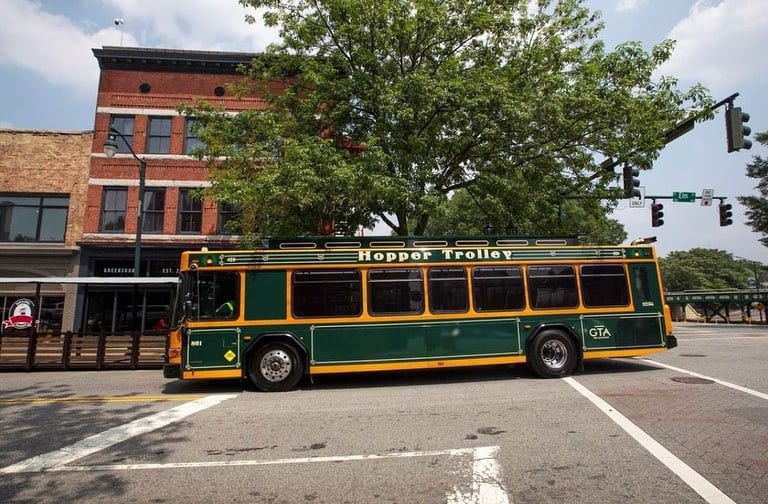
Woolworth’s eventually closed, and in a case of poetic justice, its building became The International Civil Rights Center & Museum. You may have seen the building on S. Elm St. There are myriad restaurants and coffee shops in the surrounding blocks, so it’s worth making an outing of visiting the museum. You can learn more about the Civil Rights Movement as a whole and support a local small business or two in the process. Inside the museum, which has been classified as a national historic landmark, you’ll even find part of the Woolworth’s counter that’s been restored.