
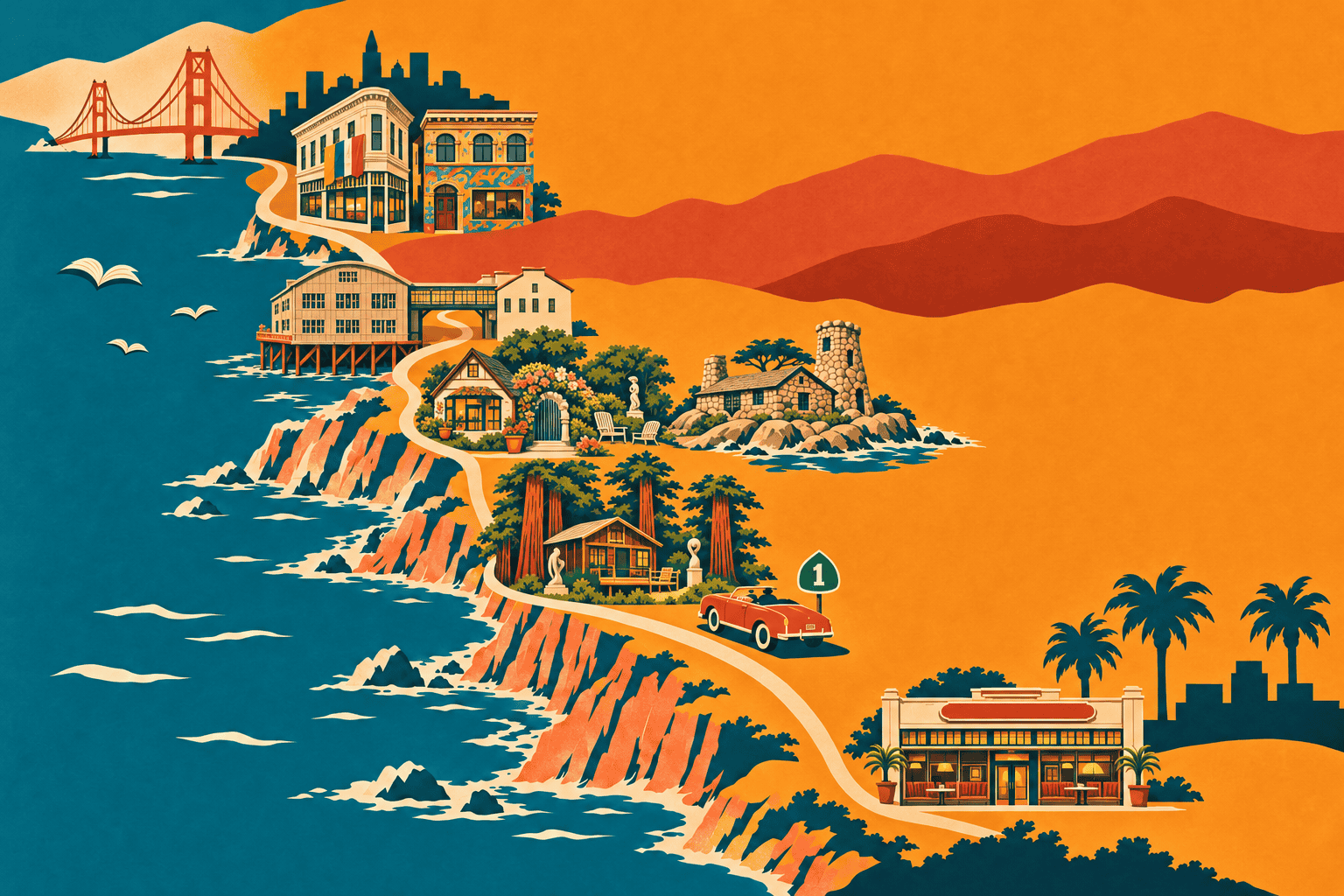
A Highway 1 road trip for book lovers: from Hollywood’s literary hot spot to San Francisco’s most famous bookstore.
The restaurants, hideaways and bookshops where California’s literary legends lived, worked and drank are still open to visitors.
From John Steinbeck to Joan Didion, with a bit of Henry Miller and Octavia E. Butler for good measure, California continues to birth and attract great writers. Some simply have the Golden State in their DNA. Others have gravitated toward California’s dramatic coastline, whether for the view or industry connections. A Highway 1 road trip lets you follow their footsteps from Hollywood to North Beach.
Such creative thinkers help define a city, a neighborhood, or even a single block. In a world before cell phones and social media, their words were our instant messages, discovered in the pages of a book, or spoken at a smoky cafe.
A Highway 1 road trip stretching from Los Angeles to San Francisco offers both a passport back in time and a real-life connection to their literary legacy.
Here are seven stops to spark conversation—or maybe even the next great novel.
The Musso & Frank Grill
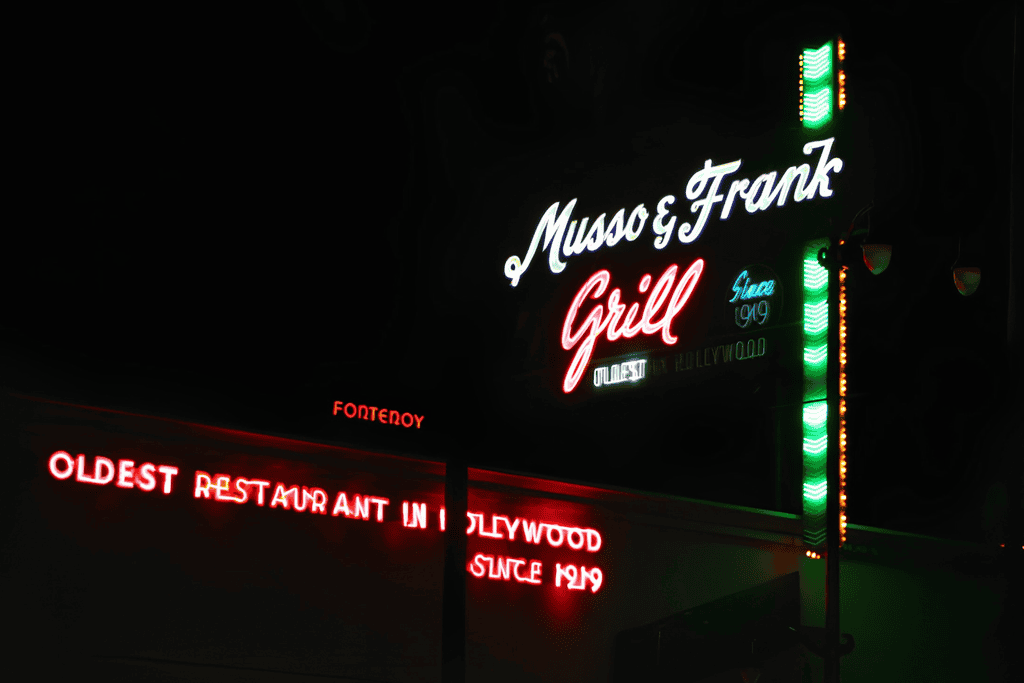
Where: 6667 Hollywood Boulevard, Hollywood
If these walls could talk! The Musso & Frank Grill has been catering to Hollywood heavyweights for over a century. Over the decades, the celebrated hotspot has changed addresses, and new generations of restaurateurs have stepped into the spotlight.
While the menu pays homage to classic steakhouse favorites of days gone by, the real flavor comes from the lineage of screenwriters, playwrights, and authors who frequented its worn leather banquettes.
Much of the action unfolded in the Back Room, where studio executives met with writers. Screen Writers Guild members, tired of producers’ watchful eyes, would put pen to paper (likely over a martini).
According to the restaurant, F. Scott Fitzgerald was a regular, Raymond Chandler wrote a portion of “The Big Sleep,” and cultural icons from John Steinbeck to Dorothy Parker found their way to Musso’s bar.
The Back Room closed in 1955, relocated to an adjacent storefront, and was appropriately called the New Room, attracting modern-day movers and shakers like best-selling author Michael Connelly (“The Lincoln Lawyer”) and Hollywood A-listers like Brad Pitt and George Clooney.
Quentin Tarantino even shot a key scene from “Once Upon a Time in Hollywood,” which featured real-life bartender Kenneth “Sonny” Donato shaking up whiskey sours.
Henry Miller Memorial Library
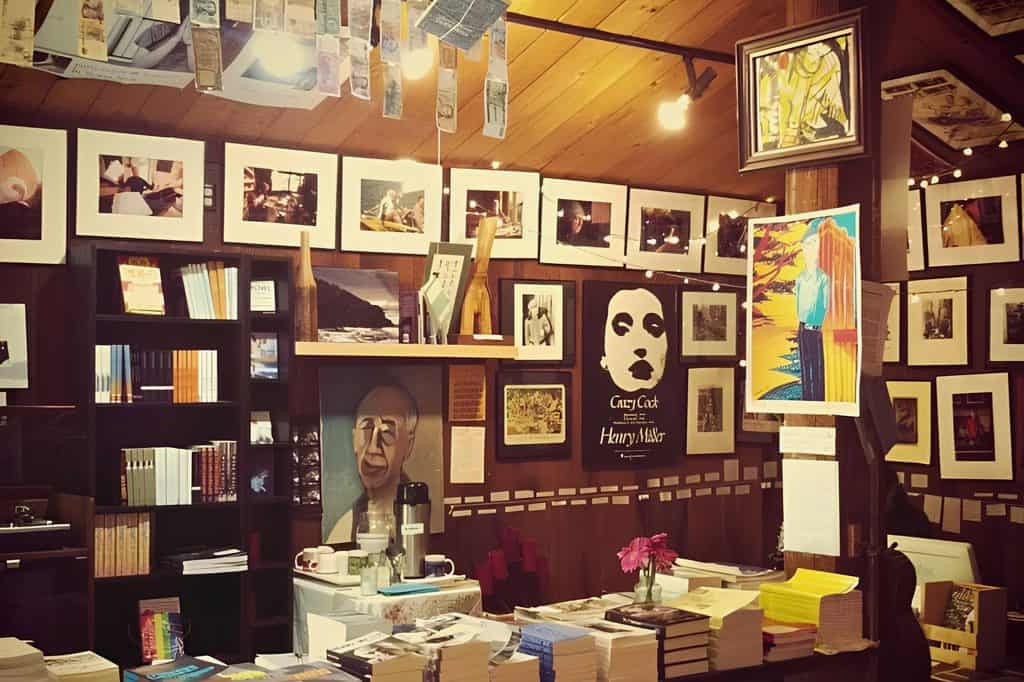
Where: 48603 Highway One, Big Sur
Born in New York City in 1891, Henry Miller spent much of his youth in the industrial neighborhood of Bushwick, Brooklyn, long before it became a hip alternative for Gen Z creatives priced out of Manhattan.
The celebrated (and controversial) writer and poet was known for his explicit sexuality on the page and his love of women (both the ones he married and the ones he had affairs with) throughout his life.
Miller moved to Big Sur in 1944, describing the Central California coast as his “first real home in America.” He’d eventually settle in Pacific Palisades in 1963, where he died in 1980. His body of work ranges from his debut novel, “Tropic of Cancer,” banned for decades for “obscenity,” to his love letter to his California home, “Big Sur and the Oranges of Hieronymus Bosch.”
Upon Miller’s death, longtime friend, confidante, and neighbor Emil White converted his own home into a kind of memorial. A year later, he partnered with the Big Sur Land Trust to more formally establish the Henry Miller Memorial Library.
Ironically, Miller famously said memorials “defeated the purpose of a man’s life. Only by living your own life to the full can you honor the memory of someone.” To that end, the Henry Miller Memorial Library has become a gathering space for community events ranging from poetry readings to book events.
Tor House and Hawk Tower
Where: 26304 Ocean View Avenue, Carmel-by-the-Sea
Decades earlier, in 1914, poet Robinson Jeffers and his wife, Una, settled in Carmel-by-the-Sea. In 1919, he bought a plot of land overlooking Carmel Bay and worked side by side with the building contractor, eager to get his own hands on the granite stones that would house Una and their twin sons. He named it Tor House for the craggy knoll (tor) where he built it.
Soon after, Jeffers began building Hawk Tower himself, a retreat for Una and a play space for the boys. He did most of his writing at Tor House, including his most famous collection, “Roan Stallion, Tamar and Other Poems” (1925).
Like Miller, Jeffers was boundary-pushing, and rooted much of his work in a term he called “inhumanism,” which he described as “a shifting of emphasis from man to not man; the rejection of human solipsism and recognition of the transhuman magnificence.”
Those wishing to visit will need to time their arrival accordingly. Tor House is only open on Saturdays, with limited availability on Fridays. Special events are held throughout the year, including the annual garden party held the first Sunday in May, and a fall festival each October.
Pilgrim’s Way Book Store and Secret Garden
Where: Dolores Street, between 5th and 6th Ave., Carmel-by-the-Sea
Located in the center of town, just a 10-minute drive from Tor House, Pilgrim’s Way Book Store and Secret Garden offers the quintessential independent bookshop experience.
Paul Fridlund arrived from Wisconsin in the 1980s to help his mother modernize the store’s inventory, and he never left. Years later, he met Cynthia Fernandes, who had started another chapter of her life, leaving behind a career in technology to become a massage therapist and embrace a slower-paced life.
They were married in the Secret Garden, adjacent to the bookstore. When the garden’s previous owners asked Cynthia to take it over, the couple combined the two businesses.
In addition to major releases, Pilgrim’s Way also spotlights local authors and titles that celebrate the Central Coast. As a special perk, the store also offers free gift-wrapping and what its owners call a “customized detective service” to help shoppers discover their next great read.
Cannery Row
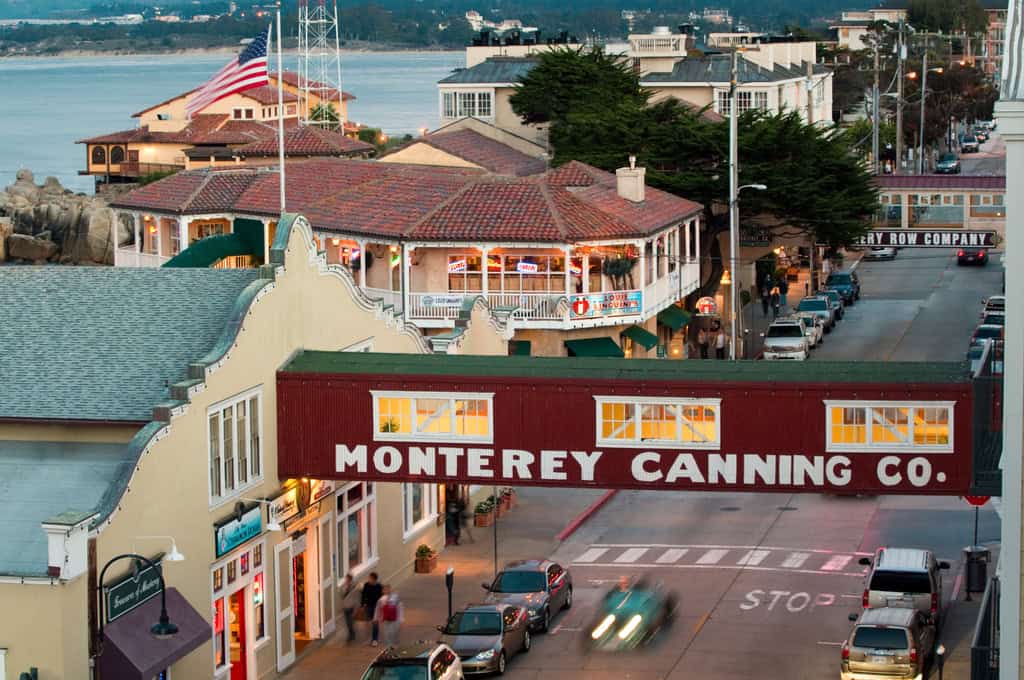
Where: Monterey
Monterey’s Cannery Row has a long history of fishing and commerce. During the 16th century, more than 16,000 Native Americans lived in the region. The Spanish built their first mission in Monterey in 1770. By the early 1850s, Chinese fishing families had settled at Point Alones, just up the shore from today’s Cannery Row, where they built a thriving village and pioneered the bay’s commercial squid fishery.
John Steinbeck, born 20 miles northeast in Salinas, was practically destined to bring the trials, tribulations, and triumphs of Cannery Row to life. He had already established himself as a prominent author with “Of Mice and Men” (1937) and “The Grapes of Wrath” (1939), for which he won the Pulitzer Prize.
His novel, “Cannery Row” (1945), came after he worked as a World War II correspondent, reportedly at the request of soldiers who wanted something funny that wasn’t about the war. The city renamed the street from Ocean View Avenue to Cannery Row in 1958 to honor the novel, though by that point, the sardine industry had already collapsed.
The Steinbeck Experience, founded by former National Steinbeck Center interim director John Holland, keeps the novelist’s legacy alive with free walking tours and a preview space on Cannery Row.
City Lights Bookstore
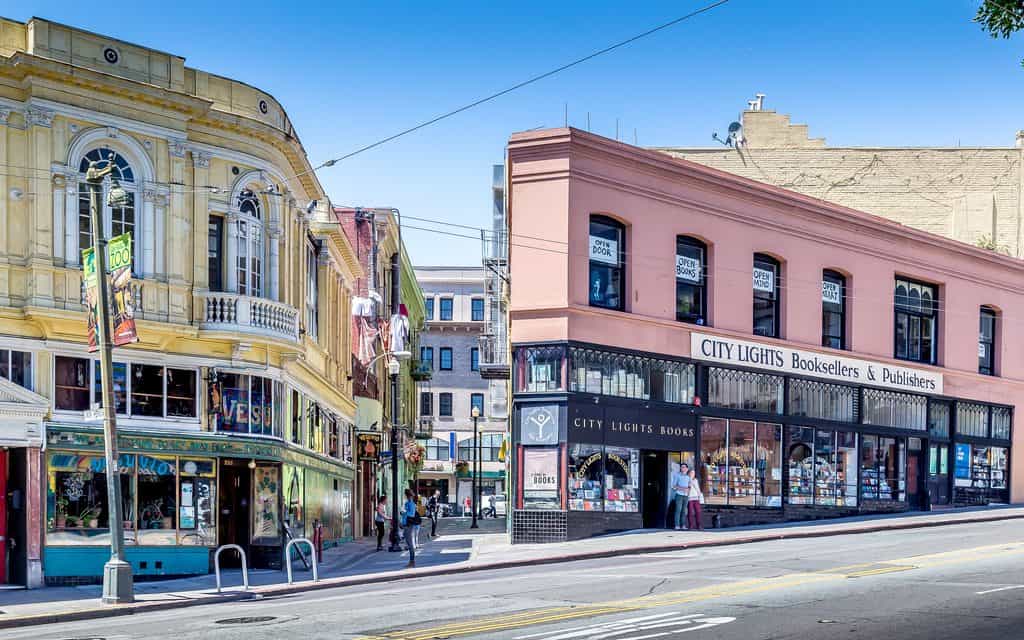
Where: 261 Columbus Avenue, San Francisco
Founded in 1953 by poet Lawrence Ferlinghetti and Peter D. Martin, City Lights Bookstore was the nation’s first all-paperback bookstore. The pair considered it a literary meeting place, and for over 70 years, it’s lived up to that reputation.
City Lights is more than a retailer. In 1955, Ferlinghetti launched City Lights Publishers with the Pocket Poets series, and the imprint has since expanded its genres, with well over 200 titles in print. It’s known for championing progressive ideas and, as its website states, “its resistance to forces of conservatism and censorship.”
Even before entering, visitors will notice City Lights’ exterior banner series, which has been going strong since 2000. Working with various collaborators, the store hopes to promote thoughtful civic engagement, using the building’s facade as a public platform.
The 1907 Classical Revival building is rich in history and architectural detail. Highlights include its triangular design and the basement Ferlinghetti discovered behind a loose sheet of plywood. The subterranean spot eventually became a gathering place for Beat poets like Jack Kerouac and Allen Ginsberg.
Vesuvio Cafe
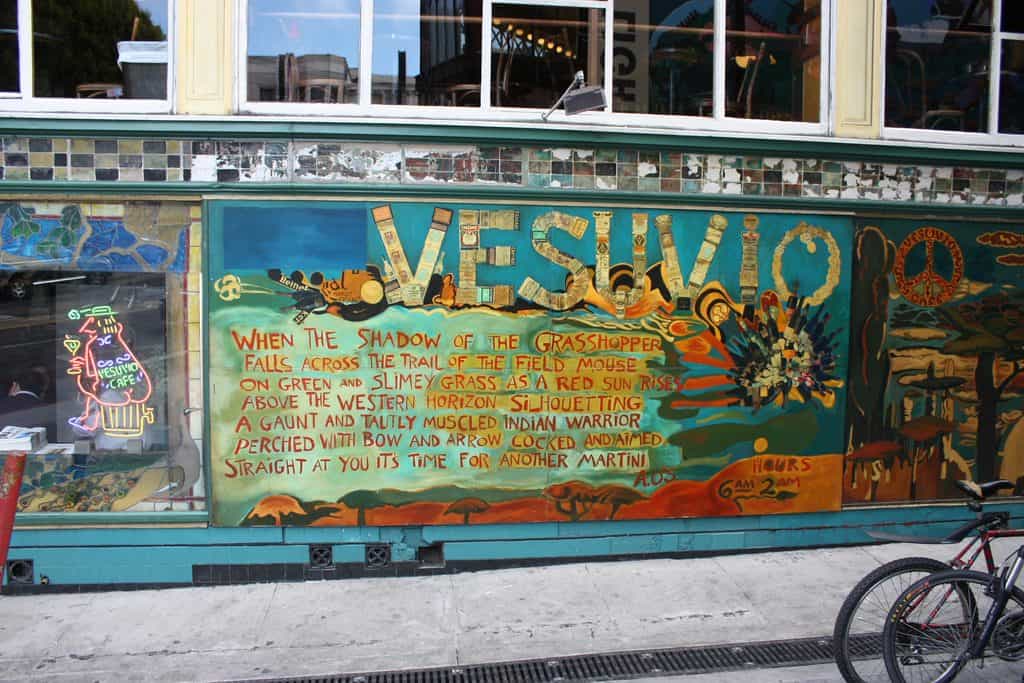
Where: 255 Columbus Avenue, San Francisco
A stop at City Lights Bookstore isn’t complete without a visit to Vesuvio Cafe, just across Jack Kerouac Alley. Bohemian Henri Lenoir founded the bar in 1948 and lived in two small rooms above City Lights, in what’s now its Poetry Room.
Dozens of artworks adorn the cafe’s walls, many created by local artists. For people-watching, head to the balcony for a bird’s-eye view of the goings-on below.
Open until 1 a.m. (2 a.m. on Fridays and Saturdays), Vesuvio Cafe remains a destination for locals and travelers alike looking to immerse themselves in an era of free-thinking and critical discourse. The bar’s signature cocktail, the Jack Kerouac (rum, tequila, orange juice, and cranberry), may further spur conversation, if you can remember it in the morning.


