Mary Lisa Gavenas’s new biography, “Selling Opportunity: The Story of Mary Kay,” recounts the meteoric rise of Texas’s own Mary Kay Ash.
Texas native Mary Kay Ash became a household name when her cosmetics company, Mary Kay, skyrocketed to fame in the 1960s-1980s. Before she was a mogul, she was just Mary Kathryn Wagner, a young girl born in Hot Wells to Lula Hastings and Alexander Wagner. Her story has been recounted in numerous articles, interviews, and word-of-mouth recollections, but now it has been forever immortalized by author Mary Lisa Gavenas in the new book, “Selling Opportunity: The Story of Mary Kay.”
Gavenas said the 448 page biography is “a Texan tall tale of second chances and self-invention.” If you know anything about Mary Kay’s story, you’ll understand how accurate this description is. She worked her way up from Houston’s Sixth Ward during the Depression until she became the owner of a Fortune 500 company with over $1.2 billion in sales revenue. By the time she died in 2001, Mary Kay had amassed a $98 million fortune and transformed the landscape of multilevel marketing forever.
Growing up in Texas
Mary Kathryn Wagner was born in Hot Wells, Texas on May 12, 1918. She was the fourth and last child of Lula Hastings and Alexander Wagner, who previously worked as farmers until Alexander’s tuberculosis worsened and he was unable to hold down a job. During Mary’s childhood, Lula was in charge of a greasy spoon and Mary spent her time after school caring for Alexander, as well as cleaning the family’s home in her mother’s absence. Later in life, Mary would comment on how her mother “couldn’t make as much money as a man,” and thus had to work 16-hour days at the diner.
While working tirelessly to care for her family and complete her daily chores, Mary continued to study hard and excel in school. She completed her high school classes by the time she was 16 and eloped shortly thereafter with a local man—a musician who was referred to as the “Elvis of Texas.” She soon became pregnant and began working alongside Lula at the diner to support herself and her child as her husband was not especially present during this time.
The beginning of her empire
As Mary Lisa Gavenas recounts in “Selling Opportunity: The Story of Mary Kay,” Mary Wagner transitioned from her work at the diner into being a door-to-door saleswoman for Stanley Home Products. It was a common career path for housewives at the time even though it didn’t offer much in the way of wages or job security. Mary Kay didn’t mind though because she was good at making sales. She divorced her first husband and remarried; this time she married the boss of her boss at Stanley Home Products, and the two moved into a large house in Dallas. He died of a heart attack when Mary Kay was 29 years old.
Following her second husband’s death, Mary Kay knew she needed to up her selling game to support her three children by herself. She switched from Stanley Home Products to World Gift and hosted successful parties where she doubled her profits. Mary Kay eventually reached a point where she wanted to start her own company to sell beauty products. There were other husbands involved in these intervening years who also died unexpectedly, but you can get into those details more in Gavenas’s book. The main thing to take away from this part of Mary Kay’s life was that her oldest son, Richard, decided to become her business partner after encouraging her to launch the beauty brand that would come to be known as Beauty by Mary Kay.
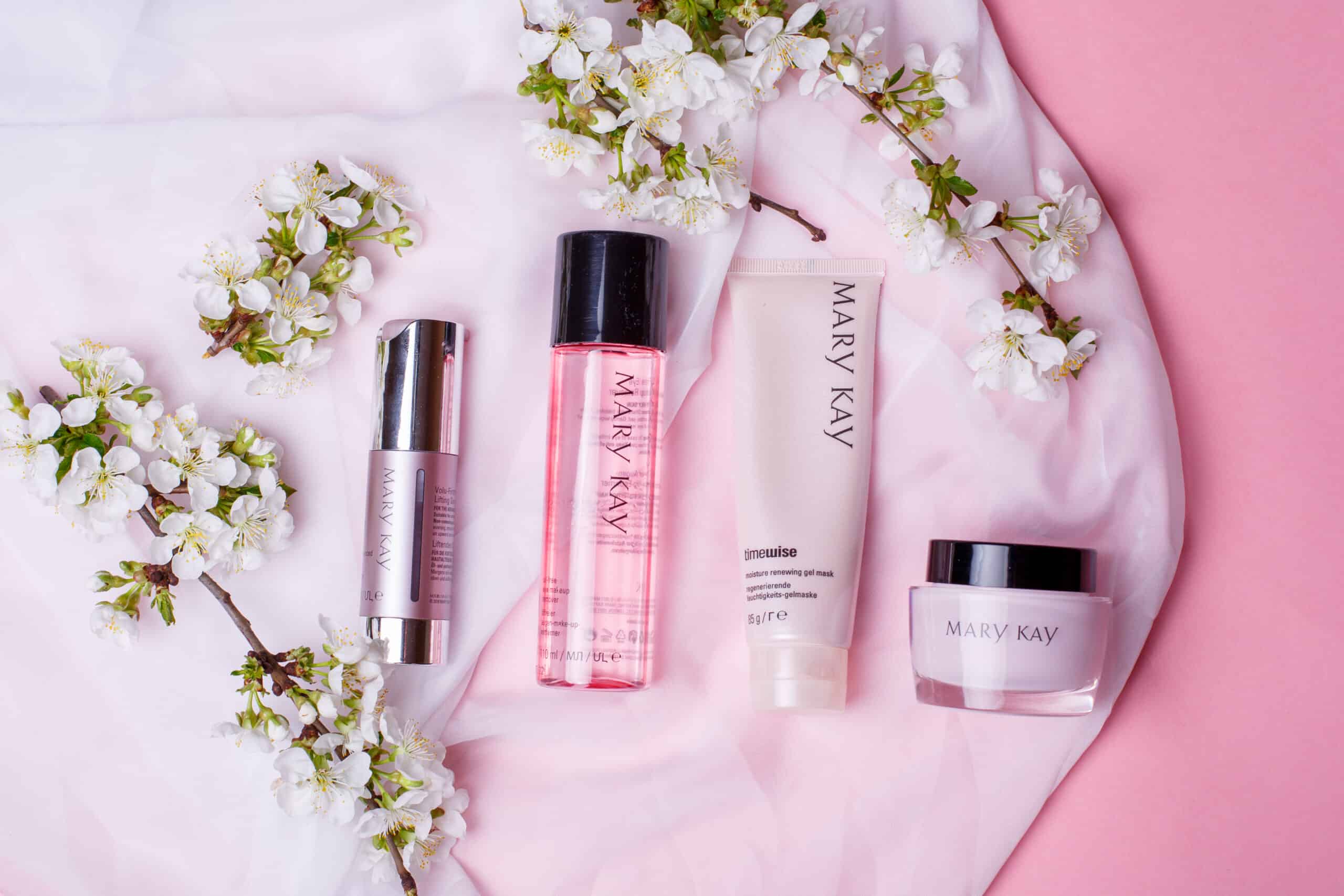
The company was officially launched in 1963 and mainly focused on selling skincare products and wigs. It was during this time that she started to develop her now-famous selling strategy that focused on having women work as beauty consultants/saleswomen. The group went from earning around $200,000 in sales during the first year to almost $1 million by the second. Mary Kay was strategic about the way the products were made, labeled, and sold. She wanted to ensure they looked expensive as a way of encouraging women to buy her products over the ones that typically retailed in department stores.
One of the key aspects of her success involved convincing women to purchase the items as a set in lieu of buying one or two individual products. Mary Kay was quoted as saying that it was “like giving you my recipe for chocolate cake but leaving out an important ingredient” if you didn’t buy the Basic Set in full. “It’s just not going to be my cake,” she said. And so the women of Texas decided they wanted to have the exact cake that Mary Kay was baking. The strategy netted her increasingly higher profits each year, and the Hot Wells native continued to employ hardworking Texas women who “weren’t being paid what they were worth” in other fields. Every consultant was offered a 40-50% commission on their sales, making it an undeniably enticing offer.
Mary Kay’s fame has continued beyond her death
Throughout the 1970s and 1980s, Mary Kay and her company grew even more popular and more successful. By 1991, her Mary Kay Cosmetics (as it would later be known) grossed $500 million in sales and employed 220,000 consultants. The primary factory where she manufactured her products was based in Dallas, further bolstering the local economy and job market. Nowadays, there are around 3.5 million Mary Kay reps across the globe, and while the company is private and doesn’t disclose its financials because of this, it’s believed to rake in billions in sales.
Before her death in 2001 at the age of 83, Mary Kay said, “You can have anything in this world you want—if you want it badly enough and you’re willing to pay the price,” and her life is a testament to that. Mary Lisa Gavenas’s new book further emphasizes this point by recounting in immense detail exactly how Mary Kay designed and sold her products, and how she developed a marketing strategy that is still used by companies to this day.