Tenth Street Historic District is an important part of Dallas’s story. Here’s a look at how the neighborhood came to be and grew over the years.
Tenth Street Historic District is one of the last remaining Freedmen’s towns in the entire United States. Emancipated Black people first began populating the neighborhood in the aftermath of the Civil War, and the area grew to a couple thousand people.
Yet, despite various protections and efforts to preserve it, Tenth Street has often found itself fighting for its livelihood. Discover how Tenth Street Historic District began, ways it’s changed over the years, and what the city is doing to keep this important part of Dallas history intact.
Tenth Street Historic District’s early history
Tenth Street is located in a section of Hord’s Ridge, named after a slave owner, William H. Hord. Hord settled in the area in 1845, but it took another 20 years for enslaved people to learn of their freedom through the Emancipation Proclamation on June 19, 1865. As the Civil War ended, formerly enslaved people began establishing homes in the Tenth Street district. Early residents included many freed people from William Brown Miller, another slave owner and well-known cotton farmer in Dallas.
The area began to pick up steam in 1886 with the construction of a school standing at the corner of today’s 12th and Lancaster intersection. Elizabeth Chapel followed a few years later.
In 1890, businessman and developer T.L. Marsalis platted the neighborhood. He called it the “Tenth Street Addition” and made it more official with streets, parks, and property lines. Additional settlers flocked to the district. Marsalis, along with Oak Cliff founder John S. Armstrong, was a key player in developing the greater Dallas area. Families began opening small businesses and added a few more churches and schools, creating a sense of community among the small but growing population.
In 1904, W.J. Betterton platted “Betterton Circle.” Once-vacant land was developed into residential lots, and Tenth Street continued to grow and bloom. At its apex, Tenth Street would eventually be home to about 40 different small businesses, including Simpson’s Corner Store, which offered supplies and was a popular spot for kids to buy candy.
Changes to Tenth Street over time
Many of the homes were built in simple folk style or with wooden frames. A few were a bit more elaborate, designed in the Queen Anne or Craftsman styles. Sitting on the southeastern corner of Oak Cliff, the Tenth Street Historic District operated as its own community. Though the Civil War had ended, segregation still remained, and the neighborhood was an independent haven for Black settlers.
During its peak, the Tenth Street neighborhood was bustling with nearly 2,000 residents. However, the Great Depression set off a downward trend in freedmen’s towns across Texas and Oklahoma, hampering their growth and prompting many to depart for other opportunities.
Oak Cliff as a whole saw many changes during the latter half of the 20th century. In the years during and after World War II, families began to move out of the area and settle in more suburban settings. Others headed to California in search of better jobs and consistent work.
The Interstate 35E extension was also built in the late 1950s, which geographically isolated Tenth Street from the rest of Oak Cliff. The neighborhood once had its own downtown community, but with a physical freeway separating it, residents could no longer easily get to some of the businesses that had kept the neighborhood humming.
Tenth Street Historic District Today
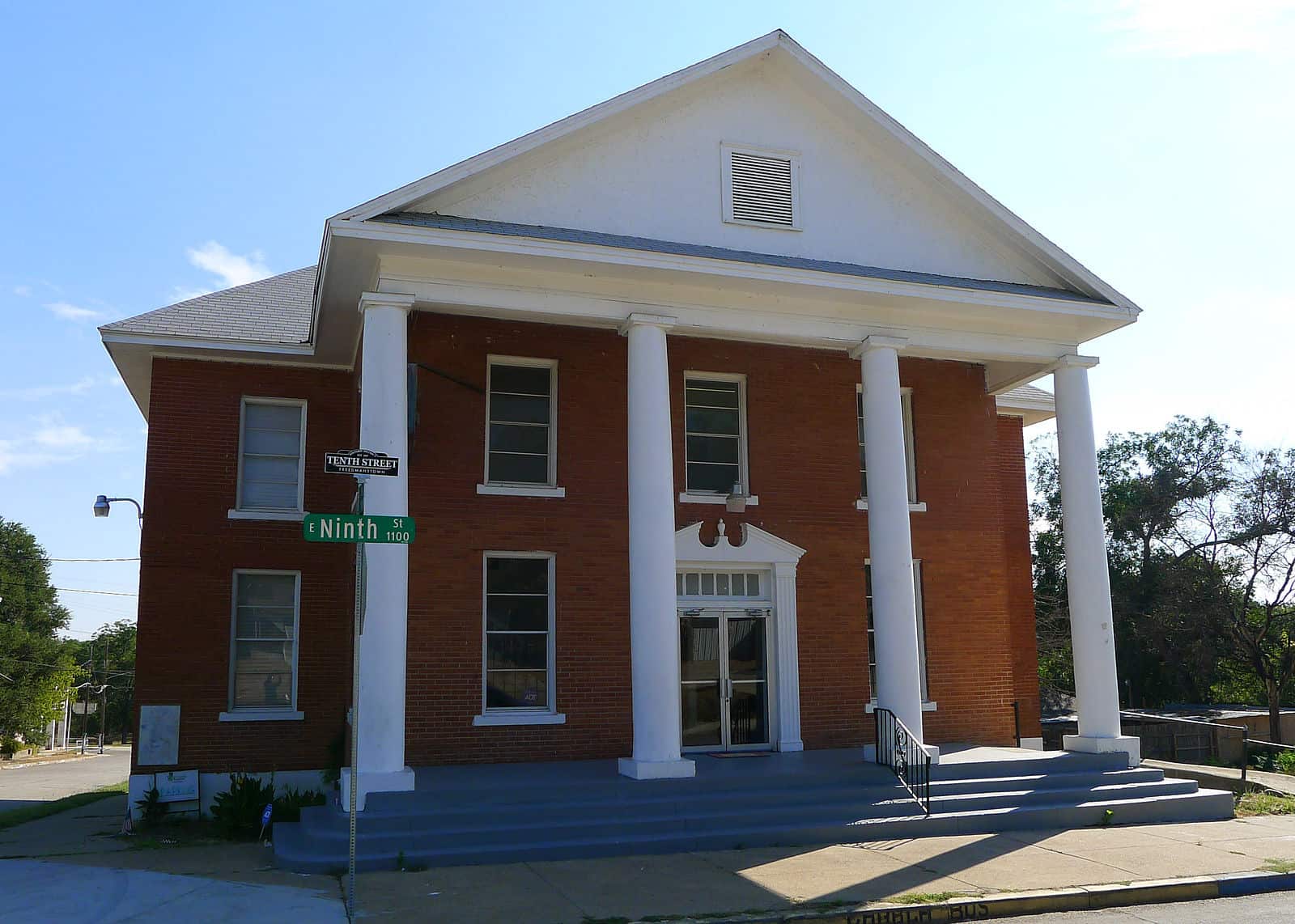
Today, the neighborhood sits between I-35, East Eighth Street, and Clarendon Drive at the eastern point of Oak Cliff. It’s a modest reminder of what used to be. There are efforts from both the city and residents to preserve Tenth Street, though sometimes those efforts seem a bit conflicted.
The City of Dallas officially designated Tenth Street a historic district in 1993. One year later, it was listed on the National Register of Historic Places. The area was also designated as a State Historic Marker in 2015.
Even with its challenges, the 69-acre Tenth Street Historic District is one of the last Freedmen’s towns in the United States that is still intact. Per Dallas City Hall’s last count, there were 257 domestic structures, four commercial buildings, three institutional structures, and one cemetery. That number is likely overinflated, though. Simpson’s Corner Store is the lone business store remaining, but it’s vacant and boarded up. The Greater El Bethel Missionary Baptist Church is the only church in Tenth Street, though it still holds Sunday mass.
A 2010 city ordinance allowed the demolition of structures in Landmark Districts if they were under 3,000 square feet. The city council eventually repealed that act in 2024, but not every building made it through that 14-year span.
Still, Tenth Street Historic District residents and others throughout the city are working to keep the neighborhood alive. Organizations such as Remembering Black Dallas have hosted walking tours to educate and raise awareness. “If Tenth Street Could Talk,” a community-engaged project led by kinkofa, is documenting the city’s past. Tameshia Rudd-Ridge and Jourdan Brunson, kinkofa co-founders, partnered with genealogist Dolores Rodgers and Katie Cross, a historical archaeologist who received a PhD in anthropology/archaeology from SMU in 2024. Together, they’re building a digital museum of Tenth Street, using a combination of oral history interviews, genealogical research, geographic information system (GIS) mapping, photography, storytelling, film, and art.
It’s a project that showcases the evolution of Tenth Street over time. Yet it also provides hope for what lies ahead, particularly if the surrounding community supports the neighborhood. By telling the stories of longtime residents and the people who helped shape its history, perhaps Dallas will take note of its significance.
As Cross said shortly before earning her doctorate: “This place matters. Its history needs to be preserved.”