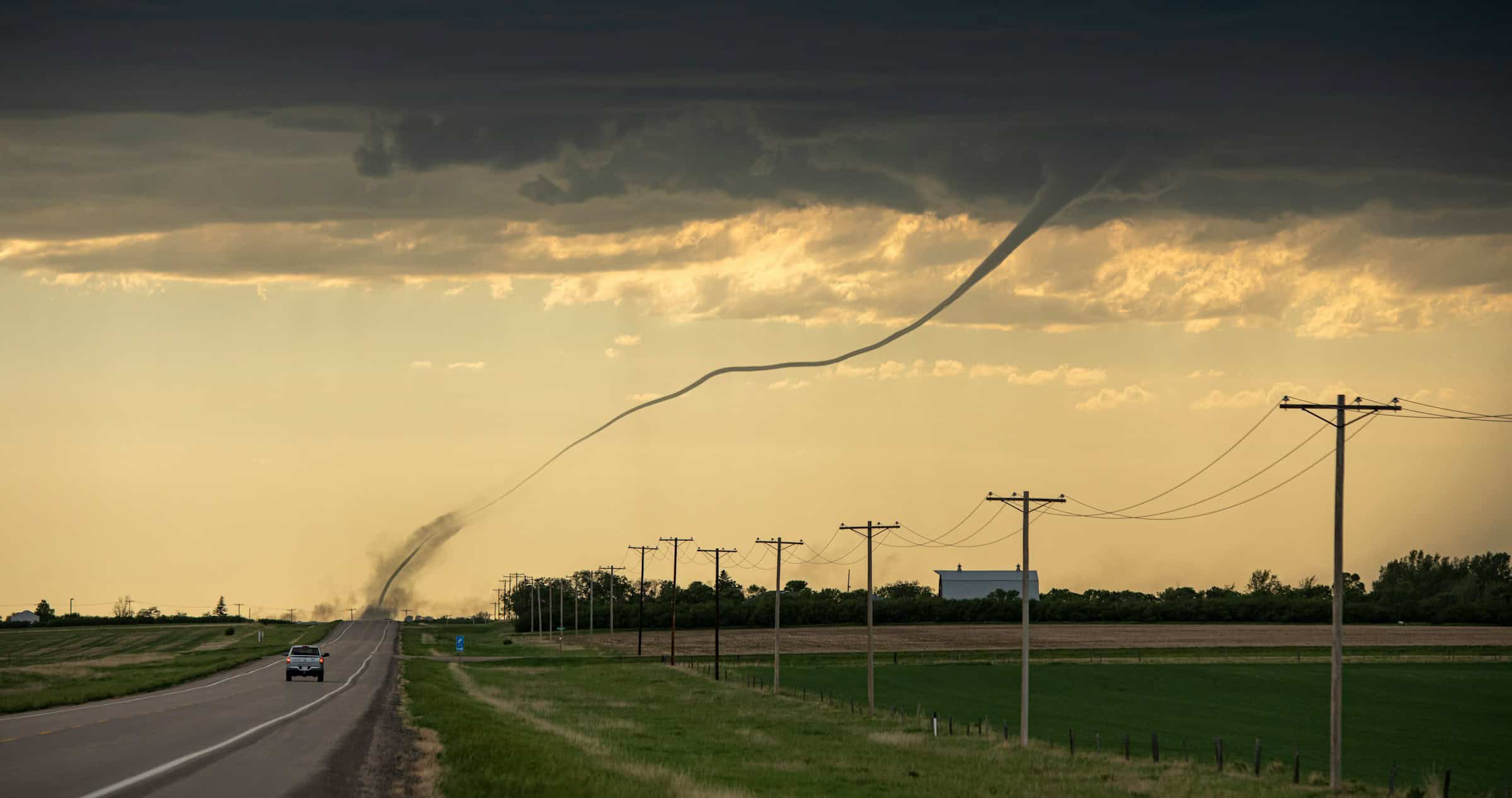
Iowa is particularly prone to tornadoes and sits within Tornado Alley. Prepare yourself for tornado season in the Hawkeye State with these practical tips.
Iowa is situated in the northern part of Tornado Alley, a region of the U.S. where tornadoes are most frequent. The Hawkeye State averages about 50 tornadoes per year and consistently ranks among the top 10 states with the most tornadoes annually.
The eastern and central regions of Iowa usually record the most tornadoes, with Polk, Webster, and Scott counties among some of the areas with the most activity.
Spring usually marks the start of tornado season, and with that in mind, it’s time to start preparing for potential storms. Keep reading to learn more about tornado season in Iowa, how to prepare for it, and what to do when a tornado watch or warning is issued.
When is tornado season in Iowa?
Peak tornado season in Iowa typically occurs from late spring to early summer, with the majority of storms hitting the state in April, May, and June. However, it’s important to keep in mind that tornadoes can occur outside of this window, too. For example, in 2023, two tornadoes occurred in eastern Iowa on Jan. 16.
Tornadoes can strike at any time of day or night, but they’re most likely to occur between 4 and 9 pm.
Why Iowa gets so many tornadoes
Iowa’s geography and climate make it particularly vulnerable to tornadoes. The state’s location places it at the crossroads of three major air masses:
- Warm, moist air from the Gulf of Mexico
- Cold, dry air from Canada
- Warm, dry air from the Rocky Mountain region
When these air masses collide, they create powerful rotating thunderstorms called supercells, which can spawn tornadoes.
A record-setting 125 tornadoes occurred in Iowa in 2024, but in 2025, the state only recorded a below-average 32 tornadoes.
How to prepare for tornado season in Iowa
Before tornado season kicks off, there are several steps you can take to ensure you’re prepared.
1. Build an emergency kit
Gather supplies you may need in the event of a tornado and keep them in a safe place. These can include:
- Water: one gallon per person per day for three days is recommended
- Nonperishable food: enough to last several days; can include items such as canned food, granola or protein bars, peanut butter, and packaged snacks like pretzels or crackers
- Manual can opener
- Flashlights and extra batteries
- NOAA weather radio
- First aid kit
- Whistle
- Phone and other device chargers
- Medications: including those for pets, if applicable
- Important documents, such as insurance policies, stored in a waterproof container
- Fire extinguisher
- Matches and candles
2. Know your safe place
Before being faced with a tornado, it’s important to know where in your house is the best place to ride out the storm. Basements and storm shelters are generally considered the best options, but if you don’t have one, a room on your lowest floor, preferably with no windows, is an excellent alternative. This could be your bathroom, a closet, or a center hallway.
Take into consideration objects on the floor above your safe place, too. You’ll want to avoid areas underneath heavy objects, such as a refrigerator or freestanding bathtub, as these could fall through the floor if your house is hit by a tornado.
For additional protection, seek cover under a sturdy object, such as a heavy desk or table, if possible. Cover yourself with a thick blanket, sleeping bag, or mattress to protect from flying sharp debris that could cut you.
In the event that you’re away from home when a tornado occurs, you may need to seek refuge at a public shelter. Depending on your location, the nearest shelter may be at a school, church, or mall. Make sure to find out where your local shelter is before a tornado strikes.
3. Stay connected
Sign up for relevant Wireless Emergency Alerts (WEAs), such as those from local officials or national organizations like the Federal Emergency Management Agency (FEMA) and the National Weather Service (NWS).
Consider purchasing a NOAA weather radio so you can tune into your local NOAA Weather Radio All Hazards (NWR) station for continuous updates on weather and emergency information during a tornado.
You may also want to create a group text chat with friends or family who live nearby to share information and updates with one another during and after a tornado or to send a warning before one hits to ensure everyone is able to prepare.
What to do when a tornado watch or warning is issued
First, it’s important to know the difference between a tornado watch and a warning.
A tornado watch is issued when conditions that are favorable for tornadoes are detected. If a tornado watch is issued for your area, you should monitor weather updates and start to prepare for a potential tornado. Locate your emergency kit, charge your phone and other devices, and stay near shelter.
A tornado warning is issued when a tornado has been detected on radar or reported by spotters. If there is a tornado warning for your area, take cover immediately.
If you’re on the road when a warning occurs, avoid overpasses and seek the nearest possible shelter. If no shelter is immediately available, lying flat in a ditch and covering your head is a better option than trying to outrun the tornado.
What to do after a tornado
How you behave after a tornado is almost as important as how you act before one.
First, check yourself and others in your home for injuries and provide basic aid if necessary. If injuries are severe or life-threatening, call 911.
Shelter in place until you hear it’s safe to leave. As you exit your home or shelter, look out for downed power lines, broken glass, and other hazards. Check on your neighbors, if you’re able to do so safely, but stay out of damaged buildings.
If you’re using a generator, do so outside only, and refrain from using matches or lighters because there could be a gas leak nearby.
Finally, document any damage to your property for insurance purposes.