Relax and let loose naturally with a recreational and ceremonial drink native to the Pacific Islands at one of three kava bars in the Silver State.
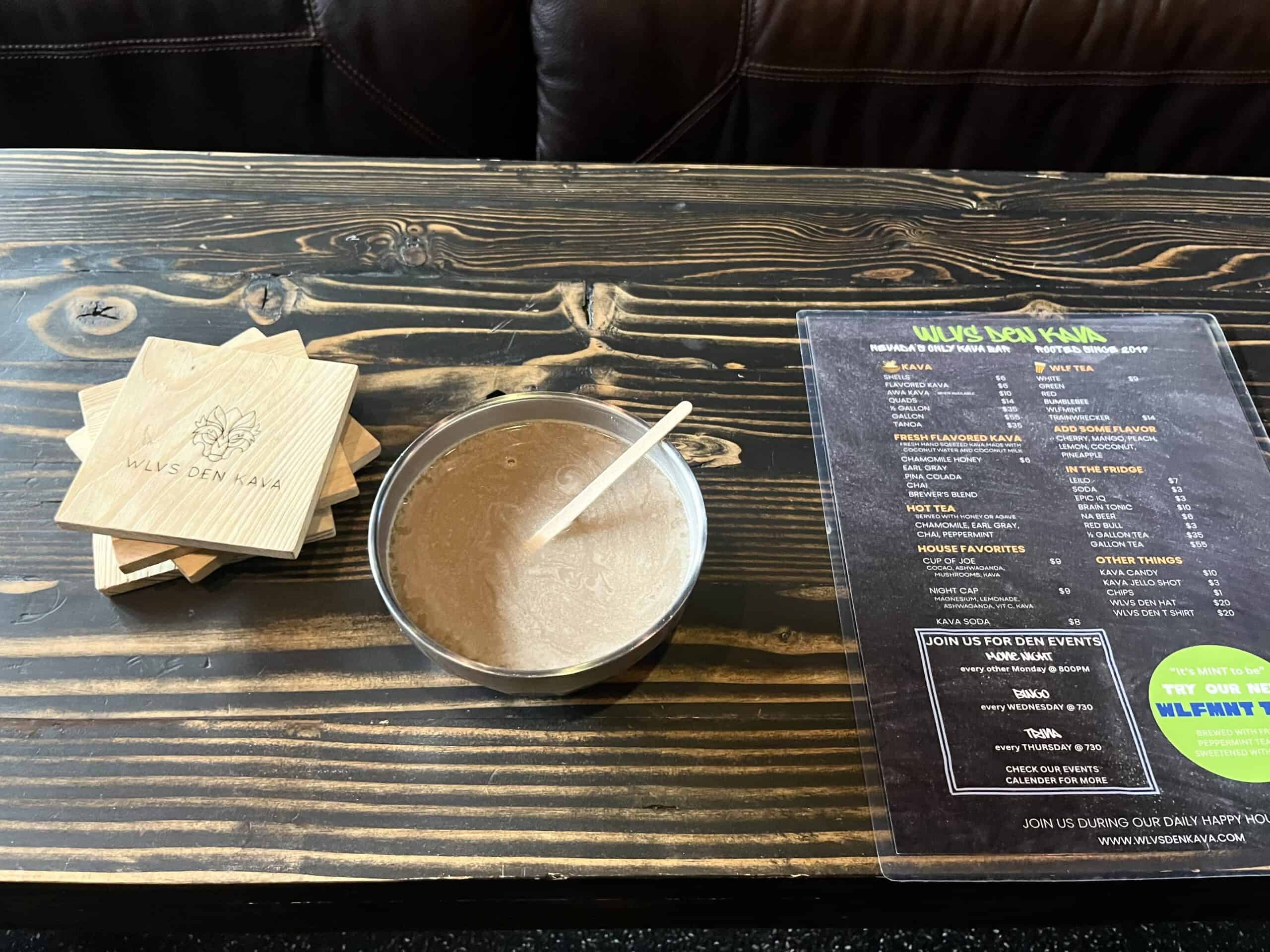
Gregory Piech emerges from the kitchen at WLVS Den Kava with two metal cups resembling coconut shells, each filled with a light-brown liquid. Placing the shells on a long wooden coffee table, he stirs his with a wooden stick and raises it for a toast of “bula” (a Fijian greeting meaning “life”) before chugging the contents.
“Traditionally, it’s slammed,” explains Piech, co-owner of the kava bar, located in a small strip mall in Las Vegas. “If you don’t want to slam it down, that’s totally fine. You can sip it. But that’s usually how it’s done.”
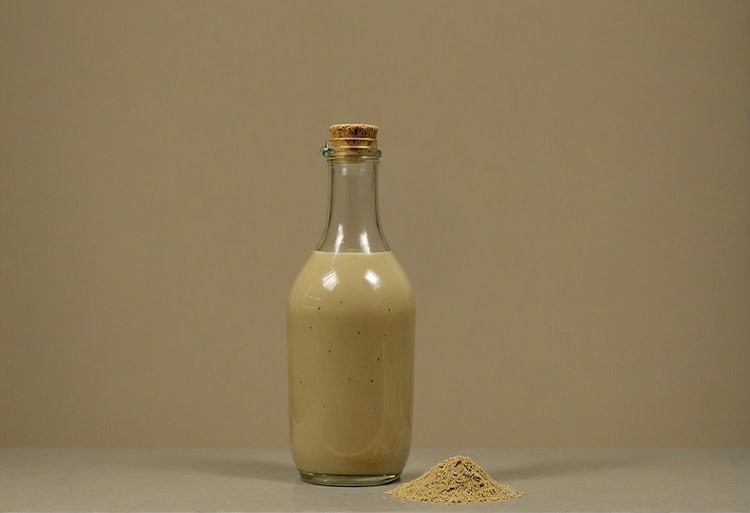
The liquid, a blend of crushed kava root strained in water, tastes a bit like soil and mushrooms. “Earthy,” is how Piech describes it, noting, “You can always get fancy and add coconut water or coconut milk.”
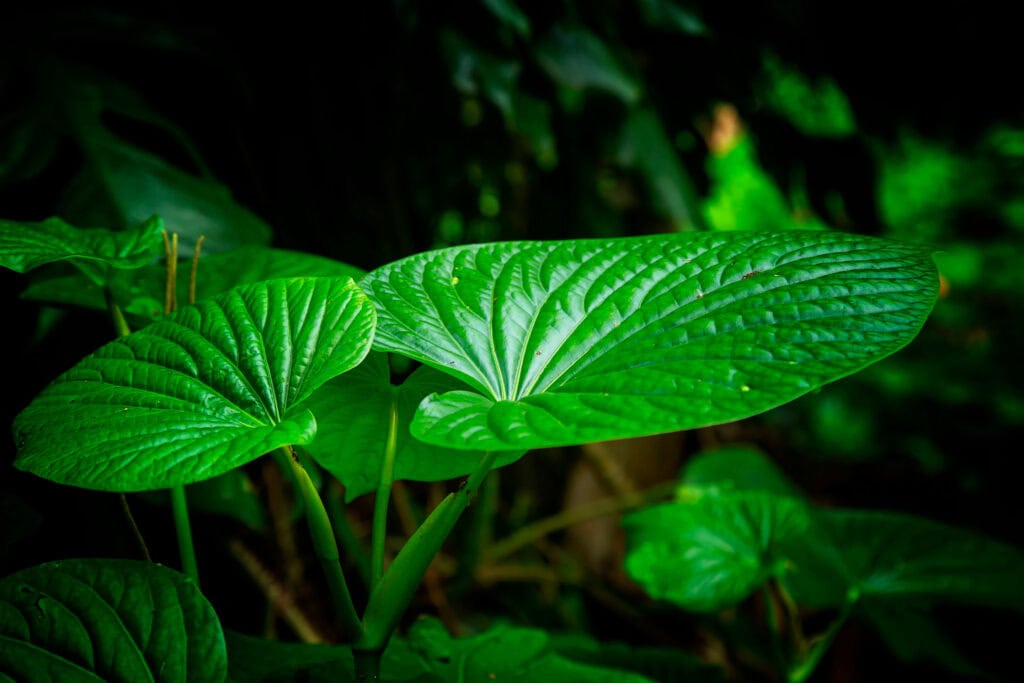
It isn’t kava’s taste, however, that has drawn interest in this plant, which happens to be a member of the pepper family. A recreational and ceremonial drink native to the Pacific Islands, kava (or awa) has been consumed for centuries in Polynesia, Micronesia, and Melanesia due to its psychoactive properties.
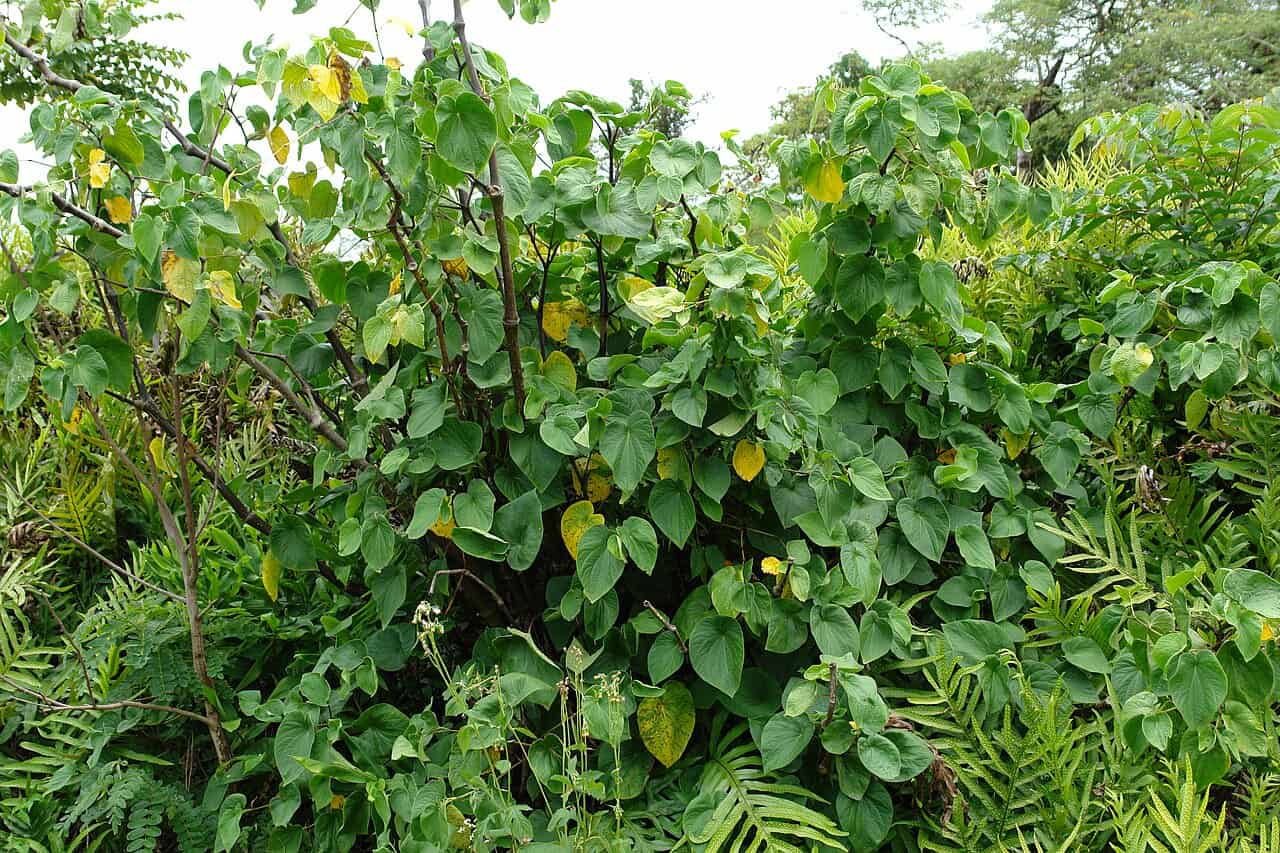
A natural sedative, kava instantly relaxes your mind and muscles while enhancing your overall well-being. An experience known as “getting rooted,” this rush of euphoria comes from the plant’s kavalactones, a natural compound extracted from the roots in water or through chemical processing.
“The feeling is anti-anxiety,” says Piech, describing it as a social lubricant. “When you hang out in a kava bar, it’s just really chill. You feel a little more relaxed in your seat, if you will, and you actually become chatty. You can sit down next to somebody, and you’ll just start up a conversation.”
Along with attracting the younger generation, which doesn’t drink alcohol socially like generations before it, kava is popular with the sobriety and recovery community.
“People want to go out,” says Piece, “and we’re conditioned to have something in our hand. And, you know, people want to feel something, too. This product delivers.”
Kava in the continental United States
Classified as a food product by the United States Food and Drug Administration (FDA) in December, kava was popularized as a supplement in the continental US, making its way into pharmacies and vitamin shops in the 1990s.
According to Kalm With Kava, the country’s first kava bar opened in 2002 in Boca Raton, Florida. Since then, these lounges have popped up in multiple states, including Colorado, Georgia, Arizona, and Michigan.
Other cities and countries have banned or restricted the plant due to its potential for liver toxicity, though the World Health Organization says it’s an “acceptably low level of health risk.”
Kava is not illegal in Nevada, but kava bars are few and far between here. Piech attributes this to regulatory issues, similar to those faced by cannabis lounges.
Kava in Nevada
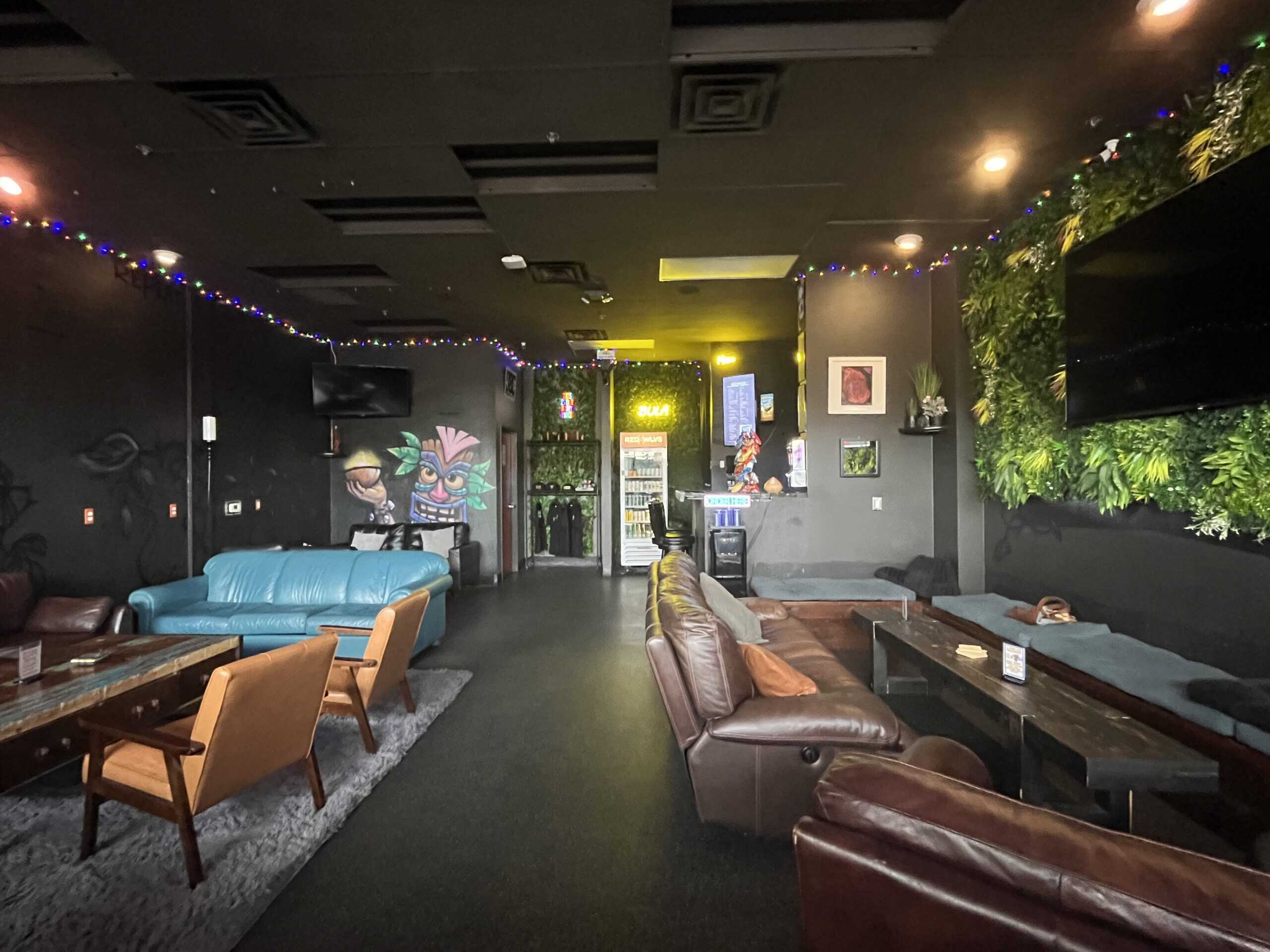
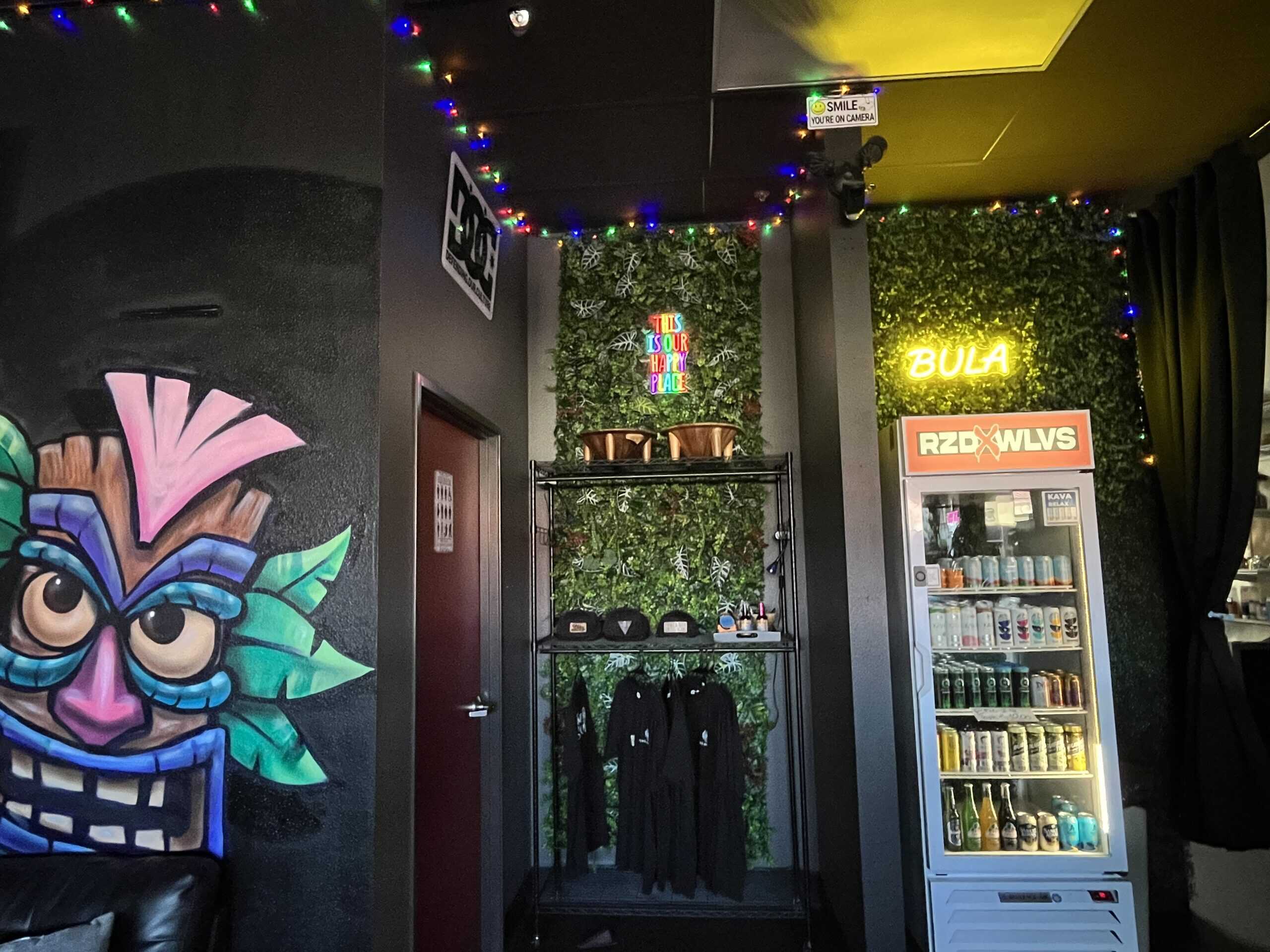
WLVS Den Kava, formerly known as Ninth Island Kava Lounge, is located at 5447 S. Rainbow Blvd., in Las Vegas, across from Spring Valley Hospital. It resembles a coffee shop with couches and tables arranged into comfy lounging areas in the spacious rectangular room, decorated with Polynesian murals and colorful lights.
On any given day, customers can play board and video games, watch TV, or chat while enjoying a traditional or flavored kava drink from the extensive menu, which includes kava candy and Jello shots.
In addition to kava, WLVS Den serves drinks infused with kratom, a natural sedative made from the leaves of a tropical tree native to Southeast Asia.
Drinks are in the $6 to $9 range, though a kava shell is only $3 during happy hour from 3 to 6 pm, seven days a week. There are monthly events, including live music performances, movie nights, bingo, and karaoke, or you can keep the party going at home by purchasing a half-gallon ($35) or gallon ($55) of kava or kratom tea to-go.
“We actually do a lot of takeout,” says Piech, noting that he enjoys the drink at home as well as in the lounge. “We used to have beer in the fridge. Now, there’s probably a half gallon of kava.”
Southern Nevada is also home to Root & Leaf, 10624 S. Eastern Ave., in Henderson. This intimate kava bar offers a rotating menu of self-serve and grab-and-go kava blends, teas, and non-alcoholic beverages. Like WLVS Den, Root & Leaf hosts a variety of events, including open mic nights and live music.
Reno Roots, 935 N. Virginia St., Ste. A, in Reno, is Northern Nevada’s sole kava bar. Located near the University of Nevada, Reno, it’s a relaxing place to hang out, play board games, and listen to live music.
Brad Ninnis is a regular WLVS Den customer and remote worker. “I’m here every single day,” he says of the kava bar, noting that he moved to Las Vegas after his Florida office closed.
“I wouldn’t have moved here if there wasn’t a kava bar,” he says, describing WLVS Den as a “nice, relaxing, social environment” and a great place to work, thanks to the free Wi-Fi.
Piech agrees. “It’s a beautiful community. It really, really is,” he says. “Because you will find a community here. You will. You can just relax here and have a good time.”