Variable speed limit signs are starting to appear across Texas. Here’s why.
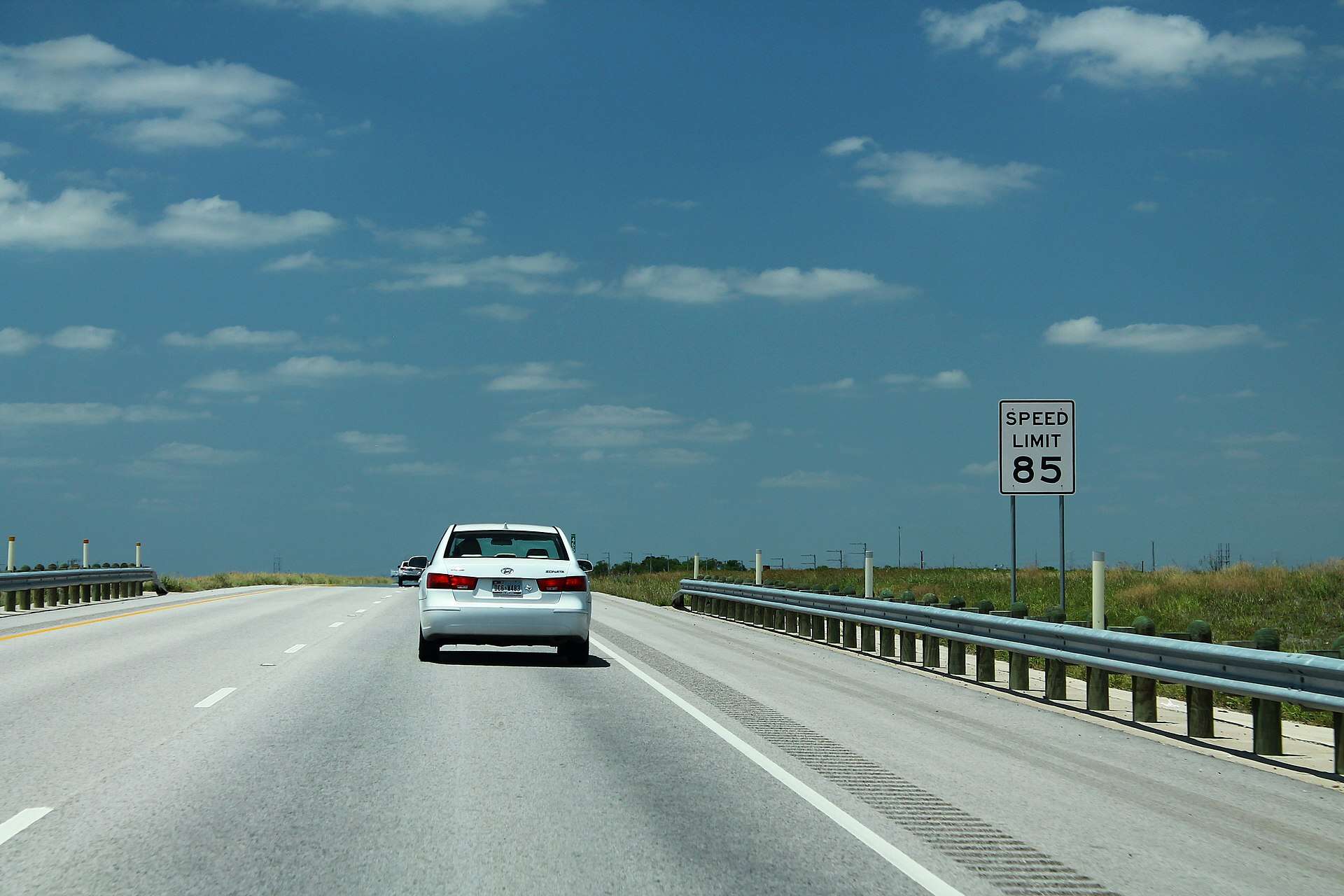
In an effort to prevent tragedies like 2021’s 133-car pileup that resulted in six deaths, Texas is rolling out variable speed limit signs across the state. Essentially, these new signs will adjust speed limits in real time based on current traffic patterns. In doing so, they’ll hopefully allow for continuous traffic flow, which will (in theory) reduce the number of highway accidents. Currently, the signs are up and running on US 54 in El Paso and Interstate 35W in Fort Worth. As of writing, it’s unclear as to where else the signs will be placed or when.
According to Chron, reductions in speed will be capped at 10 MPH maximum, and all limits will be monitored and dictated by the Texas Department of Transportation. They’ll be able to lower speeds for any number of reasons, including to “address inclement weather, congestion, road construction, or any other condition that affects the safe and orderly movement of traffic.” Chron notes that this will only be possible on specific roadways where the Department of Transportation has already been granted the authority to make these decisions.
State Rep. Terry Canales worked to author this bill and said of the program, “If we’re not able to alter or modify the speed limit to reflect the current conditions, safety is in jeopardy.” It’s an idea that has previously been supported by the US Department of Transportation’s Federal Highway Administration. On its website, the Federal Highway Administration states, “Providing variable speed limits (VSLs) capable of adapting to changing circumstances could reduce crash frequency and severity.”
Just how much of a reduction can these variable speed limit signs lead to? Around 51% for injury and fatal crashes, 65% for rear-end crashes, and 34% for total crashes, per data provided by the Federal Highway Administration.
The new Texas signs have been in the making for over a decade
Originally, a pilot program designed to install variable speed limit signs across Texas began in 2014 in Eastland County, Ranger Hill, San Antonio, and Temple. It wasn’t until 2023, though, that it was officially passed through House Bill 1885, which was written by State Rep. Terry Canales. His bill, and the idea behind it, was prompted by the tragic 133-car pileup that occurred on I-35W in Fort Worth in 2021. Six people died, and 65 were injured.
It’s believed that speed contributed to the issue, as the posted limits at the time were 65 MPH for general-use lanes and 75 MPH for toll lanes. Given that the area had experienced below-freezing temperatures for almost two days in a row, these limits theoretically should have been lowered to prevent accidents on the slippery roads.
Once House Bill 1885 was passed, the Texas Department of Transportation began working to implement its Intelligent Transportation System, which provides the data needed to determine the best speed limits at any given time based on road conditions. This information is gathered and monitored by cameras across the state.