Meet the female spies who shaped Virginia’s Civil War legacy, from covert Confederate operatives to Union intelligence gatherers.
Long before the Central Intelligence Agency was founded and headquartered in McLean, female spies in Virginia shaped the course of the Civil War by carrying messages across enemy lines, gathering intelligence in their homes, and risking imprisonment.
From Confederate sympathizers passing battlefield details to Union supporters undermining Southern plans, these six women with social access and determination influenced events far beyond their expected roles.
Confederate spies
Discover how female spies loyal to the Confederacy gathered intelligence, dodged capture, and aided southern commanders from behind the scenes.
Laura Ratcliffe
Despite receiving an album of poetry and a gold watch chain from Gen. J.E.B. Stuart in appreciation of the information she shared with him through her role as a Confederate spy, Laura Ratcliffe later married a northern sympathizer and shied away from her efforts to aid the Confederacy.
Ratcliffe grew up in Herndon, which John Mosby, a Confederate raider, occasionally used as his headquarters. Her first effort to share information with the Confederacy came when a Union lieutenant came to her house to buy milk and taunted her for her affection for Mosby. He noted that she couldn’t share her information with Mosby because she didn’t have any horses and that the mud was too deep for her to trudge through. However, she defied him and made her way to Mosby, whom she warned about an attempt to capture him.
Her spying efforts continued under Stuart.
Antonia Ford
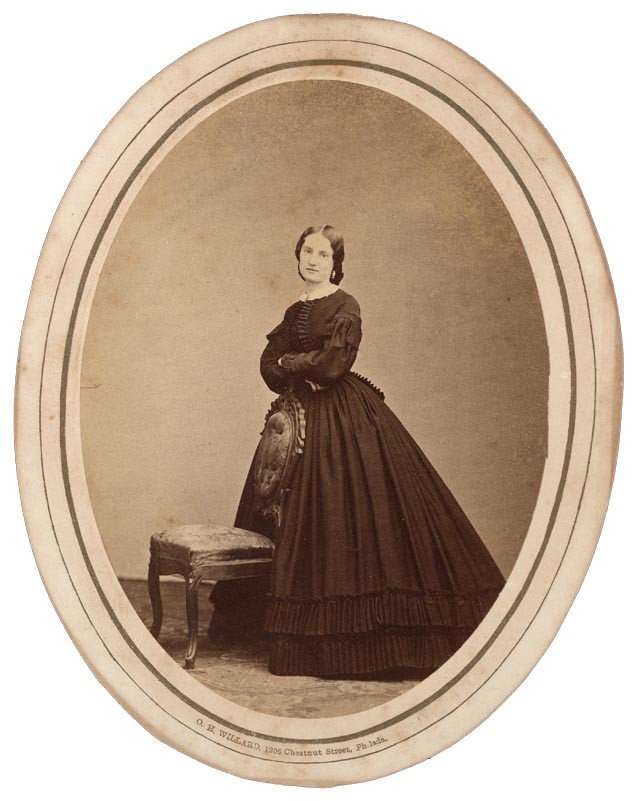
Antonia Ford, who lived from 1838-1871, spied for the Confederacy from 1861-1865, even earning the honorary aide-de-camp title from Gen. J.E.B. Stuart in 1861. Having been the daughter of a well-to-do Fairfax businessman and secessionist, it’s no wonder that she started spying for the Confederacy.
Her notable contributions to the war effort include sharing information that she gathered from her home in Fairfax Court House during the First Battle of Manassas in 1861. It’s also said that she moonlighted as a spy for the leader of a group of Confederate rangers, John S. Mosby.
Her luck ran out when a Union spy reported her activities to the authorities. Her home was searched, leading to the discovery of $6,000 in Confederate currency and the letter that bestowed her honorary title. This resulted in her arrest and imprisonment at the Old Capitol Prison in 1863.
In a surprise turn of events, Ford ended up marrying one of the men who had captured her, Joseph Willard, a Union major. The two gave up their war efforts, with Ford concluding her spying career and Willard resigning from the army, before moving to Washington, D.C., to manage the Willard Hotel. The pair had three children.
Belle Boyd
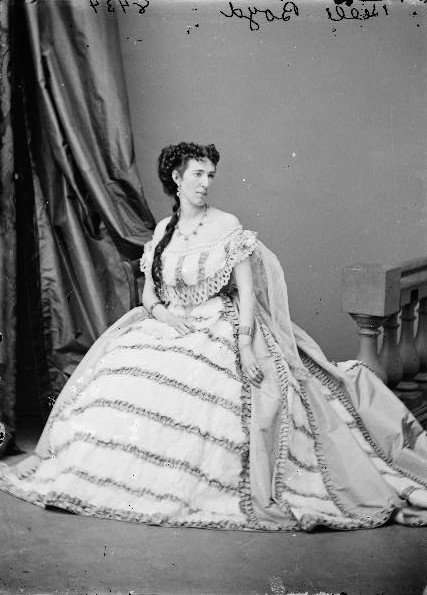
Perhaps one of the most recognizable of Civil War spies is Belle Boyd, who was born in Martinsburg, Virginia, but what is now West Virginia. Surprisingly, her spying career began at the age of 17 after she shot and killed a drunken Union soldier who is said to have directed offensive language towards Boyd and her mother. She had previously sewn clothes for Confederate soldiers.
She regularly collected information on Union activities and shared it with Confederate officials. In fact, Thomas J. “Stonewall” Jackson credited her information as being decisive in his wins during the Shenandoah Valley Campaign of 1862. Her efforts earned her such names as “the Siren of the Shenandoah” and “La Belle Rebelle.”
Despite being captured by the Union on multiple occasions, she managed to slip through the Union’s fingers each time through her uncanny powers of persuasion.
Her career as a spy came to an end when she left the States for London, England, in 1864. While there, she married one of the men who had imprisoned her before releasing the buzzy memoir “Belle Boyd in Camp and in Prison” the following year. She lived until 1900.
Rose O’Neal Greenhow
Rose O’Neal Greenhow was born in Maryland’s rural Montgomery County in 1813 or 1814, but made a name for herself in the nation’s capital, where she married a federal librarian and became part of the city’s inner circle with the likes of Dolley Madison, the former first lady.
Despite her life in Washington, D.C., Greenhow remained true to her southern roots. When she learned in 1861 that Union forces were consolidating to march to Manassas, she wasted no time. She sent word through another female Confederate sympathizer to Fairfax Court House, which was held by Confederate troops. This information allowed the Confederate Army to unite in advance of the Union attack, resulting in Confederate victory at the First Battle of Manassas.
Her spying efforts continued to grow, involving a vast network of dozens of women across multiple states who used ciphers to pass messages. She was eventually discovered and jailed at the Old Capitol Prison, but that didn’t stop her from continuing to pass information to Confederate Officials.
Greenhow was eventually released in 1862 and instructed not to leave the Confederate territory, but she did when she visited Britain and France on diplomatic missions. While overseas, she penned her memoir, “My Imprisonment and the First Year of Abolition Rule at Washington.”
Her life came to a tragic end in 1864 while she was traveling back to the Confederacy. The British ship she was on ran aground near Wilmington, North Carolina, when the captain thought they had been spotted by Union ships. While attempting to get to shore on a rowboat, she drowned after the boat capsized due to the $2,000 in gold she was attempting to bring back for the Confederacy’s use.
Union spies
Learn how female spies supported the Union by leveraging their courage and ingenuity to disrupt Confederate plans and protect northern interests.
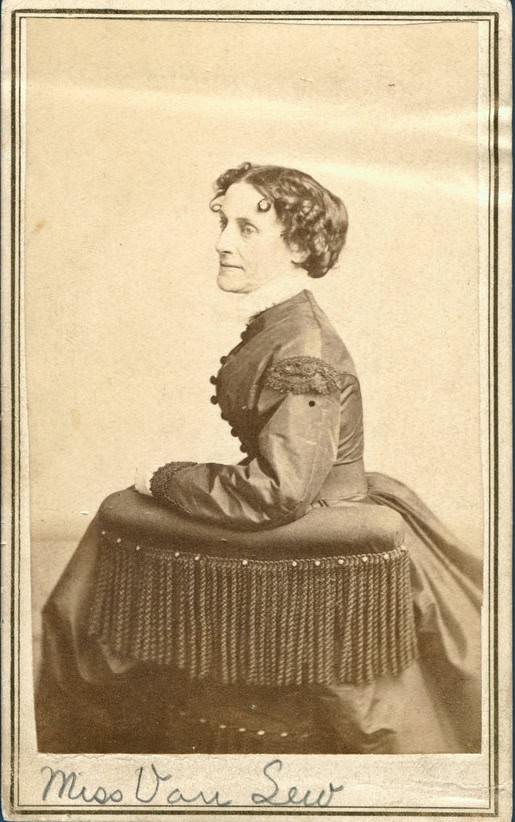
Elizabeth Van Lew
Although Elizabeth Van Lew, who was born in 1818, came from a well-to-do slave-holding family in Richmond, it should come as no surprise that she spied for the Union, given her Northern roots and Quaker background. Instead of eventually joining the Confederate patriotic movement after Virginia seceded in 1861 like other Southern Unionists, Van Lew decided to contribute to the creation of an underground assembly that worked to thwart the Confederacy and support imprisoned Union men.
She eventually moved into intelligence gathering, passing information collected from imprisoned Union soldiers to Gen. Ulysses S. Grant, who acknowledged the quantity and quality of her reports. Her efforts continued to expand, even operating a spy ring with such contacts as Confederate clerks.
Following the war, Grant, who was by then president, named her postmaster of her home city, where she remained until 1877. She later fell on hard times, dying penniless in 1900 because she had spent most of her inheritance to fund her spying efforts and to support her family’s former slaves.
Mary Louvestre
The lesser-known story of Mary Louvestre, an African American woman, is quite remarkable. While the former slave was working in the household of an engineer involved in the conversion effort to turn the USS Merrimack into the CSS Virginia in Norfolk, Louvestre nabbed a copy of the ship’s plans and journeyed north. She made it to Washington, D.C., where she shared the plans for the Confederacy’s first ironclad vessel with Department of the Navy officials.
The plans Louvestre shared underscored the Union’s need to finalize the USS Monitor as quickly as possible. Prior to the Union vessel’s arrival in Hampton Roads, the CSS Virginia had devastated the Union’s wooden fleet. However, once the USS Monitor arrived on the scene, it fought the CSS Virginia to a stalemate, depriving the Confederate forces of the ability to resupply.