Nodding to snowy mountain ranges and cottonwood trees, many places in Nevada have Spanish names (including the state itself!).
Once a territory of Mexico, Nevada’s history is flush with Spanish and Hispanic influence. Explorers first arrived here from Spain and Latin America via early routes, while modern-day Nevada has seen significant Hispanic demographic and cultural growth.
The area became part of the United States in 1848 through the Treaty of Guadalupe Hidalgo, which ended the Mexican-American War. Nonetheless, there are still many places in the Silver State with Spanish names, starting at the top with “Nevada.”
Nevada
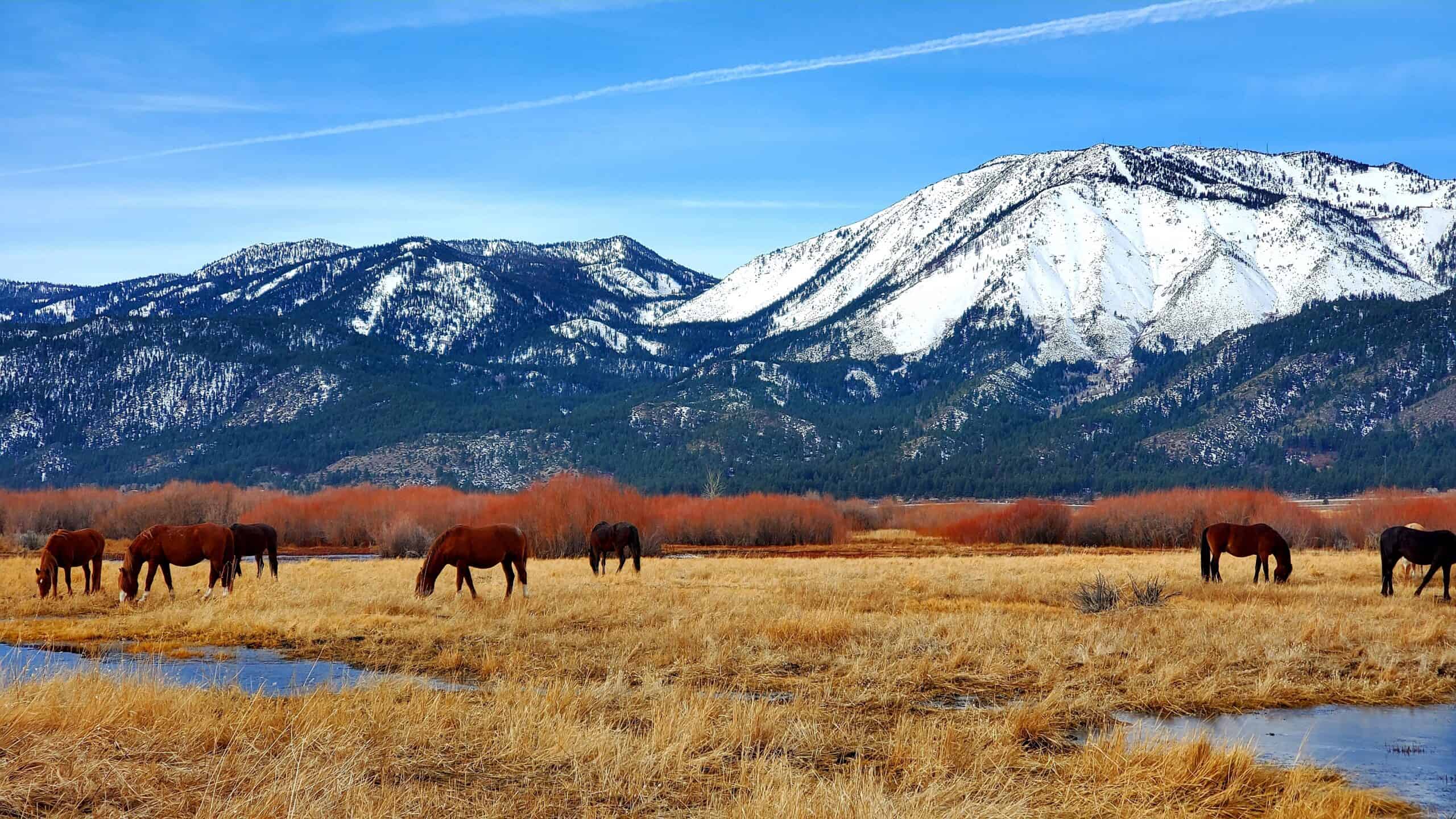
When Spanish explorers first passed through the arid land we now call Nevada, it was winter, and the mountains were covered in snow. They referred to the powdered peaks as “sierras nevadas,” or “snowy mountain ranges.”
“Nevada” was repeated by later explorers passing through, and in 1776, Spanish missionary Padre Pedro Font officially named the mountain range Sierra Nevada. When Nevada became the 36th U.S. state, the name stuck like the white stuff.
Since Nevada is a Spanish word, its pronunciation (“neh-VAD-uh” versus “neh-VAH-duh”) is known to elicit a linguistic debate. But it’s not a war you want to wage with a native Nevadan. As many a politician or tourist has learned, stick to the local pronunciation or suffer Battle Born “boos” and Silver State spite.
Las Vegas
Spanish for “the meadows,” the name Las Vegas might seem off-brand for this glitzy city, but only if you don’t know its history. While World Atlas ranks it No. 3 on a list of the Top 10 driest cities in the U.S., its origin point (Springs Preserve Las Vegas area) was once covered in marshes, freshwater springs, and yes, meadows.
Located in Clark County in Southern Nevada, Las Vegas was once a water stop for indigenous tribes, explorers, missionaries, wagon trains, and by the early 20th century, the Union Pacific Railroad. Runoff from the wells still feeds the Las Vegas Wash, which runs to the Colorado River.
“Las Vegas” was first used as a name long before the railroad came to town. The name dates back to 1829, after Spanish explorer Rafael Rivera got lost and discovered a mesa—now home to the Southeast Career and Technical Academy—allowing him to see springs and meadows in the distance. Once reunited with his party, exploration leader Antonio Armijo named the place Las Vegas.
It became official in 1905, when the railroad auctioned off land east of the railroad tracks for a townsite called Las Vegas.
It’s possible people used the phrase “Viva Las Vegas” from the very beginning, but credit for its popularity goes to the King of Rock and Roll and Las Vegas icon Elvis Presley, star of the 1964 movie “Viva Las Vegas.”
Caliente
Located about 150 miles northeast of Las Vegas along U.S. Route 93, in Lincoln County, Caliente (Spanish for “hot”) was called Culverwell’s Ranch, for its owner Charles Culverwell, until 1901. That’s when a hot spring was found, leading to the name Calientes. The name was officially shortened to Caliente in 1903. A Union Pacific Railroad stop was completed by 1905.
At its peak, the railroad town had more than 5,000 residents. Today, it’s home to about 1,000. Locals and visitors could soak in the hot springs at the Caliente Hot Springs Motel and Spa Hotel until the business closed in 2021.
Esmeralda County
This Nevada county was established in 1861, making it one of the state’s nine original counties. Bordered by Mineral, Nye, and the California border in Southwest Nevada, it’s also one of the least populated.
Spanish and Portuguese for “emerald,” Esmeralda County is believed to be named by a miner after a dancer in the book “The Hunchback of Notre-Dame.”
The Nevada Appeal writes: “One of the area’s founders, J.M. Corey, took the name because it aptly described the area, which was a ‘wild dance of death and disappointment to thousands,’ according to a writer at the time.”
The literary connections continue with Nevada’s own Samuel Clemens (Mark Twain). The famous writer spent time as a miner here and wrote about it in his book “Roughing It.”
Candelaria
In the mid-19th century, a group of Mexican miners struck silver in this modern-day Mineral County ghost town, located about 70 miles northwest of Esmeralda County. With a profitable mine and businesses, this boomtown was buzzing by 1875. By 1935, the town was largely deserted.
The origin of the town name is iffy, though it’s believed to have come from a miner, possibly named after the 18th-century Candelaria Mine in San Dimas, Mexico, or for Candelmas Day, a Latin holiday that takes place on the 40th day after Christmas.
Alamo
This isolated ranchland near the Key Pittman Wildlife Management Area and Ash Springs in southern Lincoln County is named for its plethora of cottonwood or poplar trees, “alamo” in Spanish. Once a refuge for outlaws, it was settled by Mormons from Arizona in the early 20th century.
Located along U.S. Highway 93 in the Pahranagat Valley, about 90 miles north of Las Vegas, you may pass through Alamo before or after Hiko on your way to or from the Extraterrestrial Highway, Nevada State Route 375.