North Carolina produces two crops at greater volume than any other US state—learn what they are and their history in NC.
There’s plenty the Tarheel State is famous for: a history that spans centuries, from pirate havens to the birth of Michael Jordan, to some of the nation’s most brilliant minds working in the Research Triangle. But when it comes to what North Carolina gives the nation every day, it can be fun to think literally. Specifically, North Carolina is America’s largest producer of both sweet potatoes and tobacco, both of which have long histories in the state.
But why is North Carolina so big in these two industries? And how does it impact the state today? Also, maybe it sounds crazy, but do the two worlds ever collide? Or would that just be too weird? Let’s have a look and find out.
Potatoes sweet as pie
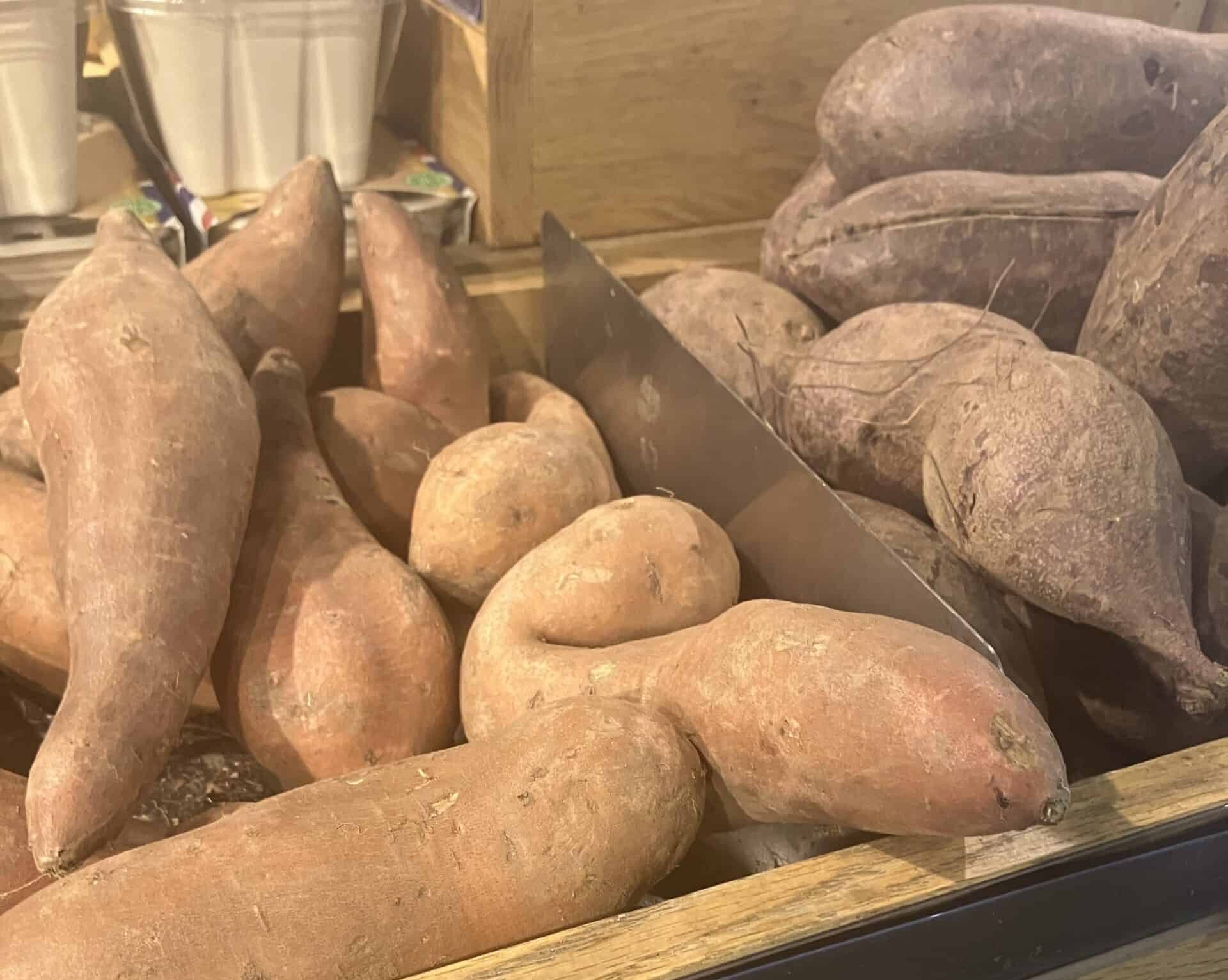
While Idaho may boast about its famous white potatoes, North Carolina has something brighter and sweeter to celebrate at its farmers’ markets. Sweet potatoes, those bright orange (or occasionally purple) root vegetables that make a marshmallow-topped appearance at so many Thanksgivings, are a North Carolina tradition. In fact, the Tarheel State changed the sweet potato industry across the whole country. But that’s getting ahead of the story.
Sweet potatoes are one of the oldest cultivated crops in the world, but may not have reached North Carolina from Mexico and Central America for some time, though well before Europeans arrived in the Americas, as they found Native Americans already growing them. Whatever the exact time of their introduction, the tasty tubers grew well in the fertile North Carolina soil and were an important part of Native Americans’ and later Europeans’ diets for their nutritional value and relatively long shelf life.
For centuries, they remained a specialty crop, grown mostly for local consumption at a relatively small scale. It wasn’t until the second half of the 20th century, with the 1961 founding of the North Carolina Sweet Potato Commission and the later invention of a specialized storage technique called negative horizontal ventilation (NHV) by N.C. State Professor Dr. Mike Boyette, that the industry really started to expand. While at its founding, the NC Sweet Potato Commission set its sights on making North Carolina the nation’s sweet potato capital, it was only 10 years later, in 1971, that the state earned that title. North Carolina has been growing more sweet potatoes than any other state ever since.
All those sugary spuds have also influenced Tarheel State cuisine. Sweet potatoes are a staple of southern cooking, especially in North Carolina. Try them in classic dishes, like wild rice soup with chicken and sweet potatoes, sweet potato pie, or sweet potato biscuits. Or, take some inspiration from the NC State Fair, and go wild with sweet potato ice cream or a decadent plate of loaded sweet potato fries.
The long history of Tarheel Tobacco
The tobacco industry in North Carolina is a complicated story, and at times a sad one. People have been growing tobacco in North Carolina for hundreds of years. Sadly, this wasn’t always by choice. While Native Americans had been growing and smoking tobacco for centuries before Europeans ever saw a tobacco leaf, when Sir Walter Raleigh popularized tobacco in England, the demand for it exploded. Since North Carolina’s climate was especially well-suited to grow the plant, this led to the rise of large-scale tobacco plantations, which were largely worked by enslaved people. In fact, it was an enslaved man named Stephen who, in 1839, discovered the “bright leaf” curing process for tobacco that would become a state signature.
After the Civil War, North Carolina’s tobacco industry was no longer resting on the shoulders of enslaved people, but continued to be one of the state’s biggest industries. In the 1880s, a North Carolinian duo, the Duke brothers (later of Duke University fame—with apologies to UNC fans) developed a mechanized way to make cigarettes, and eventually formed one of the earliest and largest “Big Tobacco” corporations: the American Tobacco Company, or ATC. By 1893, North Carolina was firmly established as the nation’s tobacco capital—and it remains so to this day.
Shall the twain meet?
Do North Carolina’s two famous “cash crops” ever come together? The answer is in: yes, kind of. While you wouldn’t put sweet potatoes in a cigarette, you can very much smoke them, barbecue style, or even make them into phyllo-wrapped “cigars” for a distinctly North Carolina-inspired appetizer. But the real place where the two crops collide is on the field, where one has been making competitive gains on the other.
As fewer Americans smoke or chew tobacco, some of North Carolina’s tobacco farmers are looking to another crop—and it’s sweet potatoes! Since “Big Tobacco” began facing financial issues in the 1980s, many North Carolinian farmers who had previously grown tobacco began turning their eyes to alternatives. Not only does the same soil that’s good for growing tobacco also produce an excellent sweet potato harvest (which should come as no surprise if you’re from North Carolina), but the two crops also need very similar farm equipment to grow. This meant that farmers could make the switch without spending too much money in the process.
Some framers even try to mix it up with a bit of both crops. In fact, scientific studies have shown that the practice of “intercropping” tobacco and sweet potatoes can be good for soil quality and help produce better harvests of both crops.
Which to try? There’s a Clear winner
If you’re pondering sampling one of North Carolina’s signature crops, you might be wondering which one to go for. For health reasons, the answer is pretty definitively sweet potatoes. While tobacco has been linked to numerous health issues, including lung cancer, and should not be smoked around children or people with certain medical conditions, sweet potatoes are a highly nutritious “superfood” that can be made into sweet and savory dishes for your whole family to enjoy.
On the other hand, there are plenty of surprising, healthful ways to use tobacco, although at least one of them (making jet fuel—seriously!) really shouldn’t be attempted at home. But you can absolutely use tobacco leaves to brew a homemade, natural insect repellent or enrich your garden compost. Many people also find the dried leaves and flowers of tobacco plants beautiful when displayed in a vase—and some artistic types even make crafts and home decor items from them!
So, there you have it: There are plenty of ways to make the most of two of North Carolina’s signature crops. Just remember to enjoy all your Tarheel treats safely!