Every December through March, faith-based organizations and colleges in Charlotte open doors for Room In The Inn.
At 6 p.m., I walk into the community room at St. Luke’s Lutheran Church in Charlotte. Several people are gathered around a long table, eating chicken pot pie. I spy my husband and son talking with others, and I grab a plate from the volunteers working in the kitchen.
Before I sit down to eat, I scan the table. I like to sit next to people I haven’t met yet. I introduce myself, and ask the people around me their names. We make comments about the meal, and keep the conversation light. If guests’ children are present, I can ease into talking about parenting, a universal conversation starter.
My first introduction to Room In The Inn (RITI) was when I worked at Queens University of Charlotte. RITI provides emergency winter shelter for families, women, and men who are experiencing homelessness during the coldest months of the year, December through March.
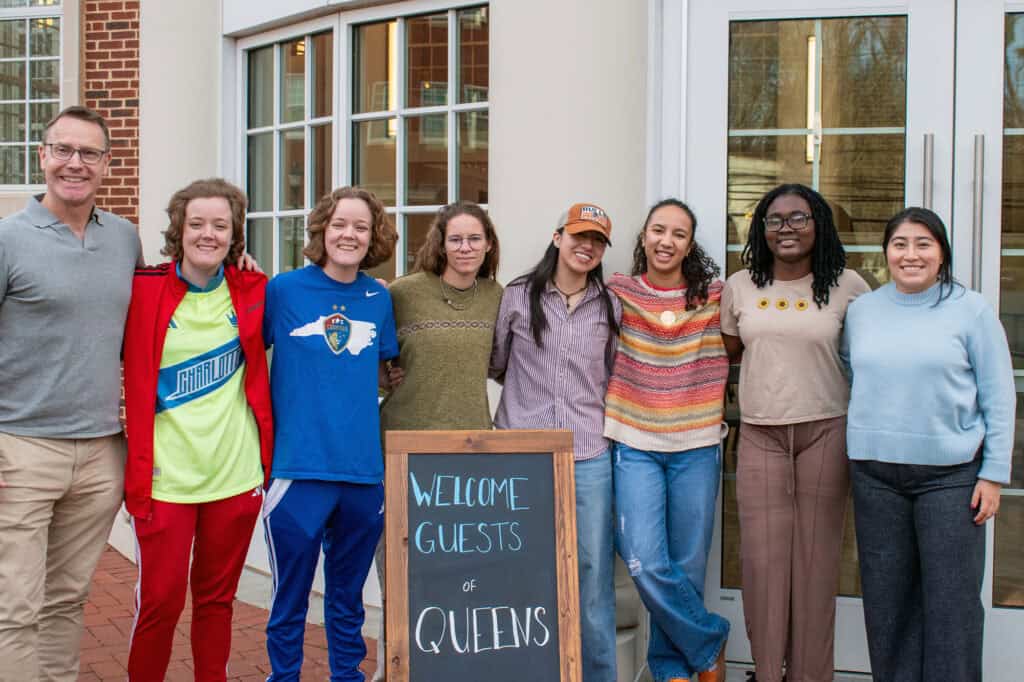
For the past few years, my friend, Tracy Moore, and I have been volunteering as the overnight crew at St. Luke’s. Tracy isn’t a member of our church; he assists because our congregation is skewing older, and it’s hard for members to stay overnight. Tracy, a former college administrator, connects with people easily, finds ways to make others laugh, and reads situations well.
As the overnight crew, we arrive around 6 p.m. to meet the neighbors. We stay with the group through the night and wake everyone at 5:30 a.m. to get ready for the day. We make coffee and hand out a cold breakfast as well as a bag lunch for later. We make sure sheets and towels get to the right laundry bag, and cots get rolled into the storage room, ready for the next time we host RITI.
Room In The Inn’s start in Charlotte
In 1996, Dale Mullenix, then the executive director of the Urban Ministry Center, introduced the Charlotte community to Room In The Inn, a program developed in 1985 in Nashville, Tennessee. More than 35 cities in Canada and the United States, including Asheville and the Outer Banks, have modeled programs after Nashville’s RITI.
“They started with the major churches,” says Cher Lindblom, innkeeper at Roof Above. “There was resistance from the community at first.”
Despite the complaints, 11 faith-based organizations joined the effort, and later RITI grew to more than 100 sites, from Fort Mill, South Carolina, to Denver, North Carolina. Since that first year, 392,472 nights of shelter have been provided.
Two innkeepers coordinate RITI through Roof Above, a Charlotte nonprofit dedicated to ending homelessness. Although the need for RITI has increased, aging congregations, facility issues, and the pandemic have decreased the number of hosts from 100 to 75.
“In 2024, we saw a 22% increase of men who are over 60 come through the door and a 33% increase in families,” Lindblom says
Roof Above hopes to grow the program by pairing current hosts, already with the infrastructure to operate RITI, with businesses and other organizations that can supply volunteers.
“The call would be for businesses or places that aren’t involved that want to take a toe dip, and match them with another congregation who may have the space,” Lindblom says.

How RITI works
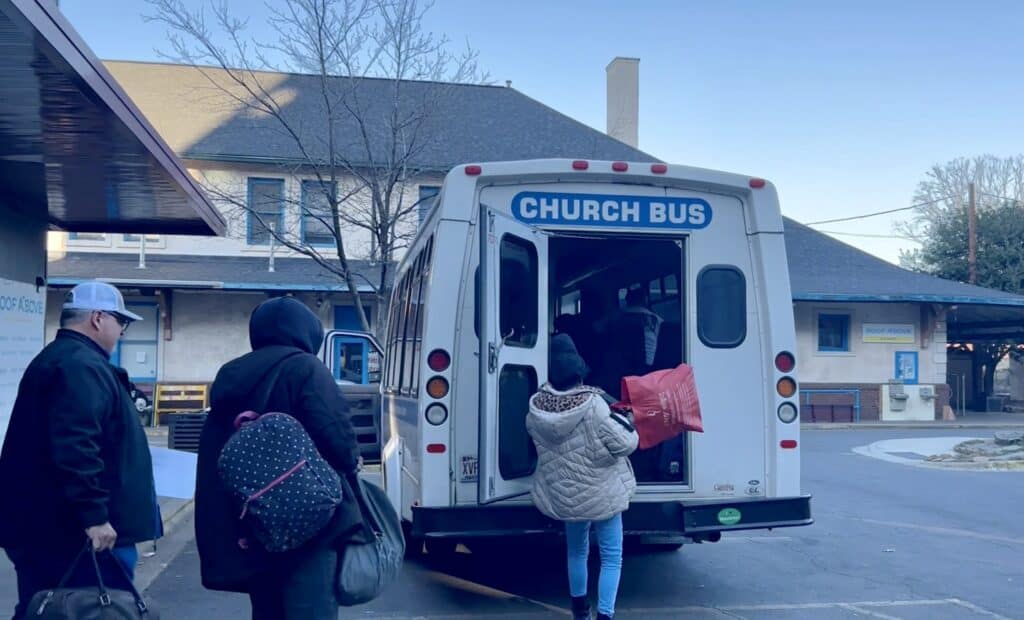
Unhoused neighbors interested in participating in RITI attend a 30-minute orientation at Roof Above. They enter a lottery in the morning, and by 2 p.m., they’ll know if they received a bed for that evening. They line up at Roof Above at 4:30 p.m. to board a van or bus to the host site.
The number of beds available changes every weeknight, from 30 beds to 115 beds. Friday nights typically have the most beds available, while Sunday nights have the fewest. The order of priority within the lottery system is families first, women, and then men over 68 with health conditions.
Neighbors must provide photo identification to be eligible for RITI, pass a breathalyzer, and cannot be on the sex offender list or have an active cross-shelter ban.
‘A safe, warm place to sleep’
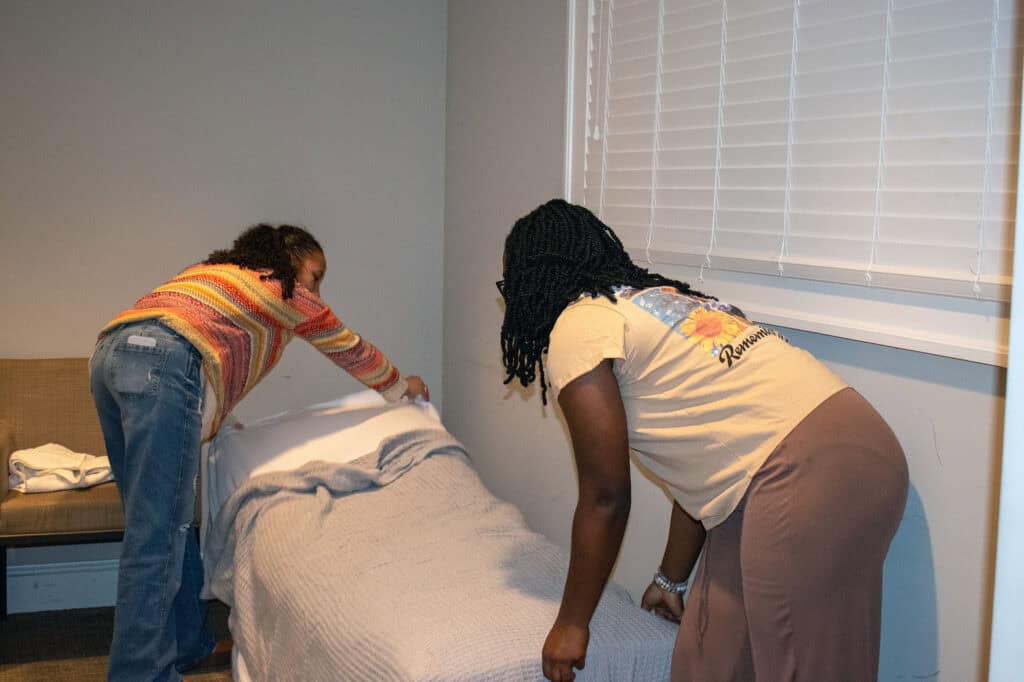
Host sites attend a training in October. Each facility must provide transportation to and from Roof Above in uptown Charlotte, cots or blow-up mattresses, and bedding. Host sites determine how many guests they can accommodate and whether they will welcome families or individuals.
Neighbors receive dinner, breakfast, and a bag lunch to take with them. Two volunteers are required to stay the night. Some host sites are equipped with showers and laundry facilities for the neighbors to use. Hosts may give out coats and other essentials.
“Room in the Inn is a massive undertaking and takes many people to make it a success,” says Diana Brooks, a St. Luke’s Lutheran Church member and one of the church’s RITI coordinators. “Our homeless neighbors are given a safe, warm place to sleep, three meals, showers, clean clothes, an evening of fellowship as we share the meal together, and counseling and prayers, when desired. I’ve had several guests tell me what makes Room In The Inn so special is the intimacy and fellowship they receive.”
What RITI means
In 1996, when Mullenix spoke at Queens University of Charlotte, a liberal arts college four miles south of Roof Above, some staff were wary of bringing unhoused people to campus, but the faculty voted to support RITI after students gave a compelling presentation, according to Diane Mowrey, former chaplain and professor emerita at Queens.
The chaplain’s office, with the assistance of a student coordinator, operates the program, the longest-running service project at the college. For six weeks, from January through the end of February, every Tuesday, Queens hosts six neighbors in the McInnes Rotunda.
“I think (Room In The Inn) is a great example of seeing a need and acting upon it,” says Olivia Codjie, a junior at Queens and the college’s RITI coordinator. “It’s one of those things you’re amazed to be a part of and just hope one day to figure out a way that it doesn’t have to be a thing anymore.”