Want to find the real heart of America on its 250th birthday? Head to one of New Hampshire’s 200 historical societies. Here are five of them to get you started.
Parades, street parties, and fireworks are all well and good, but we suggest celebrating the nation’s 250th anniversary on a macro level. Our state’s mostly volunteer-run historical societies are delightful repositories of one-of-a-kind artifacts and ephemera—some quirky, many fascinating and sentimental. From a horse-drawn town hearse in Brookline to Bette Davis memorabilia in Littleton, these objects and artifacts speak to our history as a state, from our origins as one of the original colonies to today.
So we say, hit the road this semiquincentennial year, seek out some of the 200 historical societies in the state, and celebrate the nation’s birthday, one awesome artifact at a time.
1. Milford Historical Society
Location: Carey House Museum, 6 Union St., Milford
Hours: Open the second weekend of each month from 2 to 4 p.m.
Admission: Free
Charlie Annand has been a member of The Milford Historical Society for 11 years and is in charge of accessions. She talked about some of her favorite artifacts collected since the organization was chartered in 1896 and moved to the Carey House Museum in 1979.
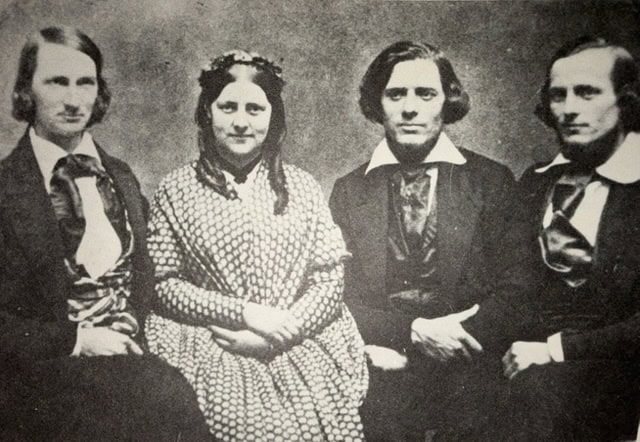
Annand is partial to the permanent display of the Hutchinson Family Singers, who, she said, “were the most popular singing group in the country in the mid-1800s.” The family’s 13 children grew up in a farmhouse where the parents sang to them. Four of those children became the Hutchinson Family Singers. They were fiercely anti-slavery and knew many of the famous abolitionists of the time, including Frederick Douglass, with whom they traveled to England and stayed at Charles Dickens’ home. Their repertoire included political and social commentary music, which they performed at entertainment venues and rallies here and abroad.
The society also has some artifacts from Milford-born Harriet E. Wilson, the first African American novelist in the United States. They are not currently displayed, but Wilson’s statue and a Black Heritage Trail Marker are not far from the historical society.
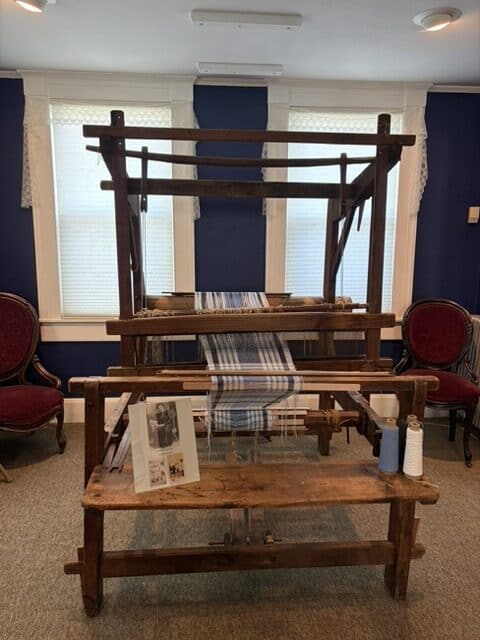
Annand is also proud that the society was finally able to assemble a 1913 loom donated by a local family whose ancestors emigrated from Finland. The loom arrived at the society in plastic bags containing its parts, and thanks to volunteers and professionals, it is now fully operational.
2. Brookline Historical Society
Location: 17 Meetinghouse Hill Road, Brookline
Hours: Wednesdays, 9 a.m. to noon
Admission: Free
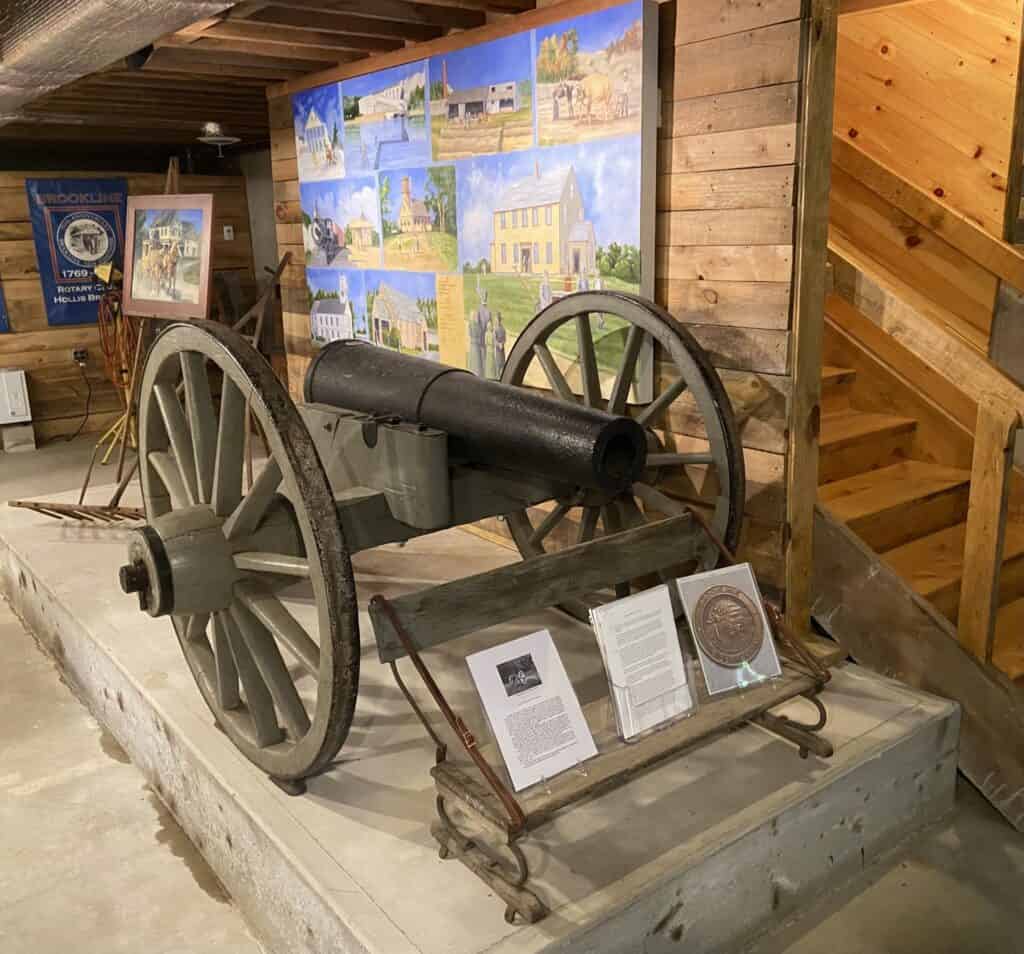
The Brookline Historical Society was established 46 years ago. Included in its eclectic collection is the 19th-century horse-drawn town hearse and a 1856 cannon owned by the town’s Democratic party and used in the 1856 James Buchanan presidential campaign. But when the cannon was set off 13 years later by a Brookline resident, things went terribly wrong.
The event was covered in the “Milford Farmers Cabinet.” According to that article, there was a “sad accident in Brookline … While Mr. Samuel Gilson and son were firing the cannon used on occasion of the Centennial the day before, to use up the powder that remained on hand, a premature discharge took place while young Gilson was standing in front of the cannon. His right arm was blown off, and the hand of his left was badly burned. His clothing took fire, and his body was burned so severely that he is not expected to recover.” But recover he did, as did his father, whose right hand “was so badly mangled that amputation was necessary.” Samuel Gilson lived to be 86, and his son, Charles, died at age 78.
In connection with the 250th anniversary of the country, Brookline Historical Society volunteer Christine St. George wrote “Revolutionaries of Raby, NH,” a series of articles featuring the 55 residents of Raby (the original name of the town) who served in the Colonial Army. The enlistees represented nearly 28 percent of the total town population at the time.
“I think it’s important to preserve the past to look at where we’ve been and to know where we are going,” said St. George. “It strengthens our community. We can see how we fit into American history.
3. Derry Heritage Commission
Location: The Derry Museum of History, the historic Adams Memorial Opera House, 29 West Broadway, Derry
Hours: Wednesdays, 6 to 7:30 p.m. and by appointment
Admission: Free
Derry has had some pretty famous residents, including the poet Robert Frost and Derry native astronaut Alan Shepard, the first American to travel into space. The Derry Museum of History has a whole room dedicated to Shepard, displaying his high school yearbook photo, an Alan Shepard golf bobble head (he was the first person to hit a golf ball on the moon), and a 30-foot-long Western Union Telegram signed by over 400 Derry residents in 1971 welcoming their hometown hero home after landing on the moon.
And there’s much more in the society’s collection dating back to 1719, when this area was known as the settlement of Nutfield. Included are one of the seven dugout canoes remaining in the state, a Native American stone plummet used to weigh down fishing nets, and an anti-propaganda poster from World War II.
Arguably, the coolest artifact on display here is a piece of Ocean-born Mary’s green Chinese silk brocade wedding dress. Well, maybe. Whether the whole story about Mary Wilson Wallace is true or apocryphal, no one knows. The fact is that Wallace was born in 1720 aboard a ship in the Atlantic Ocean while her parents were sailing from Ireland to America. The family moved to Londonderry (then part of Nutfield). Mary grew up, married, and had four sons. That part is true; what might be myth is the story that while her mother was giving birth to Mary on the ship, it was raided by pirates, one of whom promised not to harm her or the other passengers if she allowed him to name the infant. The story continues that before he left the ship, the pirate gave Mary’s mother green, silk brocade from which to make the baby’s wedding gown one day.
Like many other historical societies in the state, Derry has some special events celebrating the nation’s 250th anniversary and the town’s role in it. On July 21 from 6 to 7 p.m., and July 25 from 10 a.m. to 11 a.m., a tour of the graves of those from Derry who fought in the American Revolution will be held at Forest Hill Cemetery on 47 East Derry Road.

4. Exeter Historical Society
Location: 47 Front St., Exeter
Hours: Tuesday, Thursday, 2 to 4:30 p.m., and Saturday, 9:30 a.m. to noon
Admission: Free
Exeter was founded in 1638 as a place for religious exiles, and it later became New Hampshire’s capital during the Revolutionary War. You can bet there’s plenty of history here, from being a stronghold for the Patriot movement, where the Declaration of Independence was first read in New Hampshire, to George Washington stopping for breakfast, and on through modern times, including the 1965 sighting of an Unidentified Flying Object.
In this 250th year, a visit to The Exeter Historical Society is a perfect way to learn how New Hampshire— the state and the colony—played a seminal role in the creation of our country and to see artifacts and ephemera from those formative times through to the present. The society has a collection of early-American samplers, sewn by the hands of Exeter girls, demonstrating their knowledge of letters, numbers, and craft skills, and according to curator Barbara Rimkunas, one of the few ways girls could have their names shown in historical records. The oldest sampler in the collection was sewn in 1793 on linen with silk thread.
5. Littleton Area Historical Museum
Location: Littleton Opera House, Corner of Main and Union streets, Littleton.
Hours: Wednesday and Saturday, 10 a.m. to 3 p.m.
Admission: Free
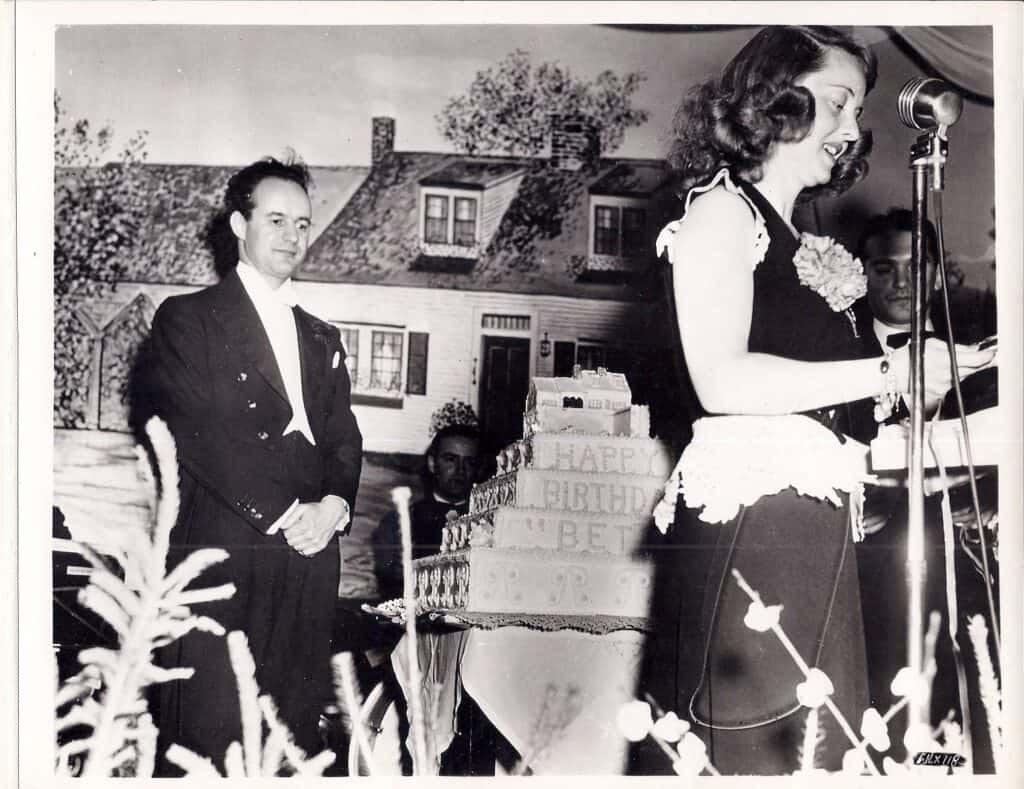
For lovers of iconic children’s literature and old Hollywood cinema, the Littleton Area Historical Museum has a lot to offer, including an area dedicated to actor Bette Davis, who lived in the Sugar Hill section of town. Giant black and white photographs of the “Jezebel” star line brick walls, and a poster of “The Great Lie,” which premiered in Littleton in 1941 on Davis’ 33rd birthday. More than 10,000 people crowded downtown to see Davis and the film.
The little museum also has a display dedicated to Littleton-born author Eleanor Hodgman Porter, who wrote the “Pollyanna” book series starting in 1913. The artifacts include personal letters to the author from fans around the world and copies of all her books. There is a life-sized statue of a jubilant Pollyanna in front of the Littleton Library.