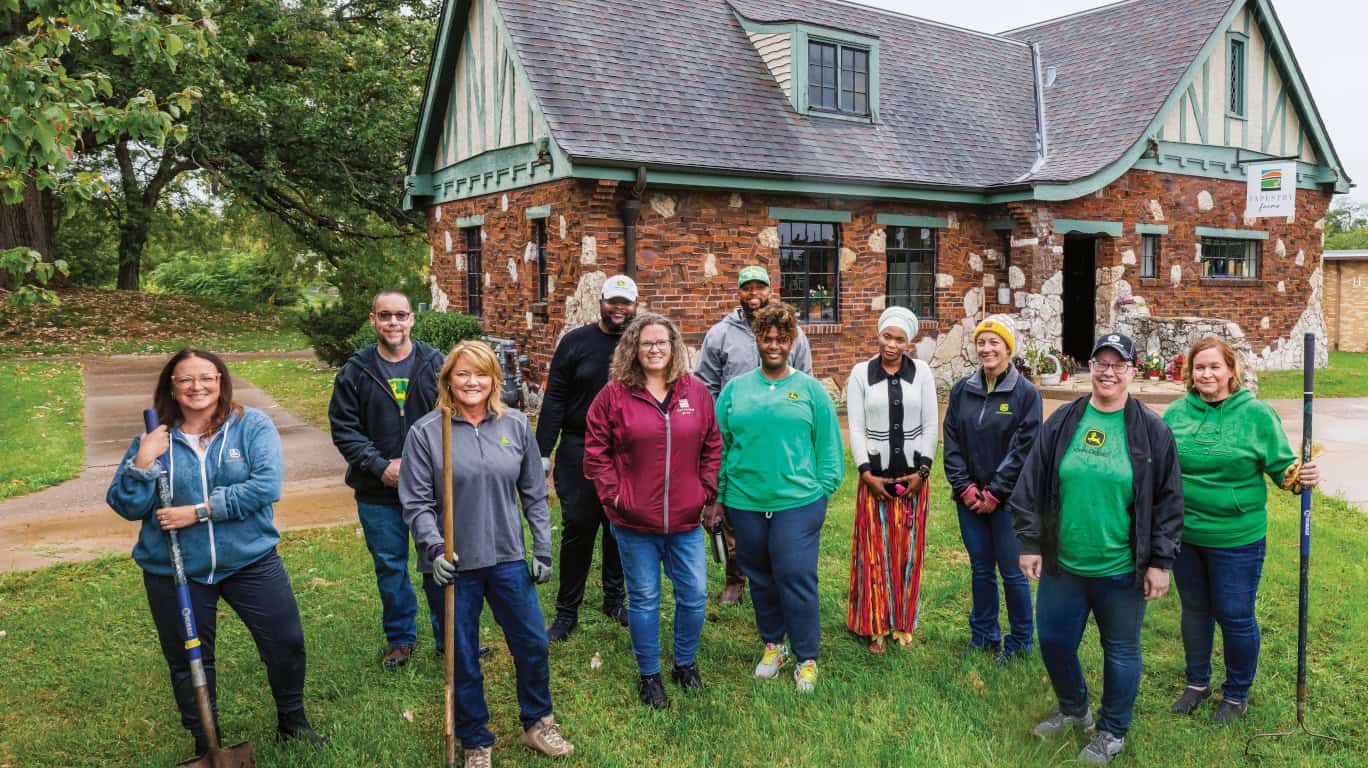
Tapestry Farms provides resources to the Quad Cities’ refugee community. We spoke with executive director Ann McGlynn about how its mission has changed lives for the better.
Tapestry Farms is a nonprofit in the Quad Cities that has served the refugee population since 2017. Not only does the org connect refugee families with legal services, healthcare, child care, English classes, and food services, but it also provides much-needed community for folks adjusting to a new cultural environment. The organization’s values are stated simply on its homepage: accompaniment, encouragement, resourcefulness, humility, and hope.
Tapestry Farms’ commitment to its families sets it apart as an example of how mutual aid and shared resources can only make a community stronger. Executive director and founder Ann McGlynn spoke with us about the organization’s development into a massive volunteer effort and a Quad Cities staple.
I’m so excited to talk with you about Tapestry Farms today. How did you get involved in this mission?
So I actually used to work at a church, and we welcomed a refugee family of seven back in September 2016. And we thought, well, we’ll hang out with each other for a while, and then we’ll go about our way. And that go about our way part never happens. We started to meet more refugee families and discovered that most communities that have a resettlement agency, which are mostly government-funded, almost always have what’s called a post-resettlement agency. So basically, it’s an organization that helps refugee families, especially once they’re done with that government-funded resettlement program. The Quad Cities did not have one of those.
That’s surprising.
Yes, for sure. So I finished my master’s degree in business administration in May of 2017, so about nine months after the family arrived. And I don’t sit still. So there was a group of us that were just interested in trying to figure out how to start an organization, so I filed the paperwork in June of 2017 to form a nonprofit.
So it was you and a couple of other collaborators right at the beginning?
Yep. So we formed a board and just got to work on our first [case]. So the family that inspired Tapestry Farms is a family of seven, and they’re incredible humans who are doing really well. And then our first official Tapestry Farms client was a woman from Burundi, and she wanted help signing up for English classes. So we helped her sign up for English classes, and we provided transportation through volunteers to those English classes, and the rest is history.
That’s so wonderful. And you guys have expanded so much—you assist refugees with medical care, legal services, English classes, childcare, and food. What does the process look like when you assess the immediate needs of these new community members?
Most of the families we work with come to us through word of mouth. So families who are familiar with us might encounter another family who they can see needs some support. Educators will reach out to us. Other social service agencies will reach out to us. So it’s mostly through word of mouth that we connect with families. What we do normally is we have one of our case workers meet with the new family and just kind of discern where they’re at, and then also listen to what their goals for their family are. But then also, we add in our expertise and knowledge of what’s available to families in our community and just get to work. Sometimes, families are with us for a very short amount of time. It might be a few months that they need some help getting over or through a difficult time. And then, some families are with us for a year or more. We have a couple of families that we’ve been connected with now for several years. And, you know, we’re helping kids go to college, or a wide variety of things.
That’s amazing. Your site mentions, “We are built for times such as this.” How does that ethos play into the work that you guys accomplish, especially considering current legislation that’s challenging immigrants’ rights and access to resources?
We hold on to that thought of being built for such a time as this every day. We are built to walk alongside families through difficult times, and this is what we do. This is what we have done for several years. This is what we will continue to do, no matter what happens outside of our organization. So what’s happening with the federal government or legislation that is not favorable for the people we serve? We just keep focused on the families in front of us, and we keep going. Some days are harder than others, some days are more joyful than others, but we just keep going.
That’s what you have to do at this point. Do you have any upcoming fundraising events that are geared towards the organization’s goals?
So we do two events every year to raise money, we have an event in the spring. It’s called Spring Fling, that is May 1 at one of our local convention centers, where we have speakers and a silent auction and dinner, and all of those good things. And then in the fall, we have, actually, this fall was our first ever concert that raises money for us as well. So we do those two more public events to raise money, and then, obviously, as well, we take donations throughout the year. The holiday time is always a wonderful time. Our supporters are just beautiful and generous people who are a part of our circle of care. It doesn’t matter if they give us $5 or $5,000 or $50,000; everyone is a part of that circle of care. And so that especially comes through at the holiday season.
That’s such a lovely way for the community to interact with your cause. You guys have gotten an exciting grant in the past year, the Quad Cities Community Foundation Transformation Grant. Especially because nonprofits are struggling so much right now to get grants and funding, and that’s for the next three years. How do you see the organization growing and changing in the next couple of years, especially considering those challenges to funding?
We are just wrapping up our first year of that grant, so we have two more years left to go, and our first year has just been beyond our wildest imagination. This grant is giving us the time and space and resources to really grow in pretty significant ways. So we launched a community effort that is gathering up all different types of gardeners. It can be people who grow in a backyard, or people who go through an organization, people who have organized efforts, and we grew through that effort, more than, I think it was 64,000 pounds of produce that was all distributed. Gardeners are, just generally speaking, very generous people. So a lot of the people who are part of this were already doing this [distribution], but we felt like it would be good to have a coordinated community-wide effort so that we could build community around that and encourage more people to grow, more people to share their knowledge about growing food. Obviously, food access is a significant issue right now, and we hope that this effort will just continue to grow. So that’s one example.
We also have a culturally specific pantry effort, even just within our own organization, and so this year, we’re actually now up to 33 families that are receiving through a partnership with the church that I used to work with. They receive a distribution twice a month of fresh vegetables, fresh fruit, staples such as beans, rice, oil, and eggs. For many refugees, the legislation that was signed into law in July will eliminate the severe SNAP benefits for refugees who do not yet have their green cards. Refugees cannot apply for their green card until they’ve been in the country for one year. Usually, it takes six months to two years for those applications to process, and currently, as of two weeks ago, the Federal Administration has halted processing of green card applications for refugees. So this food distribution of culturally relevant and nutrient-dense food is just super important to the families we serve right now. So we’re incredibly grateful for that.
I’d love to hear more about the community garden process. I know you guys have some complex food-growing systems in place. Is that year-round? Are you able to have a kind of self-sustaining effort going?
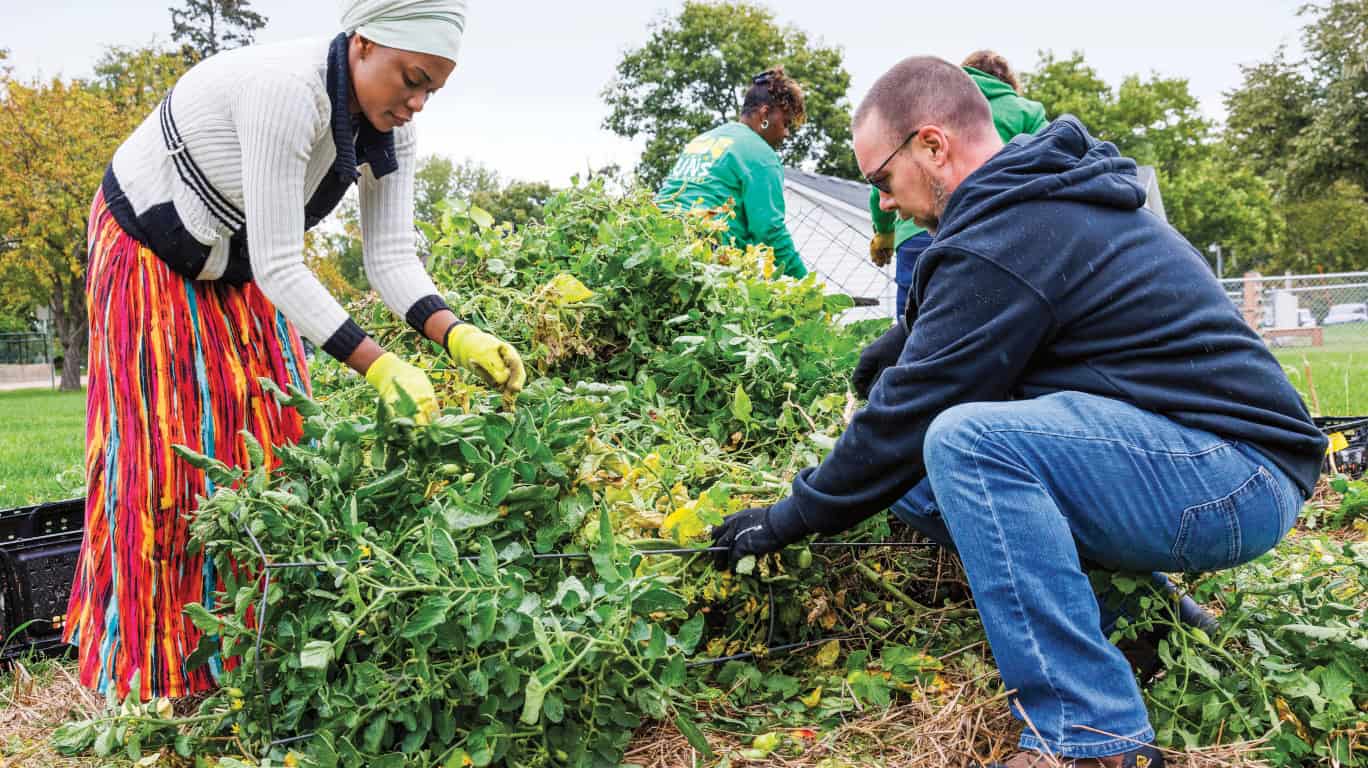
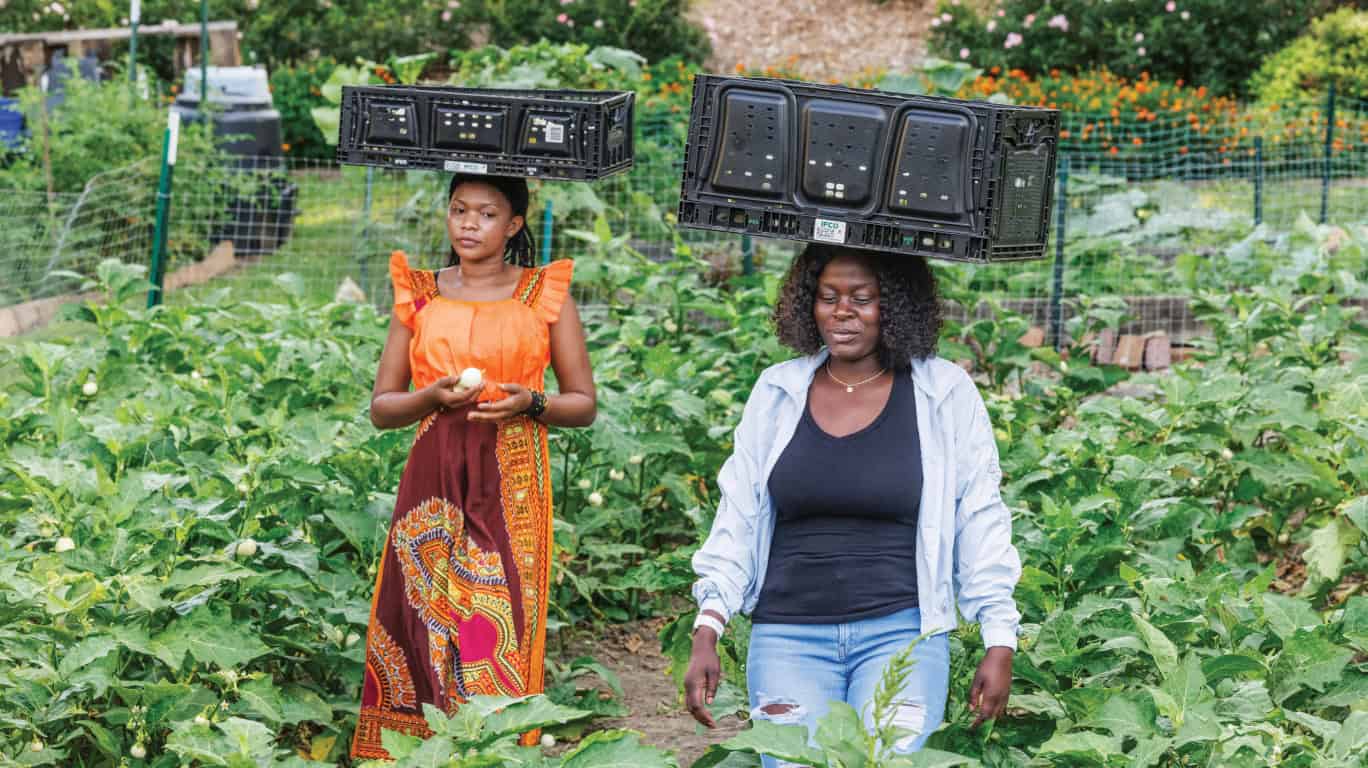
Yeah. So we have two components to our food growing. One is our seasonal gardening efforts. It’s very cold and snowy here right now. We can’t grow outdoors year-round, but we grow at 12 or 14 sites here in the Quad Cities area. Most of these sites were ones that were already built; they already have water sources, but there’s just been a transition. And so we’ve been able to come in and continue growing food at those sites. We hire refugees as part of that work. For a lot of the refugees that we work with, it’s either their first job ever or it’s their first job in the United States. And so we use that opportunity to teach about what paperwork you need to file or fill out if you have a bank account for direct deposit. What is it like to clock in and clock out using your phone, making sure you have transportation and the right clothing and shoes, and all of those things, so that is a part of our seasonal farm.
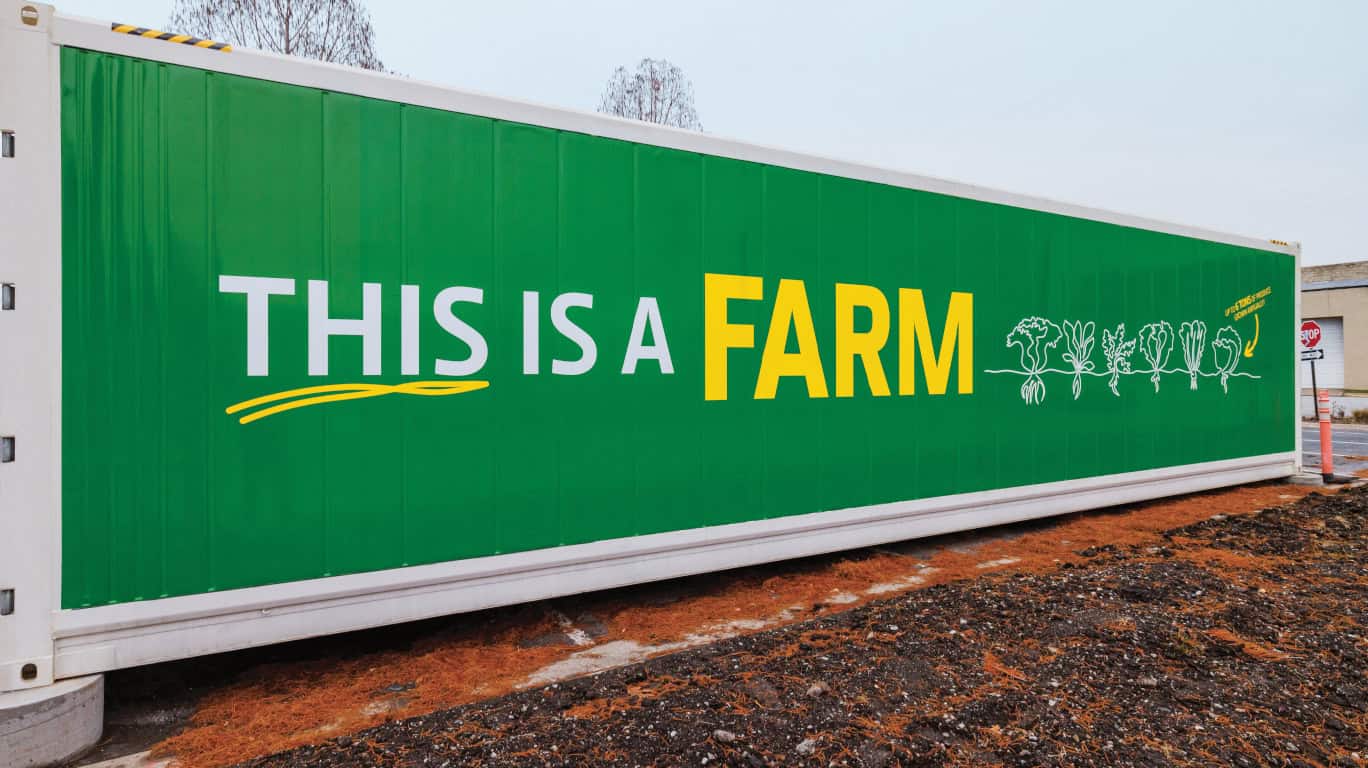
We also have about 300 to 400 volunteers a year who come to be part of that work, who come for a couple of hours and help us knock out planting at or weeding one of our sites. We do not do this work without them. And then the other component to it is our hydroponics container. We have a refurbished shipping container where we’re able to grow leafy greens and root vegetables year-round. And it’s a 320-square-foot shipping container that’s in the parking lot of the Quad City Botanical Center. And so we’re able to offer those veggies year-round to people.
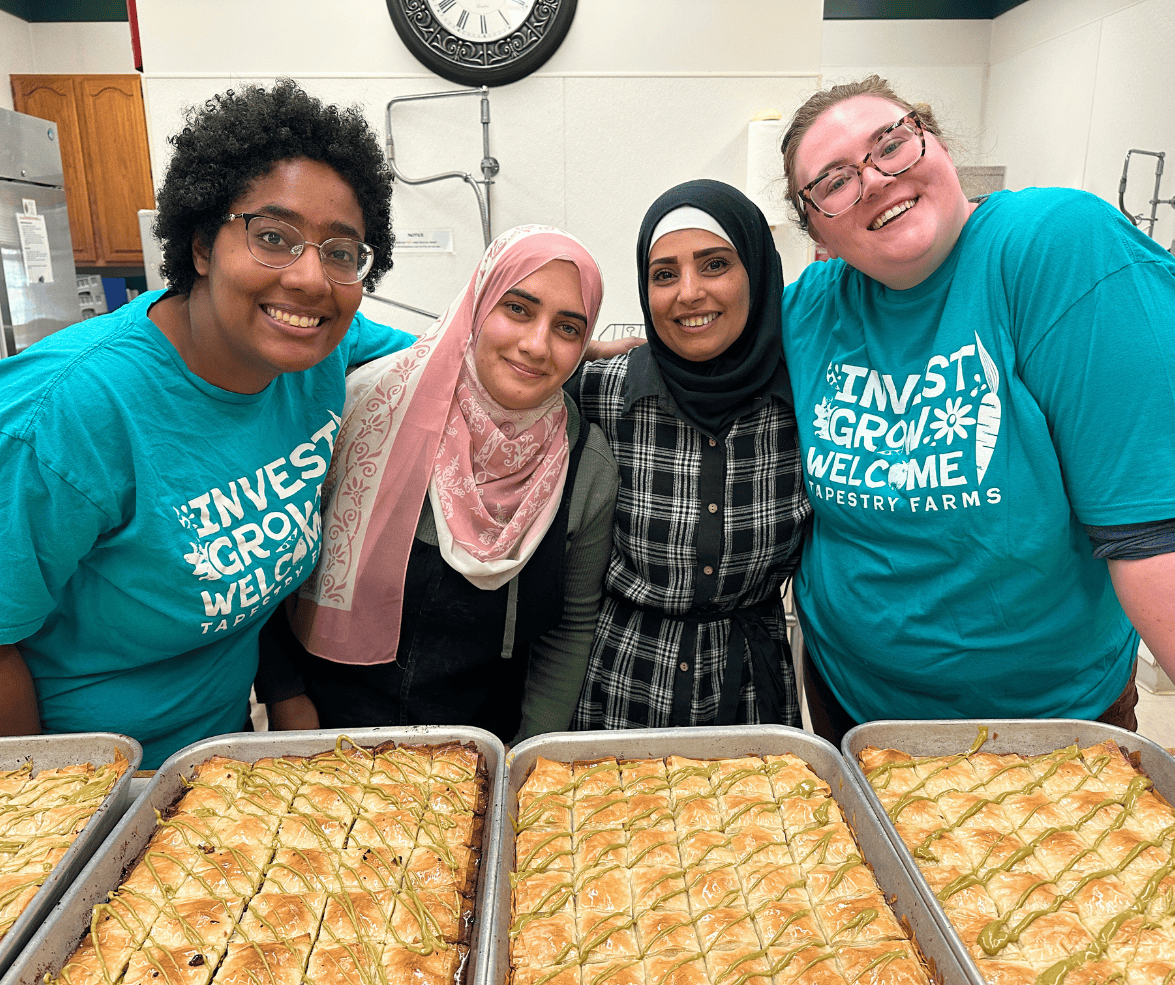
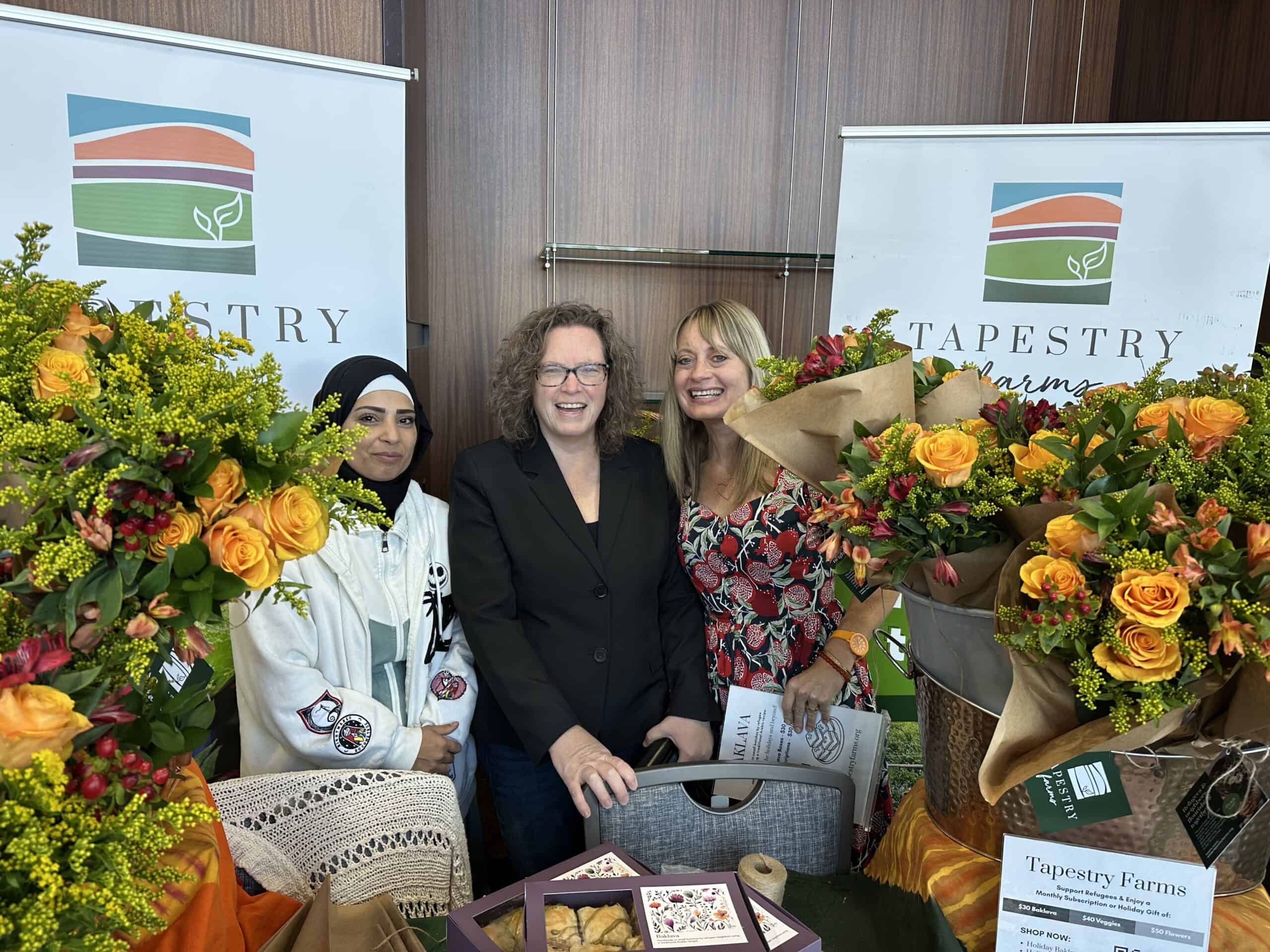
And then, actually, the third component we are working on expanding is our social enterprise. Just knowing that times are challenging right now, and we want to grow the amount of income that we earn by things that we make and sell. So we do have monthly vegetable subscriptions that are available to customers year-round, thanks to that hydroponics container in our seasonal farm, but we just expanded into baklava and a floral subscription, and so with the holidays coming up, people can buy flowers and baklava from us. So, just understanding that we want to have more of our own earned income to support our work, we’re working on expanding our social enterprise as well.
It’s such a wonderful enterprise that you guys have going on, and also hearing about the turnout for volunteers per year, it really is such a community effort. Are there any other local organizations that you’ve partnered with or work in tandem with to support the refugee community? Or do you find yourselves one of a kind?
We could not do our work without partners. From landowners to our local resettlement agency to immigration legal providers. We also have a legal clinic that we offer basic support to. There’s three other organizations that have similar legal clinics to ours. So we could not do our work without partners. We have partnerships with our school districts. We have amazing volunteers who lead English classes twice a week, and we have drivers who drive for that, and child care providers for kids to come. There’s so much isolation in resettlement. It is really hard going to a new country where you probably don’t know the language, you don’t know the customs, and you don’t know anybody. So we work pretty hard at building community as best as we can, and all of those volunteers and partners are a part of that.
That’s so wonderful. It’s a kind of mutual aid that you guys are able to offer. I was looking at your site, and there was a link to Dr Daya, Abdos’ speech at St Ambrose University, which sounded amazing. And she talked about radical hospitality and the first Iowa chapter of Every Campus Is a Refuge. I would love to hear about how you find the Quad City supports the refugee population in general.
That also goes back to that specific instance of partnerships. St Ambrose University has now welcomed two refugee families to campus. And there’s this phrase people talk about, “Iowa nice,” and we also serve people in Illinois, but I think our community does a good job of welcoming immigrants and refugees. I do think with that, as with anything, there definitely is some work left to do in that regard. But I feel like our community is learning how to communicate with people who speak different languages, of welcoming and trying to understand different cultural practices, and not just understand them, but try to really see the good that comes with people who are making their home here, who see the world differently than I may see it or my friends or my colleagues do. And so one of my personal greatest joys is when someone learns something new, so that they can interact authentically with someone who is here as an immigrant or refugee.
I’ll give you, for example, that twice-monthly food distribution we do. We have two women who oversee communicating with the families, letting them know that someone is going to be bringing food to their house the next day. And so we did this training session where I taught them how to use Google Translate for the languages of the people that we work with, and how to use WhatsApp, because most of our families communicate using WhatsApp. And it has been so much fun, not only watching them learn how to use those tools, but that the families they’re communicating with are starting to share about their lives with them. So one of our families just welcomed twin boys last week, and they’re beautiful, and they’re healthy, and mom’s doing great, and we’re all just so happy for them. And the husband sent me photos, but he also sent photos to the person who’s been communicating with them about food deliveries, because he wanted to share with her about their joy. And that humanity is what we need more of now. Is that father communicating with one of our volunteers going to change the entire world? No. But he knew that she would find joy in their joy. And when life is hard, more joy helps.
You can subscribe to a monthly winter vegetable box (for local pickup), purchase holiday baklava (picked up locally or shipped), and shop holiday flower bouquets (for local pickup) here. You can also learn about volunteer opportunities, the organization’s current needs, and make donations through the Tapestry Farms website.