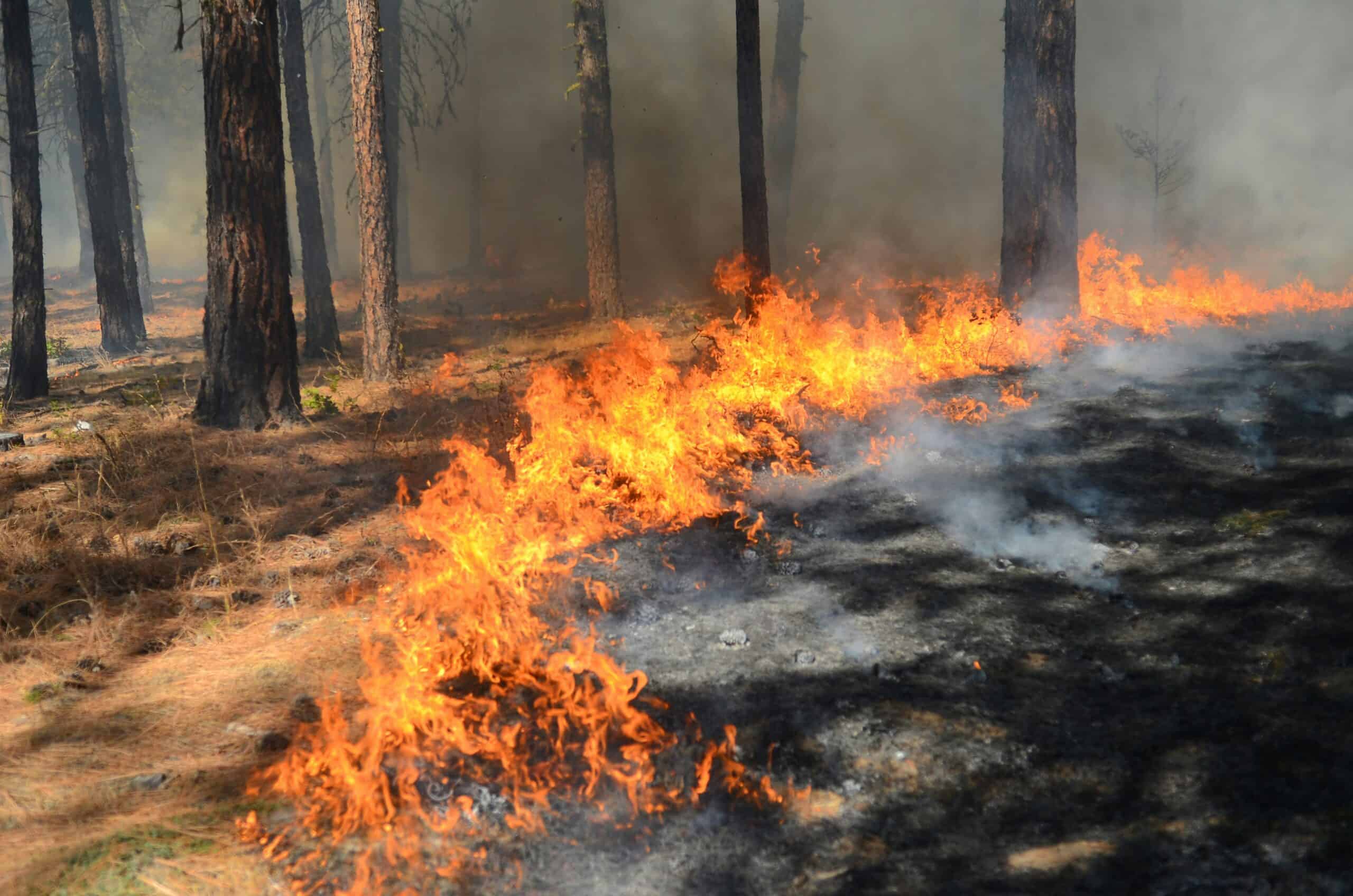
One of our state’s most destructive natural disasters struck in 1881. Explore the history of this tragedy, which killed hundreds of Michiganders.
You’ve probably heard of the Great Chicago Fire, which ravaged the Windy City in 1871. You might even know that fire broke out in San Francisco in the wake of the city’s infamous 1906 earthquake. But did you know that a destructive fire once wiped out Michigan’s beloved Thumb region?
The Great Thumb Fire, also referred to as the Huron Fire and the Great Forest Fire of 1881, left a dark mark—literally and figuratively—on the area. Read on to explore the history of this devastating natural disaster in Michigan.
The Great Thumb Fire of 1881
In 1881, Michigan experienced a classic summer heat wave: Throughout August and early September, temperatures had risen above average, leaving residents sweating their way through every day. To top it all off, rain was scarce that year.
As August rolled into September, the land was experiencing the effects of an especially dry year, with minimal rainfall happening throughout the Thumb region of the state since April. The conditions weren’t ideal for farming, outdoor leisure, or relaxation—but they were ideal for fire.
The earliest signs of trouble appeared in mid-August, when wildfires began popping up across the Thumb. Folks in Sanilac and Lapeer Counties watched in horror as fire spread throughout their communities, fueled by scorching temperatures and dry land.
Of course, the wind was no help—reports of intense wind were recorded throughout the month, which propelled flames from field to building and beyond.
By the time the 5th of September arrived, the fire had made its way to the community of Bad Axe in Huron County, a small community in the northern portion of the Thumb. Buildings went up in flames, undeterred by residents, who surely tried to tame the fire with buckets of water and other ultimately futile tools.
As wind gusts continued, the Great Thumb Fire was officially underway, leaving a path of destruction that extended for more than one million acres—an incredible expanse of land, much of which was burned in the span of just a few days.
While the flames died down by September 7, the fire’s impact was devastating. At least 282 Michiganders lost their lives, while more than $2.3 million worth of damages were recorded region-wide (in modern money, that’s roughly $76.5 million).
Reports of smoke and sky discoloration were reported as far east as New England, while locals back in the Mitten State were left picking up the literal ashes of their homes and livelihoods.
In retrospect, the Great Thumb Fire came about thanks to a perfect storm of conditions. Dry land, high winds, and scorching temperatures were important, yes, but historians also attribute some of the fire’s rapid spread to ecological conditions throughout the Thumb. Thanks to the region’s long history of logging, large swaths of land were dry and filled with logging debris, creating perfect conditions for fire to spread.
The fire’s lingering effects
Michiganders rebuilt their lives with help from the American Red Cross, which had been founded only months before the fire. In fact, records show that the Thumb Fire was among the first disaster outreach projects implemented by the Red Cross, with volunteers helping locals stay fed, clothed, and cared for.
Conservation and fire prevention efforts soon followed, as Michiganders feared future fires. Firefighting in Michigan has some of its roots in the response to the Great Thumb Fire, while forest protection agencies would ultimately be established to set the stage for a new era of environmental awareness.
It might not be the most famous fire in United States history, but the Thumb’s natural disaster created lasting challenges for thousands of Michiganders—and its aftermath paved the way for more thorough and prepared disaster management throughout the state.