A ghost avenging his unsolved murder, spirit houses for the dead, and mourning brides in wedding gowns are some of the specters you may encounter in haunted Alaska.
In a place known for complete, plunging darkness, untouched wilderness, and sometimes tragic histories, it may not be surprising to hear that Alaska is full of spooky legends and whispers of haunted spirits.
The rugged and remote landscape of Alaska, combined with the state’s history of gold rush workers and the parts of the state that are left in total darkness for months at a time, is enough to get anyone’s imagination going. But are they rumors—or real? We’ll let you be the judge. From spirit houses to “Scary Mary,” here are some of the legends of Alaska’s most haunted places.
1. The Ghost of Golden North
Coming to you first, we have a ghost story born out of the gold rush. The Golden North Hotel in Skagway, which still stands as a tour company building, was built in 1898 to accommodate the rush of gold prospectors who flooded the area. The building went through a long history, serving as a hotel, a trading post, and a supply store; so many, many people stayed or passed through its walls and halls. However, one of the most famous ghost stories of the hotel remains “Scary Mary.”
Mary, before she became scary, was the fiancée of a gold prospector named Klondike Ike. Mary stayed at the hotel while Ike traveled the 500+ miles in search of gold. Sadly, while Ike was out gold-hunting, Mary succumbed to a mysterious illness. Stories vary about the exact circumstances of her death—some say Mary locked herself in her room out of fear of the locals, others say Ike didn’t return when he said he would, so she retreated in despair, and still others say she fell ill with pneumonia. What all versions agree on, however, is that Mary was found dead in her room, dressed in the full wedding dress she was to be wed in.
Following Mary’s untimely death, guests who stayed in her Room 23 reported waking up in the middle of the night feeling like they could not breathe (similar to symptoms of pneumonia) or in an icy-cold room. Other guests claimed to have seen a sad woman in a wedding dress wandering the halls or spotted a floating light. You can no longer rent a room at the former Golden North Hotel, but you can visit the building to book a tour of the building that was once the hotel at Frontier Excursions and Adventures.
2. The Spirit Houses of Eklutna Cemetery
It might seem like an obvious choice to include a cemetery on a list of haunted places, but while the ghost stories of Eklutna Cemetery in Anchorage are well known, the area’s history is also sacred to the Indigenous people who once lived there.
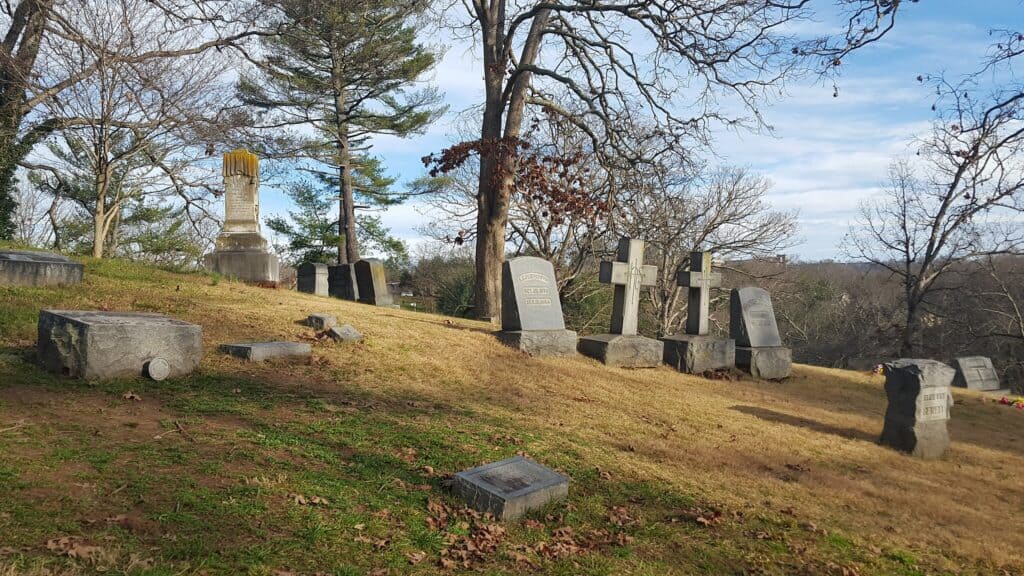
Dating back to 1650, the indigenous tribes of Anchorage were converted to Orthodox Christianity and developed a tradition of burying their dead in “Spirit Houses.” The spirit houses were meant to house the souls of the deceased and combined tribal clan affiliations, like colors and crests, with gables and Greek crosses. The houses were decorated to represent positions and authority in the clan, so some Spirit Houses are more ornate. While known as one of the most haunted places in Alaska, the spirits you will encounter there are said to be peaceful, not spooky. You can (respectfully) visit the cemetery and Spirit Houses at the Eklutna Historical Park.
3. The Spirits of Red Onion Saloon
The Red Onion Saloon is said to be one of the most notorious and haunted spots in Alaska, and it’s one of the rare areas that’s still very much in full operation. During the height of the gold rush, the saloon functioned as both a place for (alcoholic) spirits and a very popular brothel. The brothel was only in operation for around two years, but during that time, around 300 women worked in the brothel, while an estimated 15,000 men visited.
One of the women “madames” was said to be a ghost that employees have now named Lydia—it’s not entirely clear who Lydia was, or if that was even her name during life, but she is rumored to have been a madame who died of syphilis or took her own life. When she has appeared as a ghostly specter, she has borne facial marks resembling the scars of syphilis. Lydia is mostly known as a friendly ghost to females, but is not always friendly to men in town.
Today, the saloon functions more as a place to get a great sandwich, with many of the dishes paying homage to the past, featuring names such as “Sassy Lady,” “Madam Jan,” or “Lady Lavoie.” You can also book a tour of the bordello to see the brothel’s authentically preserved rooms and artifacts with a “madam” tour guide, or a walking tour of the town to learn more about the purported spirits that still roam.
4. The Haunted Anchorage Hotel
Anchorage’s only historic hotel in the city, the Anchorage Hotel, is also one full of paranormal history. The hotel openly celebrates its spooky history, openly inviting guests to contribute to its famous ghost log book, where they can document any ghostly activity they encounter during their stay.
One of its most famous ghosts is the spirit of “Black Jack” John J. Sturgus, who served as the first Chief of Police in Anchorage. In 1921, he was found shot in the alley just outside of the hotel, somehow injured in the back with his own bullet. No one has ever found the murderer behind Sturgus’s death, so it’s said that Sturgus comes back every year to haunt the grounds and seek justice.
Another ghost said to haunt the hotel is that of a jilted bride, left by her fiancé on the day of her wedding after he struck it rich in the gold rush. She was so distraught that she reportedly hung herself, still dressed in her wedding gown, and makes a sorrowful appearance now and then to unsuspecting hotel guests in the hallways in her full wedding regalia. You can still book a stay at the Anchorage Hotel, and if you happen to encounter a spirit, be sure to jot it down in the ghost book.
5. The Ghost of”Soapy” Smith
Leader of the small and short-lived, yet still powerful Alaskan mafia, Jefferson Randolph “Soapy” Smith both terrorized the town and set up shop in a local building to run his various cons and scams. His name stems from one of his cons, where he would wrap paper money around a bar of soap, wrap the soap among others in plain paper, then sell all the soaps for a chance for townspeople to “win” the money-wrapped soap. Of course, it was a scheme, and only members of his “gang” would “win.”
Soapy Smith was killed in a gunfight only two months after coming into town, but his name—and original building—live on. The building where he once lived and schemed was recently restored to what it looked like in the 1800s and now operates as the Jeff Smith’s Parlor Museum. You can visit the museum and maybe catch a glimpse of Soapy Smith himself—he’s rumored to still be hanging around, looking for a fight with his ghostly arch-nemesis, whom you may also spot, Frank Reid. (Red was a former member of Jeff’s gang, who went on to become reformed and lead the town as sheriff.)
7. The SS Princess Sophia
Many people have never heard of the SS Princess Sophia, but the passenger ship known as the “Titanic of the West Coast” met a similar tragic end, only six years after the actual Titanic sank. On October 24, 1918—only a few days before World War 1 ended—the Canadian steamer hit the Vanderbilt Reef in unknown circumstances. Despite sending out a distress signal and having rescue boats nearby attempting to help, after two days of waiting and the captain reportedly mistakenly thinking there was no rush, a violent storm rendered rescue efforts impossible, and Sophia sank. All 353 passengers and crew perished.
The ship’s sinking is considered a rather mysterious tragedy, for the lives lost, the circumstances surrounding why the ship struck the reef in the first place, why rescue efforts were so delayed and unsuccessful, and the fact that the news of WWI essentially buried the news. As a result, it’s said that the souls lost continue to haunt the seas, with eerie lights, haunting wails, and ship captains reporting mysterious voices over the radio when they sail near the reef where Princess Sophia slid off to her ghostly grave (and where she remains).
8. The Creepy Kennecott Copper Mine
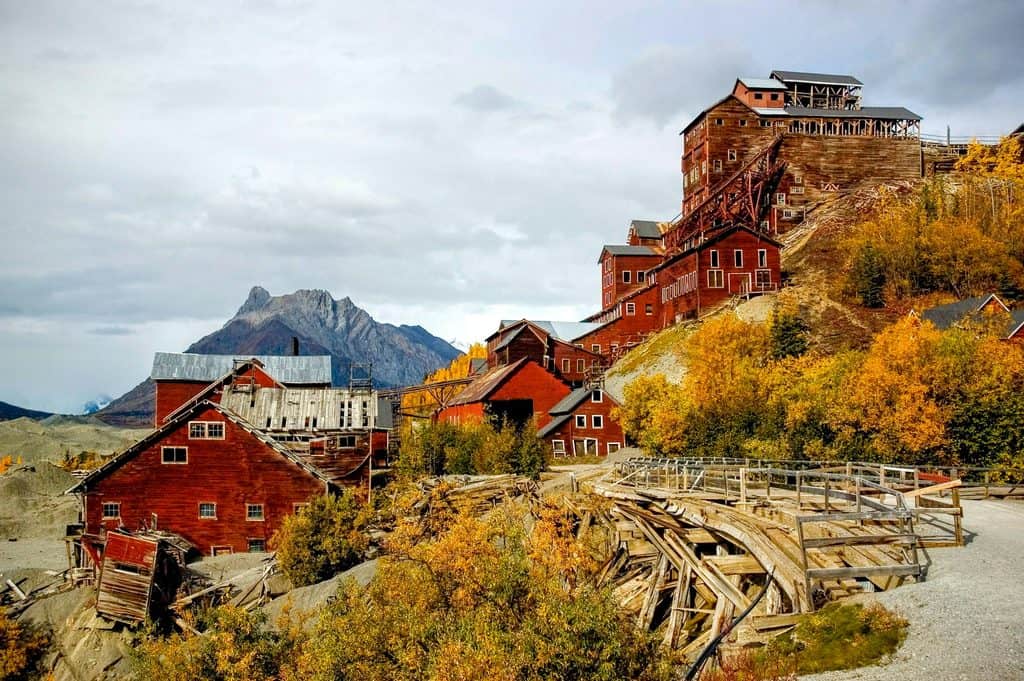
The Kennecott Copper Mine in Alaska is now known as the Kennecott Mines National Historic Landmark, and it stands in history as a ghost town, as the entire mine was abruptly abandoned in 1938. The 2,839-acre property was used for copper ore mining in and throughout Alaska, especially to fill the high demand for copper wiring that electricity required. However, after the fast and furious work of the miners led to the ore being completely depleted and global copper prices dropped, the corporation that owned the town and mill shut down, forcing everyone out.
The once-picturesque town carved into the hilltop was left almost perfectly intact. After decades of neglect, the National Park Service is looking into restoring it, and some areas, like the post office, have been reopened to the public. There are no “official” ghost stories tied to one figure, but visitors to the area report hearing footsteps of dedicated ghostly workers, voices echoing across the forest, and disgruntled ghosts who will steal tools right out of the living workers’ tool belts when they dare approach the nearby railroad tracks that carried ore from the mines.
9. The Kodiak Mystery Killer
The building known today as the Kodiak History Museum was once called the Russian-American Magazin (magazin is “store” in Russian), a Russian-built warehouse built in 1808 that stored sea otter pelts. Russia owned Alaska until the U.S. purchased the land in 1867 for $7.2 million.
The hewn-log building is one of only four surviving Russian-built buildings in the entire U.S., the oldest Russian-built building, and the oldest building in all of Alaska! An Alaskan businessman named W.J. Erskine purchased the building from the Alaska Commercial Company in 1911 (Erskine was also an employee of the company) and lived there until his death.
The Erskine family reportedly employed a maid who first spotted the now-famous ghost, thought to be a man who died under mysterious circumstances in 1886. The maid refused to work in the building alone, claiming she saw the ghost walking the halls, along with other spooky incidents such as unexplained noises and voices. You can visit the museum today and do some ghost-hunting for yourself.
10. Independence Mine, Hatcher’s Pass
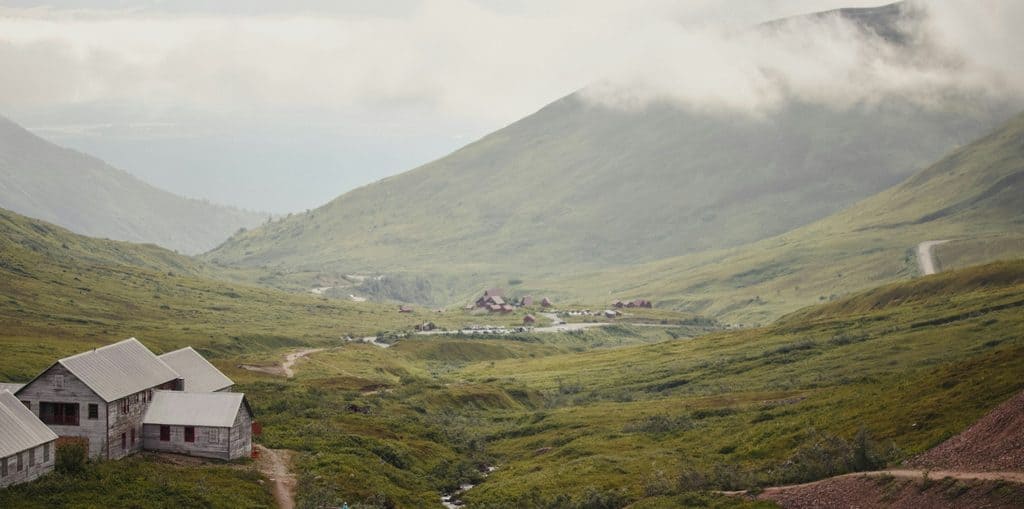
Another former mining town, Hatcher’s Pass is home to the Independence Mine State Historical Park, which welcomes visitors to its abandoned buildings and town where prospectors once panned for gold. The gold mining was so profitable, netting around $18 million in gold in today’s money, that the area was able to build up an entire town.
The gold mines operated for nearly 50 years, shutting down for good in the 1950s. With a long history of miners in the area, families, and what was no doubt hard work, competition, and dubious circumstances down in the mines, the area is also known for its paranormal activity. One report called Independence Mine one of the “most active” paranormal sites in all of Alaska, complete with visitors reporting seeing ghosts and orbs, feeling ghostly cold touches, and hearing voices. However, another ghost hunter in the area assured visitors that the spirits are also known to be of the friendly variety.
11. The Dyea Disaster
Dyea, Alaska, is the site of a tragic avalanche known as the “Palm Sunday Avalanche” in 1898 that killed as many as 100 gold prospectors during the Klondike Gold Rush. Following the avalanche and the end of the gold rush, the city of Dyea deteriorated, leaving it a ghost town.
There are no specific ghost encounters we could find, but because Dyea is a literal ghost town that no longer really exists, visitors describe passing through the remnants of the site as an “eerie” experience. Many of the bodies of those who lost their lives in the avalanche were recovered and laid to rest at Slide Cemetery, which you can also visit.
12. Paranormal Portlock
If you have ever wondered if Bigfoot is real, just ask the people who once inhabited Portlock, Alaska. The once-thriving town was founded by Captain Nathaniel Portlock, and settlers soon flocked to the beautiful waterfront area teeming with seemingly endless fish. In 1905, however, the story goes that something spooked the local cannery workers so much that they all immediately abandoned their posts at work.
From that moment, rumors and whispers of something sinister afoot started to swirl. Some townspeople reported a large, hairy creature that was destroying fish on the beach, but when people began to disappear and bodies began to appear in the lagoon with mysterious wounds, townspeople started to really get scared. As reports of murders and more people disappearing occurred, the entire town decided to flee.
The evil doings were attributed to Nantinaq, a large, murderous, Bigfoot-like creature that existed in oral indigenous legends from nearby towns. However, official records say Portlock was abandoned for economic, not paranormal, reasons. The Discovery Channel traveled to Portlock in 2021 to explore the legend of Nantinaq, and to this day, no one lives in the town; moreover, Portlock is no longer accessible by road.
13. The Graffiti Ghosts of Buckner Building
Buckner Building in Whittier, Alaska, was constructed in 1953 to serve as a fully functional “mini town” in the event of a Cold War bombing. The building contained a movie theater, bowling alley, and a jail, was capable of housing 1,000 soldiers, and had tunnels extending through town. After the military moved out in 1966, however, ghosts allegedly moved in.
The building is now said to be inhabited by ghosts who do graffiti, turn on water mysteriously, and enjoy whistling. Some spirits from Bucker also allegedly moved to the nearby Begich Towers, where the living residents of Whittier reside. The occupants, according to the Anchorage Daily News, “just live with” their cohabiting resident ghosts. As one does.